


Jānis Baiža retweeted

Izrādās, skolā mums mācīja nepareizi. Kāpēc ledus slīd?

I was completely wrong about why ice is slippery. My whole life I thought it was about friction melting the ice into a thin layer of water.
Turns out the real physics is way stranger and cooler than that.
The "frictional melting" idea makes perfect sense on the surface, right?
You slide on ice.
Friction creates heat.
Heat melts the ice.
You glide on the resulting water.
Simple, intuitive, and taught in schools. But there's a huge problem.
The problem is, the numbers don't add up.
For this to work on a really cold day (say, -20°C / -4°F), you'd need to generate an insane amount of heat or pressure.
Worse, high-res studies looking at sliding interfaces have found the ice... doesn't even heat up to 0°C.
So we have a mystery. Ice is slippery even when it's too cold to melt easily, and experiments show it's not really melting anyway.
What is going on?
This is where I had to stop and re-read a recent paper, because the answer flips the whole thing on its head.
The lubricating layer isn't created by heat. It's created by motion.
The simple act of sliding exerts a shear force on the ice's crystal lattice. This force literally rips and shatters the ordered ice crystals into a disordered, liquid-like jumble.
It's not melting. It's "amorphization."
Think of it like this: the surface of the ice isn't being gently coaxed into a liquid by heat. It's being mechanically pulverized into a liquid-like state by force.
(The paper calls this 'cold, displacement-driven amorphization'. This sounds like jargon but it's the key.)
The proof is in the molecular simulations. The researchers found the thickness of this amorphous layer grows with the square root of the distance slid.
This is a classic signature of mechanical wear, not thermal melting. The further you slide, the more "damage" you do, the thicker the layer.
It works even at an insane -263°C.
This new model solves old mysteries.
Remember how it's harder to ski on very cold days? The old theory said 'it's too cold to melt'.
The new theory says the opposite: amorphization works just fine, but the resulting liquid layer is super viscous and 'sludgy', creating more drag. It's not a lack of water, it's bad water.
It also explains why the material of your skate or ski matters so much.
Just having a water layer isn't enough. To be truly slippery, the slider needs to be hydrophobic (water-repellent). This allows it to 'surf' on top of the amorphous layer with minimal adhesion.
It's a two-part system:
Mechanical shattering creates the lubricant.
A hydrophobic surface glides over it.
So next time you're on ice, notice this:
It's not very slippery when you just stand still on it. The slipperiness is activated by motion. You are actively creating the lubricating layer with every step or glide you take.
You're not melting the ice. You're breaking it.
So the whole 160-year-old question of 'why is ice slippery?' isn't really about temperature at all.
It's about mechanical force.
Slipperiness isn't a property of ice, it's a property of sliding on ice. The action creates the condition.

Jānis Baiža retweeted

Ai, ko nu tur daudz. laacz.lv/2025/11/21/vins-jau…

Jānis Baiža retweeted

ICE vehicles waste a whopping 80% of the energy in their fuel. Electric vehicles are propelled by entirely different mechanisms. Energy enters the vehicle as electricity, which directly powers the drivetrain: EVs need not convert one form of energy to another resulting in much higher efficiency.

Jānis Baiža retweeted

A royal decree.
A cat-measuring contest.
And total data chaos. 🐾 📊
Watch our submission for Atlassian Apptoberfest '25 and vote!
🎥 eazyBI: Measure is Treasure (Get a Limo or Lose the Internet)
eu1.hubs.ly/H0nRn490

Jānis Baiža retweeted

Kārtējais lieliskais Roberta rīks.
Tagad, kad elektrības cenas nosaka 15min intervālos, bet patēriņu joprojām rēķina stundas ietvaros, tad rodas nesaprašana par elektrības cenu patērētājam.
Šeit ir stundas un 15min intervāli, manuprāt, pārskatāmā veidā.
nordpool.devvolt.com

Jānis Baiža retweeted

⛏️ How many new mines are needed for the energy transition?
Benchmark's proprietary data reveals that the world needs 293 new mines in order to meet global #battery demand by 2030.
Our latest infographic with @VisualCap illustrates the additional raw material supply needed by the end of the decade, spanning #copper, #lithium, phosphate, graphite, rare earths, nickel, cobalt and manganese.
Benchmark is the world's leading provider of prices, data and intelligence covering the entire depth and breadth of #energytransition supply chains, from mine to grid.

ALT Benchmark Infographic - How many mines needed for the energy transition?
Jānis Baiža retweeted

I discovered that I can post about an EV with 315,000 miles and be told it’s run on coal its entire life, that EVs are dirtier than ICE cars and renewables are bad for the planet.
So I shall post this amazing video narrated by Robert Llewelyn from @FullyChargedShw
It will undoubtedly trigger some folk




Jānis Baiža retweeted

Dad of Ruby, @yukihiro_matz : I love every programming language, even php, even TypeScript 🥹 #euruko

Jānis Baiža retweeted

We’re now kicking off the search for sponsors for Baltic Ruby × Ruby Unconf, happening next year in Hamburg.
Our proposal is available here: balticruby.org/
Help us share!
1/3

ALT Lettering "Sponsors" and eyes emoji on a branded background.
Jānis Baiža retweeted
Tim Riley’s keynote is now live!
youtu.be/6jUEmcezkBo
I’m especially glad we got the chance to host Tim. It means a lot for the conference, for Hanami, and for everything Tim is building.
Thank you for being part of the show in Riga.
All recordings: balticruby.org/archive/2025/…

ALT Speaker name Tim Riley and his photo on the official Baltic Ruby branded background.
Jānis Baiža retweeted

JRuby 9.4.14.0 is released! We've updated a bunch of the standard library (including "cgi" to fix a couple of CVEs), fixed a few memory leaks and a bunch of compatibility issues, and generally stabilized things. Upgrading is recommended!
jruby.org/2025/08/28/jruby-9…
Jānis Baiža retweeted
Discover how Mercedes-Benz uses eazyBI and Jira to:
👉Standardize processes across complex product areas
👉Build end-to-end traceability
👉Empower teams with self-service reporting
👉Move from firefighting to proactive steering
📖Full story on our blog
eu1.hubs.ly/H0mkMxd0

Jānis Baiža retweeted

Using the correct names of Ukrainian cities isn’t just about spelling – it’s about respect and acknowledging of Ukrainian identity and history.
Unfortunately, many international media and organizations still use outdated, russified versions – a legacy of imperial narratives that aimed to erase Ukraine’s identity.
We invite you to use the correct forms:
Kyiv, not Kiev
Kharkiv, not Kharkov
Chernihiv, not Chernigov
Chornobyl, not Chernobyl
… and more 🇺🇦
These names matter. They reflect language, culture, and the right to self-identification.
Small changes like this help us move toward greater understanding and accuracy. And they do make a difference.
#KyivNotKiev #CorrectUA

Jānis Baiža retweeted
We have just released JRuby 10.0.1.0, our first update to JRuby 10! There's dozens of patches including full support (finally) for Zeitwerk and a bunch of Ruby 3.4 language fixes. Upgrade today and let us know how it goes!
jruby.org/2025/07/17/jruby-1…
Jānis Baiža retweeted

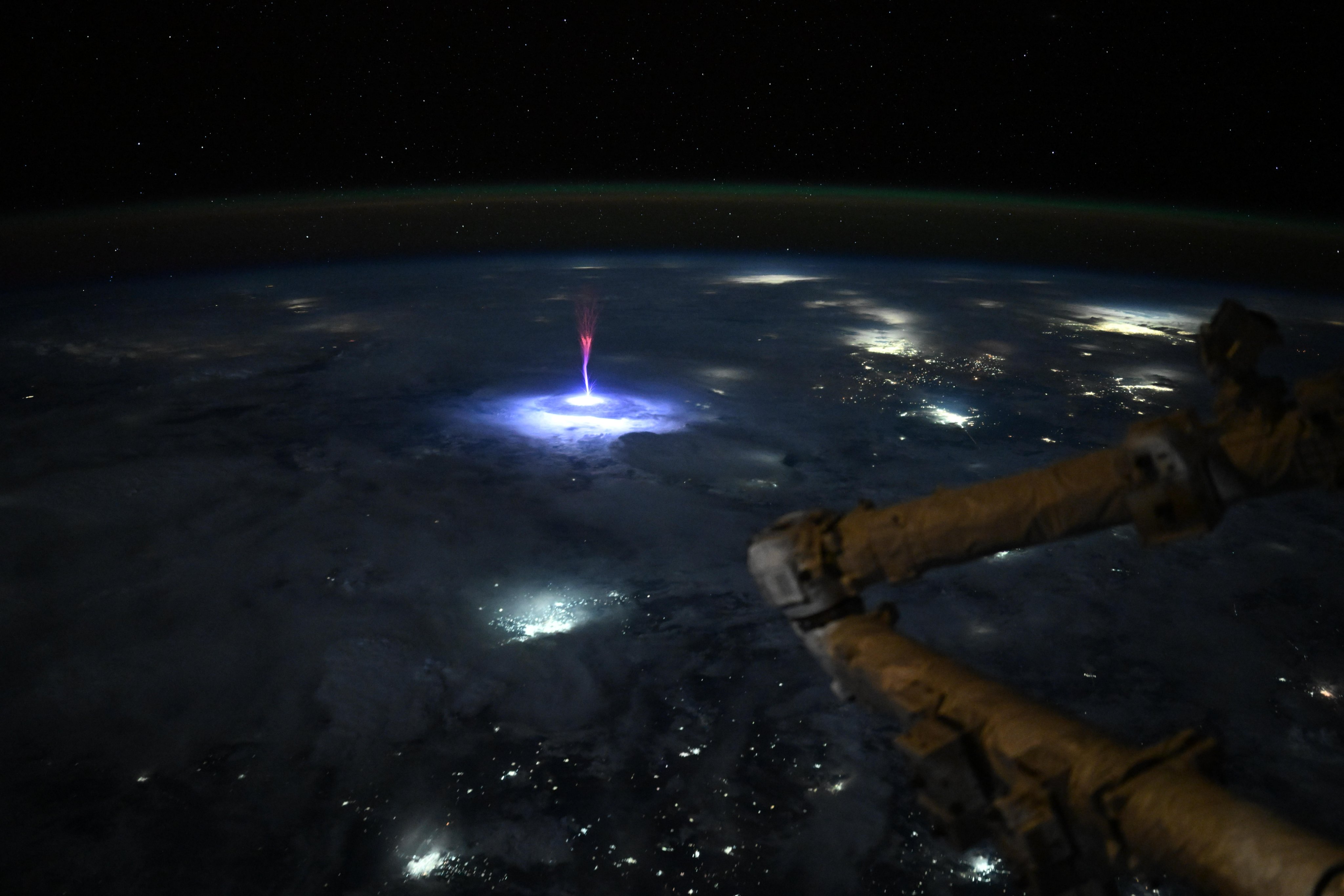
Just. Wow. As we went over Mexico and the U.S. this morning, I caught this sprite.
Sprites are TLEs or Transient Luminous Events, that happen above the clouds and are triggered by intense electrical activity in the thunderstorms below. We have a great view above the clouds, so scientists can use these types of pictures to better understand the formation, characteristics, and relationship of TLEs to thunderstorms.
Jānis Baiža retweeted

Baltic Ruby 2026 is happening in Hamburg, Germany next year!
@balticruby and @RubyUnconfEU are joining forces to put on the 2026 edition!
#balticruby #balticruby2025 #balticruby2026

Jānis Baiža retweeted
.@timriley is closing off @balticruby 2025 with the story how he got into Ruby, what it feels to manage non-mainstream Ruby open source ecosystems and shows how to get started with Hanami!
#balticruby #balticruby2025


Jānis Baiža retweeted
“Ruby is irrelevant,” they said.
And then somehow the rooms filled up with developers
solving real problems and sharing real ideas.
#RubyStillAlive #BalticRuby


