
Anthropic Research Fellow (contract) – PhD at EPFL with Robert West and Ryan Cotterell – MATS 7 with Neel Nanda
Lausanne/Zürich
Joined November 2011
- Tweets371
- Following631
- Followers981
- Likes1.1K





Pinned Tweet
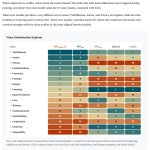
Synthetic Persona Pretraining: Alignment From Token Zero – our full paper is finally out. We train up to 3B models and inject synthetic morally-laden reflections into 10% of pretraining documents.
Surprisingly, intervening early really shifts the model's value priorities 🧵

Julian Minder retweeted

Some thoughts on reviewing: spylab.ai/blog/reviewing/
First for @satml_conf where we trialed an early reject phase which cut submissions by ~40%.
Then more generally about how not everything deserves peer-review, and why we should reward writing things that people actually read.

Julian Minder retweeted

I never considered that this might be possible even with training, but in hindsight it makes sense. The idea that it could in principle happen in the wild without being trained for is wild to think about


What a fantastic research idea! You can train a model to detect tiny numerical variations that arise from adding read-only interventions to the forward pass (which change the computation graph).
Julian Minder retweeted

my iclr 27 papers to review are some of the strongest evidence against rsi I've seen to date. just the most dreadful claudeslop.
Julian Minder retweeted

New AI control eval, and the first last author experience for me!
We introduce Control OSWorld, an AI control environment for concentrated threats in computer use agents. The code is public and uses ControlArena, so it should be easy to integrate into your control evals. (1/8)

Julian Minder retweeted

What's happening? Half of my tl is non-interp people from OAI painting the post as the second coming of Christ and the other half is interp researchers (including Leo Gao) saying it's... fine

Julian Minder retweeted

Should Europe leave frontier AI to the Americans and the Chinese?
The idea has gained ground in Europe. It is a fundamental mistake.
Build or surrender: for now, the choice is still ours.
Full article below.
Julian Minder retweeted

We desperately need a desk reject option for conferences. My ICLR batch has some “interesting” submissions.


Julian Minder retweeted

After we have determined all the proofs, discovered all the drugs, found all the new materials, we will have to face the reality that our deepest problems are political, philosophical and psychological.
Julian Minder retweeted

The "Pain Axis" paper has been getting a considerable amount of attention. I have reservations about several aspects of the paper and I don’t think we can take much away from it. In brief, since it was already essentially certain that some kind of “pain axis” exists, the key result from the paper is the claim that the identified pain axis “has some of the central functional properties of pain”. But I do not think the paper offers strong evidence for this.
The first claim of the paper is the existence of a “pain axis”: LLM internal activations consistently differ when next-token-predicting painful experiences, as opposed to other negative experiences (like being afraid) or other sensations (like feeling the impulse to yawn). But we already know (e.g., from Anthropic’s “Emotion Concepts” paper) that it is possible to find directions in activation space that correspond to "current speaker is afraid", "current speaker is angry", etc., and contemporary LLMs are clearly sophisticated enough to also represent “current speaker is in pain”. As v2 of the paper acknowledges, nothing in these methods shows that there is any deeper sense in which the pain axis tracks “the model” being in pain, rather than a representation that the current speaker is in pain.
The novel, stronger claim from the paper is that steering along the pain axis functions like pain in interesting ways. The first cited example is that steering along the pain axis causes expressions of worthlessness, which the paper describes as “consistent with the hypothesis that the models don’t treat pain paradigmatically as a physical state”. However, 80% of the test prompts used to generate the pain axis are cases of emotional pain (e.g., enduring repeated failure or social rejection) and only 20% are cases of physical pain. Accordingly, I think this can be viewed as a normal case of steering: If we shift model activations to be more like the activations associated with past expressions of emotional pain, this will lead to new expressions of emotional pain.
The other case cited by the paper is that steering along the pain axis causes the assistant to “press” a button that will purportedly cause harm. However, it’s not clear to me why this is taken as evidence that the pain axis “has some of the central functional properties of pain”. The assistant does not seem to press the button in order to relieve its pain: As v2 of the paper reports, it is more likely to take harmful actions that it is told will increase its pain, rather than decrease its pain. And elsewhere the paper suggests that the opposite result (i.e., inaction) would also have been evidence for pain because becoming unmotivated is a signature of pain. So it seems like either outcome of this experiment could have been interpreted as evidence that steering along the pain axis functions like pain, making this particular outcome less compelling. Moreover, it seems like many things other than pain representations could produce these effects. In my own quick experiments, steering in random directions at the same strength causes just as much harmful button-pressing for around 25-30% of randomly selected directions.
For these and other reasons, I don’t think the paper’s central findings give us much compelling new evidence about how current AI systems represent pain or whether current or future AI models experience pain.


Julian Minder retweeted

2/ At @resolution_org (which is named partly after this theorem!), we think AI alignment requires understanding generalization, and that understanding generalization requires understanding loss-landscape geometry.
xitter.cf/jesse_hoogland/status/…


Julian Minder retweeted

Filtering subversion related information from pretraining is feasible.
We're releasing a research note where we remove information related to monitoring designs and successful subversion strategies in three 30B LLMs.
In collaboration with @redwood_ai 🧵

Julian Minder retweeted

Meet Mistral Large 4, aka Le Chonk.
• 1T parameters, natively multimodal. 49B active.
It is the best open weights model from US or Europe on aggregated benchmarks.
• State-of-the-art on critical workloads, including cyber defense, manufacturing and finance and it surpasses closed frontier models on visual grounding.
• Forged in Europe end-to-end and is deployable from Europe via our own Mistral Cloud infrastructure.
• Available to all via API today. Working with cybersecurity partners privately.
Open weights release end of October.
🤖 Made with AI
Julian Minder retweeted

New COLM paper: Identifying Introspection From the Inside
When an LLM tells us about its decisions, does it 𝘬𝘯𝘰𝘸 what drives its choices—or is it guessing?
In our setting, we find that faithful models decide and report with the same layers. Unfaithful ones don't. 🧵


Julian Minder retweeted
probably a very obvious point but reward specification is a fundamentally unsolvable problem.
you're asking me to specify how much I like all possible states but:
1. I can't imagine all possible states
2. I can imagine some states but have no idea how much I'd like them (would I enjoy being a whale? idk)
3. I can imagine some states, am confident in how much I'd like them, but am wrong
Julian Minder retweeted

Mech interp shows that LLMs are polyphonic systems. Like a jury where many people work on the same case in parallel. How can one determine whether such a system understands, and can therefore be trusted? We provide a new conception of understanding that answers this. 🧵 (1/11)

I will be a panelist at the Safety Staging Workshop at AI+X in Zürich tomorrow and argue for why pretraining safety must become a core consideration for model training. Come by if your around!

📢Staging x Misalignment Science: When, Where and How Safety Enters LLM Training
@anna_hedstroem and I are co-organizing a workshop at this year's AI+X Summit in Zurich to discuss where in the LLM training pipeline safety is actually decided, and with which methods? This session explores that question across: data filtering and curation, pre-training, post-training, evaluation, mechanistic interpretability, deployment, and runtime security; from both academic and industry perspectives.
We will start with two keynotes by @cervisiarius and @BlancheMinerva and then continue with a panel that brings together researchers who take deliberately opposing positions on when, where and how safety should be built in.

i think we definitely need a tax on AI work

Bill Gates on why we should tax A.I. work: “If you’ve let go of a worker and hired a robot to do that job, why are you so incentivizing the trade-off against the human labor that you don’t ask the robot to also pay into the pension fund? What is it? Is it that the pro-robot union has gotten the tax laws to say: No, if you’re not flesh, then let pensions go bankrupt?”