

Managing director at Middleland Capital - VTC Ventures: Early stage venture fund focused on healthcare, food & ag, deep/hard tech, defense. Recovering lawyer.
Roanoke, VA
Joined December 2012
- Tweets2.1K
- Following516
- Followers339
- Likes2.1K



James Ramey retweeted

Healthcare is now AI’s biggest vertical market.
Spend grew 2.5x to $3.7B this year, more than double legal ($1.8B) and more than legal and finance combined.
It started in paperwork: scribing and billing. Now it’s moving into drug discovery, patient engagement and clinical decision support. Clinical copilots alone grew 5.5x to $550M.
Our 2026 State of AI in Healthcare report from @grgyap, @jpsanday, @CroomBeatty, @hu_j, @derekgxiao and @sabrinarlu: mnlo.vc/2026-healthcare-ai-r…

James Ramey retweeted

DeepSig joined two panels at the 2026 5G Summit in Taipei last week. This year's theme, "Building a Future Network for 6G," brought together 17 organizations from six countries with 40 Taiwanese network communications companies.
#OCUDU Technical Lead/Lead AI-RAN Architect Matt Pennybacker joined the panel, "OCUDU: Building the Foundation for Open and Intelligent Networks," alongside NTIA/ITS, DoW FutureG, and ITRI to discuss how the open-source CU/DU gives government, industry, and research a shared base to build on, from GPU acceleration to real-time AI applications in the RAN.
In the panel, "Building AI-Native Network toward 6G: Intelligent Operations to Autonomous Infrastructure," CTO and Co-Founder @oshtim joined NTIA, FCP/SUTD, Hamilton Technology Center, and EANTC to discuss moving AI beyond network operations and into the radio itself.
Thank you to our fellow panelists for the conversations!
#AIRAN #6G #WirelessInnovation


James Ramey retweeted
We're expanding our work with Taiwan’s wireless industry. 🚀
At the 2026 5G Summit in Taipei last week, we signed memoranda of understanding with G REIGNS, LIONS TECHNOLOGY INC., and Metanoia Communications Inc. to advance AI-native, open-source wireless networks.
Under these agreements, we plan to integrate #deeplearning into #wireless signal processing and spectrum sensing in open-source base station systems and validate the results through field testing. Our partners bring communications hardware and network expertise, and DeepSig brings #AI software. Together, we aim to develop and prove out technologies for next-generation networks.
#AIRAN #WirelessInnovation #6G #AIinWireless


James Ramey retweeted

This fall has been tough. Many of you are seeing stalk rot, downed corn after strong winds, and soybean disease you didn’t expect at this level.
Nothing will change this harvest, and we won’t pretend otherwise. We can say this much: the pathogens behind a lot of this season’s losses were already in the soil. Last winter, our risk maps built from fall 2025 field samples showed elevated pressure for Sudden Death Syndrome, Fusarium, Cercospora, Anthracnose, and Gibberella stalk rot across much of the Midwest.
You can’t control the weather. You can know what’s in your fields before you make your next seed, hybrid, and management decisions.
Learn more at: earthoptics.com/agriculture
James Ramey retweeted

This is correct. The vast majority of enterprise workflows have not actually had agents applied to them in any meaningful way. The economy probably has this deployed < 1% right now.
At best you have a few automated systems in a company that do a single pass of an LLM to make a decision or provide feedback, but very little real “automation”. Some of this is a statement about the adoption rates of technology in enterprises, but the vast majority of it is really just due to the capability of AI itself.
That’s all changing. Now with computer use, long running agents, harness improvements and surrounding infrastructure, we’re finally at a point where we can start to apply agents at more complex workflows.
We will see self-improving systems that can take any particular workflow goal and improve the execution rates over a volume of instances. And with the emerging form factor of agent swarms, you can just choose to deploy any amount of compute at a problem and agents will off and do the work.
This won’t be about and users prompting agents to complete a specific task for them, but instead the organization reengineering the underlying workflows to take advantage of agents in their processes. This will have a massive impact in finance, life sciences, healthcare, and other information-heavy domains. Lots of opportunity to build and deploy these systems right now.

James Ramey retweeted

Most #AI conversations in food and ag still start #generativeAI or a model. The ones worth having start with the decision.
Over the next 2 weeks the SWARM team will be in 2 rooms where those conversations are happening. This week, October 27-28, we’re at Reuters Events Food & Agriculture - Transform Food & Agriculture USA in Minneapolis.
Next week, November 2-3, we’re at the American Food Manufacturing Summit in Chicago.
We keep hearing the same thing from leaders across agrifood: data isn’t the bottleneck anymore. The bottleneck is the time between knowing something and acting on it while it still matters. Margin leaks out of the business in that gap, a little at a time, and nobody sees it on a dashboard. SWARM was built to close that gap.
If you’ll be in #Minneapolis or #Chicago, come find us and bring the one decision you wish you could make faster.
#TransformFoodAg #FoodMfgUS26 #DecisionIntelligence #Agrifood #FoodManufacturing

James Ramey retweeted

5 stories we are following at Becker’s Healthcare today
1. Mass General Brigham cuts more jobs amid income shortfall. Andrew Cass.
lnkd.in/gcek-T_k
“The system is running more than $300 million behind budget in fiscal 2026, David Brown, MD, president of academic medical centers; CFO Niyum Gandhi; and COO Ron Walls, MD, wrote in a Sept. 17 internal message.”
2. AI diagnostic tool way outperforms generalist physicians. Giles Bruce.
lnkd.in/ghaB58Bi
“Microsoft’s AI diagnostic system correctly diagnosed 83.2% of complex New England Journal of Medicine cases, compared with 36.1% for generalist physicians using search and reference tools, according to a study published Oct. 22 in Science. Without those tools, physicians averaged 22.3%.”
3. Bedside nurse turnover hits 18%. Kristin Kuchno.
lnkd.in/gAXcJX-Z
“The U.S. is projected to face a deficit of more than 250,000 RNs by 2028, but many nursing leaders argue the core challenge is retention, not supply. Bedside registered nurse turnover reached nearly 18% in 2025, and more than four in 10 nurses say they are likely to leave a bedside role within a year.”
4. CommonSpirit Health virtual hospital efforts also leads to an improved workforce pipeline. Kelly Gooch
lnkd.in/gkh2eUVh
“‘I would say when we started it was having the ability to care for patients in a compassionate way and not have them be without their care team or their family when they most needed them,’ said Gail Daly, RN, CommonSpirit’s system senior vice president of clinical operations integration and optimization, who launched the program. Gail Daly.
Since launching in 2021, Care Base has expanded to support 452 CommonSpirit hospitals, clinics and home health branches across 19 states, according to the health system. The virtual hospital provides services ranging from 24/7 cardiac monitoring and after-hours triage to telehealth, virtual nursing, discharge support and AI-enhanced monitoring, generating $95 million in savings in fiscal 2026, according to CommonSpirit.”
5. INTEGRIS Health becomes the third system to join Risant Health. Kristin Kuchno.
lnkd.in/g3HKpNK4


James Ramey retweeted
DeepSig is at the @OCUDU_EF Developer Summit in Alexandria through Oct. 22, demonstrating AI-RAN dApps.
Tomorrow: @oshtim joins @nvidia for a keynote on AI-RAN and open-source 5G/6G at 8:50 a.m. EDT.
Want to go deeper? We opened our new #OCUDU Lab in Arlington just yesterday, a short drive from the summit.
Find a DeepSig team member on-site to arrange a private visit. See all of our sessions and our work on OCUDU: deepsig.ai/event/ocudu-dev-s…
#AIRAN #OpenRAN #OpenSource #WirelessInnovation


James Ramey retweeted

Steven Sinofsky on why it's so hard to diffuse AI into companies: most work runs on know-how that's hard to turn into step-by-step instructions for an agent.
"Algorithmic thinking is really, really, really hard for the vast majority of people who have jobs."
"If you were to go to any person and ask them to create a flow chart for a particular thing that they have to go do, they would probably fail at producing that flow chart."
"Say doing a marketing plan and there's 50 marketing people working on a giant product line. One person probably understands and could document the flow chart."
"So if you put one of these agents in front of people to create these things, their ability to explain to it what to do is really, really limited."
"You're basically just developing the next abstraction layer for how people interact. And developing an abstraction layer has historically, at each level of the abstraction layer, been a highly skilled, very specific individual within an organization."
@stevesi

Jean-Denis Greze, founder of @TownAI, argues AI isn't diffusing because most people aren't tinkerers: a text box isn't enough, so the product must both identify the value prop and perform the work for them.
"There's this business that rents surfboards on an island to people and then uses Town to inspect surfboards and little beach buggies, whether they've been damaged, to decide whether afterwards the person should get their deposit back."
"What makes it work there is the tinkerer... The unlock is, is there someone over there that gets AI enough to wanna tinker a solution to their problem?"
"And the problem with that is that there aren't enough tinkerers in the world, or there aren't enough people that have the time to be tinkerers to help their business. And I think that's why AI is not diffusing."
"Instead what you're doing is you're using [AI tools] as a replacement, as like a better Google search."
"If you can make a non-tinkerer into getting the same value as a tinkerer... you could be a ginormous business today because AI can solve so many business problems. You don't need more intelligence. The intelligence is there."
@jgreze @arampell
James Ramey retweeted

@LastFeetHQ ‘s boxer robot did its biggest delivery day yet yesterday! Amazing team and amazing progress
James Ramey retweeted

I've been through a few cycles where startups had to focus on being default alive. We are now in one of those. But this time it's 95% of startups. The top 5% have endless money.
James Ramey retweeted
Thanks @gbrulte for visiting the robot shop, going for a ride along, and chatting the future autonomous deliveries!

.@Lee_Redden's LastFeet is solving the last 50 feet of package delivery.
In Palo Alto, @gbrulte watched their robot climb stairs, cross yards and deliver packages to doorsteps.
This is the Field Report.
James Ramey retweeted

The "should I pivot or persist?" framework
Pivot when:
→ Core assumption is proven wrong by data
→ Users consistently use the product for something else
→ You've tried 5+ variations and none retain
Persist when:
→ Retention is improving even if slowly
→ A small segment loves it deeply
→ You haven't fully explored the core problem yet
- The mistake: pivoting from impatience.
- The mistake: persisting from ego.
Let Data decides & Not your feelings.
James Ramey retweeted

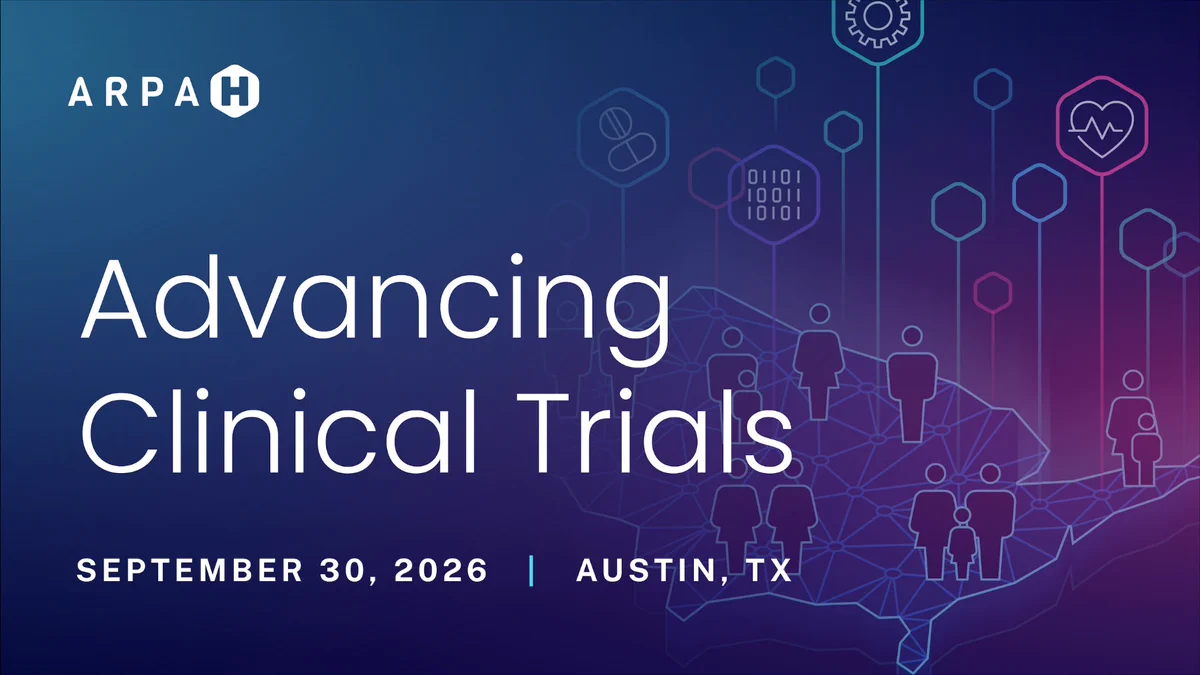
How ARPA-H is planning to cut clinical trial times from 10+ years to <4 years:
1. 'Phaseless' clinical trials - move towards replacing phase 1 → 2 → 3 with adaptive trials that can cut failed drugs (or advance good ones) faster.
2. Simulate trial outcomes before starting, with digital twins - to reduce reliance on large control groups.
3. AI agents for trial operations.
4. Turn ordinary hospitals into reusable clinical trial sites, and gets AIs to flag eligible trials to doctors and patients.


ARPA-H Advancing Clinical Trials Announcement teapaw.org/i/broadcasts/1vKpPNOwV…
James Ramey retweeted
In the AI-doomer argument, broad multidisciplinary thinkers like @sapinker have suggested the "kill-us-all" scenarios are preposterous. The AI researchers, that are most negatively outspoken, say that their voice should count more, because they are closest to AI and know what it can do.
Everyone watching this debate should read about Tetlock's work (see below). The generalists (foxes) and much better predictors than the specialists (hedgehogs) who are to close to the problem to accurately predict broader implications.
So "no points" for the "we know more" argument. In fact, it works against you.

“One of the main lessons to come out of Tetlock’s work is that the best generalist forecasters are usually better at telling the future than domain-specific experts, even when it comes to those experts’ areas of study. This is because forecasting itself is its own science that requires a unique way of thinking, and a person having a great deal of knowledge about a field is no guarantee that they have good epistemological habits. If you’re going to ask, for example, whether American democracy is falling apart, an expert might start by making a superficial comparison between the modern US and the Weimar Republic. Someone with a forecasting mindset would be more likely to begin with a question like “how often do advanced democracies slide into dictatorships?” The answer is not very often.”
Important reminder from @RichardHanania that domain experts are not the best at predicting what happens, even in their own domains.
open.substack.com/pub/richar…

James Ramey retweeted

One of the most interesting things about startups is that there are exceptions to practically every rule. E.g. it's bad to be a solution in search of a problem. Except .5% of the time it's good. The ultimate test of an investor is to see these exceptions.
James Ramey retweeted

The @BostonCollege Investment Committee (an LP and my beloved alma mater) asked for a few thoughts on what's happening in AI. I recorded a test run yesterday morning and then shared it with my partners, who encouraged me to share it more broadly... so here you go!
This is not a sales pitch, it's just a reflection on what we're seeing. And it wasn't intended to be shared, so please pardon the rough edges.
loom.com/share/c016702964a04…

James Ramey retweeted
Had an amazing time chatting with @gbrulte about LastFeet and solving the last 50' of package delivery. Thanks for having me on @RoadToAutonomy!
The last 50 feet is where delivery still breaks.
@Lee_Redden built @BlueRiverTech's See & Spray. Now he’s back with LastFeet, a custom quadruped made for van steps and doorsteps, not a dog robot with a box on it.
Day one it sits shotgun. Driver loads. Robot walks the package to the door.
Episode Chapters
0:00 Why Lee Redden Is Building Again
02:41 How the LastFeet Robot Works
04:56 How to Build a Robot in 2026
07:27 Testing in Snow and Ice
10:00 How the Robot Delivers to Every Doorstep
12:43 Riding in the Jump Seat of a Delivery Van
15:00 Manufacturing at Scale
18:46 Building for Rugged Delivery Vans
22:54 LastFeet Business Model
29:32 Battery Life and Charging in the Van
32:11 What Lee Learned Shadowing 50 Delivery Drivers
37:28 Safety and Building Trust With the Public
40:18 The Future of LastFeet
43:11 @AUTNMYAI

