

Founder/CEO of Regenerates: A Qrypto Qo-op—“Democratizing DeFi, ReFi, & RWA Tkzn” // Queer Anthro of blockchain, biomedicine, value, data, and social difference
Minneapolis, MN
Joined November 2010
- Tweets1.8K
- Following5.7K
- Followers499
- Likes2.7K




Pinned Tweet
"I didn't like modeling because you didn't need brains to do it. It's only going to last as long as you look good." ~ BETTY DAVIS
Kirk Fiereck retweeted

this is f*cking insane. Anthropic quietly dropped 532 free Claude plugins. Stripe, Shopify, Canva, HubSpot built them themselves
Dario Amodei (CEO of Anthropic) picked the 7 that replace an entire small-business team. every one is $0:
→ bookkeeper: QuickBooks. reads your P&L, chases every overdue invoice
→ payments: Stripe. ships checkout, subs and refunds inside your app
→ store: Shopify. 18 skills to build and run your whole store
→ designer: Canva. creates, resizes and brand-checks every design
→ sales: HubSpot. preps every call, writes your morning brief
→ lawyer: LegalZoom. flags risky clauses in your contracts
→ ops: Zapier. plugs Claude into 8,000+ apps
set it up in 5 minutes:
1. open Claude Code, type /plugin
2. search a tool you already pay for
3. hit install, log in once
4. give it one job in plain words: "chase every invoice older than 30 days"
start with one. the tool you open every morning saves you the most
$38,400 a month for a team or one person with 7 free plugins. which one are you installing first?
full breakdown below ↓


Kirk Fiereck retweeted

Police in India’s most populous state now track criminal evidence on Cardano.
Every scan and lab result is hashed on-chain, live on active cases in Uttar Pradesh.
Our new case study breaks down how @TrivolveTech built it. Check it out: cardanofoundation.org/case-s…

Kirk Fiereck retweeted

Crypto is just one application of blockchain.
Yet much of the conversation still treats them as the same thing. From verifiable public records to financial infrastructure, there's a much bigger story about what blockchain can offer businesses, especially as AI takes on more decisions.
I talk about this in my latest @ForbesTechCncl article.
forbes.com/councils/forbeste…

Major yes to "blockchain not (just) crypto"

Cardano: Let’s Talk About It
Over the past few days, there has been a lot of discussion about the future of Cardano.
This is amongst a super busy time between meetings and events all over the world from London to the US and Lisbon.
The discussions are about adoption, accountability, leadership, and the role of the founding entities.
I believe now is an opportune time to take a broader look at what is actually happening across the ecosystem.
In terms of technology, decentralization, and adoption in a rapidly changing world.
The Cardano I see today is fundamentally stronger, more decentralized, and more capable than the Cardano I came into over five years ago.
So from my perspective, as CEO of the Cardano Foundation, we, the Cardano community, together with our partners across multiple industries, have very good reasons to be excited about the future.
From decentralized infrastructure to decentralized technology
For many years, Cardano has been recognized for its decentralized network of stake pool operators.
But decentralization is about much more than the distribution of block production.
It is also about the diversity of the underlying technology, the distribution of knowledge and the ability of independent teams to maintain and evolve the protocol.
With Amaru in Rust and Dingo in Go, alongside the original Haskell implementation, we are entering a multi-client era.
Think about the significance of that.
Independent teams, using different programming languages and different engineering approaches, implementing the same protocol.
We are reducing technological dependencies, increasing operational resilience and creating new opportunities for developers to participate in the ecosystem.
This is a fundamental step towards making Cardano a truly decentralized digital infrastructure.
That’s something the entire community can and should celebrate.
An ecosystem that continues to innovate
Let's take a look at the ongoing innovation across the Cardano ecosystem. In recent years, we have:
- Decentralized on-chain governance and a community-governed treasury.
- Developed alternative node implementations through Amaru and Dingo.
- Aiken, making smart contract development more accessible.
- Hydra, creating new opportunities for high-performance applications.
- Mithril, enabling more efficient and trust-minimized access to the blockchain.
- Native cryptographic capabilities that enable privacy-preserving applications directly on Cardano.
- BLS signatures, enabling signature aggregation and more compact cryptographic proofs.
- An increasingly diverse ecosystem of developer tools, programming languages and infrastructure providers.
- Progress in interoperability, stablecoins, oracles and decentralized finance.
- Institutional recognition and the future of capital markets
Another milestone that I believe deserves considerably more attention is the introduction of ADA futures on CME.
The Chicago Mercantile Exchange is one of the most important financial market infrastructures in the world.
For ADA to become part of that environment is a meaningful development.
It provides institutional market participants with regulated instruments for price discovery, risk management, and ADA exposure.
Having spent a significant part of my professional life in traditional financial markets, I understand the importance of this development.
But there is something potentially even more significant happening on Cardano itself.
In October, we went live on mainnet with a new programmable token standard, CIP-0113.
And I believe this gives Cardano a significant competitive advantage in the emerging market for regulated digital assets, or in other words, tokenization of TradFi and RWA.
To understand why, let us look at what is happening on Wall Street right now.
Some of you may have seen the recent full-page advertisement in The Wall Street Journal:
“Your stock. Their tokens. Your problem.”
The advertisement triggered a significant debate across the financial industry about the tokenization of equities.
- Who actually owns the shares?
- Who has the authority to tokenize them?
- What rights does the investor have?
- Who can transfer them?
- And what happens when something goes wrong?
These are not theoretical questions. They are fundamental questions about property rights, corporate governance and the future architecture of global capital markets.
And while much of the financial industry is debating these questions, we already have technology live on Cardano that addresses many of them.
Our programmable token standard allows issuers to embed compliance requirements, investor eligibility, and transfer restrictions directly into native Cardano assets, with enforcement by the ledger itself.
When combined with verifiable identity, this makes it possible to maintain accountable ownership without compromising the benefits of a public blockchain.
Furthermore, the standard has been recognized by the Swiss Capital Markets and Technology Association, CMTA, as equivalent to its established smart contract standard for certification purposes.
And we, at Cardano, have gone beyond the theoretical.
We have already tokenized 850,000 shares in Veridian, an operating Swiss company, as legally recognized ledger-based securities under Swiss law.
These are not synthetic instruments.
They are not tokens that simply track the price of an underlying share.
They are actual equity securities designed to preserve shareholders' legal rights and the essential functionality of a conventional share register, while leveraging blockchain infrastructure.
That distinction is incredibly important.
We are not simply creating a digital representation of traditional finance.
We are building infrastructure that allows traditional financial instruments to exist natively in a blockchain environment.
And we are doing it on a public, permissionless and decentralized network.
Imagine what this means for the future of equities, investment funds, bonds, stablecoins and other regulated financial instruments.
The global capital markets represent an enormous opportunity for blockchain technology.
I believe Cardano is exceptionally well positioned to compete for a meaningful part of that opportunity.
And this is not a roadmap announcement.
The technology is live.
Adoption beyond speculation
When people talk about blockchain adoption, the conversation often revolves around TVL, transaction volumes, and token prices.
These are important metrics. We should not dismiss them.
But they are not the only measures of whether a technology is becoming relevant to society.
Look at what is happening in the real world.
The Police force in India is exploring and using blockchain technology to strengthen the integrity and verifiability of public records.
Across the world, we are engaging with financial institutions, international organizations, and educational establishments such as Petrobras in Brazil, FC Barcelona, and UCLA in the USA.
Through Masumi, we are seeing an entirely new economic infrastructure emerge around autonomous AI agents.
Through Veridian, we are addressing decentralized digital identity and verifiable credentials.
Through Reeve, we are demonstrating how financial information can move from being merely disclosed to being independently verifiable.
We are seeing new developments within tokenization, institutional-grade reinsurance, and real-world assets.
These are not simply attempts to replicate what other blockchains are doing.
They are genuine solutions built to address fundamental economic and societal problems using blockchain technology.
Of course, we need to translate more of these initiatives into production deployments, recurring transactions and sustainable economic activity.
But we should also recognize the progress that has already been made.
Building for the next twenty years
One question we should be asking ourselves is not just which blockchain is competitive today, but which blockchain will remain relevant twenty years from now.
Quantum computing is a very good example.
The emergence of sufficiently powerful quantum computers will fundamentally challenge much of the cryptography underpinning today's digital economy.
This is not exclusively a blockchain problem. It is a problem for banks, governments, telecommunications providers, and essentially every piece of critical digital infrastructure.
This is where Cardano benefits from years of expert research, formal methods and a deep understanding of cryptographic security.
Across the ecosystem, we are actively investigating post-quantum cryptography, understanding our exposure and exploring credible migration pathways. We have a strong scientific and architectural foundation from which to address this challenge.
When you are building infrastructure intended to last for generations, these things matter.
Cardano belongs to all of us
I welcome accountability. Every organization receiving or deploying significant resources within the ecosystem should be able to demonstrate the value it creates.
That includes the Cardano Foundation.
But no individual and no organization can single-handedly deliver the adoption of a decentralized global network.
Cardano's success will be the collective achievement of developers, entrepreneurs, researchers, stake pool operators, investors, institutions and the broader community.
We should spend less time debating Cardano's history and more energy making history.
Decentralization means that no single individual gets to decide when Cardano is finished.
Blockchain is not Crypto
I believe, at Cardano, we have the opportunity to build something that matters far beyond the cryptocurrency industry.
Something that can change how we establish trust, exchange value, verify information and build economic infrastructure.
We have more work to do.
We need to be more competitive.
But we also need to recognize how far we have come.
Cardano is more decentralized, more technologically diverse, and more capable than ever before.
Cardano is only getting started.


7
Yes! This is precisely why I decided to pivot into blockchain not (just) crypto. When I discovered theoretical debates about tokenization in 2022, I thought immediately that tokenization *when done right* (like this) can be a massive force for the democratization of DeFi globally
Don’t Tokenize for tokenization’s sake…
As well as celebrating bringing Cardano to the 75,000 @WebSummit attendees in Lisbon last week - this was just one of the other topics @Rachelwolf00 and I discussed when we caught up after my Fireside at the event.
Looking forward to a longer conversation to explore many more Cardano success stories with Rachel very soon.
5

Kirk Fiereck retweeted

Zellana

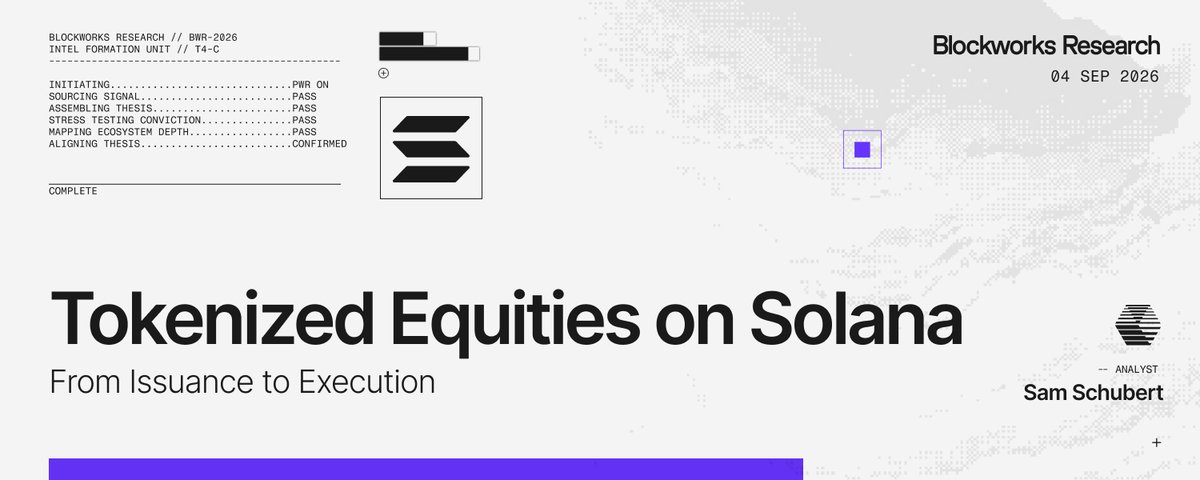
.@Zelle just showed its first CONFIDENTIAL BANK transfer on Solana
$1.25M in ZelleUSD sent bank to bank, and only Zelle and the receiving bank can see the amount
> Zelle moved $1.2T this year
> Backed by Chase, Bank of America, Wells Fargo, and more
> ZelleUSD lives on Solana
The biggest US banks payment network just picked Solana to go global

Kirk Fiereck retweeted

“Nobody’s messing around. This is not a pilot.”
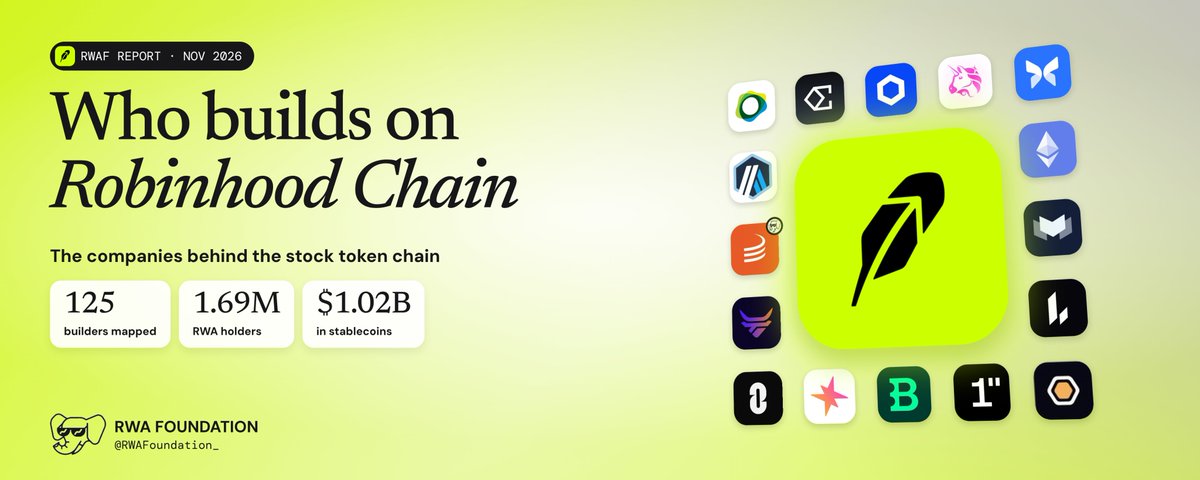
With the value of RWAS on @StellarOrg now hitting a cool $5B, we have to agree with @DenelleDixon . It’s definitely not giving pilot.
Catch @natashaghoskins full convo from Meridian with @DenelleDixon , CEO & Executive Director of @StellarOrg , at the link below ↓


He’s really “THE KLEPTO PRESIDENT” and it just happens that **this time** he used Crypto as the medium for theft. He’s never made his own money. He started with his father’s wealth and all of his ventures have long lists of people who he worked with on them who he stole from.


10




Kirk Fiereck retweeted

MAYBE I WAS WRONG ABOUT BLOCKCHAIN TECHNOLOGY
I wrote about how I always used to make fun of the guys who said things like "Bitcoin is speculative, but the underlying blockchain technology is interesting." And now I think maybe they kinda had a point.


When has meme coin anything been anything but a total Ponzi scheme? As a culture, crypto should excommunicate this type of protocol because its poisonous ☠️ blowback threatens sustainable democratization that decentralized crypto public blockchains might otherwise promise.
lol pump fun just got a community note added
as they burried the conditions of the referral bonus in the thread

1
3
30


Kirk Fiereck retweeted

A valid signature can show that a particular key signed a file and that the protected data has not changed.
But trust requires another question: Who controls that key?
When you first entered Web3 or crypto, how did you decide which people, communities, and projects deserved your trust? Looking back, what advice would you give someone beginning that journey today?
teapaw.org/NodleNetwork/status/21…
#NodleNetwork #TrustNetwork #Crypto101 #Web3Education #DigitalTrust


Impressive basis trade strategies for DemFi regenerates such as myself

Renzo Protocol is now Renzo Finance, a technology company building the tools, automation and infrastructure that advanced yield strategies run on.
Our new focus begins with a massive market and a new strategy that lets you earn perp basis yield - and keep it all.
2
20
Kirk Fiereck retweeted

Everyone talks about which crypto will dominate the next bull run.
But the bigger question is which blockchains are actually preparing for the quantum era?
I examined 28 projects and the differences are striking.
Let's break them down:
• @NEARProtocol ( $NEAR ): ML-DSA-65 account key rotation while retaining addresses.
• @Algorand ( $ALGO ): Falcon State Proofs and native Falcon-1024 accounts; consensus upgrades remain pending.
• @NervosNetwork ( $CKB ): Live SPHINCS+ lock, but classical signatures remain the default.
• @Tensorcash ( $TSC ): Optional ML-DSA-65 addresses; actual spending not yet demonstrated.
• @QRLedger ( $QRL ): XMSS signatures since 2018; Zond’s ML-DSA-87 validator design remains on testnet.
• @QuantusNetwork ( $QTC ): Launched September 2026 with ML-DSA signatures; 21M supply cap and 27% premine unlocking from September 2027.
• @PQabelian ( $ABEL ): Privacy-focused PoW chain using lattice cryptography, including Dilithium and Kyber.
• @cellframenet ( $CELL ): Falcon, Dilithium and SPHINCS+ support; mainnet defaults remain unclear.
• @Neptune_WEB3 ( $XNT ): Hash-based cryptography and zk-STARKs; security and governance concerns need verification.
• @ethereum ( $ETH ): PQ consensus research continues; major upgrades may take years.
• @trondao ( $TRX ): Falcon-512 and ML-DSA-44 on Nile testnet.
• @Zcash ( $ZEC ): Planned hash-based signature opcodes; shielded assets need separate migration.
• @SuiNetwork ( $SUI ): ML-DSA-65 accounts targeted for testnet by end-2026 and mainnet in Q1 2027.
• @Aptos ( $APT ): Accepted AIP-137 proposes SLH-DSA, with deployment not considered urgent.
• @tezos ( $XTZ ): Quantumnet testnet explores ML-DSA-44 accounts and hash-based attestations.
• @monad ( $MON ): Quantum-resistant account keys and consensus remain roadmap work.
• @QANplatform ( $QANX ): Dilithium cross-signing remains testnet-only in the collection.
• @MovaNAORIS ( $NAORIS ): PQ-focused security L1; reported mainnet access was invite-only, with cryptographic details needing verification.
• @qoneqtapp ( $QONE ): Falcon-based qVAULT protects assets inside the vault, not all HyperEVM accounts.
• @zksync ( $ZK ): STARK-based Airbender prover, but ECDSA accounts and a SNARK wrapper leave dependencies.
• @aztecnetwork ( $AZTEC ): Quantum-security roadmap awaited; no specific PQ migration established.
• @NexusMutual ( $NXS ): Security-focused architecture associated with signature chains.
• @_Qubic_ ( $QUBIC ): Quantum-computing-related ecosystem, with less direct PQC exposure.
• @mindnetwork_xyz ( $FHE ): Focuses on fully homomorphic encryption, not demonstrated native PQ signatures.
• @Amechainquantum ( $AME ): Smaller blockchain associated with PQ security claims.
• @GeeqOfficial ( $GEEQ ): Security-focused blockchain infrastructure.
• @qu_stream ( $QST ): Smaller project making quantum-hardness claims.
• @tidecoin ( $TDC ): Early hash-based post-quantum blockchain project.
—
As more projects or PQC protocols come up, I will be updating this series.
Happy to know others I might have missed.


Crypto spent years treating privacy and post-quantum security as two separate problems.
They are starting to converge.
Privacy protects what financial activity users expose today and Post-quantum cryptography protects whether those same users can still prove ownership if today's signature schemes eventually become vulnerable.
Bitcoin already has roughly 6.04M BTC sitting behind exposed public keys, equivalent to about 30.2% of issued supply.
No quantum computer can exploit those keys today. But the scale of that exposure shows why the next cryptographic transition is not simply about inventing better signatures.
It is about migrating trillions of dollars of existing ownership without breaking the systems underneath it.
—
● Privacy and quantum resistance protect different parts of the same financial system
Public blockchains expose enormous amounts of financial information. Balances, counterparties, transaction histories and capital flows can often be reconstructed directly from the ledger.
Privacy infrastructure tries to limit that exposure. Quantum security addresses a different problem.
Most major blockchains still rely on elliptic-curve cryptography for signatures. A sufficiently capable quantum computer running Shor's algorithm could theoretically derive a private key from an exposed public key.
So the two problems sit at different layers:
• Privacy: protects financial information
• Post-quantum security: protects control of the asset
The next generation of blockchain infrastructure increasingly needs both.
—
● The immediate quantum concern is signatures, not Bitcoin mining
Bitcoin's most important quantum vulnerability sits in its signature system.
Once a public key is exposed, a cryptographically relevant quantum computer could theoretically use Shor's algorithm to solve the discrete-log problem and recover the corresponding private key.
Hashing is different.
Grover's algorithm can reduce the effective security of hash functions, but it does not break them in the same way Shor's algorithm threatens elliptic-curve signatures.
That is why most post-quantum migration work is focused first on:
signatures -> authentication -> key exchange
rather than replacing proof-of-work itself.
NIST has already standardized ML-DSA for post-quantum digital signatures and ML-KEM for quantum-resistant key establishment, giving the broader industry a common cryptographic foundation to migrate toward.
—
● Bitcoin's harder problem is migration
The cryptography can be upgraded but existing ownership is much harder to move.
Glassnode estimates that roughly 6.04M BTC currently sits behind already exposed public keys.
That breaks down into approximately:
• 1.92M BTC in structurally exposed outputs
• 4.12M BTC exposed through wallet behaviour and key reuse
• Around 1.63M BTC of that operational exposure associated with exchanges
Another roughly 13.99M BTC remains unexposed at rest.
The operational portion can potentially be reduced through better wallet practices and migration. The structural portion is much harder.
• Some coins may belong to inactive users.
• Some keys may be lost.
• Some holders may simply never migrate.
So the challenge becomes less about creating a quantum-safe address format and more about what happens to legacy coins that never move.
That is ultimately a governance problem layered on top of a cryptography problem.
—
● BIP-360 is an early step, not the full solution
BIP-360 proposes Pay-to-Merkle-Root, or P2MR, as a new Bitcoin output type designed to reduce long-exposure quantum risk.
It removes Taproot's key-path spend, which exposes a public key directly, while preserving script-tree functionality.
That gives users a path toward outputs that are more resistant to attacks against long-exposed public keys.
But BIP-360 does not by itself introduce post-quantum signatures.
A sufficiently fast quantum attacker targeting a public key revealed while a transaction is waiting in the mempool would still require a separate solution.
So Bitcoin's transition is likely to happen in stages:
Protect long-exposed keys -> introduce quantum-safe signatures -> migrate active balances -> deal with unmigrated legacy coins
That final step may prove to be the hardest.
—
● The industry is preparing before the threat becomes practical
This work is happening years before a known quantum computer can break modern blockchain cryptography. That is deliberate.
Cryptographic migrations take a long time.
• Standards have to mature.
• Wallets need upgrades.
• Hardware needs support.
• Protocols need migration paths.
• Users then need enough time to actually move their assets.
Ethereum has already created a dedicated post-quantum security effort covering ECDSA account signatures, BLS validator signatures, KZG commitments and ZK systems.
Its roadmap includes leanXMSS for hash-based validator signatures and leanVM for aggregating those larger post-quantum signatures efficiently, with core post-quantum infrastructure targeted around the end of the decade.
The transition is therefore starting long before "Q-Day."
—
● Some networks are building post-quantum security in from genesis
@QuantusNetwork takes the opposite approach to migrating an existing chain.
Its mainnet launched on September 9, 2026 with a 21M QTC supply cap and post-quantum cryptography built into the network from the beginning.
Its stack uses:
ML-DSA -> transaction signatures
ML-KEM-768 -> encrypted P2P communication
Plonky2 + Wormhole addresses -> ZK-based private transfers
That last component is particularly interesting because it brings privacy and post-quantum design into the same architecture.
Funds can enter a Wormhole address and later exit through a zero-knowledge proof without revealing an onchain link between the source and destination.
Quantus says those proofs rely on hash-based constructions rather than quantum-vulnerable elliptic-curve pairings.
So the network is not simply replacing one signature algorithm. It is experimenting with an entire stack built around quantum-resistant ownership plus private transaction flow.
—
● Other networks are approaching different parts of the same transition
• @ethereum is working on migration across signatures, consensus, commitments and ZK infrastructure.
• @Starknet is built heavily around STARK-based proving and is exploring quantum-resistant account structures.
• @QRLedger was one of the earliest networks designed specifically around post-quantum signatures.
• @PQabelian combines privacy with post-quantum cryptography.
• @cellframenet focuses on quantum-resistant networking and infrastructure.
• @projecteleven is working around Bitcoin migration and cryptographic agility.
Then there is the privacy side.
• @Zcash uses zero-knowledge proofs and shielded transactions to protect financial activity.
• @MidnightNtwrk is building around selective disclosure and programmable privacy.
• @aztecnetwork pushes private state and execution into Ethereum.
• @AleoHQ builds around private execution and zero-knowledge verification.
• @RAILGUN_Project adds privacy directly to existing EVM environments.
These networks are not solving the same problem. But together they show how the cryptographic stack is beginning to move beyond the assumption that transparent execution + elliptic-curve signatures will remain the default forever.
—
● Privacy makes the migration problem even more interesting
The more institutional capital moves onchain, the less acceptable universal financial transparency becomes.
Institutions may need to prove:
• Asset ownership
• Solvency
• Eligibility
• Compliance
• Transaction validity
without exposing every position, counterparty or strategy.
That creates a broader architecture:
• Quantum-safe signatures : prove who can authorize
• Zero-knowledge proofs : prove that rules were followed
• Selective disclosure : reveal only what counterparties need
So future blockchain security may not simply mean stronger keys. It may mean being able to prove ownership and compliance while exposing less financial information in the process.
—
That is the larger cryptographic transition taking shape.
Crypto is gradually moving across three layers at once:
• Cryptography
Legacy signatures -> post-quantum authentication
• Privacy
Globally transparent activity -> selective disclosure and confidential execution
• Ownership
Legacy assets -> coordinated migration into new security models
Bitcoin's exposed supply shows why the third layer is particularly difficult.
A protocol can upgrade its code. It cannot automatically move coins belonging to millions of independent users.
That makes cryptographic agility, migration planning and privacy infrastructure increasingly interconnected.
The real test for crypto will not simply be whether post-quantum cryptography works.
It will be whether trillions of dollars of digital ownership can move into a new security model without breaking ownership, liquidity or privacy along the way.
