

Co-founder @hbr_pbc (YC S26), prev @janestreetgroup @verkadahq
Joined August 2012
- Tweets1.1K
- Following645
- Followers988
- Likes4.1K



Pinned Tweet
Hebbian Robotics has joined @ycombinator's S26 batch!
@brandon1 and I started @hbr_pbc because we believe the next generation of infrastructure will be built and maintained in places that are increasingly difficult for people to access safely and consistently: remote sites, subsea environments, orbit, and other demanding field conditions.
Our goal is to build human-like robots that can work alongside expert field teams to help construct, inspect, maintain, and repair the systems that communities and industries rely on.
YC will help us accelerate as we continue building toward that mission. Thanks @sdianahu for taking a chance on us!
We are grateful to the early believers who supported us when there was not much to show beyond conviction, early prototypes, and a lot of work ahead. Your trust, feedback, and encouragement have meant a lot.
There is still plenty to build, learn, and prove, but we are excited for what is ahead. We are grateful to be working with partners who share our mission in developing robotics to extend what humanity can do for the benefit of the communities they serve.

Kingston Kuan retweeted

Today, Dream Labs is coming out of stealth with Dream-1, a robot foundation model that controls bimanual robots it has never seen, on tasks it was never shown, in places it has never been, from $3/hour.
Dream API is live for everyone, today. 🧵
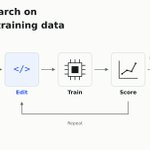
We’ve been using agents to train models on robotics data.
In this blog post, we share what we learned about data, evaluation, and equipping agents with the right tools to do research.
We also open sourced a short example you can run to try it out for yourself.

ALT Autoresearch loop on robotics training data


Training robotics models for humanoids has never been easier thanks to open source, LeRobot is killing it

Humanoids are coming to LeRobot! 🤖
Learn what you can do with the @UnitreeRobotics G1 in LeRobot, how to use @NVIDIARobotics SONIC, and which open-source humanoid hardware we currently support!
Read more in our latest blog: huggingface.co/blog/nepyope/…
Kingston Kuan retweeted

hosting an IROS happy hour with @kstonekuan and @hbr_pbc on mon 9/28, after 6pm.
if you’re excited about open source robotics, dm us! 🦾
Lots of people have been sending me this, very happy to see more work done in the robotics data quality space.
And an amazing contribution to open source!

We (@PantheonInc) have been working on a robotics data quality pipeline that uncovered a series of major problems in public robotics datasets, especially for world modeling.
To improve the quality of data available to open-source robotics, we're publishing annotations for four of the most popular datasets. Some examples of issues, and our report 🧵
Kingston Kuan retweeted
we wrapped up yc s26 last week and a friend asked what lessons are worth passing on. here is a cleaned-up version of my answer:
1. team - travel for conferences, live together, have fun together. the more cohesive you are, the better your odds of success
2. community - every founder is an expert in their industry. i'm constantly surprised by the lessons i get from hearing how they problem-solve, despite how different our industries are
3. walk your own path - there will be noise. choose what you stand for, but be mindful of the big picture

We're opening early access to Hebbian Robotics' custom models for robotics data quality control.
Built for the questions robotics data teams actually ask.
Are the wearer's hands in view? Is there active manipulation?
We want teams to evaluate them and shape what comes next.


As more robotics data is collected at scale, catching a bug in the video early (e.g. a hair across the camera lens) and giving the operator immediate feedback become critical to ensuring the quality of the data. It also happens to cost less than running a post-upload quality check.
Today the best available option for robot video quality control (QC) runs only after the task is completed. Record the episode, upload it, let Gemini Flash grade the file.
A strand of hair falls across the lens at second nineteen of the task, but the wearer keeps working for another five minutes. By the time the video is uploaded, the only decision left is whether to throw the episode away.
We set out to change this, training a fast fine-tuned model for robotics QC that matches Gemini 3-8 Flash's accuracy and runs on the stream as it records, today at 1 frame per second (FPS). Gemini 3-8 Flash tokenizes video at 1 FPS.
Gemini 3-8 Flash on low thinking costs $5.83 per video-hour, while our fine-tuned model costs $1.16, and less still when we catch the bug early. On an average 7.5-minute episode, that is 73 cents against 15 cents. This price differential compounds downstream.
In addition, a retake is cheap and a discard is not. That gap is what forces you to collect 1,500 hours to meet a buyer's 1,000-hour specification, and it doesn't scale as a vendor moves to 100K- and 1M-hour collections.
Dyna-2 pretrained on 1M hours of egocentric video, and the next rungs on that curve are 10M and 100M. Inspecting 1M hours for a single quality check costs $1.2M on our model and $5.8M on Flash. At 10M hours, $11.6M against $58.3M. At 100M, $116M against $583M.
In practice, a team runs ~7 checks, each tuned to their rig and their operation: overexposure, idle stretches where nothing is being manipulated, hands drifting out of frame. Every one of them is another parallel pass over the corpus. You can fold them into a single prompt, but at the expense of accuracy.
All of this is the QC bill alone, before accounting for other operational costs. Margins on ego data are already being squeezed, and we think a 10x faster, 8x cheaper inspection layer is what makes the unit economics work for even the largest data hyperscalers.
Today, there are many bottlenecks to scaling up the data robotics needs. Existing tools will not cut it, and our mission is to rebuild the ones that let robots learn from data at the scale general intelligence requires.
If your QC runs after the upload, let's chat.


Kingston Kuan retweeted
Most people I spoke with this past week are still missing the "why now" in robotics.
In 2025, AI in robotics still looked like a research problem. In 2026 it is showing "sparks" of intelligence, similar to the moment right before ChatGPT was released.
Here is what changed. A year ago, NVIDIA was among the first to publish studies that ran on ~20K hours of robot training data and found scaling laws, similar to those in LLMs, between data scale and robot task performance. This year, Dyna Robotics (Dyna-2) took the idea further, pretrained models on 1M hours, and found that the scaling law holds at that scale.
Why scaling laws matter: robotics has conventionally been costly and integrator-heavy, because every new task and every new site was a new project. With pretraining and scaling laws, a model that adapts to a new task and a new site in hours changes how quickly robots can be put into the world to do useful work.
This is why every frontier lab is suddenly talking about "few-shot learning". First coined in the LLM space, it now means robots need only a few hours of demonstrations, sometimes as little as 2 hours, to perform useful tasks in sectors where tremendous labor shortages already exist.
The point was actually never to replace people. There is a long list of sectors that cannot hire fast enough: cleaning, data center construction and maintenance, solar. Robots let a strained workforce keep delivering the services we take for granted.
Scaling laws only pay off if the ecosystem can actually produce the next order of magnitude of data. 1M to 10M hours is orders of magnitude more challenging, and getting the industry to this next frontier of intelligence requires infrastructure that has never existed before.
One such bottleneck, and one that Hebbian actively works on, is quality control. AI models in robotics are more sensitive to noise than LLMs, which is why quality control is a core component that every AI model training pipeline relies heavily on.
Inspecting 1M hours of video for quality today costs $5.8M on Gemini 3-8 Flash. These models were never built for the demands of robotics QC, but they are the best option available to the data hyperscalers.
What ends up happening is that these data teams can only afford to run partial quality control, and buyers reluctantly accept such quality because there is no better alternative. This means the industry today is forgoing model improvement experiments for lack of high quality data, inhibiting progress in robotics.
Vendors themselves collect 1,500 hours to meet a 1,000-hour delivery. This works today. It does not survive 1M and 10M hours.
I have tremendous respect for the teams going against all odds to get us to the next frontier of robotics intelligence: @MeckaAI, @buildpbc, @ropedia_ai, Praxis, @DeepReach_AI, @DatoricAI, Luel and @joinHandshake on data.
And for the great teams at @cosmic_robotics, Proprio and Neuromorphic, pushing the frontier of what deployed robots can solve in the real world.
We think data quality tooling is the underinvested piece of infrastructure. Our mission is to accelerate the data engine for robots to learn from data at the scale general intelligence requires.
If you're excited to see more AI in robots, reach out.
Kingston Kuan retweeted

For months I have been telling my robot friends "VLM is all you need" and everything else is an optimization. Evidence has been piling up lately.
This dramatically lowers the barrier to entry and people can build harnesses instead of infinity monthly training compute for demos.

GPT-6 Astra vs MediaPipe for 3D hand pose estimation
It looks like GPT-6 Astra is showing SOTA results in visual and spatial reasoning (mazebench) and can be used for labelling and annotating robotics datasets.
I tested this out against MediaPipe, which is a fast method for 3D hand pose estimation on egocentric data, but a known limitation is that it can’t be applied to gloves.
GPT-6 Astra was constrained to the same output schema as MediaPipe, then the results were visualized side by side.
High reasoning took 3 min per frame, while MediaPipe took only 20 ms per frame.

If you're QC-ing hand pose estimations for robotics data you should try hflow
github.com/Hebbian-Robotics/…

Kingston Kuan retweeted
As more robotics data is collected at scale, catching a bug in the video early (e.g. a hair across the camera lens) and giving the operator immediate feedback become critical to ensuring the quality of the data. It also happens to cost less than running a post-upload quality check.
Today the best available option for robot video quality control (QC) runs only after the task is completed. Record the episode, upload it, let Gemini Flash grade the file.
A strand of hair falls across the lens at second nineteen of the task, but the wearer keeps working for another five minutes. By the time the video is uploaded, the only decision left is whether to throw the episode away.
We set out to change this, training a fast fine-tuned model for robotics QC that matches Gemini 3-8 Flash's accuracy and runs on the stream as it records, today at 1 frame per second (FPS). Gemini 3-8 Flash tokenizes video at 1 FPS.
Gemini 3-8 Flash on low thinking costs $5.83 per video-hour, while our fine-tuned model costs $1.16, and less still when we catch the bug early. On an average 7.5-minute episode, that is 73 cents against 15 cents. This price differential compounds downstream.
In addition, a retake is cheap and a discard is not. That gap is what forces you to collect 1,500 hours to meet a buyer's 1,000-hour specification, and it doesn't scale as a vendor moves to 100K- and 1M-hour collections.
Dyna-2 pretrained on 1M hours of egocentric video, and the next rungs on that curve are 10M and 100M. Inspecting 1M hours for a single quality check costs $1.2M on our model and $5.8M on Flash. At 10M hours, $11.6M against $58.3M. At 100M, $116M against $583M.
In practice, a team runs ~7 checks, each tuned to their rig and their operation: overexposure, idle stretches where nothing is being manipulated, hands drifting out of frame. Every one of them is another parallel pass over the corpus. You can fold them into a single prompt, but at the expense of accuracy.
All of this is the QC bill alone, before accounting for other operational costs. Margins on ego data are already being squeezed, and we think a 10x faster, 8x cheaper inspection layer is what makes the unit economics work for even the largest data hyperscalers.
Today, there are many bottlenecks to scaling up the data robotics needs. Existing tools will not cut it, and our mission is to rebuild the ones that let robots learn from data at the scale general intelligence requires.
If your QC runs after the upload, let's chat.
What does quality control actually look like for egocentric data used to train robotics models?
QC often needs to run automatically in the background, so it’s hard to visualize what gets flagged. Most datasets you see online have already gone through extensive post-processing, up to 3x the cost of collecting (@SkildAI S1)
Grid AI shared some samples before any post-production. We ran one through HFlow’s built-in checks and visualized the results below.
Three patterns flagged:
1. Both hands out of frame → trim affected segments or improve collection guidelines.
2. No active manipulation between tasks → segment the video into useful task clips.
3. Shakiness during a camera adjustment → stabilize digitally where appropriate, or improve how the camera is secured.
These checks help teams decide what to keep, what to process, and what to improve in the next round of collection.
Skild AI S1 Blog: skild.ai/blogs/s1
Grid AI Samples: huggingface.co/datasets/arya…
HFlow GitHub: github.com/Hebbian-Robotics/…

We just added native LeRobot Dataset v3 import support to HFlow.
HFlow uses MCAP as its canonical format and required users to handle conversion, but you can now import @LeRobotHF datasets directly without additional converters.
Any other formats we should support natively?
