

Entrepreneurial task handler. Always Motivated to solve problems. Proud dad. Chelsea is my team. #KTBFFH |https://xitter.cf/t.co/WKkClffPVZ | https://xitter.cf/t.co/ScoYGFmEfI
Warrington, England
Joined November 2010
- Tweets9.8K
- Following1.7K
- Followers2.7K
- Likes6.1K










Pinned Tweet
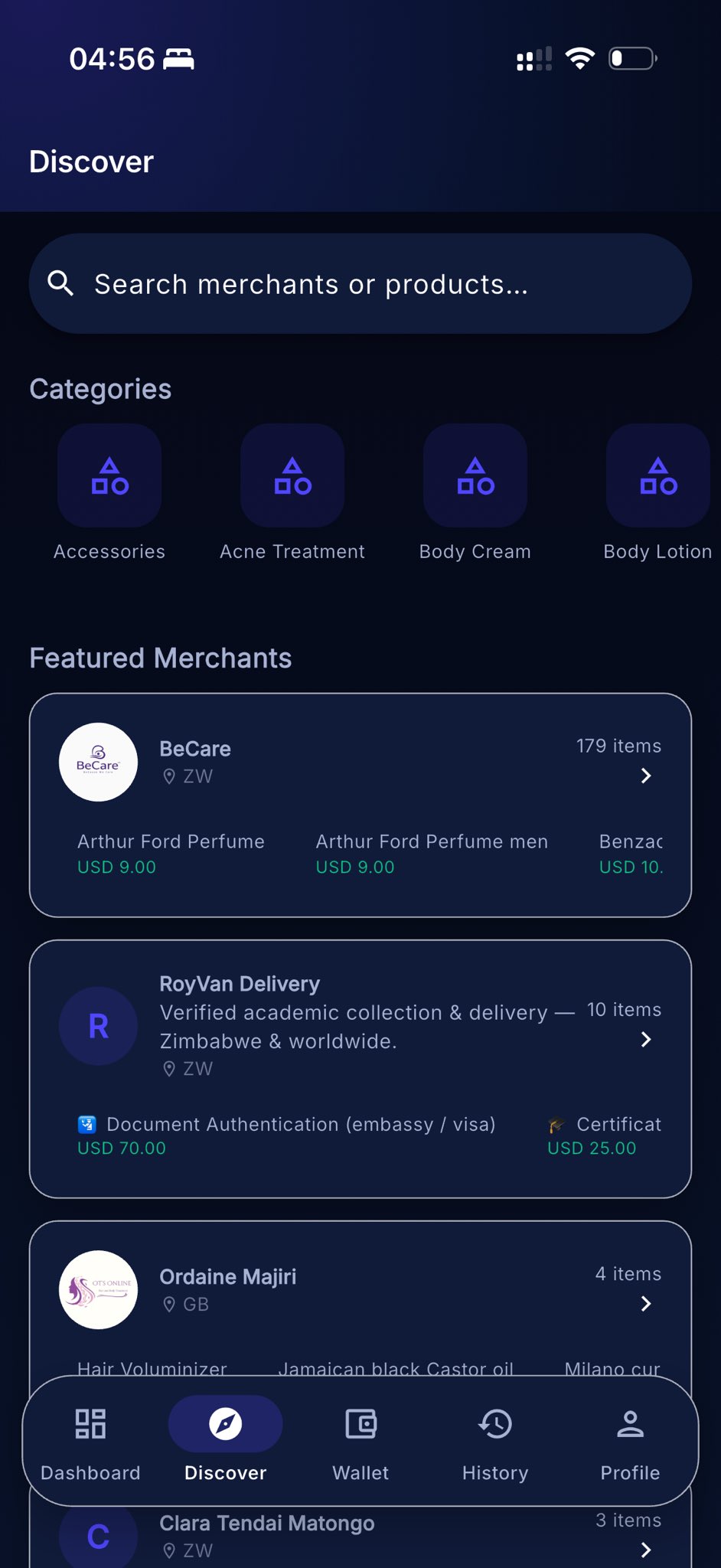
Download UZA by KMG and do more for yourself and your family back home.
With UZA, you can:
💳 Access Buy Now, Pay Later (BNPL) where eligible
🛍️ Discover merchants already selling on our marketplace
📦 Buy products and have them delivered to your relatives across supported African markets
🇿🇦 Send loved ones in South Africa Uber, Uber Eats and other digital vouchers
🇿🇼 Coming soon: pay for your relatives’ bus fares in Zimbabwe directly through UZA
💰 Resell products and services and earn commissions
We’re building UZA around a simple idea: instead of only sending money home, pay directly for the things your family actually needs.
📱 Android:
play.google.com/store/apps/d…
🍎 iOS:
apps.apple.com/gb/app/uza-by…
🌐 Register:
kmgvitallinks.co.uk
💬 WhatsApp:
+44 7387 111817
wa.me/447387111817
UZA by KMG — Pay. Buy. Send. Sell. Earn.
#UZAByKMG #KMGVitalLinks #Diaspora #Africa #Fintech #DigitalPayments #Ecommerce #BNPL

In the past 48 hours, there have been significant developments in the realm of cybersecurity, raising concerns about the safety of various programming languages and platforms.
The incident involving PHP, Node.js, Google Cloud, and Railway has highlighted vulnerabilities that seem to have been compromised. This has been further exacerbated by the storm 0940 threat attack, which has added to the complexity and severity of the situation.
We are currently experiencing a cybersecurity crisis of unprecedented speed and scale, making it challenging to manage and control. The uncertainty surrounding the current state of security leaves many questioning whether we still have control over our digital infrastructure.

Rickred07 retweeted

Organising ZESA? Check the meter account and delivery details before payment. This illustrative Tayari chat shows those checkpoints. What would you want confirmed first?
Demo data; availability varies. kmgvitallinks.co.uk
Rickred07 retweeted
Start with the service you need. Keep recipient details ready and read the summary before authorising payment.
wa.me/447916687285
🤖 Made with AI

Rickred07 retweeted
Life keeps moving. Gift cards, everyday services, business tools and the journeys we are building next. What would make your day simpler? Availability varies by market; previews are labelled. #KMGVitalLinks
🤖 Made with AI
Rickred07 retweeted
Buying a gift card across borders? Check region, currency and redemption terms before choosing the amount.
kmgvitallinks.co.uk?utm_sour…

Rickred07 retweeted
Virtual cards are back on Uza for Zimbabwe and other supported markets! 🌍
Next: delivery-partner and restaurant services, starting in northern England.
Explore Uza: kmgvitallinks.co.uk
Card eligibility and terms vary by market.
#UzaByKMG


Virtual cards are back. And we’re building the next chapter of @TayariByKMG.
Customers in Zimbabwe and other supported markets can once again explore virtual cards through Uza by KMG for eligible online purchases.
Download on Android and IOS Uza, select your actual country of residence and review the cards available to you. Before purchasing, check the card’s currency, fees, expiry, spending limits and merchant restrictions. Different markets have different card options, and acceptance depends on the merchant and issuer’s terms.
Thank you to everyone who has been waiting for their return. Your patience and feedback matter as we continue improving the experience.
We’re also introducing delivery-partner and restaurant services, with an initial rollout planned for northern England Warrington and Manchester to be specific.
This next step brings a local dimension to our work: connecting customers, restaurants and delivery partners alongside the digital services already available through KMG.
If you operate a restaurant, manage a restaurant chain or are interested in becoming a delivery partner in northern England, we’d welcome a conversation as we prepare the rollout.
Launch locations, availability and onboarding details will follow.
Explore Uza by KMG:
kmgvitallinks.co.uk
For partnership enquiries:
[email protected]
#UzaByKMG #KMGVitalLinks #VirtualCards #Zimbabwe #NorthernEngland #DeliveryPartners


Government needs to be careful not to turn every small economic lifeline ordinary Zimbabweans find into another revenue collection point.
There is nothing wrong with regulating Bolt, inDrive and other e-hailing services. Driver vetting, vehicle fitness, insurance, passenger safety, platform accountability and taxation are all necessary.
But regulation must start with the problem Zimbabweans are trying to solve.
Our public transport system is inadequate. Harare’s own planning documents acknowledge shortages in formal public transport, while thousands of illegal mushikashika vehicles have emerged to fill the gap. Zimbabwe also continues to record thousands of road accidents, injuries and deaths every year.
People did not suddenly fall in love with e-hailing apps. They use them because they are often more predictable, convenient, traceable and, on some routes, cheaper than traditional alternatives.
E-hailing has its own safety problems too. Drivers have been robbed and attacked, and passengers have raised serious safety complaints. Those are reasons for better regulation, not reasons to suffocate the industry.
Use this 5-month moratorium properly:
Fix public transport.
Improve road infrastructure.
Strengthen driver and passenger verification.
Require proper insurance and roadworthy vehicles.
Introduce emergency and incident-reporting standards.
Protect drivers from robbery and passengers from abuse.
Consult drivers, passengers and platforms.
Then develop a proportionate tax framework.
The first question should not be, “How much tax can we collect from e-hailing?”
It should be, “Why have so many Zimbabweans become dependent on e-hailing in the first place?”
Government should regulate innovation so that it works better for ordinary people, not regulate it until they can no longer afford to use it.

E-HAILING SERVICES GET 5-MONTH MORATORIUM AS GOVERNMENT MOVES TO REGULATE INDUSTRY
The Government recognises that e-hailing apps (like Bolt, In-Drive, and others) are giving people cheaper, easier rides and creating jobs for young people.
However, there have been problems with how these companies are managed, making it hard for them to operate smoothly.
To fix this, the Government has approved a 5-month pause (moratorium) on new rules while they figure things out. During this time:
· Drivers and companies must start creating their own safety rules.
· All businesses must register for taxes with ZIMRA.
After the pause, the Transport Ministry will create new, permanent rules based on global best practices. The final goal is to make sure e-hailing services are safe, affordable, and reliable for everyone.


There’s nothing particularly noteworthy to discuss.
Chelsea’s performance was poor. They failed to create any impact and convert chances. Their midfield lacked the creativity and intensity needed to drive the game forward.
We’re lacking depth and intensity throughout the team, particularly on the defensive side. Many players feel like passengers, especially in defence.
We’re far from being competitive in the league or for big games. This club isn’t giving us the confidence we need.
There aren’t enough resources to fill the gaps. James’s injury has highlighted a significant gap even though he’s being played out of his position. We’ve been playing awful today.
Disappointed is an understatement; I’m utterly disgusted by today’s performance. @ChelseaFC, we need to do better. This is unacceptable.
Zimbabwe doesn’t have a savings culture problem. It has a financial architecture problem.
We keep announcing new savings instruments while ignoring the environment people are expected to save in. Roughly half of adults still do not have a financial account, while the World Bank says 80% of Zimbabweans work in the informal sector, with median earnings of about US$130/month.
Then we expect that population to navigate heavy KYC, formal income requirements, bank charges and documentation designed around a largely formal economy.
Now add taxation. In 2026, IMTT is 1.5% on ZiG electronic transactions and 2% on foreign-currency electronic transactions. Where that tax applies, a digital stokvel can face friction when money enters, moves and is eventually paid out, before the savings have even had an opportunity to meaningfully compound.
Add wallet fees, banking fees and cash-out costs and suddenly cash, ma-rounds and informal saving become economically more attractive than the formal digital product policymakers claim they want people to use.
That is the contradiction.
You cannot promote financial inclusion, formalisation, fintech and a cashless economy while continuously increasing the cost and complexity of entering and moving money through the formal system.
Zimbabweans already know how to save. Digital stokvels, mukando and similar fintech products could thrive because the behaviour already exists.
The problem is not demand. It is access, trust, taxation, KYC friction and an ecosystem that still makes informal finance easier than formal saving.
Until those fundamentals change, launching another savings instrument means very little to the majority of people it is supposedly designed to serve.

@FNBSA Digital Stokvel is essentially a digital version of the traditional stokvel. Instead of collecting cash and keeping records manually, members can contribute money into a shared digital savings account, with contributions and balances managed digitally.
WE NEED THIS IN ZIM
Zimbabwe’s new vending policy deserves serious scrutiny.
Government has now restricted LEGAL vendors to 6am-6pm in CBDs and 6am-8pm in residential areas across all 92 local authorities.
The problem is simple: for many vendors, 5pm-8pm is peak business. That is when workers leave offices, commuters head home and customers actually have time to buy.
And this is not a marginal sector.
ZimStat found 76.1% of establishments are informal. The World Bank estimates informal output at around 60% of official GDP, and its September 2026 Zimbabwe update says roughly 80% of Zimbabweans work informally.
So when Government restricts trading hours, it is regulating the livelihood of the majority, not a fringe activity.
Yes, cities need order. Pavements cannot be permanently blocked. Food safety, waste management, sanitation and security must be regulated.
But why is the solution to shorten the working day of someone who is already legally registered?
Provide designated sites. Install lighting and toilets. Collect refuse. License traders. Police genuine crime. Allow regulated evening trading where demand exists.
Even Zimbabwe’s Constitution protects the right to carry on a trade, while requiring administrative measures to be reasonable and proportionate. Section 24 also calls for the removal of restrictions that unnecessarily prevent people from engaging in gainful economic activity.
Formalisation should make it easier to trade legally, not formalise someone today and then tell them tomorrow that they cannot trade when their customers are available.
That is the concern with this approach: regulation is necessary, but regulation without economic reality can simply push lawful economic activity back underground.


You are spectacularly missing the point. Drive your argument without insulting me.
“The one who pays calls the shots” is not parenting. It is ownership mentality.
Murikuitisa vana venyu zvamakatadza imi. Just because you wanted to become a lawyer, doctor, engineer or whatever else does not mean your child inherited your unfinished ambitions.
A parent’s responsibility is to provide, guide, expose, advise and protect, not to purchase control over another human being’s future.
Paying school fees, buying food and putting a roof over your child’s head are parental responsibilities. They are not shares in a company that give you controlling voting rights over your child’s life.
And this mentality of “I pay, therefore I decide” is precisely how some parents manufacture deeply unhappy adults who spent half their lives pursuing careers, relationships and lifestyles chosen to satisfy their parents.
Listen to your children. Guide them. Correct them when necessary. But understand that they are individuals with their own gifts, interests and aspirations.
The fact that you genuinely believe financing your child’s upbringing gives you an ultimate right to dictate their destiny tells me everything I need to know about your understanding of parenting.
And calling other people’s children “stupid” because their parents allow them a voice doesn’t strengthen your argument. It just exposes how intellectually bankrupt it is.
Anyway, handitambe nemi cde. Kana parenting yenyu iri dictatorship because “ndini ndinobhadhara,” enjoy your little government at home. 😂
But please excuse yourself from my opinion.
