


Len retweeted

IRAN WAR ANALYSIS: With the Quadrilateral summit taking place today between Iran, Saudi Arabia, Pakistan, and Turkey, many people are hoping that this will bear fruit towards a potential peace deal between the United States and Iran...
It ain't happening.
First and foremost, the ONLY way that Iran would possibly consider letting President Trump off the hook prior to the US Midterm elections is if President Trump made a concession that was TRULY irreversible for Iran. This is because Tehran is well aware, through repeated American reversals and strikes in the midst of negotiations, that there is an extreme likelihood that after the midterms...
Trump would just go back to war anyways.
As a result of this, the ONLY way that I could see the Iranians making any kind of deal with the United States to avoid a return to all-out war and escalation is IF the United States coughed up an ENORMOUS amount of cash and gold to Iran, to be delivered PHYSICALLY into the Iranian Central Bank. Irreversible. No getting it back.
... I don't find that terribly likely. But without an irreversible and SIGNIFICANT concession from the US, Iran would be foolish to take Trump on trust that he will stick to his word on any deal. See: MOU.
But beyond this, there is also the Israeli perspective that needs to be addressed.
Listen to the rhetoric coming from Bibi Netanyahu about how he, and to be honest, many Israelis view this war. It's existential. It's the last chance Israel will ever have to secure the Greater Israel Project, their regional hegemony, to even HOPE to avoid a complete and total collapse of their relationship with the United States in the decades to come.
Israel has no INTENTION of allowing the United States and Iran to make a deal. We saw this during the Memorandum of Understanding when the Israeli Lobby, the Iran Hawks, and the Neocons FLOCKED to Fox News and Newsmax to rip Trump to SHREDS about signing the MOU.
The MOU fell apart because, despite my best efforts and op-ed in The Hill advocating for Trump to NOT do it, the United States revoked the Iranian oil sanctions waiver and imposed an escrow account under the amended General License X-1.
How can I prove that it was the Israeli Lobby that advocated for this and pressured Trump behind the scenes? Because Mark Dubowitz, the CEO of the Israeli-First think tank The Foundation for Defense of Democracies, and Miad Maleki, a Senior Advisor for the Foundation for Defense of Democracies, published an op-ed in The New York Post entitled, "Iran deal tosses a tremendous cash lifeline to terrorist regime". In this piece, Dubowitz and Maleki say that (falsely) Iran will get an ENORMOUS windfall from these oil sanction waivers, and therefore, we must attach escrow mechanism that completely destroy any and all value they provide to Iran.
I published a rebuttal in The Hill entitled, "The backlash to Iranian oil sanctions relief misses the point" where I argued (correctly) that Maleki and Dubowitz are idiots, and revoking or attaching non-starter escrow account mechanisms will destroy the MOU.
I was right. Again.
Israel has no INTENTION of letting the United States reach a deal with Iran. They played Trump like a FIDDLE to get the US into this war of choice, and they are going to fight like HELL to keep America trapped in another Middle Eastern forever war. Regardless of the costs.
While I would love to believe that this Quadrilateral Summit between Iran, Saudi Arabia, Pakistan, and Turkey will yield a framework in which the United States and Iran can agree to terms that will avoid catastrophic and reckless destruction of the global economy...
Not likely.

a very interesting and well constructed note on the KSA and admission that it faces collapse due to its inability to counter the Yemeni capacity for destruction.

انتهى الاجتماع الرباعي في طهران بين تركيا وباكستان وإيران والسعودية.
لمن يتساءل عمّا حدث، فمن الواضح لي أن السعوديين ذهبوا إلى طهران حاملين عرضاً يتضمن تنازلات كبيرة للإيرانيين، مقابل التوسط لدى أنصار الله لوقف هجماتهم على السعودية، والحصول على ضمانات بإبقائها خارج نطاق الرد الإيراني في حال أقدمت الولايات المتحدة على قصف منشآت الطاقة الإيرانية.
ولكن إيران لن تقدم شيئاً ملموساً للسعودية إلا إذا تضمن العرض السعودي تنازلات استراتيجية حقيقية، تبدأ بسحب القواعد العسكرية الأمريكية من منطقة الخليج، وتنتهي ببناء تحالف أمني إقليمي تعترف فيه دول الخليج بسيادة إيران الكاملة على مضيق هرمز، وبحقها في نقض أي وجود عسكري أجنبي في الخليج.
باعتقادي، هذا الاجتماع عنوان لمرحلة جديدة في المنطقة، تتلخص باعتراف خليجي واضح بأن إيران أصبحت سيدتهم الجديدة، وأن عليهم التفاهم معها لضمان أمنهم واستمرار دولهم.
ولكن هنا تكمن المعضلة السعودية. فالسعوديون مطالبون بالتعقل والتفاهم مع إيران بما يضمن مصالحهم، بعيداً عن الأمريكيين، بينما هم في الحقيقة لا يمتلكون الاستقلال السياسي والعسكري الذي يسمح لهم باتخاذ مثل هذا القرار بحرية.
ولفهم هذه المعضلة، يكفي العودة إلى تاريخ الهند تحت الاستعمار البريطاني. فقد كانت هناك مئات الإمارات والممالك التي يحكمها الراجات والمهراجات والنواب، مثل حيدر آباد وكشمير. وكانت لهذه الممالك قصورها وحكامها وجيوشها وإداراتها الخاصة، وتبدو وكأنها دول مستقلة، بينما كانت بريطانيا تتحكم في علاقاتها الخارجية وتفرض عليها سيادتها العليا.
والأمر نفسه حدث في مصر بعد الاحتلال البريطاني عام 1882. فقد بقي الخديوي على عرشه، واستمرت الحكومة المصرية في ممارسة مهامها، ولكن القرار الحقيقي في القضايا الكبرى كان بيد البريطانيين.
وهكذا هي طبيعة العلاقة بين دول الخليج والولايات المتحدة. فالاستقلال الشكلي ووجود الحكومات والجيوش والأعلام لا يعني بالضرورة امتلاك السيادة الحقيقية، خصوصاً عندما تكون الدولة عاجزة عن اتخاذ قراراتها الأمنية والعسكرية الكبرى بمعزل عن إرادة القوة الأجنبية التي تعتمد عليها لحمايتها.
وهنا مأزق السعودية تحديداً. فهي تريد التفاهم مع إيران لإنقاذ نفسها من حرب قد تدمر منشآتها النفطية واقتصادها، ولكن هذا التفاهم سيصطدم بالضرورة بالمصالح الأمريكية، لأن ما تريده إيران يتعارض جذرياً مع استمرار الهيمنة العسكرية الأمريكية على الخليج.
السعودية عالقة بين نارين: نار إيرانية قد تحرق منشآتها النفطية إذا استمرت في الارتهان للأمريكيين، ونار أمريكية قد تواجهها إذا قررت الخروج عن إرادة واشنطن والتفاهم مع طهران.
والمشكلة أن السعودية أمضت عقوداً تبني أمنها على الحماية الأمريكية، لتجد نفسها اليوم أمام تحول هذه الحماية إلى السبب الذي يعرض وجودها للخطر.
lots of information wrt Chagos etc that i simply don’t have the inclination to check every detail.
However what concerns me is the fact that Powell is still sitting next to the U.K. PM as key National Security adviser. Has he been checked out by the appropriate agencies and given a 100 percent Ok for such ongoing activity.
As for the Chagos saga - could there be any legal consequences linked to conflict of interests or payments for advisory?

Why were Jonathan Powell, Peter Mandelson and Lord Hermer appointed without vetting?
The answer is that Chagos was a deal Starmer couldn't refuse to make.
Here's a timeline of the key stages of the Chagos treachery.
In 1982, after it became known that the Chagos seabed may contain vast mineral wealth, Mauritius set up a select committee to examine the matter.
However, sea-mining technology was in its infancy, and it was too expensive to be commercially viable at that time.
In 2003, as underwater mining technologies advanced and the value of minerals and rare earth elements soared, mining the Chagos seabed became an exciting possibility again; Mauritius appointed the eminent international barrister Sir Ian Brownlie as advisor for the Chagos Archipelago.
A former member of the Communist Party of Great Britain, Brownlie was a good friend of Sir Satcam Boolell, a former Labour deputy prime minister of Mauritius, and High Commissioner in London.
In 2009, Brownlie led the first Mauritius delegation to the Foreign Office in London seeking a Chagos deal.
Among the delegation was Sir Satcam Boolell's son Satyajit, who became Mauritius Director of Public Prosecutions the same year.
In 2010, after Brownlie died in a motor accident in Egypt, Sir Keir Starmer’s “great mate”, Philippe Sands, a leading human-rights lawyer who has publicly boasted of humiliating the UK in international courts, took over as counsel to Mauritius for Chagos.
In 2013, Satyajit Boolell invited Keir Starmer, whom he had become friendly with during Starmer's time as the UK's DPP, to a legal conference at the 5-star Balaclava resort in Mauritius.
During the trip, Starmer discussed the future of the Chagos Archipelago with then Mauritius prime minister Navin Ramgoolam.
After Starmer’s 2013 visit, Ramgoolam wrote that he and Starmer were aligned over Chagos.
In 2015, Ramgoolam was arrested on money-laundering charges when large sums of cash in foreign currencies, suitcases full of brand-new luxury watches, and blank British visas were found in his home.
Also in 2015, Starmer was elected to the British Parliament.
In 2019, Philippe Sands, after a campaign of lobbying the UN, obtained an International Court of Justice ruling (advisory opinion only, and non-binding) that the Chagos islands should be given to Mauritius.
Sands used the ICJ ruling as leverage in the following years in his efforts to persuade the Conservative government to give Chagos to Mauritius.
In 2020, Starmer became leader of the Labour Party.
In 2021, Sands received Mauritius' top honour, The Most Distinguished Order of the Star and Key of the Indian Ocean.
In 2022, Sands made an unauthorized entry into the Chagos Archipelago for a flag-raising ceremony. Sands tweets at the time, “It’s morning on Chagos, where the flag of Mauritius flies."
In 2023, Sands became a Mauritius citizen, but retains his British and French citizenships.
🧧In November 2023, David Cameron replaced James Cleverly as Foreign Secretary and, with the support of other senior Tories, stopped a Chagos deal saying, it’s not in the national interest, as reported in Hansard.
In July 2024, Starmer became UK Prime Minister and just ten weeks after entering Downing Street, he agreed a deal with Mauritius, despite there having been no mention of Chagos during the election campaign, and the Labour manifesto pledging to protect the BOT.
in November of 2024, Ramgoolam was elected Mauritius prime minister again after a snap general election, and took over from the incumbent PM, Pravind Jugnauth, to lead the Chagos negotiations with the UK.
In December 2024, after 14 years in the role, Philippe Sands steps down as Mauritius counsel for Chagos.
In January 2025, Attorney General Lord Hermer recused himself from signing off on the Chagos deal, and declined to say why.
In February 2025, Jugnauth was arrested on money-laundering charges after large sums of cash in foreign currencies and suitcases full of brand-new luxury watches were found in his home.
In May 2025, twelve years after discussing the future of Chagos in Mauritius, Starmer and Ramgoolam sat down in London to sign the treaty that transfers the archipelago's sovereignty to Mauritius.
The Fall Out.
The Chagos deal does🟥NOT secure the joint UK/US military base on Diego Garcia.
The deal operationally hobbles the base, and increases the dangers to the British and American military personnel, and the civilians who work there, and in the wider Central Indian Ocean region.
Diego Garcia's remoteness made it easy to defend in the past. This deal leaves the base horribly vulnerable to the growing threats posed by the new longer-range missiles, and more sophisticated and lethal drones.
When Keir Starmer, Lord Hermer and Vijay Rangarajan, the Director General at the Foreign, Commonwealth & Development Office, made the deal it was fully understood that the outer islands of the Chagos Archipelago were by far the best locations to deploy early warning, and air-defense systems, to protect the main base from missile and drone attacks.
Yet they still decided to lease only Diego Garcia.
Andy Burnham, Foreign Secretary Ed Miliband, and Defense Minister Wes Streeting, know the deal increases the dangers to the lives of British service personnel, and our NATO allies personnel, in the strategically important Central Indian Ocean region.
To double down and push the deal with that knowledge is a shameful act of betrayal.
While the deal leaves Diego Garcia vulnerable to attack, it also renders the base itself ineffective and operationally hobbled.
Mauritius is a signatory of the Pelindaba African Weapon-Free Zone Treaty which bans all nuclear weapons from treaty members' territory.
Pelindaba gives each of the more the 40 countries who have signed it the right to inspect the facilities on Diego Garcia if they suspect nuclear arms are being stored there.
The UK's nuclear-armed Trident submarines will no longer be able to enter Chagos waters, or visit Diego Garcia which is the only island in the region which has suitable anchorage and facilities for maintenance and restocking provisions, etc.
The US's nuclear-armed submarines, ships, and planes will also be banned from Diego Garcia and the Chagos Archipelago's waters.
Mauritius gets complete sovereignty over everything, including control of the airspace above the Chagos Archipelago, which at 250,000 square miles is the same size as France.
The implications of controlling such a vast area of airspace in a strategically vital region are huge.
Mauritius has shown it will ban planes entering its current airspace when China asks.
The Chagos Deal does not ‘secure the base’. It methodically destroys every element required for operations. The text and annexes state it will:
❌Constrain future Ops and use of the base
❌Prevent the placing of sensors and other maritime installations
❌Require us to sight our foes on defence planning
❌Mean we’re unable to use our preferred contractors
❌See us lose of control over electromagnetic spectrum.

Len retweeted
You misspelled “Russia”.

Len retweeted

The UK government has, since April, spent no less than £61 billion - that’s £61,000,000,000 - on debt interest payments.
That’s equivalent to our entire annual defence budget - on just half a year’s worth of debt service costs, not paying back a penny of our national debt.
For £61bn you could build 40 state-of-the-art hospitals.
Or employ 100,000 nurses for a decade
Or fund free-at-the-point-of-use social care, across the entire UK, for three years.
Watch this short “When The Facts Change” video for more on the UK’s soaring debt interest bill - the biggest national scandal our mainstream media continues to ignore.

who can possibly trust Trump?

In much of the world, trust in America is collapsing.
President Trump believes he is making America's allies support themselves and pay their own bills. But he may instead end up making them build their own nuclear bombs.
My latest column:
washingtonpost.com/opinions/…

sadly a fact

"Trump’s consistent indulgence of Vladimir Putin has been slavishly supported by the great mass of the Republican Party in both Houses. Not a single member of the administration has dissented, let alone resigned over it."
Read why Dominic Lawson believes "a lust for proximity to power has seen supposedly principled conservatives betray their country"🔗
telegraph.co.uk/news/2026/10…

yes it’s power and cooling - as a good engineer will know!
On the moon? maybe best?
as for the Musk business?
if governments outside the USA start to avoid use of starlink and tesla tech - etc etc - canada ? norway? etc etc then cash flow might be impacted?

SpaceX is on track to make $1 TRILLION per year.
But Elon says the constraint is “more in power and cooling and infrastructure than it is in chips.”
6 stocks that get paid when SpaceX builds:👇
1. Super Micro ( $SMCI ) - $35.57
Len retweeted
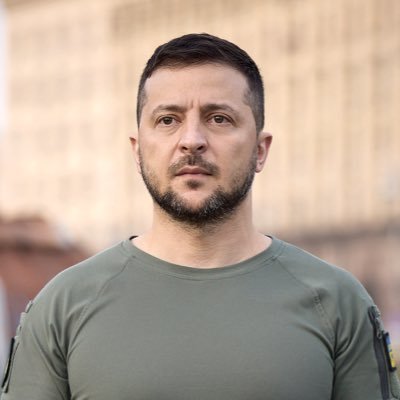
When President Trump says we need to find a compromise – we live with this. A ceasefire and sitting down at the negotiating table – it is a huge compromise.
Nobody can step into the shoes of all these people whose children were tortured. And you can't force people to forgive. How can you force them when their child was tortured? How do you forgive? It's impossible. I desperately want justice. I just really want. I know so many people had their hearts ripped out, and there won't be a new heart.
That's why we say a ceasefire is the only step, because people’s hatred isn't going anywhere. It takes time and justice. And that's why it's a huge compromise. I've tried many times to tell the President of the United States: understand us. This is a huge compromise just to hold the lines where we are. Trump can bring Putin to the negotiating table very easily. The way President Trump talks about me, he needs to adopt that kind of rhetoric about Putin.
From The Diary of a CEO podcast with Steven Bartlett. (3/3)
if Trump - the grand strategist - was leader instead of Churchill would the allies have won in just days ora few months? or what? .
only one answer yes or no?

Trump on Ukraine War:
The Russians had a thousand tanks riding up a concrete highway.
They would have been in Ukraine in four hours, going maximum tank speed, which is 48 miles an hour, to be exact. Nothing to stop them. The war would have been over in one day.
And this very stupid general—I have no idea who he is. I doubt he’s still with us. I doubt he’s still living.
He decided to hang a right onto the farmland and then take a left and go up to Kyiv, rather than staying on the highway—the concrete highway, perfectly good highway—where they were doing very nicely.
It would have been three and a half, four hours, and the whole war would have ended.
He ended up getting stuck in the mud.
Readers added context they thought people might want to know
Russian tanks did use highways to Kyiv in 2022 and took heavy losses. The main reason the 40-mile convoy failed was it lacked fuel and food. Ukraine blew bridges, flooded the Irpin, and ambushed columns.
nbcpalmsprings.com/2025/08/15/fac…
rusi.org/explore-our-re…
npr.org/2022/03/01/108…
mwi.westpoint.edu/urban-warfare-…
euronews.com/my-europe/2025…
Len retweeted

Trump on Ukraine War:
The Russians had a thousand tanks riding up a concrete highway.
They would have been in Ukraine in four hours, going maximum tank speed, which is 48 miles an hour, to be exact. Nothing to stop them. The war would have been over in one day.
And this very stupid general—I have no idea who he is. I doubt he’s still with us. I doubt he’s still living.
He decided to hang a right onto the farmland and then take a left and go up to Kyiv, rather than staying on the highway—the concrete highway, perfectly good highway—where they were doing very nicely.
It would have been three and a half, four hours, and the whole war would have ended.
He ended up getting stuck in the mud.
Readers added context they thought people might want to know
Russian tanks did use highways to Kyiv in 2022 and took heavy losses. The main reason the 40-mile convoy failed was it lacked fuel and food. Ukraine blew bridges, flooded the Irpin, and ambushed columns.
nbcpalmsprings.com/2025/08/15/fac…
rusi.org/explore-our-re…
npr.org/2022/03/01/108…
mwi.westpoint.edu/urban-warfare-…
euronews.com/my-europe/2025…

Rubio ? a puppet wth no guts? S for JDV what will he say to the Pope? Sorry?

Rubio: "President Trump is most certainly angry and frustrated at the lack of progress in Russia-Ukraine negotiations after having dedicated almost 2 years to it now."
Marco, oh Marco... The cause of your anger and frustration, your lack of progress, sits in the Kremlin and has a name. He is rejecting every ceasefire you propose except the ones where Ukraine is asked to surrender.
You suggested an unconditional ceasefire back in March 2025. Ukraine accepted, so why isn’t it happening? Probably because someone else didn’t. The aggressor, maybe?
We suggested a ceasefire on energy strikes, exactly what you want, too. So why isn’t it happening? Who is refusing? Russia.
I get it, it must be so annoying that some pesky Ukrainians and their fight for literal survival stand between you and your bestie merging in a sweet ecstasy of… dealmaking. But we will not surrender, regardless.
Seriously, what happened to this man???

Len retweeted

Donald Trump professes astonishment at the deteriorating electoral fortunes of the Republican Party. Having lavished hundreds of millions of dollars upon political campaigning, he now demands an explanation for his party's increasingly precarious position ahead of the midterm elections. One might reasonably suggest that he need look no further than his own presidency.
No amount of money, electoral manipulation or political manoeuvring can purchase the confidence of a nation increasingly disillusioned with its leadership. For nearly two years, the American people have witnessed a succession of broken promises, economic upheaval, diplomatic confrontation and military adventurism, accompanied by a seemingly inexhaustible determination to attribute every failure to somebody else.
He promised to restore American prosperity. Instead, the national debt has continued its inexorable rise, the cost of living remains a considerable burden upon ordinary households, and his ill-judged tariffs have disrupted international commerce, increased costs and antagonised some of America's oldest and most dependable trading partners. The promised economic renaissance has given way to uncertainty, mounting financial pressures and growing public dissatisfaction.
He promised to end wars, not embark upon new ones. Yet his administration has plunged the United States into a destructive conflict with Iran, seemingly without either a convincing strategy for its conclusion or a proper appreciation of its wider consequences. America's traditional allies have been notably reluctant to endorse his course of action, leaving Washington increasingly isolated in a confrontation of its own making.
The repercussions have been felt throughout the international economy. Disruption to energy supplies has driven oil and gas prices sharply upwards, with the resulting increases in transport, manufacturing and household costs imposing further hardship upon millions. Nations far removed from the conflict are being compelled to bear its economic consequences. The President who promised cheaper energy, greater prosperity and an end to foreign entanglements has instead presided over precisely the conditions he claimed he would prevent.
Then there is the continuing tragedy of Ukraine. Trump repeatedly proclaimed that he could bring Russia's invasion to an end within twenty-four hours. Nearly two years into his presidency, that boast stands exposed as another promise he has been unable to fulfil. Ukraine continues to suffer under Russian aggression, whilst Trump appears more disposed towards accommodating Vladimir Putin than confronting the fundamental illegality of his invasion.
What manner of peace can possibly endure when the aggressor is offered concessions and the victim is expected to surrender its rights? Peace purchased through capitulation is no peace worthy of the name. It is the abandonment of principle and an invitation to further aggression. To confuse appeasement with diplomacy is to misunderstand one of the most elementary lessons of European history.
More disturbing still is the apparent contempt shown towards international law and the principles upon which the post-war international order was established. The United Nations Charter, the sovereignty of nations, the prohibition of aggressive warfare and the peaceful settlement of disputes were not conceived as diplomatic ornaments, to be admired when convenient and discarded when troublesome. They were established in the aftermath of unimaginable destruction to restrain the arbitrary exercise of power. They have never been universally honoured, but they remain indispensable safeguards against a return to the law of the strongest. When an American administration itself disregards these obligations, it diminishes not merely its own moral authority, but the international framework which the United States was instrumental in creating.
The damage to America's standing amongst its traditional allies is equally profound. Governments which once regarded Washington as the indispensable guarantor of their security are now obliged to question the reliability of its undertakings. Across Europe, nations are reconsidering their defence arrangements, their economic dependencies and the wisdom of placing their future security at the mercy of American political uncertainty. Their quarrel is not with the American people, but with a President whose conduct has placed decades of diplomatic goodwill under extraordinary strain.
Nor is the disquiet confined to America's allies. Within the Republican Party itself, divisions have become increasingly apparent. Members of Congress have questioned his policies, candidates have sought to distance themselves from his more contentious decisions, and the electoral consequences can no longer be dismissed as the invention of political opponents.
Yet Trump apparently imagines that the remedy lies in further expenditure, more advantageous electoral boundaries and the dismissal of advisers who have failed to deliver the results he demands.
The explanation is neither obscure nor complicated. A President cannot promise prosperity whilst pursuing policies which compound economic hardship. He cannot profess an abhorrence of war whilst committing his country to another costly military confrontation. He cannot claim to uphold freedom whilst appearing to indulge the ambitions of an aggressor who has invaded a sovereign European nation. He cannot invoke international law when it serves his purposes and disregard it when it does not. Nor can he systematically undermine the confidence of longstanding allies and then demand their unquestioning loyalty.
Above all, he cannot expect the American electorate to remain oblivious to the accumulating consequences of his own decisions.
Donald Trump's predicament is not principally the result of inadequate campaign expenditure, incompetent political advisers or an unsuccessful electoral strategy. It is the consequence of his own judgement, his own policies and his own conduct, pursued with a remarkable apparent indifference to their wider repercussions.
For a man so accustomed to assigning responsibility for every misfortune to others, the explanation may prove particularly unwelcome.
The American people do not require hundreds of millions of dollars in political advertising to recognise the consequences of a presidency. They are living with them.
And therein lies the answer to the question Donald Trump apparently finds so difficult to comprehend.

TRUMP FUMES AS REPUBLICANS STRUGGLE AHEAD OF MIDTERMS 🇺🇸
Donald Trump is growing increasingly frustrated with his political team as Republicans face troubling polling numbers ahead of the congressional midterm elections, according to Reuters.
The president has been demanding answers about campaign spending, candidate selection and the failure of his redistricting strategy to produce the electoral advantages he expected.
One particular source of irritation is the $200 million spent by a pro-Trump Super PAC. Trump has questioned why such an enormous investment has failed to translate into stronger Republican polling numbers.
He is also dissatisfied with efforts to redraw congressional districts, particularly in Texas, where the anticipated Republican advantage has yet to materialise clearly.
Behind the scenes, the tensions reportedly involve senior political adviser James Blair and White House Chief of Staff Susie Wiles, with administration officials increasingly pointing fingers over the party’s difficulties.
The internal disputes come at a consequential moment for Trump. Congressional control will determine how much freedom his administration has to advance its domestic and foreign policy priorities during the remainder of his presidency.
For now, the reported frustration inside the White House centres on a question Trump wants his advisers to answer: why are the money, political manoeuvring and campaign preparations not producing the results he expected?

Len retweeted

GB Energy, the useless state-owned company established by Labour, has so far spent £14.2m on running costs — and £5.8m on investments.
Running costs included the almost £400,000/year paid to its ineffective CEO and six executives on more than £100,000 each. What any of them has done to earn these sums is one of life’s mysteries.
Perhaps it’s a blessing it’s invested so little. The £5.8m it has earmarked is for a proposed floating wind farm off the north coast of Scotland — a sure-fire loss-maker if ever there was one.
JDV? does
he agree with Trump on Ukraine? Do his supporting Tech Friends support him and are also against Ukraine.?
Should the rest of the free world take note?

There can now be precious little confidence in Donald Trump’s professed desire to secure a just and lasting peace in Ukraine, or indeed in his commitment to the peace and security of Europe.
The United States Congress passed legislation expressly intended to weaken Putin’s war machine through severe economic sanctions. Yet Donald Trump, having signed that very legislation into law, has now issued an executive order suspending its principal provisions, mere days before they were due to take effect.
The contradiction is as extraordinary as it is deeply troubling. At the very moment when Congress sought to tighten the economic stranglehold on Moscow, the President of the United States chose instead to loosen it. Whatever justification Washington may offer, the practical consequence is to afford Putin precisely the breathing space that Congress intended to deny him.
One must therefore ask whose interests are truly being served. Certainly, it is difficult to see how such a decision advances the cause of Ukraine, a sovereign European nation whose people continue to endure the appalling consequences of Russia’s unprovoked aggression.
The increasingly erratic pronouncements and deeply questionable decisions emerging from the White House should serve as a stark warning to the international community. America’s traditional allies must now confront an uncomfortable reality: the assurances upon which European security has depended for generations can no longer be accepted without question.
The forthcoming American midterm elections have consequently assumed a significance extending far beyond the domestic affairs of the United States. At stake are the constitutional checks upon presidential power, the credibility of NATO, the security of Europe and the preservation of an international order painstakingly constructed in the aftermath of two devastating world wars.
What makes this moment particularly alarming is the apparent disregard for the lessons of history. Peace is not secured by indulging aggression, rewarding territorial conquest or weakening the collective resolve of democratic nations. Such conduct risks emboldening those who regard military force, rather than international law, as the ultimate instrument of political ambition.
We should harbour no illusions about the gravity of the present circumstances. The possibility of a wider European conflict, with consequences reaching far beyond the continent and potentially involving nuclear powers, is no longer a danger that responsible governments can afford to dismiss.
Donald Trump may continue to proclaim himself a peacemaker, but grand declarations are rendered meaningless when contradicted by the decisions of the man making them. The measure of any statesman lies not in the extravagance of his promises, but in the consequences of his actions.
And those consequences now demand the most searching scrutiny, for the price of political recklessness on this scale may ultimately be paid not merely by the people of Ukraine, but by generations who had every right to expect that the catastrophic lessons of the twentieth century would never again be so casually disregarded.
bbc.co.uk/news/articles/cxr5…


Len retweeted

We keep being told that Britain's defence and security infrastructure is so deeply integrated with that of the United States that we simply cannot operate independently.
So how is it that we apparently didn't know the US was restricting critical support to Ukraine, a country we are actively helping defend against Russian aggression?
And how do we reconcile a security partnership in which Britain remains firmly committed to supporting Ukraine, while the Trump administration is taking decisions that appear to undermine Ukraine's ability to defend itself and potentially benefit Russia?
There's a fundamental contradiction here.
If our national security depends on a country whose government can take decisions that directly undermine our own security objectives, how secure are we really?
And if Britain cannot rely on the United States to share its strategic priorities, surely we need to ask whether our continued dependence on American military technology, intelligence and infrastructure is itself becoming a national security vulnerability.