

I'm a tall, 👓 wearing🕺. My Xs are my own unless i've rXed. I do Internal Comms & Ai dabbling 👁️ ♥ 🥊
London, UK
Joined May 2009
- Tweets18.6K
- Following3.1K
- Followers1.3K
- Likes36.6K



Frank :oD retweeted

That’s what makes it valuable. If you’re able to communicate and demonstrate ‘taste’ then the value is there.
Taste means different things to different people. Our definition might not be the same as company A or Bs. Taste varies widely, but it’s about being able to tap in to what resonates with the brand and their customers. Understanding where things are headed. Tapping into experience and expertise. Visualizing and communicating it effectively. And then being able to set up agents and the system to deliver on it - proper tee up, steering, and refinement - to deliver at speed to get signal from the market.
Frank :oD retweeted

I spent 48 hours in SF hanging out with billionaires, data labs and AI founders and execs running $1B to $100B companies.
My observations:
1. Sooo MANY stories of data brokers making like $2M a WEEK selling company data to labs. I can't tell if it's the beginning or a bubble, and I kept wondering which niches are left. Digging into it actively.
2. At dinner, someone asked the table, "If a new model drops next month, does your company get better or worse?" HALF the table went quiet! I think that's the best question to ask about any AI startup right now.
3. The bar people talk about now is hitting $1B in revenue in 12 months (I guess that's the new unicorn?). What I didn't hear much about is retention. AI revenue can come in fast and leave fast, and I think we're going to see a lot of stories of AI companies with huge revenue and terrible retention.
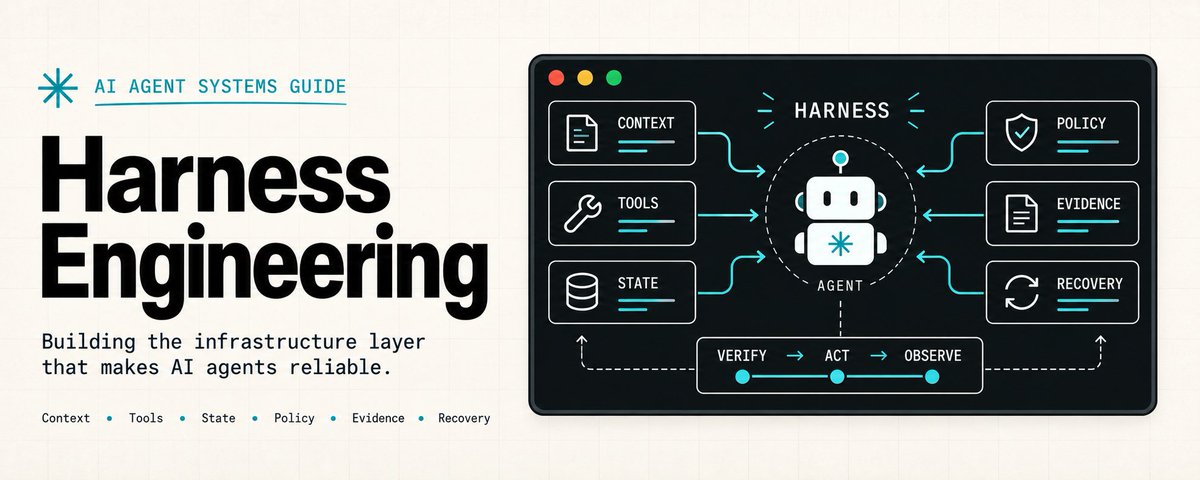
4. It's pretty clear we're living through the reinvention of the computer. The model is the CPU, the harness is the operating system, and skills and plugins are the apps. Thinking about it that way makes it easier to see where the whitespace is.
5. We're maybe 12 months from an agent that can watch you work for a week and then do your job without any instructions. The screen recording plus agent memory plus local model combination makes this possible right now.
6. Agent harnesses feel like the new GPT wrappers, in a good way, especially vertical ones. The best teams I talked to treat the model as swappable. One founder walked me through routing different models to different jobs: one for taste and visuals, a cheaper one for the everyday stuff, another for text.
They use prompts they can move across models over fine-tuning, and A/B test the output on what users actually do with it: do they edit it, export it, share it? A vertical harness is basically four things: the connectors for that industry's data, evals written by people who know the work, rules for what the agent can and can't touch, and a clean screen for a human to review. The model is maybe 20% of it.
7. There's a lot of reverse engineering going on/cloning going on more than I've ever seen. People are decompiling software and rebuilding it with agents, and someone showed a suite of like 10 apps that are worth $5B+ each all that he cloned open source. Me and everyone are still thinking through what it means when software gets this easy to copy.
8. My guess is the value moves to data. If the software can be rebuilt quickly, what's worth paying for in a legacy SaaS company is the years of customer data and workflows inside it. Some SaaS companies are secretly data companies.
Gets me thinking about how do you truly value data for this saas companies? Like if we were buying these dying saas companies at 2x ARR before (as example), maybe there is a better metric. Idk, just thinking out loud here.
9. It feels like a good chunk of legacy software won't make it to the agentic era, especially anything built around people clicking through a lot of screens.
10. Every company I talked to wants to pipe its internal data into one place and expose it to agents through MCP. Then they look at the data and realize it's a mess: five versions of the same customer, old Slack channels, PDFs nobody can search. Cleaning that up feels like a big consulting opportunity!
11. A lot of founders are building the basic building blocks for agents: APIs, data layers and tools. Some of the companies I saw barely have a UI because the main user is an agent. I really believe the startups that build primitives to this agentic era will do extremely well. Building blocks is the best way to think about it.
12. Labs can get plenty of training data, but it's harder to get real examples of agents failing inside companies. Whoever has those logs has something valuable.
13. Someone running a big consumer company told me the next fight is over memory. The model that remembers the most about you wins, and the smartest model matters less than people think.
14. Physical AI came up a lot. Astra I think was the first model that got people into AI can actually do CAD, and I think a lot of people are thinking what does vibe manufacturing really look like. The line I keep thinking about came from a robotics founder: the hardest problems in AI are deployment problems now, not research problems. Their robots work on their own, call a human when they get stuck, and every one of those calls becomes training data.
15. Cybersecurity companies are having a moment and are actually cool companies to build now, especially the ones that clean up after a breach. Every agent with access to your systems is a new door into your company, and a lot of those doors were left open.
16. Some startups are worth more dead than alive now. A shutdown company with 5 years of Slack, email and code can get paid for licensing all of it. I wouldn't be surprised if founders start factoring that into when they shut down.
17. People are starting to talk about monetizing the agent web. It feels really early, but when the most popular user of the internet is an agent, what startups should you be building?
18. I think agent insurance is coming. Once an agent makes an expensive mistake, insurers will want audits before they cover anyone.
19. Several people said the hire they want most is someone with taste who can write evals. The models are getting good at generating ideas, so the hard part is judging which ones are good.
20. New trend I observed: startup raises VC, uses venture dollars to become a creator, startup fails, founder falls back on being a full-time creator and incubates other products bootstrapped.
21. Getting SIGNIFICANT distribution is HARD right now. Founders are sponsoring buses, buying billboards like crazy and throwing parties with famous DJs to get noticed. Kinda feels dotcom era in that sense.
Attention is what's scarce! The growth guy going viral sharing his UGC strategy from Wispr Flow is a good example. It's the sauce everyone wants, and I truly believe there are probably only 50 people on the planet who know how to scale these types of businesses efficiently in this era.
Always good to get that dose of SF. I felt sooo lucky to have such an incredible trip during such an incredible time in building businesses. Surreal in so many ways.
Happy to be home and locked in.
Until next time!


Frank :oD retweeted

We were able to fine tune an open weight model (Qwen3.5-9B) on proprietary internal data at @coinbase, and it out performed frontier models, at much lower cost and speed, for a specialized task (fraud prevention in this case).
I think we'll see more of this pattern inside companies. The frontier models are amazing generalists. But increasingly you'll see specialist models out perform on more narrow tasks, either working on teams, or by themselves.
We're making it easy to fine tune models internally for our employees. We even have a skill for it in our internal harness that makes it easy to spin these up and start training them:
"/fine-tune-and-serve-llm I want to fine-tune Qwen for payments risk review. help me get started"
I imagine we'll have some backend services that could be replaced entirely by this new architecture.


Frank :oD retweeted

Today marks a new chapter for Windows, as we bring unmetered intelligence to every desk and every home, and make every PC a place where agents can work securely on your behalf.
Some highlights of what we announced:
• MAI-Code-1.1 Flash: 137B parameter coding model w/ 256K context window, which is now optimized to run on your PC!
• GitHub Copilot now hands off work to local models like MAI-Code-1.1 Flash, helping projects cost a lot less without sacrificing quality.
• With Hybrid Intelligence, Copilot can now take action directly on the PC and keep sensitive work on your device.
• And with Code in Copilot, you can essentially build any software you need on your desktop, without any cloud token spend, and it’s just super at it. You’re no longer limited to what’s in an app store! Your PC becomes an infinite software factory.
• Security is foundational to all this, which is why we are also bringing together Windows and Agent 365 so agents can work within secure boundaries on-device, including MXC a local sandbox for agent execution. Windows becomes your secure agent box!
• All this comes to life on a new generation of devices, like Surface Laptop Ultra, powered by NVIDIA RTX Spark.
Can’t wait to see what you build with all this.

Frank :oD retweeted
Introducing Microsoft-Decision-1, our new model for fast decision-making.
It delivers top performance on structured decision tasks, outperforming both LLMs and other decision models in latency and quality.
We’re already testing it across Microsoft for everything from incident response and quality control to scientific discovery.
Frank :oD retweeted

Chamath: Software IP Just Became Worthless
“I think that IP and software was effectively rendered worthless two days ago.
There have been people that decompiled the entire Big 5. What is the Big 5?
Adobe has five very, very important products in their product suite, and these folks basically decompiled it, distilled it, and published open source versions of these things.
I was so shocked because I was like, ‘Hold on a second. These are profound products that have existed and have had moats for years, and now they're just open source versions.’
If you think about it, when everything is headless, so when Elon makes his services headless, Benioff made Salesforce headless a few months earlier, when all of these things are headless and you can wrap them in agent tools and you can connect them via MCP to other experiences, the value of IP no longer exists in software. It doesn't exist.”




Frank :oD retweeted

You can now train your own Decision model with our free notebook! 💡
Qwen3.5-4B will generate decisions instead of text on just 8GB VRAM locally.
Learn to data prep (state, questions, gold answers), train, serve.
Notebook: colab.research.google.com/gi…
Guide: unsloth.ai/docs/basics/train…


You can now train your own Decision model like Jev locally!
We increased Qwen3.5 0.8B’s aggregate accuracy from 20.7% to 74.3% across 3 decision benchmarks - on just 4GB VRAM.
Turn any LLM like Qwen3.8, Gemma 4 into decision models with our open-source Unsloth repo.
We fine-tuned with a Clef head using Unsloth and LoRA (r=64) for one epoch, increasing downstream accuracy from 30–37% to 78%.
GitHub: github.com/unslothai/unsloth
Guide and Notebooks: unsloth.ai/docs/basics/train…

Frank :oD retweeted

This is your reminder that there are tens of millions of people whose primary experience with AI is Microsoft Copilot
We are still so early

Frank :oD retweeted

WHOEVER LEAKED THIS HAS BIGGER BALLS THAN SENSE
i thought AI trading was mostly about finding good strategies, then i paired CLAUDE OPUS 5.5 with MINARA AI.
→ Opus scans the market and proposes strategies
→ Minara pulls in live data and fee-aware backtests
→ every idea passes risk + stress tests
→ paper trading comes before going live
→ Minara’s 24/7 Autopilot only trades after approval
then everything gets reviewed nightly instead of just letting the agent run wild.
the interesting part isn’t AI trading by itself.
it’s having one AI reason about the strategy while another system handles the data, execution, risk, and validation.
Full breakdown on how to set it up below

opus 5.5 is the most dangerous AI model for trading right now
it gives you 1M token context and always-on reasoning
that can discover new profitable trading strategies for you 24/7
if you set it up correctly, you gain superpowers

Readers added context they thought people might want to know
There is zero proof of this being functional software. Creators regularly design defunct animations and videos of systems like this for the purpose of engagement baiting on social media.
24vids.com/channel/savipww
trmlabs.com/resources/blog…
cftc.gov/LearnAndProtec…
Frank :oD retweeted

I have never been more certain that if AI development stopped today, we would still have massive & rolling disruption across society & the economy for the next ten years as people figured out how to harness what models can already do. And the end of AI progress seems unlikely.
Frank :oD retweeted

SOMEONE CREATED A GITHUB REPO WITH AN ENTIRE SETUP TO RUN ONE PERSON AI COMPANY
Engineers, designers, growth marketers, product managers.
Broken down how even a rookie could understand.
It has over 155K stars now.
Bookmark this.
LINK: github.com/msitarzewski/agen…


Frank :oD retweeted

Andrej Karpathy just dropped a 1-hour Stanford lecture on AI engineering from scratch:
"You can basically delete everything… delete everything, keep Graph"
Here are the core ideas:
10% → LLM: "I treat GPT like a general-purpose computer that can be reprogrammed at runtime"
30% → Prompt: "I give that computer a program written in natural language"
50% → Agent: "I wrap the model with a goal, context, memory, and tools that turn prediction into action"
70% → Loop: "I separate the inner loop, where the model learns from context, from the outer loop, where training updates the weights"
100% → Graph: "I organize communication as data-dependent message passing across directed graphs"
This 1-hour Stanford lecture will teach you more about AI engineering than most 100 random YouTube tutorials combined
"Just chop everything up and throw it into the mix"
Bookmark it and watch later
Then read the full article below ↓

Frank :oD retweeted

I accidentally discovered how to compress a semester of learning into 48 hours.
A grad student at MIT showed me his NotebookLM setup. I thought he was just organized. Then I watched him pass a qualifying exam on a subject he'd never studied before.
Here's exactly what he did:
First: he didn't upload a textbook.
He uploaded 6 textbooks, 15 research papers, and every lecture transcript he could find on the subject.
Then he asked NotebookLM one question:
"What are the 5 core mental models that every expert in this field shares?"
Not "summarize this." Not "explain this topic."
Mental models. The stuff that takes professors years to develop.
But the next part is what broke my brain.
He followed up with:
"Now show me the 3 places where experts in this field fundamentally disagree, and what each side's strongest argument is."
In 20 minutes he had a map of the entire intellectual landscape of the field:
the debates, the consensus, the open questions.
Most students spend a full semester just figuring out what those debates even are.
Then he did something I've never seen before.
He asked:
"Generate 10 questions that would expose whether someone deeply understands this subject versus someone who just memorized facts."
He spent the next 6 hours answering those questions using the source material. Every wrong answer triggered a follow-up:
"Explain why this is wrong and what I'm missing."
By hour 48, he could hold a conversation with his thesis advisor without getting destroyed.
The tool didn't change. The questions did.
Most people treat NotebookLM like a fancy highlighter.
These students are using it like a private tutor who has read everything ever written on the subject.
The difference between a semester and 48 hours isn't the amount of content.
It's knowing which questions to ask.

Frank :oD retweeted

NVIDIA and MIT researchers just used Karpathy’s method to cut Agent harness costs by 2x - dropped 15-page PDF
The shift: one formula replaced prompt engineering: same LLM, same benchmark - change just the harness
here’s how they built it:
step 1 → inspect the agent’s execution logs - repeated actions, growing context, oversized outputs - find where tokens stop moving the task forward
step 2 → run Karpathy’s loop on the harness: propose → implement → review → test → keep or discard. Fix the quality and efficiency gates before the search starts
four fixes survived:
step 3 → fuse actions: edit the file and run its planned test in one tool call - remove the model round trip between them
step 4 → compact at completed steps - but only when expected savings outweigh the cost of rewriting the cached context
step 5 → stop replaying huge outputs: archive them, send them twice, then keep a handle and short excerpt. Retrieve exact pages when needed
step 6 → delegate log reading to a cheaper model - verify its evidence against the original. If verification fails, return the full log
how to steal this for your agents:
step 7 → start with one mechanism in Pi, where their code runs. Measure it against your current setup before combining all four
step 8 → freeze the changes, then test on unseen tasks. Track completion, API cost and tokens together - a cheaper failure is still a failure
the result:
50-54% lower API costs than native Codex and Claude Code on EdgeBench - using the same main LLMs
Against Pi: about one-third cheaper, 45-49% fewer tokens, retaining roughly 94% of its average score
bookmark this 15-page PDF - then build the full workflow from the article below ↓


Frank :oD retweeted
An article for everyone who ships, buys, or signs off on software built on large language models (LLMs): engineers, product managers, and the CEO. Written in plain language, from the big picture down to the details.

Frank :oD retweeted
HOW TO BECOME A FORWARD DEPLOYED ENGINEER (53 MIN MASTERCLASS)
Some forward deployed engineers are getting PAID $1M+/year (kinda crazy, I know)
And I REALIZED almost nobody talks about HOW they do it in any detail. It's basically nowhere online.
So I asked someone who does it ALL DAY LONG for Fortune 500 companies to walk me through it, step by step. and he shares EXACTLY how he does it
youtube.com/watch?v=1a5HxU52…
Here's what I learned:
1. They start by listening, not building. They interview the people doing the work and let agents quietly read the company's data for a few weeks. The real process is almost always 3x longer than the one on paper.
2. They sort every step into four buckets: delete it, automate it with a simple rule, give it to an AI agent, or keep a human on it. A surprising amount ends up in the first bucket.
3. They build inside the tools the company already uses. Nobody has to learn a new app. When a human needs to sign off, it's just a Slack message.
4. They use the cheapest model that gets the job done. Most of this work doesn't need the most expensive AI.
5. They measure everything before and after, then come back 6 months later and prove it worked.
This + concrete client examples + way more on today's episode of @startupideaspod (thanks to @vasuman)
A full course pretty much on the topic aivalable to you 100% for free.
This episode is for ANYONE who wants to be a FDE or who wants to make their company AI-native by deploying agents.
Watch