

arts and culture @AnthropicAI | prev @perplexity_ai @tiktok_us @effecthouse @felixandpaul
Joined August 2018
- Tweets1.6K
- Following1K
- Followers10.7K
- Likes12.3K







Pinned Tweet
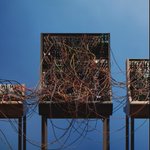
We have a new @claudeai pop-up in Tokyo opening today in partnership with Karimoku. New works by artists @daitomanabe and @spline_info created with Claude. Free and open to the public!


Greg retweeted

Karimokuとのコラボレーションプロジェクトは、10月25日(日)まで展示しています。モジュラーシンセのインスタレーションです。制作過程やシステムの仕組みを紹介するプロジェクトサイトも公開しました。会場で体験していただけたら嬉しいです。 projects.daito.ws/timber-tim…

Greg retweeted

Anthropicが主催する展覧会「Machines of Loving Grace」が、西麻布のKARIMOKU RESEARCH CENTERで開催中。生成AI「Claude」と木工技術、クラフトマンシップが融合した新作インスタレーションを紹介する。会期は10月25日(日)まで。
#Anthropic #MachinesOfLovingGrace
Greg retweeted

We’re committing a portion of Anthropic’s shares to the Anthropic Public Benefit Fund, a new wholly owned entity dedicated entirely to the public benefit.
It will start off with 5% of our shares. For every 50% increase in the company’s value over a set baseline, we can contribute up to an extra 2%, subject to our board’s discretion.
In total, this means that roughly 20% of Anthropic’s shares are committed to the public good. Our co-founders have already pledged to donate 80% of their equity, and around half our employees are donating a portion of their equity as part of a donation matching program we’ve run since our founding.
In the post below, we share more details about our new fund.
anthropic.com/news/public-be…


Greg retweeted
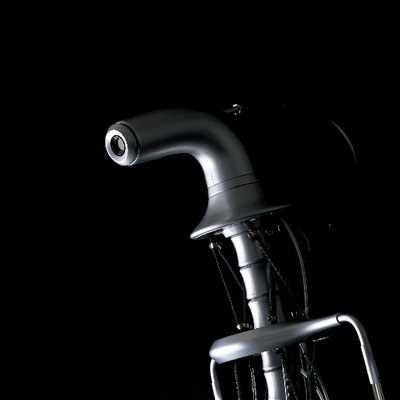
肩関節に駆動軸はなく、ウェイトバランスと遠心力の絶妙のAI制御で踊る美しい木製のマシン。いつまでも見ていられる。
Director: 神山友輔 Product Design: 村松充 / Mechanical Design: 村山覚 / Simulation: 賀堰 / Sound Design: 赤川純一 / Prototype: 三谷悠人 / Spatial Design: 園部莉菜子
First 300 visitors can take home a Claude photo stand, made from leftover wood from Karimoku’s furniture workshop.

Open 1-6pm through Oct 25. More details: molg.tokyo/

Greg retweeted
An astrophysicist worked with Claude Science to create the first complete ultraviolet map of the sky. Astronomers have already created complete sky maps from radio to gamma rays. But large regions of the sky have never been observed in UV.
In today’s science blog, Brice Ménard explains how he guided Claude to find existing datasets, combine them, and fill in the gaps with statistical inference. The work would have taken humans weeks of work, but, with Claude, just took a few days while Ménard worked on other projects.
The resulting map is a useful teaching tool and an example of exactly the sort of slow, low-priority work which scientists never quite get around to, but which AI now makes feasible.
Read more: anthropic.com/research/the-m…

Rebuilt this project with Opus 5.5 and was able to finally realize the dream of this project — a fully volumetric point cloud version of the Radiohead music video that you can walk through. Claude is finally good at making VR apps!

A few months ago I stumbled on the point cloud data from @radiohead's House of Cards LIDAR music video. After some coding I got it running in Unity, and now I put it on #magicleap so you can see the music video spatially! Here's a recording of the experience:
Opus 5.5 is great at checking its own work — here were some of the images it generated during the development process.


And this time it's fully interactive, so you can move around the points in the point cloud and they will slowly drift back.
Here's the repo if you'd like to install it to your own AVP! github.com/gregfeingold/Hous…
cc @aaronkoblin :)

Greg retweeted

New channel for us to share tips, tricks, and updates for developers: claude.dev/

Greg retweeted

Today we announced the Claude-led discovery of a molecular machine that we suspect could represent a new gene editing mechanism. Its precise function, biotechnological utility (if any), or level of significance is not yet clear, but at minimum it is work I would have been proud to do as a PhD student. The work was done mostly, though not entirely, by Claude: our life sciences team suggested a broad area of research, Claude read through the literature and a bunch of genome data and discovered something interesting, then Claude proposed experiments to verify the discovery and our team carried them out.
It’s easy to dismiss this as a one-off or curiosity, but we’ve repeatedly seen a pattern where AI performance in new intellectual domains goes from weak to superhuman in a matter of a few years. In 2023 models struggled to do math at the level of an average high-school student. In 2024 they started to do well on math competitions for the best high-schoolers in the country, in 2025 they started to solve minor open problems, in early 2026 more significant open problems, and in late 2026 they are beginning to solve the top few open problems in all of mathematics. We believe AI for biology is on a similar exponential trend.
The main difference between biology and mathematics, of course, is that math can be done purely theoretically, while biology requires experimentation. Some have used this to draw the conclusion that AI’s utility in biology will be limited. We think this is wrong. As we’ve demonstrated today, humans can collaborate with AI to perform the experiments, validate key results in a few weeks and, if necessary, work with the AI to iterate on what they find. Eventually it may even be possible for Claude itself to safely perform the experiments by autonomously controlling lab equipment, with appropriate safeguards in place, but we aren’t doing that today (our lab is also a BSL1/BSL2 facility that doesn't handle materials dangerous to humans).
More broadly, biomedical advancement has many stages — from fundamental biology discoveries, to translational research, to drug discovery, clinical trials, and finally the actual delivery of medicines and health care to patients. We are also interested in these later stages, but even simply accelerating the first stage of fundamental biological discoveries has the potential to speed up and broaden the entire pipeline. Improving our understanding of biology and sharpening biologists’ tools can drive forward all of the later stages, for example by identifying new drug targets, finding new therapeutic modalities, allowing for more precise measurement, and speeding up the experimental loop which itself further accelerates our understanding of biology. This will not in itself speed up clinical trial times, but if it succeeds it could greatly increase the number of promising candidates that go into the pipeline — an increase in throughput even though latency remains.
In Machines of Loving Grace, I wrote about AI’s potential to “cure most diseases in 5-10 years” — a goal that sounds impossible, but one I believe is just barely possible if AI is applied to every stage of the pipeline. The first step is showing that AI can first help with, and then drive, biological discoveries.
Claude’s discovery is the latest in a line of related prior work that goes back decades, beginning with systems like CRISPR, and continuing with discoveries like the bridge recombinase and VIPR in the past few years. Recently, there has been heightened interest in systems based on reverse transcriptase (RT) enzymes, the enzyme underlying the system Claude identified. And most recently, a Stanford team working independently described a novel RT system with an associated non-coding array that is in some ways similar to the one Claude found, though they are distinct systems that evolved independently from each other. I believe that we’re at the very beginning of finding such systems and developing them into powerful tools for biotechnology.
I’m proud of the resources Anthropic has invested in accelerating the public benefits of AI through the life sciences, and we’re aiming both to grow our life sciences team and to work with other scientists to extend this approach to a broad range of problems. If you have a proposal for a research collaboration or are interested in joining our life sciences team, please reach out.

Claude has discovered a previously unknown enzyme system hidden in the DNA of bacteriophages. Beside the enzyme’s gene sits a long array of repeating DNA—a structure that looks somewhat similar to CRISPR.
We don’t yet understand what this system does, but only a handful of known systems share its features, and all of them are able to cut, copy, and paste DNA. Historically, the discovery of such programmable systems has helped revolutionize medicine. CRISPR, for instance, is now the foundation of genetic medicines. But it will take much more work to learn what this system does, and whether it can be put to similar use.
Read more: anthropic.com/news/claude-di…


Greg retweeted

Worth spending a few minutes this weekend to read this essay in full.
Embedded evaluators might sound unusual in tech but it's pretty normal in other industries. Big banks have federal examiners with desks in the building and every nuclear plant in the US has inspectors who work on site full time. I think frontier AI labs should work the same way and this is a very practical first step.


We Must Pace the Frontier: I’ve written a new essay on why the AI industry should slow down, with a three-part plan for doing so.
Anthropic is unilaterally committing to the first of these steps. We’ll provide third-party evaluators with permanent, employee-level access to our systems, so that they can verify adherence to our safety measures, report on incidents, and assess models’ alignment during training.
You can read the full post here: darioamodei.com/post/we-must…

Greg retweeted

as the timeline finally discovers Lance Oppenheim with PRIMETIME and YOU CAN SEE EVERYTHING soon, I must urge you all to watch REN FAIRE on HBO Max. it's one of the most stylistically invigorating documentaries I've seen in years, and a brilliant parable of our present chaos.


