
Assistant Professor @mldcmu. Formerly: Postdoc @MITEECS, PhD @Berkeley_EECS, Math Undergrad @Princeton. New to Twitter. https://xitter.cf/t.co/67bMOAyqK6
Joined May 2024
- Tweets179
- Following168
- Followers3K
- Likes608


Max Simchowitz retweeted

Hi all, I have a new result I'm excited to share. It turns out that *all existing implementations* of softmax and cross-entropy (that's JAX, PyTorch, textbooks, etc) have a subtle bug --- two bugs, actually. A simple rewrite fixes both, and eliminates "slingshots" when grokking:
Max Simchowitz retweeted

A mathematical breakthrough used to effectively be defined as solving a problem that many smart people failed at for N years. Now a subset of those problems fall to LLMs with effectively zero human input and each gets announced as a breakthrough. Fair enough, by the old standard it is one.
But the difficulty by which a breakthrough was defined, was measured against human effort. If a magic wand now solves them, how do we redefine difficulty in terms of the magic wand? A hard problem is one that resists the wand. Which leaves us with the actual question:
What is now considered a breakthrough?
Max Simchowitz retweeted

Diffusion / flow-based robot policies unlock two axes of test-time scaling: sequential (denoising steps) and parallel (samples). Both improve performance but cost latency on a robot, and knowing which to scale a priori is often unclear. ELASTIC learns it via RL!
Max Simchowitz retweeted

I am starting a blog about deep learning theory and its value to practitioners! First post is about Adam, broken convergence proofs, and what theory can contribute when stuff just works anyways without it. Subscribe on Substack if you like it! undertheassumptions.substack…
🤖 Made with AI


Max Simchowitz retweeted

1/ As AI agents become increasingly capable, what must *inevitably* emerge inside them?
We prove selection theorems: strong task performance forces world models, belief-like memory and—under task mixtures—persistent variables resembling core primitives associated with emotion.

Max Simchowitz retweeted

Can just a 4B model solve IMO-level proof problems at the level of much stronger LLMs like Gemini 3 Pro? Yes, if you can train the LLM to scale test-time compute well!
We're very excited to release our 4B model "QED-Nano", built via an awesome open collab! Details below🧵⬇️

Max Simchowitz retweeted

Introducing Large Video Planner (LVP-14B) — a robot foundation model that actually generalizes. LVP is built on video gen, not VLA. As my final work at @MIT, LVP has all its eval tasks proposed by third parties as a maximum stress test, but it excels!🤗
boyuan.space/large-video-pla…
Max Simchowitz retweeted

I’ve always seen twitter bros be like “keep building keep shipping” when using ai agents for coding, but now that I’ve tried it for real, it feels less like grinding and more adjacent to eating popcorn while bed rotting and watching heated rivalry (I’m not complaining)
Max Simchowitz retweeted

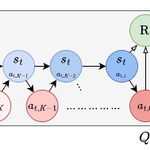
The authors ask whether an N-layer ViT can be rewritten using just K<<N layers by recurring on them. Remarkably, they match DINOv2 performance with only 2-3 layers. The paper also offers rich dynamical-systems analysis. Very cool work!
🔗arxiv.org/abs/2512.19941


Max Simchowitz retweeted

the mistake so many people make is seeing university professors as intellectuals when they’re actually employees at a combination hedge fund and healthcare conglomerate that operates a small luxury resort/sports franchise where student-customers occasionally take classes
Max Simchowitz retweeted

Check out the paper and the project website to find out more!
📃 Paper: arxiv.org/abs/2512.05927
🌐 Website: c-cubed-uq.github.io

Max Simchowitz retweeted

🤖 Robots rarely see the true world's state—they operate on partial, noisy visual observations.
How should we design algorithms under this partial observability?
Should we decide (end-to-end RL) or distill (from a privileged expert)?
We study this trade-off in locomotion. 🧵(1/n)

Max Simchowitz retweeted

TRI's latest Large Behavior Model (LBM) paper landed on arxiv last night! Check out our project website: toyotaresearchinstitute.gith…
One of our main goals for this paper was to put out a very careful and thorough study on the topic to help people understand the state of the technology, and to share a lot of details for how we're achieving it.
youtube.com/watch?v=BEXFnru5…
Max Simchowitz retweeted

I am giving a talk "From Sim2Real 1.0 to 4.0 for Humanoid Whole-Body Control and Loco-Manipulation" at the RoboLetics 2.0 workshop @ieee_ras_icra today, summarizing my recent thoughts on sim2real.
If you are interested: 2pm, May 23 @ room 302.

Max Simchowitz retweeted

Want to scale robot data with simulation, but don’t know how to get large numbers of realistic, diverse, and task-relevant scenes?
Our solution:
➊ Pretrain on broad procedural scene data
➋ Steer generation toward downstream objectives
🌐 steerable-scene-generation.g…
🧵1/8
Max Simchowitz retweeted

RL and post-training play a central role in giving language models advanced reasoning capabilities, but many algorithmic and scientific questions remain unanswered.
Join us at FoPT @ COLT '25 to explore pressing emerging challenges and opportunities for theory to bring clarity.


Max Simchowitz retweeted

really excited about this one -- please submit your best work, and come join us in beautiful Lyon to talk about machine learning and science!

@khodakmoments, @__tm__157, along with myself, @nmboffi and Jianfeng Lu are organizing a COLT 2025 workshop on the Theory of AI for Scientific Computing, to be held on the first day of the conference (June 30).

Max Simchowitz retweeted

Congrats to Andrea Bajcsy (@andrea_bajcsy) on receiving the NSF CAREER award! 👏
Her work: “Formalizing Open World Safety for Interactive Robots,” explores how robots make safe decisions beyond collision avoidance. Read about it and her education plans: loom.ly/59evuD0
