
PhD @mldcmu. Previously @ucsd_cse @UcsdMathDept
Joined April 2020
- Tweets365
- Following396
- Followers1.2K
- Likes1.2K






Pinned Tweet
🤖 Robots rarely see the true world's state—they operate on partial, noisy visual observations.
How should we design algorithms under this partial observability?
Should we decide (end-to-end RL) or distill (from a privileged expert)?
We study this trade-off in locomotion. 🧵(1/n)

More evidence doesn't necessarily give better answers! Really cool work showing how retrieval can mislead LLMs and how to be more robust.

1/
When LLMs answer questions with retrieved webpages, several plausible answers may appear.
What if one appears much more often and fits much of what the question asks, but still isn't the right answer?
Excited to share our #EMNLP2026 paper on this!
📄arxiv.org/abs/2610.27114

Yuda Song retweeted

Check out @ZihaoZhao1's thread on our new paper!
We compare various techniques to mitigate privacy leakage, finding that synthetic data and LLM rewriting offers a particularly strong privacy/capability trade-off 📈📈

We’ve all offloaded the writing to LLMs, but have you considered REWRITING with LLMs? 👀
Rewriting your private data with an LLM before finetuning gives a better empirical privacy vs. capability trade-off than PII scrubbing or DP-SGD!
To test this, we generated 5,000 synthetic medical records with private information. Then, we finetuned Qwen3.5-4B and gpt-oss-20b with several methods to mitigate privacy leakage and asked two things: does the model learn from the medical records, and does it leak private information?
1/n 🧵👇

It's easy to teach the model how to succeed when it has the knowledge for a task -- but how do we teach the model *how to fail* when it lacks the capability? 🤔
Why does it matter? If we don't teach the model how to fail, it then takes risky actions or hallucinates. ⚠️ (1/n)

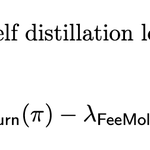
If we use a regular RL objective with this fallback reward, the policy will get stuck due to bad optimization landscape (more of this in the paper!)
The key to resolving the issue is via a log-barrier trick -- it also recovers TailRL objective! (3/n) xitter.cf/amuseddaman/status/211…
And as it turns out, optimizing how to fail can even improve the model's overall accuracy on certain tasks!
Check out our paper to learn more: arxiv.org/abs/2610.20401
All the credit goes to the amazing @amuseddaman

I was fortunate enough to spend my first summer in my PhD mentored by Dylan. It is just hard to enumerate all the valuable lessons I learned from him and they help me through my whole PhD till today.
Go work with him!

A super exciting announcement: In January 2027, I'll be joining @UCBerkeley as an assistant professor in EECS and Statistics.
I'll be recruiting PhD students and postdocs this cycle, starting Fall 2027. If you're interested the science of RL and deep learning, please apply.

Yuda Song retweeted

On July 15, we released Schema, the first agent harness to reach ~99% RHAE on the ARC-AGI-3 public set.
Today, we’re sharing the full paper and code, with new results and a closer look at why Schema works.
xitter.cf/HavenFeng/status/20777…


Yuda Song retweeted

Huge thanks to @pratyushmaini and @AdtRaghunathan for all their work, support and feedback as we worked on this paper!

So proud of @gaurav_ghosal for the incredible work he’s put into bringing NULLs to life.
Even happier to see it recognized with the Best Paper Award at the COLM Privacy & Security Workshop!
This is exactly the kind of ambitious research academia should make possible!

Yuda Song retweeted
We are taking a big step towards scaling LLMs that can unlearn on demand.
Cleanly deleting data from LLMs has proven impossible: training entangles every source in shared weights.
NULLs (Natively Unlearnable LLMs) escapes this, keeping millions of sources individually deletable in a 1B-parameter model trained on web data. (1/8)
Yuda Song retweeted

Please come and join us for the COLM 2026 Lifelong Agent Workshop!
Location: Continental Ballroom #6
We are starting!

Yuda Song retweeted

Join us at MOSS tomorrow!
There's been lots of discussion about what one can meaningfully contribute w/o huge resources (e.g., in academia). We hope MOSS can offer some answers and inspire more conversations! 🌱
(panel poll results for those interested: form.typeform.com/reports/01…

MOSS @COLM_conf is happening tomorrow (Fri, Oct 9)!
Join us for talks and discussions on how small-scale research and experiments can advance both scientific understanding and algorithm insights. 💡
📍 Hilton Union Square, Theater 84
sites.google.com/view/moss-c…

Yuda Song retweeted

Very happy to see MaxRL making the AI's top 10 list!

The AI’s top 10, crediting first authors:
1) Spurious Rewards: Rethinking Training Signals in RLVR — @RulinShao
2) Learning to Discover at Test Time — @mertyuksekgonul
3) Revisiting Efficiency–Accuracy Scaling in Mixture-of-Experts Architectures — @venmugil
4) Reinforcement Learning via Self-Distillation — @jonashubotter
5) Maximum Likelihood Reinforcement Learning — @FahimTajwar10
6) AutoNumerics-Zero — Esteban Real
7) Reinforcement Learning with Evolving Rubrics for Deep Research — @RulinShao
8) Rethinking the Trust Region in LLM Reinforcement Learning — @QPHutu
9) Gromov-Wasserstein at Scale, Beyond Squared Norms — Guillaume Houry
10) Flowers: A Warp Drive for Neural PDE Solvers — Till Muser
Well deserved! Congrats 🎉
Delighted to receive an ✨Outstanding Paper✨ at #COLM2026 for our paper “Message Passing Enables Efficient Reasoning.”
This work was done w Xuecheng Liu, @g_k_swamy and the 🐐 @Zanette_ai
At #COLM2026 Tue-Sat.
I will present our harness learning paper at the LLA workshop on Friday ( @ZAlvin39105 will deliver the oral).
I'd love to chat about making RL more general and efficient (or anything about RL!), and meta-topics like how to proceed with research at school.

if you want to learn more about our harness learning paper: xitter.cf/ZAlvin39105/status/210…

1/8
How do we train a model to adapt to tasks it has never seen, without updating its weights at test time?
With Harness Learning, we train a model to revise harnesses using execution feedback. At test time, the model applies this learned skill to improve harnesses on unseen tasks, while model weights stay fixed.
Improving agent harnesses takes experimentation. We want a model to learn from those revisions and make better edits on unseen tasks.
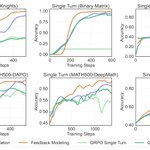
Models trained with harness learning nearly double their performance on challenging unseen reasoning and multihop question-answering tasks.
Yuda Song retweeted

New work on Harness Optimization: Training a model to revise executable agent harnesses using execution feedback:
arxiv.org/abs/2609.35738
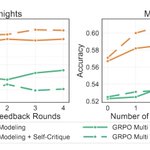
Trained with RL on downstream performance, the model learns to improve harnesses for unseen tasks. Across reasoning and multi-hop question answering, harness learning improves performance over successive revisions.
The key idea is that the model learns how to adapt, while the harness is what changes. These revisions reshape how an agent organizes computation, uses tools, and passes information across model calls.
Models trained on single revisions can continue improving harnesses over multiple rounds, suggesting that harness design can become a reusable and generalizable adaptation skill.
See an excellent thread by @ZAlvin39105.

1/8
How do we train a model to adapt to tasks it has never seen, without updating its weights at test time?
With Harness Learning, we train a model to revise harnesses using execution feedback. At test time, the model applies this learned skill to improve harnesses on unseen tasks, while model weights stay fixed.
Improving agent harnesses takes experimentation. We want a model to learn from those revisions and make better edits on unseen tasks.
Models trained with harness learning nearly double their performance on challenging unseen reasoning and multihop question-answering tasks.
Yuda Song retweeted

Computer-use agents are extremely good!
But they need to improve on a metric which most benchmarks don't track. How much time do CUAs take to complete a task?
Introducing cua-speedrun: a benchmark for accuracy, speed, and cost under matched infra.
cuaspeedrun.com
👇🧵
Yuda Song retweeted

There’s lots of buzz around agentic harnesses for robots, particularly for long horizon tasks that require complex reasoning and memory. But what will it really take to turn a reasoning agent into a reactive, reliable and low-latency robot policy?
In our new paper, workspace models, we design a new memory architecture that acts as a latent harness for stronger reasoning models. Here’s why we think this might be the way forward:
(1/9)
