
PhD student @mldcmu | Prev. @PrincetonCS
Pittsburgh, PA
Joined December 2021
- Tweets28
- Following183
- Followers205
- Likes93






1/
When LLMs answer questions with retrieved webpages, several plausible answers may appear.
What if one appears much more often and fits much of what the question asks, but still isn't the right answer?
Excited to share our #EMNLP2026 paper on this!
📄arxiv.org/abs/2610.27114

4/
JCA outperforms baselines, with especially large gains on questions where retrieved passages mention a plausible near-miss more often than the correct answer.

5/
Thankful for this work with @zacharylipton and Aarti Singh!
📍 Poster: Sun, Oct 25 · 11:00–12:30 at Hall H.
💼 I'm a final-year ML PhD at CMU, looking for full-time industry research roles starting in 2027. Would love to connect!
Jennifer Hsia @EMNLP retweeted

In our Nature paper, we introduce the first superhuman Stratego AI, which we built using general techniques that we developed for RL & test-time compute under imperfect information. 1/N

Jennifer Hsia @EMNLP retweeted

A lot of excitement in synthetic data for science is motivated by ambitious uses of LLMs (e.g., running a survey with GPT before real participants, forecasting promising experiments with LLMs). We ask, what beliefs should the experimenter have to make this a good idea? 🧵

Jennifer Hsia @EMNLP retweeted

Are we done with new RL algorithms? Turns out we might have been optimizing the wrong objective.
Introducing MaxRL, a framework to bring maximum likelihood optimization to RL settings.
Paper + code + project website: zanette-labs.github.io/MaxRL…
🧵 1/n
Jennifer Hsia @EMNLP retweeted

RL on LLMs inefficiently uses one scalar per rollout. But users regularly give much richer feedback: "make it formal," "step 3 is wrong."
Can we train LLMs on this human-AI interaction?
We introduce RL from Text Feedback, with 1) Self-Distillation; 2) Feedback Modeling (1/n) 🧵

Excited to share our work at #ICML2025!
📍 East Exhibition Hall A-B E-1707
🗓️ Wed July 16, 11am–1:30pm
📄 github.com/neulab/ragged


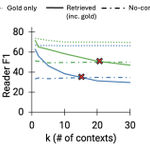
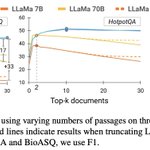
1/6 Retrieval is supposed to improve generation in RAG systems.
But in practice, adding more documents can hurt performance, even when relevant ones are retrieved.
We introduce RAGGED, a framework to measure and diagnose when retrieval helps and when it hurts.

5/6 Use RAGGED to analyze RAG systems with confidence:
✅ Detect fragile readers and unstable retrieval depths
✅ Compare models and setups using consistent, quantitative signals
✅ Guide training, evaluation, and design of more robust readers
6/6 Thankful for the collaboration w/ Afreen Shaikh, @ZhiruoW, @gneubig!
🔗Paper: arxiv.org/abs/2403.09040
🔗Project page: github.com/neulab/ragged
Jennifer Hsia @EMNLP retweeted

1/6 🚀 Excited to share that BrainNRDS has been accepted as an oral at #CVPR2025!
We decode motion from fMRI activity and use it to generate realistic reconstructions of videos people watched, outperforming strong existing baselines like MindVideo and Stable Video Diffusion.🧠🎥
Jennifer Hsia @EMNLP retweeted

🧵 Are "medical" LLMs/VLMs *adapted* from general-domain models, always better at answering medical questions than the original models?
In our oral presentation at #EMNLP2024 today (2:30pm in Tuttle), we'll show that surprisingly, the answer is "no".
arxiv.org/abs/2411.04118

Jennifer Hsia @EMNLP retweeted
Estimating notions of unfairness/inequity is hard as it requires that data captures all features that influenced decision-making. But what if it doesn't? In our work (arxiv.org/abs/2403.14713), we answer this question
w/ @dylanjsam @MichaelOberst @zacharylipton @brwilder

Jennifer Hsia @EMNLP retweeted

1/What does it mean for an LLM to “memorize” a doc? Exactly regurgitating a NYT article? Of course. Just training on NYT?Harder to say
We take big strides in this discourse w/*Adversarial Compression*
w/@A_v_i__S @zhilifeng @zacharylipton @zicokolter
🌐:locuslab.github.io/acr-memor…🧵
