
N 55°6' 0'' / E 38°48' 0''
Joined April 2010
- Tweets387
- Following152
- Followers55
- Likes365
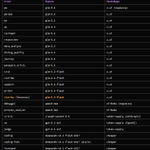
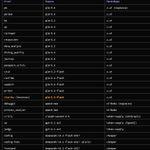






Есть у меня флот 20+ агентов, ими рулит агент-PM. Как меня год назад заблокировали в #Anthropic я пересел для PM на #glm 5.3 и в целом был доволен. Пару дней назад попробовал #qwen4. Это товарищи реальный шаг вперёд, рассуждения, домысливание за меня - теперь это мой фаворит

1
76
Maxim Efanenkov retweeted

Всё, отныне я амбассадор Kimi, друзья. Это ПЕРВАЯ нейронка В МИРЕ, которая позволила русским оплатить свои услуги. @Kimi_Moonshot @KimiDevs Спасибо!


Maxim Efanenkov retweeted

Elon Musk was asked at a conference whether he is happy. The pause before he answered lasted long enough that the audience shifted in their seats. The answer, when it came, was not what anyone expected from the richest man alive.
He said he doesn't think happiness is the right framework. He said his brain is "a very, very bad neighborhood" that he wouldn't recommend visiting. He said the experience of being him is one of constant output at the expense of internal peace. The production never stops. The mental simulation of problems, solutions, designs, and possibilities runs continuously, including during sleep, and there is no mechanism to turn it off. The brain that produces extraordinary external results produces extraordinary internal discomfort.
He compared his mind to a never ending explosion. Not a metaphor he used casually. An explosion. Constant expansion in all directions simultaneously. The explosion produces the companies, the products, the ideas, and the ambition. It also produces the insomnia, the inability to be present in relationships, the emotional unavailability that every partner has described, and the restlessness that makes ordinary human activities feel like a waste of processing power.
The answer was not self pity. It was clinical. He was describing the architecture of his own mind the way he would describe the architecture of a rocket engine: here is how it works, here is what it produces, here is what it costs. The cost of the mind that runs 6 companies is that the mind cannot be peaceful. The peace and the production are mutually exclusive. He chose production.
The audience wanted to hear "yes, I'm happy, and you can be too." They got: my brain is a bad neighborhood and the price of what I build is that I never rest. The honesty was so total that the room didn't know how to respond. The moderator moved on quickly.
The richest man alive does not experience happiness in the way the question implied. He experiences drive. He experiences the satisfaction of solving problems. He experiences the compulsion to build. But the quiet contentment that the word "happy" suggests is not available to him because the quiet is not available. The engine does not idle. The engine only runs.
He answered the question the way he answers everything: honestly, technically, and in a way that made everyone in the room grateful they are not him.
Maxim Efanenkov retweeted

几杯黑啤下肚之后,OpenAI CEO 奥特曼在镜头前犹豫了一下最后没忍住,有点失态但又非常真实的吐露了OpenAI 最深的一个秘密,
奥特曼原话是“我其实可能不应该说这个,但既然我们在喝酒,我就说了。”
前几天在ChatGPT新模型把数学家们一辈子的研究难题像切菜一样打穿之后,他兴奋得连熬两夜,却在天亮时陷入了深深的悲伤:
因为他亲眼看着人类依靠肉身大脑探索真理的时代,在眼前彻底死去了😭😭
紧接着,他讲了 OpenAI 内部那个被称为“Model Name-Hold My Beer(看我的)”的疯狂周末。
新模型刚跑通,
一群全世界最顶尖的科学家在内部频道里彻底玩疯了,
大家像是在给神明出考题一样,
把各自学术生涯里积攒了几十年最难啃的研究、横跨各个学科的未解之谜、以及所有人都笃定“机器绝对不可能做出来”的死结,一股脑全扔了进去。
然后,那个模型在所有人面前,像秋风扫落叶一样,接二连三把这些人类智力的终极堡垒全部击倒。
单单一个千禧年大奖难题 Navier-Stokes 方程相关的证明,他们就砸进去了 1000 万美元的算力。
奥特曼坦言,实际跑出来的科研发现,
远比他们对外公开发表的那几百个成果多得多。
他连着两个晚上兴奋得彻夜无眠,
但全场最让人脊背发凉的,是他兴奋之后的心理断崖:
“我也有比预期更多的悲伤和忧郁,以及一种……某种东西正在结束的感觉。”
这绝不是装模作样的公关辞令,而是一个亲眼目睹了造物主降临的人,在废墟上发出的本能悲叹。
过去几千年,人类之所以能昂着头自封为万物之灵,是因为我们坚信肉身大脑里蕴含着不可被公式化的神性与顿悟。
无论工具多么发达,那些最深奥的数学真理、物理规律和科学发现,永远是属于少数天选之子的至高王冠。
但在那个周末,这顶王冠被一排排冷冰冰的显卡机柜,以千万美元的算力成本,暴力且优雅地摘了下来。
最难的命题变成了算力的问题,一生的苦修变成了通宵跑完的代码,
它证明了人类科学探索的上限被无限拓宽,但也宣判了人类纯粹依靠肉身智慧傲视宇宙的时代,正式敲响了丧钟。
那个世界上离超级智能最近的人,手里握着远比展示给外界更多的真理,但他喝完酒后,听起来比任何人都悲伤😭

卧槽,这个真的必须卧槽一下了,币安热钱包被洗劫一空,他们自己的系统,居然主动给黑客的地址硬生生充了 2 个亿进去!
更离谱的是,4 分钟扫光 33 个亿!甚至何一在发推暂停提现的时候,黑客还在后台疯狂提币…… 我做了个视频完整讲解整个过程,
堪称币安史上最大的盗币事件了,热钱包被洗劫一空,他们自己的系统,居然主动给黑客的地址硬生生充了 2 个亿进去!
币安主力热钱包在凌晨被卷走 33 亿美元资产的链上记录全翻出来了,最让人后背发凉的根本不是金额有多大,而是黑客早已摸透了系统的签名机制,
从凌晨 4 点 20 分黑客在链上发起攻击,到主力钱包被全面洗劫,整个链上痕迹暴露出核心签名体系可能早就被渗透了。
大家默认以为交易所被黑客攻击,要么是前端被钓鱼换了地址,要么是内鬼卷款跑路。
但这次链上还原出来的操作,本质上是一场针对以太坊新协议 EIP-7702 的降维收割。
黑客给发送过上千万笔交易的主力热钱包挂上了代理委托,委托一生效,合约就能以钱包的名义随意调度资产,四分钟内第一波 25 亿美元直接归零。
更致命的是自动化流程的滞后,主力钱包被清空后,自动归集脚本依然在机械运转,甚至另一个热钱包还在凌晨 5 点多主动往里面补了 2 亿 USDT,结果 72 秒后就被黑客光速截胡。
4 点 20 分那笔最关键的攻击交易里,一次性打包了 50 个带有热钱包合法私钥签名的授权,这说明黑客手里早就握有成套的合法签名。
留个清醒,虽然稳定币可以通过中心化手段直接拉黑冻结,但黑客地址里趴着的近 20 万个 ETH 根本不受任何机构管控,链上追回难度极高。
最致命的漏洞从来不是代码里多写了一个错别字,而是你引以为傲的自动化防御体系,还在盲目相信一个已经被敌人拿下的签名印章。

Maxim Efanenkov retweeted

Far too many people are worried about super HIGH intelligence destroying humanity, when we should be worried about super LOW intelligence destroying humanity.


Maxim Efanenkov retweeted

Честно говоря какая-то жесть с Антропиками происходит.
Раньше у меня работала фиче-фабрика сутками, ну бывало съедал недельный лимит раньше чем за неделю.
И это еще я параллельно работал просто над фичами сам в сессиях и других проектах.
Теперь без всякой фабрики съедаю за два дня. И это при том что уже 70% через Кодекс делаю.
Добавил Team аккаунт за 100 евро. Так я там чисто пук-среньк успеваю сделать, два тикета уже второй день делаю, 5-ч лимиты слетают вмиг.
В то же время Astra за 200 чувствуется почти как бесконечная.
Перехожу на 100% Codex, а Клод только для ревью, иначе никак.
Maxim Efanenkov retweeted

This is what 9 months of building in public looks like financially 🙈
💰 Revenue: $375
→ Snail Walk: $358
→ Ko-fi tips: $17
💸 Expenses: $2,096
→ Claude Max: $1,200
→ Hosting: $230
→ Ship or Die: $199
→ X Premium: $110
→ Google Workspace: $100
→ Apple Developer: $99
→ Domains: $89
→ iCloud+: $40
→ SpriteCook: $29
📉 Total Net: -$1,721
One day I'll make real money with this. Just not today 😅
Full stats: martintale.com/stats

Maxim Efanenkov retweeted

If you want AI to actually make your work easier instead of stressing you out, stick to these as much as you can:
1 - Avoid subscriptions with 5-hour limits whenever possible. They mess with your workflow more than you realize.
2 - Set three goals:
One for today.
One for this week.
One for this month.
Stay flexible with the dates, but don't work without direction.
3 - Stop chasing every new model, harness, and tool.
Stay informed, but build a stack you can actually rely on.
Stability beats novelty.
4 - Give every tool a clear job.
If five tools do the same thing, that isn't a stack. That's an expensive distraction.
5 - Don't be loyal to any platform.
Be loyal to your time, your money, and your output.
6 - Spend more time understanding and planning before you execute.
A great agent with a bad plan just gets you to the wrong place faster.
7 - Separate testing from real work.
Don't start experimenting with a new model in the middle of an important project unless there's a good reason.
8 - Don't work with agents when you're exhausted, distracted, or mentally fried.
You'll make worse decisions and get frustrated a lot faster.
9 - Measure output, not usage.
More tokens, more agents, and more hours don't mean you're getting more done.

Maxim Efanenkov retweeted

I’ve genuinely never seen a model claim this low of a hallucination rate. This company was founded by Diogo Almeida, one of the researchers behind the instruction following work that led to ChatGPT, and instead of building an autoregressive chatbot that generates strings token by token, they basically throw string generation away entirely.
This model takes unstructured state in and spits out type safe probabilistic decisions in parallel, with their new RLCD training method calibrating how confident it should actually be.
And the results are kind of insane? On their workflow evals they’re claiming up to -194x faster and -445x cheaper.. while still competing with frontier models on these System One tasks. It’s also only $0.042 per million input tokens (4.2 cents) and output is literally free??
Obviously this isn’t a replacement for GPT-6/Astra style general reasoning it gives up free form generation to do this but for actual software automation? How is this not a much bigger deal?


After co-inventing ChatGPT, I kept asking myself: why have superhuman chat models not led to AGI?
I’ve spent the last 2 years in stealth building a new way to train models (RLCD), and a new type of frontier AI model that we are releasing today: Jev
• 20-200x faster
• 40-400x cheaper (w/ output tokens free)
• Frontier composable intelligence optimized for decisions
AFAICT the shortest path to AI-based economic revolution
Maxim Efanenkov retweeted

Should you build an agent harness?
I see lots of opinions about it.
My thoughts:
As an AI engineer, learning how to build a harness is one of the best ways to stay ahead and unlock unique value from agents.
If you understand how to build one, you can, at a minimum, transfer that knowledge to tune whatever harness or set of harnesses (closed or open) you use.
In the best case, you apply your domain expertise to build domain-specific harnesses that unlock unique real-world value and solve reliability issues other companies just aren't willing to invest time in. If you haven't noticed, many companies and startups have already started doing this. Harnesses are enablers in that way.
I don't see any drawbacks in learning to build one.
The main pushback against building a custom harness is that models will get better at generating them on the fly, so why build one? Or that companies will provide harness-as-a-service, etc. Now, ask yourself: will you have the level of customization that a proper harness requires? See, you are not building a wrapper here; you are building an important part of your intelligence stack. Something you want to control completely.
Like automated prompt engineering, evals, and many other areas requiring extensive domain knowledge, harness engineering isn't something models are great at (see dynamic workflows from ant as an example). We assume too much that tools will remain static, data won't change, or knowledge will not evolve. A custom harness lets you own these issues and solve them at your desired pace. You simply cannot afford to sit back and wait for model providers to solve this problem for you. The harness is too important to offload.
While general frontier models get better at verifiable (math, code, and the like) tasks, I haven't seen evidence that they solve reliability issues when you apply them to domain-specific and more dynamic environments. This is why you want to understand how the harness works and potentially build your own. I see a lot of companies already doing this in bio, health, legal, and finance.
My other concern about just relying on a model provider to solve the harness for you is vendor lock-in. Right now, we mostly use single models for most tasks, but it's not hard to see a world where we leverage a set of frontier models (open and closed) to address issues like cost and diversity of intelligence. Are you going to rely on some company to build that harness solution for you, or, even worse, trust a single model to do that for you?
I can go on and on.
Building your own harness is about working towards building your own intelligence stack. I don't think that's optional where things are headed if you really want to have a differentiated business or offering.
So where do you get started?
I suggest feeding this list of seminal harness engineering papers to your agent: academy.dair.ai/papers/colle…
You can start with something like: "Summarize the main components of an agent harness by researching this list of papers and tools: academy.dair.ai/papers/colle…. Then put together a set of visual notes on where to get started to build my own minimal harness using <language_of_your_choice>."
Your thoughts? I want to keep this as an open discussion. Please share any concerns or thoughts. I'll share more thoughts as the conversation evolves.
teapaw.org/omarsar0/status/209880…

Learn to build a harness, folks.
It's not surprising to me that so many YC builders want to build domain-specific harnesses.
If you work long enough on a domain-specific problem, you quickly realize the opportunity. But you also realize how important that harness will be to stay competitive in the agentic era.
From a product perspective, harnesses open up interesting new surface areas and experiences for the services/products you provide.
From a technical perspective, harnesses are how you build and maintain a framework and set of best practices for how your users/customers interact with what you offer.
Understanding how to build and design a harness means you can build much stronger intelligence stacks, given that you can customize it and understand the domain well. That's extremely valuable. It may not seem apparent yet, but a harness wave is coming.
If you are getting started, give this list of harness papers to your agents and start upskilling: academy.dair.ai/papers/colle…
If you are already a builder, try building one for your specific domain. It's a lot of fun, and you learn a lot of interesting things to enhance your current agentic tools.

Maxim Efanenkov retweeted

大家好,本人是做跨境电商的。
最近我失业了,也有一直在找工作,但是并不是很理想。
靠,找个工作真难,就业形势太严峻了🥲。
从今天起,我决定好好运营推特,看看能不能挣个饭钱,要不然会饿晕的。
我的目标也很明确:90 天内,用 AI 搞出每个月能赚 $1000 的东西。
我会在这里公开记录一切:
✅ 每天测试了什么 AI 工具(踩坑和惊喜都会说)
✅ 赚了多少钱,亏了多少钱,每笔都晒
✅ 走了哪些弯路,犯了哪些傻逼错误
我就是一个普通人,公开把自己的路走一遍,成或不成,你们都看得见。
如果你也在迷茫,也在想用 AI 找出路,欢迎关注。
转发帮我攒个人品,就当监督我了 🙏
大家一起加油吧😀