




Pinned Tweet
1/Just finished the @AllInPodcast with @MartyMakary. His point on "medical dogmas" is a wake-up call for the current system.
We have a structural bottleneck in ortho care that's costing Medicare billions and it's being protected by dogma. @mcuban @friedberg @jason @DrOz
1
1
101

MetaSin retweeted

I'm a spine surgeon. You asked a fair question, so here's the plain-English answer.
Before 2012 you could buy an individual plan online for about $200 a month, pick from six or seven insurers, and choose your own deductible: $500 if you wanted to pay more up front, $5,000 if you didn't. If you were healthy, that is. If you were sick, they could turn you down, and that part was real and had to be fixed.
Obamacare fixed it by requiring every plan to cover everyone for everything. Good. But that made the real price of a plan jump, and the only way to keep the monthly number from looking insane was to push the cost onto the back end. That's your $6,500 deductible. You're paying comprehensive prices for catastrophic coverage.
Then the quiet part. The law caps what insurers can keep at 20% of premiums. So the only way an insurer makes more money is if the total bill gets bigger. 20% of $10,000 beats 20% of $5,000. They have no reason to fight the hospital's price. They pass it through, take their cut, and send you the premium.
And the hospital's price went up. Hospitals bought the independent doctors, and the same visit & surgery under the hospital's name now costs 3-10 times more. Hospital prices are up 281% since 2000.
The number of insurers you can choose from fell to one in half the counties in America by 2018. Meanwhile, six in ten adults now have a chronic disease, so the pool is sicker.
So: sicker patients, pricier hospitals, an insurer that profits from a bigger bill, and a law that moved the cost to your deductible. That's what you're paying for.
Nobody in that chain gets paid more if you get better. That's the part to fix.

CAN SOMEONE EXPLAIN HEALTH INSURANCE LIKE I’M FIVE?
I pay $580 every month for health insurance. Then I get sick, visit the doctor, and receive a $1,400 bill because I haven’t met my $6,500 deductible.
So I paid nearly $7,000 in premiums just to be told I still have to spend another $6,500 before most of my coverage kicks in.
And every January, the deductible resets and the whole game starts over.
WHAT EXACTLY AM I PAYING FOR IF I STILL HAVE TO EMPTY MY OWN POCKETS BEFORE MY INSURANCE DOES ITS JOB?
MetaSin retweeted

Interesting idea from Vitalik.
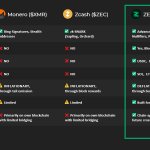
A “Zcash Frontier Edition” that merges ETH + ZEC balances and combines Ethereum’s PoS/sharding with #Zcash first-class SNARKs…
Privacy tech getting serious attention from the top.

MetaSin retweeted
Rep Khana @RoKhanna , I am a Spine Surgeon & read the Yale study. All 40 pages. Here's what the "$1 trillion in savings" actually is.
$378 billion comes from cutting drug prices 51%. You could pass that tomorrow without touching anyone's insurance. It has nothing to do with Medicare for All.
$296 billion comes from paying every hospital and doctor in America Medicare rates. That's not a saving. That's a pay cut, to the one line that's already down 33% since 2001. The model counts it as efficiency.
$286 billion is an assumed 8% cut in "fraud." Medicare's own improper payments last year: $57 billion. The government's program doesn't achieve what the model assumes a bigger version of it will.
That's $960 billion of the trillion. The rest is admin savings, which are real, and ER visits, which are modeled.
Now what the study leaves out, in the authors' own words: "provider responses to Medicare rates are not modeled." No doctors leaving. No wait times. No supply constraint. A "static, single-year accounting." They say so on the page.
And the 114,000 lives? 51,000 of them, 45% of the headline, come from reversing last year's subsidy and Medicaid cuts. Not from your bill.
Restore the subsidies and you'd get those without a single-payer system. Of what's left, half is based on a mortality number the authors say they couldn't find and had to interpolate.
It's a preprint. Not peer-reviewed. It says so at the top.
As a surgeon, I don't doubt the Yale team's intent. But a model that cuts the doctor's pay, assumes the doctor stays, assumes the patient shows up, and assumes the fraud disappears isn't evidence. It's a spreadsheet with the hard parts turned off.
Medicare already pays physicians 33% less than it did in 2001. Private practice fell from 680% of doctors to 18% on that rate. Your plan makes it the only rate. The trillion dollars is real. It's coming out of the people who treat you.
@Alison_Galvani #medicareforall

A new Yale analysis found Medicare for All would cover every American AND save more than $1 trillion a year, cutting national health care spending by 20%.
It would also mean better pay for doctors, nurses, and healthcare providers. The savings from cutting private insurance and Big Pharma profits as well as administrative waste would pay for increased Medicare reimbursement rates and $52 billion in unpaid hospital care.
Medicare for All saves money and lives.
MetaSin retweeted
Senator Sanders @SenSanders I am a surgeon, and I DONT get any tax breaks, nor do any of my patients get any tax breaks.
A hospital making $5 billion a year pays LESS property tax than a pizza shop.
HERE’S WHERE YOUR MONEY ACTUALLY GOES:
2 days ago I showed you hospital prices
are up 281% since 2000. Everyone asked the same question: where did it go?
Here's the answer, in one picture 👇
Hospital prices: +281%.
Healthcare administrators: +131%. Four times faster than the number of doctors.
Nonprofit hospital CEO pay: +92% in a decade. The CEO-to-nurse pay gap went from 23:1 to 44:1.
Medicare's payment to the physician: +7% in 25 years. After inflation, -33%.
That's where it went. Not to the bedside. To the C-suite and the org chart.
Now the part that should make you angry.
Most big hospitals are "nonprofits." That means no income tax. No property tax. No sales tax on what they buy.
A hospital system doing $5 billion a year pays less property tax than the pizza place across the street.
The deal was supposed to be: we don't tax you, you take care of the community.
Here's the scorecard: The tax break is worth $37 billion a year. The average nonprofit hospital spends 2.3% of its budget on charity care. The exemption is worth 4.3% of its budget.
80% of them get more in tax breaks than they give back. The gap: $25.7 billion a year.
$25.7 billion, every year, that didn't go to patients, didn't go to doctors, didn't go to your city's schools or roads, and didn't go to the IRS. It went into the building.
And the CEOs running these "charities"? Average pay is six times what a CEO makes at any other kind of nonprofit. Some make $20 million. The research found their pay rises with profits and has zero relationship to charity care.
The only people in this system who pay no taxes are the ones with the biggest buildings and the biggest bonuses.
A nonprofit that pays its CEO $20 million and spends less on charity than it saves in taxes isn't a charity. It's a corporation with a halo.
Ask your hospital one question: what did you pay in property tax last year?
#medicareforall @lowninstitute
MetaSin retweeted

While the entire crypto industry has been suffering from the consequences of their stupid incidents for two consecutive years, is there anyone who lies to the public more shamelessly than this—after repeatedly causing market crashes every October, then claiming to be responsible for protecting their customers and asking those same customers to maintain a long-term vision?
And whenever customers or community members criticize them, they dismiss the criticism as attacks orchestrated by competitors like OKX, rather than addressing the concerns themselves.

NEW: @cz_binance CLAIMS HE'S NOT SELLING - "I ONLY BOUGHT, DCA EVERY DAY"
IT COMES AFTER HE LISTED "POTENTIAL REASONS" WHY CRYPTO IS DOWN, INCLUDING THE ANTHROPIC IPO AND $1.9B IN $BTC ETF OUTFLOWS

MetaSin retweeted

🚨 BTC短短17天从81,971暴跌15,515美元,就是币安交易所操纵盘口特权机制、配合外部巨鳄恶意猎杀收割造成的!
(文中附完整官方API数据证明)
很多人想不通:这轮暴跌,平台特权账户与外部庄家到底是怎么做到“既不花多少真金白银砸盘,又能精准操控价格完成血洗”的?
其实底层操盘原理只有四步,30 秒就能彻底看透:
1. 静默埋空(特权被动挂单不改变价格):
在横盘期,特权做市账户用“被动限价单(Maker)”或冰山单挂在盘口上方。因为被动挂单不主动吃单,完全不会砸低最新成交价,还能白拿平台负费率返佣——散户每主动抄底买一笔,就神不知鬼不觉替庄家建好一笔空单。
2. 假墙诱捕(零成本挂撤单伪造强支撑):
利用平台赋予的高频撤单豁免权,在整数关口下方摆出几百枚 BTC 的巨额“假买墙”,制造官方/巨鲸护盘假象,诱骗散户高倍开多,且止损全扎堆在买墙正下方。
3. 抽梯点火(专挑美盘睡觉时借币破位):
等散户多头喂肥后,专挑美股休市、买盘最薄的亚盘早间或周末,0.1 秒内瞬间撤光下方假买墙,反手在头顶压上几百枚卖墙封死退路;同时从币安 VIP 池借出少量散户理财真币,市价猛砸击穿关键关口。
4. 借刀收割(用散户自己的爆仓单砸盘):
关口一破,散户扎堆的止损与强平单会被系统强制转化为“不计成本的市价卖单”连环踩踏!庄家根本不用再掏钱往下砸,只在插针最底部重新挂好被动买单(同样不推高价格),躺着接走散户带血的强平筹码平掉空单、低价买回现货归还借币池;庄家赚走巨额波动差价,币安零风险抽走千亿流水手续费与 1.25% 强平罚金!
这不是猜想。拉完 10/29–11/14 共 17 天币安现货、永续合约、Coinbase 与 Kraken 汇率的全部官方 API 底层数据,全套实盘铁证如下👇
【铁证一:狂跌 15,515 美元,现货根本没砸多少,全是合约屠宰】
• 10/29 至 11/14,BTC 从 81,971 砸到 66,456 USDT(暴跌 15,515 美元);
• 17 天里,币安现货累计净主动卖出仅 -927 BTC(日均仅 54.5 枚!);
• 而币安 U 本位永续累计净主动砸盘高达 -47,747 BTC(约 35.2 亿美元),是现货的 51.5 倍!17 天永续总流水狂刷 1,980 亿美元。
【铁证二:75.1% 的跌幅专挑华尔街睡觉时下死手】
拆解过去 200 小时(11/06–11/14,累计净跌 -$8,772)逐时数据:
• 美股/ETF 开盘时段:仅跌 -$2,188(占 24.9%);
• 美股休市的亚欧时段 + 周末:狂跌 -$6,584(占 75.1%!)。
【铁证三:11/12 最新储备审计(PoR)揭开平台真实回血动机】
填补 10 月底安全事件缺口后,11/12 最新 PoR 显示币安用户托管 687,912 BTC,储备率降至贴地飞行的 100.05%——超额自有缓冲仅剩约 344 BTC。平台自己没多余币去裸砸,但极度饥渴高波动带来的天量手续费与 1.25% 强平清算费回血金库,遂用 VIP 借币池(出借散户理财币)+ 负费率撤单特权为外部收割巨鳄彻底打开绿灯。
【铁证四:全程五步“养、套、杀”时间线数据还原】
▸ 11/04–11/05(拉盘洗盘):11/04 永续净买 +6,965 BTC 暴力拉上 81,196 诱多;次日晚 4H 反手暴砸 -4,360 美元,强平蒸发 -4,994 BTC 持仓(OI),散户多空比打残至 1.39。
▸ 11/06–11/07(假托底真养猪):横盘两天,现货净买 +1,123 BTC 装铁底,永续暗中净卖 -4,380 BTC 埋空单;48 小时内散户多空比从 1.39 翻倍飙至 3.13(超 75% 散户做多)。
▸ 11/09–11/13 00:00(被动挂单蓄满 73 亿美元堰塞湖):价格阴跌 3,700 美元,币安永续 OI 不降反增,逆势暴涨 +6,568 BTC 冲上 102,149 BTC 峰值!做市商用被动单疯狂建空,散户一路接刀补仓(多空比升至 3.14–3.32)。
▸ 11/13–11/14 早盘(美盘休市连砸两记闷棍):卡死北京时间 08:00–12:00 真空期——周五早盘现货净砸 -977 BTC 点火,永续轰出 10 倍体量(-9,754 BTC)砸穿 70,000;周六早盘现货再砸 -649 BTC、永续砸 -4,591 BTC 击穿 67,000(剥离汇率后周六 10:00 币安真实成交价比美国 Coinbase 低 -$11.91,实锤币安盘口领砸),两轮迫使 -5,825 BTC 多头爆仓割肉。
▸ 周六晚 21:00(撤托改压现场实拍):刚破 67,000,盘口 66,900 原本护盘的 501 BTC 买墙 4 分钟内全撤,反手在 66,900 压上 517 BTC 卖墙锁死反弹。
永远别信永续合约前五档的几百枚大买墙(零成本随时秒撤),只看 Coinbase 与币安现货深水区长期驻留的真买墙。
MetaSin retweeted

Let me tell you a story about how unethical Anthropic is.
In April, the Anthropic team began heavily courting our engineering team to tell them corporate secrets, technical details, and future plans for @cfosilvia.
They pretended their interest was due to our exploding popularity and accelerating compute usage, but it quickly became apparent that Anthropic was fishing for details on how we built our product and why it was so popular.
This included the Anthropic team trying to wine-and-dine our engineers, including a infamous steak dinner where someone told our team "don't worry about it, this is on Dario."
Our team was not born yesterday, so we quickly realized what was happening and refused to share sensitive information and technical details with the Anthropic team.
As we suspected, Anthropic was trying to get information from us, so they could build a competing product. Some people on their team must have a guilty conscious because they messaged us a few days ago to give us "a heads-up" that they were launching a competing product.
Thankfully, the Silvia engineering team has been aggressively working to get off the frontier models for the last ~ 6 months. That effort has been highly successful, because our compute costs are ~ 97% lower when we use our own model & hardware, the latency is lower, and the accuracy of answers materially increases as well.
The sad thing for Anthropic is they have now released an inferior product and they had to sell their soul to do it.
The only thing worse than being a trillion-dollar company that can't beat a 10-person team is being a trillion-dollar company that no one trusts and everyone knows is unethical.
Serious investors continue to choose @cfosilvia over ChatGPT, Claude, and other frontier companies because these products are not optimized to solve the actual user problem.
Today, Anthropic launched a Claude wrapper that is masquerading as a personal finance product. Best of luck to them.
But I will take the Silvia misfits vs the Anthropic losers any day of the week.
if you want to support people trying to do things the right way, and help investors be more informed, then consider signing up for Silvia today: silvia.com


MetaSin retweeted
Under pressure from Israeli prime minister Benjamin Netanyahu, the Trump administration may be within days of launching a nuclear strike on Iran. The target would be Pickax Mountain in central Iran, where Israeli intelligence claims the Iranian government has restarted its nuclear enrichment program. No conventional weapon in the American arsenal can penetrate 300 feet of solid granite to destroy the tunnels where enrichment is supposedly taking place. The only military option is a nuclear strike. Netanyahu has been pushing hard for one. “Bibi calls Trump about it every day,” says an informed observer.
Netanyahu is cornered and desperate. After last week’s election results, he can’t form a government unless Trump intervenes directly in Israeli politics and brokers a deal with other parties that gives Netanyahu 61 seats in the Knesset. Otherwise, he is out as prime minister and on his way to ignominy, investigations and possibly jail. Netanyahu must stay close to Trump. He needs this war.
To that end, he’s applied maximum pressure to his closest allies in the administration, including Secretary of Defense Pete Hegseth and CENTCOM commander Brad Cooper. Both oppose a negotiated settlement to the war they’ve so grievously mismanaged; both are pushing to restart major combat operations. Secretary of State Marco Rubio and CIA director John Ratcliffe are also following Netanyahu’s lead, as are leaders of the Democratic Party. In a recent meeting on the subject, former president Barack Obama said he opposes the current Iran peace deal being drafted in Doha.
The rest of America’s longtime allies in the Middle East are terrified by the prospect of more war. On September 27th, Netanyahu flew secretly to Abu Dhabi to enlist the UAE in his lobbying effort for a final attack on Iran. The Emiratis refused. After eight months of conflict, Gulf economies are teetering. So are global energy and fertilizer markets. They won’t recover soon. Globally, there are a total of about 850 supertankers used to transport oil from producers to the rest of the world. In October alone, 11 of them were badly damaged in Hormuz. At this pace, a global depression is imminent. A nuclear strike would radically accelerate the destruction. Fallout from a ground explosion at Pickax Mountain would contaminate the Persian Gulf, poisoning the water supply for 100 million people.
And those are just some of the immediate consequences for the region. The rest of the world is every bit as exposed. No country other than the United States has ever used a nuclear weapon in war. Some would like to. An American nuclear attack on Iran would set a new precedent. The Russians have already told at least two other governments that an American nuclear strike on Iran would free them to use nuclear weapons against Ukraine. Pakistan and India would be tempted to do the same against each other, as would North Korea against Seoul. After the first nuclear strike, World War Three is inevitable. That war would be short and final.
We’ve been sleepwalking toward this moment for months. Since February, the administration has quietly rewritten America’s nuclear doctrine to make first use of so-called “battlefield nukes” easier and therefore more likely. No one in Washington in either party seems bothered by this. Now we’re on the brink of it.
Close observers say Trump is likely to decide by next weekend whether or not to use nuclear weapons. That would be November 7, six days from now. To his credit, he’s hesitating. At the moment, Trump is listening to his vice president, JD Vance, and to his envoy and friend Steve Witkoff, both of whom argue a deal with Iran can be made.
They’re right, though it won’t be simple. The Iranians are famously frustrating to negotiate with under any circumstances, and elements of that government have become more radical since Ayatollah Ali Khamenei and his family were killed in February. After decades of isolation, even relatively moderate Iranian leaders seem confused by how decisions are made in the West. (There is a widespread belief in Tehran, for example, that the United States government controls Israel.) But overall, people who have spoken to decision-makers in Iran say there is consensus there that more war is bad for everyone and a deal is worth making.
One group that hasn’t been consulted so far is the global population — the hundreds of millions of people who will be killed along with their children if Trump is pushed by Netanyahu into launching a nuclear strike next week. Now would be the time for them to speak up.
MetaSin retweeted

Is 50 GW in a single year too aggressive?
"Dear Brad called us out publicly and cut our forecast in half."
So Jeremie (@JeremieEO) and Reyk (@robotknower) came on with Jordan (@JordanNanos) to show their work. They go site by site from satellite and explain why haircutting the number double counts the delays already baked in. Plus moratoriums, 9-month modular builds, and why 2028 is the year to watch.
MetaSin retweeted
for crypto to win, we need the best ecosystems working together
NEAR is how
trillions

Helius CEO @mert has joined the NEAR Foundation Council, NEAR Foundation’s governing body.
An early NEAR Intents user and leading voice on privacy, Mert brings an operator’s view to how NEAR builds and grows.
“For crypto to win, we need connected, unstoppable liquidity at planetary scale. A market of markets. Neither Solana, Zcash, or Bitcoin can win on their own, we must work together. And NEAR is how."
near.org/blog/mert-mumtaz-jo…

MetaSin retweeted
lmao
it took Zcash devs less than 24h to design against the recent fearmongering
in fact, Zcash will be resistant (on transparent side) by January
$10,000

Here's our plan for quantum-safe, unlinkable, rotating taddrs. Possible with Zcash, today.
While others are worrying about the viability of rotating transparent addresses, we're already solving linkability.
zakura.com/engineering/trans…

MetaSin retweeted

More on AI pacing:
Sarah Friar CFO of OpenAI yesterday on CNBC: “from where I sit today there is so much opportunity to drive growth that I am still highly focused on getting more compute to keep that flywheel going.”
Sachin Katti VP of Compute Strategy at OpenAI @sk7037 yesterday: “The way we will make sure frontier models are safe and aligned is by spending compute. So the counterintuitive point is that we’ll need even more compute to make sure future models are more safe and aligned.”
If you thought “pacing” was negative for AI infrastructure demand, think again. Almost as bullish as open-weight AI taking share but not quite.
MetaSin retweeted

Some people seem fixated on the words “construction-ready.”
The point is that:
(1) We are not far from AI producing usable plans
(2) Right now consumers can now engage in an exploratory process that is actually realistic if they do have a land survey. And they can bring in specialists only when they are excited about a particular concept.
MetaSin retweeted

Zcash is the most exciting and undiscovered opportunity in crypto. It is encrypted bitcoin. It is pioneering privacy technology, quantum resistance, and AI-hardening. There is nothing out there even close to it and it's just beginning. Bookmark this tweet.
MetaSin retweeted

Why corning?
open.substack.com/pub/photon…


$GLW
I am super long on GLW
Countdown to Corning (GLW) Q2 Earnings: A Look at Estimates Beyond Revenue and EPS
finance.yahoo.com/markets/st…

MetaSin retweeted

$AAOI Applied Optoelectronics places record follow-on order for ClassOne Solstice S8 wet processing systems


MetaSin retweeted

I’m long $NOK
$NOK not being up at least 30% on this news just lets me know most people are missing the turnaround story, the geopolitical angle and the bet on America.
Nokia is 10x-ing photonic chip packaging capacity at its Allentown, Pennsylvania facility. Commercially available by end of Q3.
The numbers confirmed from the June 16 release:
-- ~$30M Nokia capex, plus ~$4M Pennsylvania state aid and ~$10M federal CHIPS investment tax credit
-- 500+ new jobs, nearly doubling the PA workforce
-- $500M+ projected economic impact over 5 years
-- Part of Nokia's broader $4B US R&D and manufacturing commitment
Less than 2% of global semiconductor advanced test and packaging happens in the US. Nokia's Allentown plant is one of the only domestic sites packaging photonic chips into optical modules for AI data centers. Their optical tech can cut energy usage by as much as 75%.
This facility came from Infinera. Nokia acquired Infinera in February 2025.
Allentown traces directly back to Infinera's decades of work in photonic integrated circuits, coherent optical technology, and domestic optical manufacturing.
When people look at $NOK and see a sleepy European telecom equipment maker, they are missing that Nokia absorbed one of the most important US-based photonics manufacturing assets in existence and is now scaling it 10x with government money behind it.
The market is still pricing the legacy telecom company. It is not pricing the domestic photonics infrastructure play that Nokia built through the Infinera deal.
Reshoring is its own thesis now, and it has government money and a Q3 deadline attached to it.
When less than 2% of global ATP happens domestically and Washington wants that number to climb, the few companies that already own US photonics packaging capacity become strategically valuable in a way that has nothing to do with quarterly telecom revenue.
It is a $20B+ telecom giant and the Allentown expansion is a small piece of the total business.
For a name the market still prices as legacy telecom, getting a domestic photonics packaging franchise with CHIPS Act backing essentially for free inside the valuation is the kind of mispricing I like.
The market is misreading this headline. I rather trade the supply chain.
Bullish AF $NOK


MetaSin retweeted

Whenever $NOK dips, just know the company's insiders are bagged with you.
They were dropping millions of their own $ at ATH's right beside us...


$NOK just announced a 10x expansion of its photonic chip facility in Allentown, Pennsylvania. New capacity online by end of Q3 2026.
Less than 2% of global semiconductor advanced test and packaging happens on US soil. Nokia's Allentown plant is one of only a handful of facilities in the country doing it for optical modules going into AI infrastructure.
$CIEN trades at 11.0x forward revenue. $COHR trades at 11.6x. Nokia trades at 3.4x. All three sell optical networking gear to the same AI datacenter customers.
The gap exists because optical is still only 15% of Nokia's revenue. Wall Street prices the whole company like Ericsson. Today's announcement is the capacity build that changes that mix.
We ran a SOTP model attributing peer multiples to each business segment. The numbers tell a very different story than where this stock trades.
$NOK is still one of the most slept on optical businesses on the market. €3.8B net cash on the balance sheet and the Ericsson floor already sets the downside.
Full deep dive with the complete model and price target is live on the Substack. Link in below and in bio.
$NOK $COHR $CIEN $ERIC $AAOI $LITE
