

Make it simple, but significant
Joined July 2012
- Tweets15.9K
- Following334
- Followers1K
- Likes92.3K








Mike Redeker retweeted

About $300 million from an unknown source landed in September in the National Park Service donation account Trump uses for his D.C. projects, the NYT reports.
Interior expected $50 million that month. $347 million came in overall. Financial reports don't say who gave it.
Mike Redeker retweeted

It's a week before Thanksgiving, and Minneapolis, Denver, Omaha, Des Moines, Milwaukee and Detroit haven't seen a single snowflake yet.
Only one fall in 142 years has gone this long in Minneapolis without one, and there's none in the forecast through the weekend.


Mike Redeker retweeted

Fate loves irony, so what if...
- Nvidia fires Jensen
- NVDA crashes
- Elon hires Jensen, Jensen hires his best lieutenants
- SPCX skyrockets, NVDA crashes more
- SPCX can now afford to acquire NVDA
- Jensen back in seat, NVDA board is out
Nice

Excellent debut interview here with Joel Block CEO @DarkHorseDRK covering their latest Q3 Earnings and a bit of a deep dive intro DarkHorse Technologies!!!🔥🔥🔥 $DRK
youtube.com/watch?v=Mas1NOqG…

5
539
$DRK changing the narrative! this is the way
contributor > extractor

Utility on record: local bills haven’t risen in 3 years because @DarkHorseDRK has been operating there.
They’re taking stranded/excess power that sat idle after industry left the area, putting real revenue back into the utility’s system, and keeping rates flat for the community. The utility itself calls them a good corporate citizen.
And the real opportunity still lies ahead.
That’s the model. Real community based partnerships. When you’re expanding into neighboring towns and the utility is already vouching for you, it carries weight.
$DRK doing it the right way 🏇🏇🏇

This is very big deal IMO

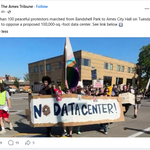
28 measures in 25 towns and every one went against data centers.
The buried lede though was this..
7 of them didn't ban data centers, they capped them at 25 MW.
People aren't voting against compute.
They're voting against a gigawatt campus on the farmland next door. $DRK
Mike Redeker retweeted

Tonight’s outcome isn’t about placing faith in Democrats or socialist principles; it’s about holding Republicans accountable for betraying their promises.
All Republicans had to do was:
1. put Americans First
2. not start another war
3. prosecute sex traffickers


Mike Redeker retweeted

Even if it were possible for the IRS to seize every dollar from every billionaire in America, it would total about $9 trillion and only run the federal government for roughly 15 months. The problem has to do with spending.

$DRK yep

Darkhorse technologies $DRK just took a major step toward becoming a real AI infrastructure story.
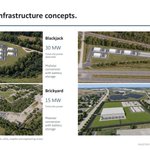
Today, DarkHorse signed a 10-year power contract for another 50 MW in the TVA region, doubling its contracted capacity to roughly 100 MW.
Why this matters:
Power is the bottleneck for AI data centers.
Land is easy.
Servers can be bought.
But large blocks of reliable power are increasingly scarce.
DRK now controls access to ~100 MW in one of the most attractive power markets in the country.
That materially strengthens the thesis.
The next two pieces matter enormously:
Financing the new substation/site without crushing shareholders with dilution
Signing an AI/HPC customer to actually monetize the power
If DRK lands a credible multi-year AI customer for 20-50 MW, the valuation framework changes completely.
Today’s announcement does not finish the story.
But it makes the story a lot more real.
$DRK

Mike Redeker retweeted

This video is about the lived experience of Broken Money.
My team and I worked for over a month on this one, I hope you will check it out and share it.

well this takes the cake:

Went through the full DarkHorse resource after our conversation and the thesis makes a lot more sense to me now.
My biggest takeaway is that the inference argument is really about architecture, not just AI demand.
Training naturally pushes toward enormous, tightly connected campuses.
But if inference becomes increasingly distributed, the opportunity shifts toward getting usable compute closer to where demand exists, across multiple smaller sites rather than forcing everything into one massive campus.
That makes the rest of the DarkHorse strategy click:
Start with energized infrastructure that already exists.
Match each site to the workload it can support best.
Build in stages.
Connect multiple locations into a distributed compute network.
And do it in a way that can actually coexist with the communities hosting the infrastructure.
One thing I think deserves significantly more public and investor education is the “good neighbor” side of the model.
Closed-loop cooling, reduced local water impact, smaller footprints, and designing around existing communities matter, especially as data-center development faces more scrutiny around water, power, and local infrastructure.
But the other side of that discussion that I rarely see outside city council meetings is the potential tax base.
For perspective, Hopkinsville’s entire FY2027 general fund is roughly $53M, with about $6M coming from property taxes. So even $1M of incremental recurring local tax revenue would represent nearly 2% of the entire general fund and roughly 16% of the city’s current property-tax revenue.
That is NOT a projection of what DarkHorse will pay. It just puts into perspective how economically meaningful a properly structured project can become for a smaller community.
And we have examples of what the model can eventually mean at scale. Loudoun County projects roughly 40% of its FY2027 budget will come from data-center tax revenue.
That combination deserves more attention:
Build compute infrastructure where power already exists.
Minimize the burden on local water and resources.
Become a good long-term neighbor.
And potentially create a meaningful new tax base for communities that may never otherwise attract this level of infrastructure investment.
I think educating communities and investors on that side of the equation could be almost as important as educating them on training vs. inference.
The “start where the electrons already are” line means a lot more to me after reading through the whole thing.
Appreciate you pushing me to look deeper into this, @FarmahTom. Definitely understand the $DRK thesis better after our conversation.
8
742