

Tales and commentary from the borderland between business and deep tech. Also startups, CS, ML and AI.
Joined May 2022
- Tweets419
- Following371
- Followers74
- Likes2.2K





One more reason to be skeptical of general quantum computing: if this result holds it means quantum computers can only be polynomially faster (not exponentially faster) than classical computers for most inputs.

Today Physical Superintelligence PBC is announcing a proof of the Aaronson-Ambainis conjecture, one of the central open problems in quantum complexity, with major implications for quantum computing speedup.
psi.inc/research/aaronson-am…
Thread 👇

Björn Smedman retweeted

I am completely in awe of ChatGPT Pro. Today I gave the final version of our article to my my personal ChatGPT Plus, intended it only to correct typos and possibly the English. Instead it found a serious mathematical error.
Björn Smedman retweeted

ChatGPT for physical engineering, including enabling amateurs to design prototype devices:

Björn Smedman retweeted

Mistral VP of Science @PierreStock says they have efficiency in their DNA and people should give them more money:
"Now, it's 300 people, and [Le Chonk] we managed to train it on only 10 megawatts of compute from scratch. 10 megawatts of compute is roughly 4,000 GB300s, to give you an order of magnitude."
"That's super low. It's a fraction of what every competitor uses, and we trained it on our own compute."
"It's pretty amazing, and we really got efficiency in our DNA. But now, the thing I want to tell everyone is that it means that you should give us more money because the yield is there....Please give us 1 gigawatt."
"We've now spent one year building the reinforcement learning machine in training… [Le Chonk] is the best open-weight model in the world on cyber defense, on coding, and on coding agents."

ML4 is now open-weight! Frontier capabilities on code agents & cyber, way more efficient and compact than its Preview version three weeks ago (!) and cherry on the cake: technical report telling its epic backstory. Check it out: huggingface.co/mistralai/Mis…

Björn Smedman retweeted

Anthropic updated its S1 this morning. Notable additions re automated AI R&D and human oversight of it:
"[...] our internal estimates and our expectations regarding future models, rather than our current models, indicate that we may imminently meet our Responsible Scaling Policy’s definition of 'dramatically accelerated progress attributable to AI.' We have not designated any of our current models as exceeding this threshold, and we continue to assess the underlying data. We are also evaluating the implications of meeting the AI research and development capability threshold and will release further reports in the future as we set forth in our Responsible Scaling Policy."
"We are also considering additional measures, including updates to our Responsible Scaling Policy, to require human review and approval of certain decisions in our research and development processes as our models perform an increasing share of that work."
"We believe our investments in safety techniques will enable us to manage these risks and responsibly realize substantially more leverage from Claude than we do today in developing AI models. However, we do not anticipate being able to safely use Claude to fully autonomously design and build successive generations of frontier models without meaningful human supervision or understanding, if and when that becomes technically possible. Accordingly, we are considering updates to our Responsible Scaling Policy to keep humans in control of frontier model development at Anthropic."
sec.gov/Archives/edgar/data/…


Björn Smedman retweeted

NICE
Ranking of the the highest valued AI labs outside the US:
• DeepSeek (China) $50b, ~$74b rumoured
• Moonshot AI (China) $35b, ~$50b rumoured
• Cohere (Canada) ~$25.5b,
• Mistral AI (France) ~$24b
• Z.ai (China) ~$32B (market cap)

Björn Smedman retweeted

Insane that the European Union is represented only once amongst the 50 largest companies in the world.

Almost 25 years ago I sat in the basement of Lund University (LTH) working on an Othello-playing AI agent. Back then I thought AI would be perhaps humankind's greatest achievement, and I just hoped I would live to see it. But now that the thinking machines are here...
I'm having more mixed emotions. I wrote about them on my blog: moneysoftware.substack.com/p…


Björn Smedman retweeted

An internal model at OpenAI has produced a claimed refutation of ETH! Russell Impagliazzo, Mohan Paturi, and I have been asked to help organize an open and independent examination of this claim. 1/4
Björn Smedman retweeted

Two physicists asked AI to choose a problem on its own, solve it and write a paper that could be published in a prestigious journal. In two hours, AI produced a paper with a novel, significant result.

Björn Smedman retweeted
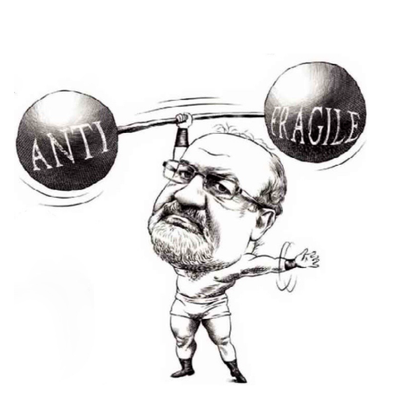
"A country's assets reside in the tinkerers, the hobbyists, and the risk-takers." - Nassim Nicholas Taleb
Björn Smedman retweeted

Peter Thiel on the difference between American and German wealth:
“In the US, nine out of 12 of those people made their own money.”
“In Germany, all 20 of those 20 inherited it.”
“Not a single person did something new.”
Björn Smedman retweeted

Papers rejected by Nature:
1933 · Fermi’s theory of beta decay (“too remote from reality”)
1937 · Krebs’ citric acid cycle (Nobel Prize, 1953)
1973 · Lauterbur’s first MRI paper (Nobel Prize, 2003)
I good sign for the future

Björn Smedman retweeted

Checking that a major mathematical proof is correct can take years. Formalization—converting the mathematical reasoning into a form computer proof assistants like Lean can verify—can help.
Last month, Claude completed the first formalized proof of Fermat’s Last Theorem, one of the most famous theorems of all time. This was a project experts thought would take many years. It is the largest Lean proof ever written.
Fermat’s Last Theorem was first proven in 1995 by Sir Andrew Wiles, more than 350 years after it was conjectured. Our proof, which totals over 13 million lines of code, provides machine verification. More importantly, it proves over 29,000 other theorems that the proof requires, across many areas of math which had never before been formalized.
We see this as a major step in the long process of firming up the core of mathematical knowledge, building on work from three centuries of mathematicians and hundreds of contributors to Lean and Mathlib. We are optimistic that AI-assisted verification of mathematical proofs will help reduce the burden of refereeing mathematics in an era where more proofs are being produced than ever before.
You can read about the process on our Science Blog: anthropic.com/research/forma…
And see the complete proof on GitHub: github.com/anthropics/fermat…
Björn Smedman retweeted

Andrew Wiles worked on Fermat's Last Theorem alone in his attic for 7 years and told nobody except his wife.
The problem was 358 years old. Fermat scribbled in a margin in 1637 that he had a proof and no room to write it, and every mathematician since had failed.
Wiles saw the statement in a library book at 10 years old. He never let it go.
He was a Princeton professor when he started in 1986. He stopped publishing new work and released old results in pieces to hide the silence.
He announced it in Cambridge in June 1993, over 3 lectures, revealing the target only at the end. Newspapers ran it worldwide.
Then a referee found a gap. One step in the proof did not hold, and the error was fundamental.
He spent 14 months trying to close it in public view, with the whole field watching. He was ready to quit.
The fix arrived in September 1994. He has said he stared at it in disbelief for 20 minutes.
The BBC filmed him describing that moment. He gets a few words out, then turns away from the camera in tears.
He kept the greatest result of the century secret so nobody could take it.

