



Postdoc in Molecular Genetics of Adaptation – Pespeni Lab, University of Vermont. Flexible project, expertise in linking genotype to phenotype. 2+ years of funding; NIH pay scale; Ideal start Sept 1. Email mpespeni at uvm dot edu if interested! Pls RT! blog.uvm.edu/mpespeni/

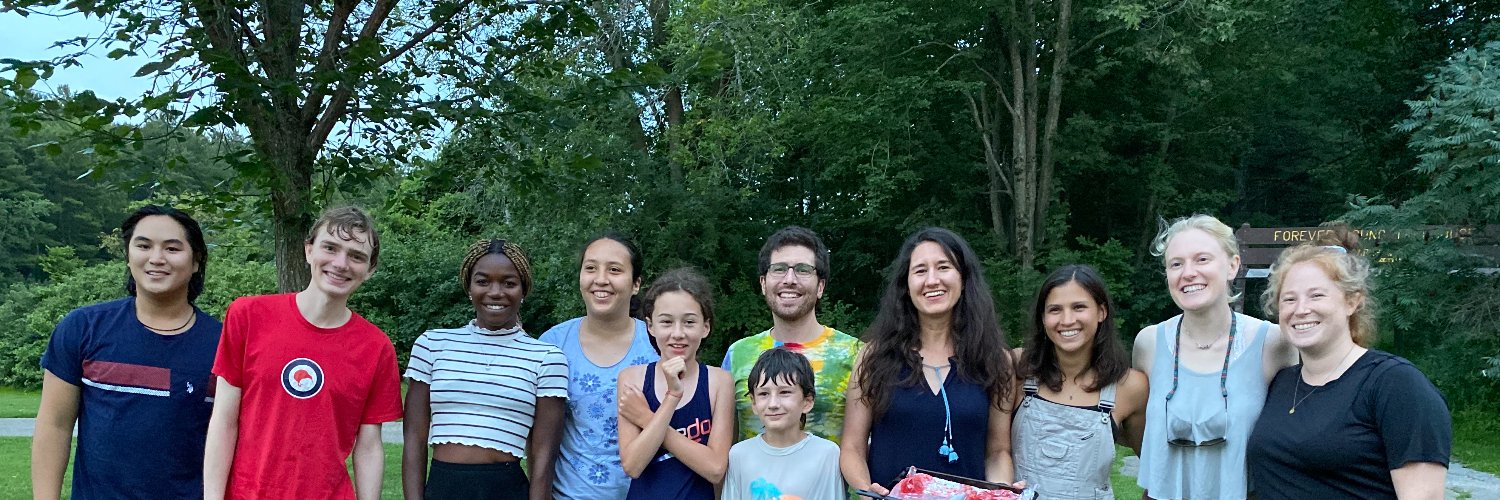
ALT Pespeni Lab Summer 2023 Ice Cream Treat on Church Street in Burlington, VT!
New paper out today on Sea Star Wasting in Proc B @RSocPublishing – Longitudinal gene expression and microbiome data: visibly healthy stars = active immune and collagen systems + stable microbiome. Wasting stars = hypoxia + turnover to anaerobic microbes. royalsocietypublishing.org/d…

Take home: The tipping point between health and disease is likely shaped by host condition, low oxygen conditions, and microbial dysbiosis. These results are also supported by our field-sampled naïve, exposed, and wasting sunflower stars in Alaska: frontiersin.org/articles/10.…

Beautiful and inspiring talk and visit with @chengsbrian. From atmospheric rivers, to oyster drills, to MPAs! Thanks for visiting @BiologyUVM!

New paper @FrontMarineSci – The microbiomes of Naïve, Exposed, and Wasting sunflower stars sampled in the wild in Alaska as the disease spread north implicate Vibrio and low oxygen conditions. Amazing collaboration among @QuestUvm trainees and AKDF&G!
frontiersin.org/articles/10.…
Melissa Pespeni retweeted

Today is a big news day for ocean science and economics @UBC. See below. @ubcSPPGA @SSHRC_CRSH @KillamTrusts @TylerPrize @envpriz @pewenvironment @oceana @OceanCanada @SolvingFCB @SeaAroundUs

Two @UBC ocean fisheries experts – marine biologist Dr. Daniel Pauly (@SeaAroundUs) and fisheries economist Dr. Rashid Sumaila (@DrRashidSumaila) — have been awarded the 2023 Tyler Prize for Environmental Achievement. @TylerPrize
oceans.ubc.ca/2023/02/22/202… @ubcscience @ubcnews

#SeaUrchin larvae don’t grow or survive well when exposed to compounds that leach from #plastics into the ocean. Surprise - the most detrimental effects were at intermediate doses! Project started by a curious undergrad and finished by Master @EmilyShore8! sciencedirect.com/science/ar…
New paper! 25 gens of exptl evol of copepods - ambient, ocean acidification, warming, and combined -> warming is the strongest selective pressure, but the combination results in a unique synergistic response pnas.org/doi/10.1073/pnas.22…
@PNASNews @BiologyUVM
See our cartoon abstract!

Big picture take home: 1+1 ≠ 2 when it comes to global change adaptation!
Amazing collaborators!:
@reidbrennan @Jimmy_deMayo @planktonomics @vsbuffalo @Baumannlab1
Congrats, Dr. Ashlock! In one week, @AshlockLauren defended their dissertation and lined up a postdoc! Lauren’s work explored the effects of pop, life history, and enviro history on copepod temp and salinity tolerance. The oceans thank you, Dr. Ashlock! @QuestUvm @BiologyUVM
We're #hiring a Program Coordinator for QuEST (uvm.edu/quest). Please #share with anyone who might be interested! lnkd.in/eZ_s8Zby
Learn more and apply here: uvmjobs.com/postings/56054
Please RT and get in touch if interested!
New paper @NatureComms! We show that rapid adaptation of #copepods to #GlobalChange leads to a loss of plasticity – costs revealed even w/ return to benign conditions nature.com/articles/s41467-0…
Amazing collaborators @reidbrennan @Jimmy_deMayo @planktonomics @Baumannlab1
#UVMresearch

Big picture: Nature is both resilient and vulnerable. We need to make and encourage Earth-friendly choices to protect and preserve the beauty and complexity that exists on this world.
For a fun and accessible press release: go.uvm.edu/copepod

25 generations of experimental evolution in copepods + genomics + beautiful analyses and visualizations show that adaptation to ocean warming and acidification is synergistic rather than additive. Check out our new preprint just up!
biorxiv.org/content/10.1101/…

We measured fitness across 25 generations of experimental evolution to find “Rapid, but limited, zooplankton adaptation to simultaneous warming and acidification” Out this week @NatureClimate with @planktonomics and @reidbrennan! #UVMResearch #copepods
nature.com/articles/s41558-0…
Awesome new synthesis of global patterns in copepod thermal tolerance by @Matt_Sasaki just out! What a useful product of the pandemic! Thanks, Matt!
This Post is from an account that no longer exists. Learn more
#Copepods have slower pop. growth and slower sinking poop when they eat #microplastics. This may be bad news for the oceanic food chain and carbon settling. Emily Shore’s MS thesis @BiologyUVM just out in #Environmental #Pollution! Free PDF til Jul 23! authors.elsevier.com/c/1dB29…
Melissa Pespeni retweeted

This UVM’s “Beyond Brave Spaces” conversation: QuEST director @mpespeni , UVM President @SVGarimella , Dr. Linda Schadler & Marie Worsham Banks discuss and address inclusive solutions to the barriers BIPOC & womxn face in STEM youtube.com/watch?v=2m6KYm_y…
And said so well! Thank you, @big_data_kane !

"Antiracism in science must be about much more than challenging the bigoted greybeards of our past."
I said what I said.
New work for @sciam
#BlackIntheIvory
#BlackLivesMatter
#BlackMindsMatter
scientificamerican.com/artic…
