

PhD Student in Deep Learning for Egocentric Vision - University of Zaragoza
Joined March 2013
- Tweets3K
- Following290
- Followers445
- Likes1.5K




Pinned Tweet
Last week, I was at CVPR presenting our latest work, which was awarded as a ✨highlight✨ paper
@rmcantin


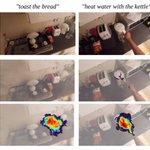
Very happy to announce, that our last work "DIV-FF: Dynamic Image Video feature fields for egocentric vision" with
@rmcantin
and J.Guerrero, has been accepted at CVPR 2025!! lmur98.github.io/DIV_FF_webp…
Take a look 👇🧵
Loren retweeted

Ok my turn to be brave for the good of the community
Not sure who needs to hear it, but usually models with JEPA in their title are bad. Like LeJepa is much worse than DINO in practice
Pretty papers, fancy math, bad results
V-JEPA 2.1 is probably the only exception [1/2]

Can we please have more posts like this one?
Too many people are afraid to openly criticize posts and papers, and that really hurts the community and lets bad ideas spread fast
Thank you @giffmana for saving me (and thousands other people) an hour of my time

Loren retweeted

Video self-supervised learning just had an insane year.
For a long time, image models dominated dense spatial tasks and surprisingly held their ground on video benchmarks too.
Then, V-JEPA 2 and V-JEPA 2.1 completely flipped that dynamic.
Here is what you need to know:

Loren retweeted
🎥V-JEPA was the proof of concept.
📈V2 was the scaling moment: 1B encoder, dataset from 2M to 22M videos, longer training at higher temporal and spatial resolution.
🖼️V2.1 was the dense-feature moment: finally, temporal pre-training does not compromise spatial representations.

Loren retweeted
The result is a unified image and video encoder to power robotics systems and real-time video analytics.
Needless to say, V-JEPA 2.1 is a must-try for anyone in the space.
Find more details on how video models evolved in today's article. Enjoy!
mlhonk.substack.com/p/66-v-j…
References
📝 V-JEPA 2: arxiv.org/abs/2506.09985
📝 V-JEPA 2.1: arxiv.org/abs/2603.14482


Loren retweeted

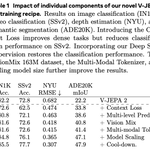
7/ The numbers are brutal. NYUv2 depth RMSE drops from an unusable 0.682 to SOTA 0.307. ADE20K segmentation mIoU jumps +23.4 points. Ego4D anticipation hits 7.71 mAP. PCA features go from noisy static to sharp object boundaries.

Loren retweeted
2/ V-JEPA 2.1 by Mur-Labadia, Muckley, and the FAIR team fixes the global-local representation bottleneck. It unifies image and video representation learning into a single encoder. This is a massive step for embodied AI world models.

Loren retweeted
Thread on VJEPA 2.1🤟
This DEFINITELY flew under the radar: just a few days ago, @AIatMeta released V-JEPA 2.1, taking a massive step toward closing the gap between image and video domains.
For a long time, image backbones were the only option for solving dense vision tasks. This model disagrees, showing that universal spatial understanding also emerges from large-scale video models!🎥

I am very happy to share the result of my internship at FAIR (Meta): V-JEPA 2.1: Unlocking Dense Features in Video Self-Supervised Learning with @ylecun @AdrienBardes
Our approach learns dense, spatially coherent features from video while preserving strong global understanding


V-JEPA 2.1's new feature maps are worth a look. Genuinely. 👀
- Paper: arxiv.org/abs/2603.14482
- Code and models: ViT-G (2B), ViT-g (1B), ViT-L (300M) and ViT-B (80M) github.com/facebookresearch/…

Loren retweeted

Yann LeCun and his team dropped yet another paper!
"V-JEPA 2.1: Unlocking Dense Features in Video Self-Supervised Learning"
In this V-JEPA upgrade, they showed that if you make a video model predict every patch, not just the masked ones AND at multiple layers, they are able to turn vague scene understanding into dense + temporal stable features that actually understands "what is where".
This key insight drove improvements in segmentation, depth, anticipation, and even robot planning.
