

PhD student at @CS_HSE, researcher at @bayesgroup Previously intern at @EPFL, @yandex ICPC World Finalist Generative models, Sampling, RL, AI4Science
Joined February 2025
- Tweets80
- Following704
- Followers285
- Likes911





Pinned Tweet
(1/n) Excited to share our latest work “Learning Shortest Paths with Generative Flow Networks”!
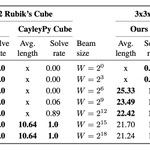
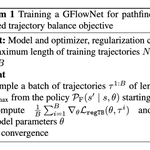
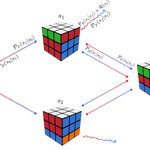
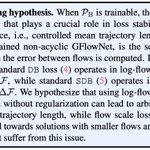
We uncover a novel theoretical connection between flow minimization in GFlowNets and finding shortest paths, and develop a learning approach that rivals SOTA in solving Rubik's Cubes!

Nikita Morozov retweeted

the mathematicians pushing back on AI say that it might help with proofs, but not our HUMAN UNDERSTANDING of math.
so I got curious how chess players think AI engines help them better understand chess.
and found this clip of Magnus Carlsen:
“the neural nets have improved our understanding of the game immensely.”
watch his HUMILITY towards these engines:
“it’s just that my understanding is not good enough. And that is useful.”
“I rarely play against engines at all because they just make me feel so stupid and useless.”


Nikita Morozov retweeted

Do large language models actually understand the world, or are they just very good at pretending? Does it even matter?
Our recent special issue in the Royal Society, “World Models in Natural and Artificial Intelligence,” brings together pioneers across AI, biology, and philosophy to argue that the path to true intelligence runs through something deeper: the ability to model not just language, but causality, the self, and the physical world.
Featuring contributions from Douglas Hofstadter, Michael Levin, Josh Tenenbaum, Samuel Gershman, Melanie Mitchell, and others, the collection asks a radical question:
What if the next leap in AI requires not just more data, but systems that model themselves?
Here are 3 ideas that might redefine how we build AI:
1. Capability is not the same as true intelligence.
Current foundation models are incredibly capable, but they often lack true emergent intelligence. They learn surface statistics instead of compact, causal abstractions. Simply scaling compute will not fix this fundamental issue.
2. Self-modeling is an engineering primitive, not a philosophical luxury.
New research in the issue shows that when networks learn to predict their own internal states, they compress and simplify, becoming more efficient as a form of regularization. For physical AI and future agents, a self-model is what will allow them to adapt their own skills and morphologies in real-time.
3. The hardest problems in AI are continuous with the hardest problems of life.
Biological minds do not passively ingest data; they actively explore, driven by empowerment to increase control over their environment. If world modeling is about an agent representing itself in relation to its environment to survive and adapt, then general AI may need to look much more like artificial life.
The takeaway is that the next leap in AI won’t come from just scaling up next-token prediction, but rather from systems that are agentic, self-referential, and temporally grounded.
Read the introductory essay and the full special issue here: royalsocietypublishing.org/r…
What do you think is the most important missing ingredient in today’s AI systems?

Nikita Morozov retweeted

Mathematics has now fully morphed into biology:
Project costs millions $ ✅
Put out paper that nobody has read ✅
Massive paper supplement nobody will read ✅
Advertise with pretty art ✅
Vicious authorship fight ✅
Say you're curing cancer ✅


Nikita Morozov retweeted

Introducing Flow Reasoning Models.
We developed a recurrent flow-based architecture to efficiently solve structured reasoning problems (e.g., Sudoku).
FRMs apply continuous flows to discrete data and recurrently refine their past mistakes through self-conditioning.
Check out our latest paper where we meticulously adapt PPO for sampling in discrete spaces!

🍌🍌🍌
1/ The original GFlowNets paper tried PPO for sampling, but it failed. We figured out why and fixed it. And now PPO beats all objectives on standard problems including molecular graph generation in large spaces.

1
16
933
Nikita Morozov retweeted

💨 Did you know neural networks can behave like literal ideal gases? 💨
In our #IJCAI2026 paper, we show that at stationarity, scale-invariant NNs surprisingly obey... the ideal gas law 🤯
Thermodynamics helps us to understand how train hyperparams shape final solutions!
🧵👇1/8

Nikita Morozov retweeted

A NOTE FROM BETHESDA GAME STUDIOS
We love making these worlds as much as you love playing in them. Today, we want to share what's next for Bethesda Game Studios and what you can expect from us in the years ahead.
For forty years, we've built games that have entertained almost half a billion players. More than just games, these are worlds. Worlds for you to explore, shape, and make your own. Worlds we return to together.
That's what's driving us forward. We're investing more deeply in the worlds players love, giving creators a bigger role in shaping their experiences, and bringing our teams closer together so we can get our games into your hands sooner, support them longer, and continue building them alongside you for decades to come.
STARFIELD CONTINUES
With over 17 million players logging almost a billion hours to date, Starfield remains an important part of our future. As we enter Year 3, we'll continue expanding the Settled Systems with new stories, targeted gameplay improvements, and additional updates, while preparing for the launch of new Starborn content next year. More than 40% of players already customize their experience through Creations, and we'll continue investing in creators and giving players new ways to make Starfield their own.
CREATED BY PLAYERS
We've believed from the beginning that our worlds belong not only to the people who make them, but also to the people who play them. That's why we've long provided players with the tools to create their own experiences, dating back to the Morrowind Construction Set. This year marked another major milestone for Creations with its expansion to Fallout 4, joining Skyrim and Starfield. We're proud to say Creators have already earned more than $10 million in royalties from their work.
THE FUTURE OF FALLOUT
Fallout is one of our biggest priorities today. Fallout 5 remains our long-range destination, and we have multiple Fallout projects in active development right now.
Fallout 76 continues to be home to millions of players exploring Appalachia together. With nearly 70 free updates released to date, the journey is far from over. In fact, we have a major Fallout 76 expansion planned for next year: Raven Rock, a prequel story to Fallout 3.
Fallout 4, the most award-winning game in the franchise, just celebrated its 10-year anniversary and recently passed over 35 million copies sold, continuing to attract a new audience every year.
We also know many players want to revisit previous Fallout experiences. While we're not announcing any dates today, we have been working on remasters for both Fallout 3 and Fallout: New Vegas.
Fallout Shelter continues to be the most popular way to experience Fallout on the go, with more than 250 million players. There’s more ahead for Fallout Shelter, including new Seasons. An unscripted Fallout Shelter television project is also in the works with our partners at Amazon Studios and Kilter Films.
We'd like to congratulate Kilter Films and Amazon Studios on the 10 Emmy nominations for Fallout Season 2. Production on Season 3 is already underway.
And while we won't host a traditional Fallout Day broadcast this year, we're already planning something special for Fallout's 30th anniversary in 2027, when Fallout Day will be celebrated live in Washington, D.C.
STUDIO COLLABORATION
The wasteland continues to expand as we team up once again with our longtime friends at Obsidian Entertainment. We're happy to confirm they're working with us on a new Fallout project. We'll have more to share in the future.
We're also bringing our teams closer together across Bethesda. ZeniMax Online Studios will partner closely with Bethesda Game Studios on The Elder Scrolls franchise, while continuing to deliver incredible new experiences for The Elder Scrolls Online. Season One: Return of the Thieves Guild recently launched, and the team has more planned for the future. By aligning more directly across the franchise, we can create even better experiences for players.
Bringing our teams closer together is helping us build a stronger foundation for everything we create next.
THE ELDER SCROLLS AND BEYOND
That foundation extends beyond our teams to the technology, tools, and systems that will power the next generation of Bethesda RPGs.
Our teams are now developing The Elder Scrolls VI and Fallout 5 on Creation Engine 3, a shared technology platform we've been building since Starfield's launch. It allows our teams to support multiple projects simultaneously with new tools, rendering, and systems that define our games.
Fallout 5 is currently in preproduction. The Elder Scrolls VI is our primary development focus today, with the majority of our team currently working on the next chapter of the franchise. With over 65 million copies sold, players are still exploring Skyrim 15 years later, but we know it’s been a very long wait for the sequel.
The next chapter is on the way. We’re where we planned to be, loving how it looks, and playing it every day.
THE ROAD AHEAD
Across Bethesda Game Studios, we're building for the future of Fallout, The Elder Scrolls, and Starfield. We're investing in our technology, bringing teams closer together, supporting our live games, expanding into new forms of entertainment, and developing the next generation of Bethesda RPGs.
We couldn’t be more excited for what’s ahead and wanted to share as much as we could today. We can’t thank you enough for all you’ve given to us and these worlds. And we can’t wait to continue them together.
–Bethesda Game Studios

Nikita Morozov retweeted

Introducing InfiniteDiffusion, my independent paper accepted to #SIGGRAPH2026!
I have one RTX 3090 Ti. No funding, advisors, or team. By day I'm a new grad SWE at Walmart.
The paper has two main contributions:
- InfiniteDiffusion: a new approach to infinite generation with diffusion models.
- Terrain Diffusion: the world’s first learned procedural terrain generator.
Here’s why this matters, and how they are connected. 🧵


Nikita Morozov retweeted

Why Gaussian diffusion models fail on text data and how to prevent it?
☝️ We find that discrete-like latent spaces are fundamentally bad for continuous diffusions.
☝️ We explain what happens inside, and why self-conditioning and other heuristics improve generation.
🧵👇 1/7


Nikita Morozov retweeted

Bryan Johnson spent $2 million a year for five years trying not to die. He's tested longevity drugs, gene therapies, plasma transfusions, stem cell injections, the works. His final list of what actually works is mostly stuff your grandma would have told you for free.
Johnson is the most measured human alive. Hundreds of blood tests, 30 doctors on staff, his own brand of olive oil. The 41 tips he just sent his "immortal nieces and nephews": sleep 8 hours, walk after meals, see a friend weekly, lift heavy things, floss.
Researchers estimate 80 to 90% of his health gains come from those free habits, not from the gene therapy he flew to Honduras for or the 100-plus daily supplements he takes. Johnson says the same thing himself.
Harvard ran a study on relationships that lasted 85 years and followed 724 men from their teens to their nineties. The result: how long you live depends more on the quality of your relationships than on your genes, your IQ, or your social class. A separate study of 3.4 million people found loneliness raises your risk of dying early by about the same amount as smoking 15 cigarettes a day. Tip #20, see at least one friend once a week, is doing real work.
Tip #11 says walk after meals. A 2025 study found that a 10-minute walk right after eating lowers your blood sugar spike more than a 30-minute walk done any other time of day. The spike is what wears down your heart and arteries over decades.
Tip #13 is lift heavy things. A study of about 2 million people found the strongest third had a 31% lower risk of dying than the weakest. You don't need a gym for this. Carrying groceries, lifting your kid, doing pushups in your living room, it all counts.
Sleep dominates the list with about a dozen tips. The data: under 7 hours of sleep raises your risk of dying by 14%, over 9 hours raises it by 34%. Seven to eight is the sweet spot.
Johnson dropped one of his most-hyped pills, rapamycin, this year because of side effects. He keeps simplifying. Even the guy who hired 30 doctors is landing on the boring stuff.
The longevity industry is worth around $80 billion. The advice with the strongest evidence costs zero.

This is it.
Everything learned spending millions on longevity.
From: Your Immortal Unc and Auntie.
To: Our Immortal nieces and nephews.
0. Sleep is the world's most powerful drug.
1. Be in your bed for 8 hours
2. Same bedtime every night, any time before midnight
3. Don’t eat right before bed
4. Calm foods for dinner
5. No screens 1 hour before bed
6. Avoid added sugar (be aware it’s in everything)
7. Avoid all things in an American convenience store
8. Avoid fried foods
9. Shoes off at the door
10. Eat whole foods, particularly veggies fruits nuts legumes berries
11. Walk a little after meals or air squats
12. Get your heart rate high routinely
13. Lift heavy things
14. Stretch daily
15. Water pik, floss, brush, tongue scrape, morning and night
16. Make an effort to drink water
17. Get sunlight when you wake up (UV is low)
18. Protect skin in midday sun
19. Stand up straight
20. See at least one friend once a week
21. Avoid plastic where you can (in all things)
22. Circulate air in rooms
23. When stressed, breathe, learn to calm your body
24. Go to the dentist
25. Avoid sitting for long times
26. Protect your hearing, the world is too loud
27. Alcohol is bad for you
28. Finish coffee before noon
29. Avoid bright lights after sunset
30. If obese, look into a GLP
31. Sleep in a cold room
32. Texting while driving is dangerous
33. Turn off all notifications
34. Limit social media use
35. Don’t smoke anything
36. If you struggle to sleep, read a physical book before bed
37. 1 hour before bed have a calm wind down routine: bath, read, light walk, listen to music
38. The body is a clock and loves routine. Have a daily morning and evening schedule.
39. Avoid long distance travel where you can
40. Baby steps first: incorporate new things slowly
41. Do less… most things don’t work.
Bonus points if you get your blood checked.
Start here, it will change your life.
Nikita Morozov retweeted
For over a decade, we’ve accepted that end-to-end backprop is the only way to train deep networks. But holding the entire network in memory all at once is why AI training is hitting a resource wall.
We found a new way to break the network into blocks and train them independently. The trick? Treating the network’s forward pass like a diffusion model denoising a signal.
This reinterpretation slashes the memory needed to train deep models. In our #ICLR2026 paper (arxiv.org/abs/2506.14202), we matched end-to-end performance across ViTs, DiTs, and LLMs. We did this while training just one isolated block at a time.


Introducing DiffusionBlocks: Block-wise Neural Network Training via Diffusion Interpretation
pub.sakana.ai/diffusionblock…
What if we didn’t have to hold an entire neural network in memory to train it?
Standard neural net training optimizes all parameters jointly. As a result, the memory required during training grows linearly with the depth of the network.
In our #ICLR2026 paper, we propose DiffusionBlocks, a principled framework to train networks one block at a time, drastically reducing memory requirements while matching end-to-end performance.
With DiffusionBlocks, we split the network into blocks and train them one at a time, so you only need memory for a single block.
How? We explicitly assign each block a role: to move the representation a little closer to the target than the block before it did. That role turns out to be precisely what a diffusion model does, step by step. Each block only needs to optimize its own objective and can be trained independently.
We validated this across five different architectures:
• ViT
• DiT
• Masked diffusion
• Autoregressive transformers
• Recurrent-depth transformers
In each case, performance is competitive with end-to-end training while using a fraction of the memory.
This perspective also extends naturally to recurrent-depth (Looped) transformers, which apply the same network iteratively and normally require expensive backpropagation through time (BPTT). Viewed through DiffusionBlocks, we can replace those multiple iterations with a single forward pass during training.
Read our paper and code, to learn more.
Paper: arxiv.org/abs/2506.14202
GitHub: github.com/SakanaAI/Diffusio…
🐟
(5/n) Our findings provide a new structural interpretation of flow minimization in non-acyclic GFlowNets and reframe shortest-path optimality in probabilistic terms, extending the applicability of GFlowNet framework to a new domain of optimization problems.
(6/n) Huge thanks to my amazing collaborators: @ian_maksimov, @dtiapkin and @svsamsonov!
📄 Paper: arxiv.org/abs/2603.01786
💻 Code: github.com/GreatDrake/gfn-pa…
