

Machine learning engineer, ex-competitive programmer, passionate about STEM, aspiring rationalist, philosopher (lover of wisdom), building @solidten_ai
Thailand
Joined July 2009
- Tweets17.2K
- Following597
- Followers468
- Likes70.2K




I think the entire market going down was partly because NVIDIA was missing Jensen, a visionary leader. That gave people depression.
Now that he is back, the depression is cured, and it's time to accelerate again.


13


Damn! That’s quite a strong evidence for singularity. We are either so back or so over.

We decided to provide more transparency into pretraining progress at OpenAI for the sake of moving toward shared safety bars. In “Perplexity and Intelligence” I argue for common limits based on perplexity and other measurements, with progress beyond them gated on our ability to understand AI behavior.
openai.com/index/perplexity-…

23
Chanchana 🐳 retweeted

Fantastic to be collaborating with Merck on designing a new cancer drug - another important proof point of the rapid progress we’re making at Iso on reimagining drug discovery!

Today, we enter a strategic research collaboration with @MSDInvents. The collaboration brings together Isomorphic Labs’ world-leading frontier AI capabilities with MSD’s deep discovery, development and manufacturing expertise.
Read more: isomorphiclabs.com/articles/…

I'm laughing at this. It's wild this is happening. I still shout at Claude now and then.
But what you mean I can churn massive amount of code without fear that anything is going to break because I will just tell the AI to fix it if it breaks?

Flashback to June 14, 2024.
At the time, frontier AI models have zero fluid intelligence. They score around 5% on ARC 1. They can't reliably add two numbers. They make laughable logic errors every other prompt. Reasoning models don't exist. Coding agents don't exist. Claude Code doesn't exist. "Code gen" is a complete joke. Scaling up next-token prediction based on web text data is hitting a wall.
What if a time traveler told you that, by November 2026...
• AI models would have human-like fluid intelligence, thanks to a new paradigm: test-time induction (modern reasoning models).
• Not only would ARC 1 be saturated, but unreleased benchmarks 10x harder (ARC 2) and 100x harder (ARC 3) would be saturated too.
• Nearly all code would be written by AI, and models could one-shot complex codebases flawlessly.
• AI models would be solving multiple Millennium Prize problems.
• OpenAI's valuation would be 15x higher, and Anthropic's would be 85x higher.
And on top of all that...
• Nvidia would still hold ~80% of the AI compute market.
• Nvidia would have grown its revenue and earnings 4.5x.
• Nvidia would still be growing 75% a year.
• Nvidia would have even higher operating margins (67% vs. 65% back then).
Based on that information, straight from the future, would you have bought NVDA?
If you answered yes -- congrats. Today, 2.5 years later, you'd be down 5% on your investment (even more after inflation).
42


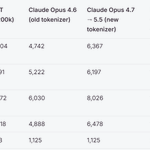
I just realized that Opus 5.5 costs 50% more tokens to read the same text compared to ChatGPT models.
This makes API pricing per token even harder to trust.
You should measure subscription usage directly.

2
41


Since agents will start to abuse digital infra everywhere, it's probably a good idea to come up with business ideas around scaling infra in this era. This search thing is just one example. There are probably more monetizable ideas.

Introducing SID-2, a new search model built on compute-scaling swarms.
Our swarms find better results than Opus and Astra, while being 8x faster and 20x lower cost.
By 2030, AI will write an internet's worth of text every 24 hours. Current search pipelines were built on hand-designed rules, adding more won't scale to meet this incoming volume of data.
SID-2 is available on our API today. Try it on your most demanding searches.
1
32
the amount of work we do today is mostly related to agent tooling and skills despite that not being our business. i see myself spending more than 50% of the tokens improving tooling and skills. huge market inefficiency here.
1
32

Chanchana 🐳 retweeted

Read this to the end, I promise it’s worth it.
Imagine that you’re ordering food at a restaurant.
You: “I’ll have the steak medium rare with fries”
Waiter: “What about the fries?”
You: “…huh?”
Waiter: “do you want the fries medium rare too?”
You: “idk what that means just cook them normal”
Waiter: “okay got it, coming right up!”
15 minutes pass, waiter comes back out
Waiter (panic’d): “hey man, we REALLY need to know if you want your fries cooked at 413 degrees or 471 degrees. Whole kitchen is held up until you decide!”
You: “wtf just do whatever the chef wants”
Waiter: “okay got it!”
30 minutes pass.
The waiter comes out with mostly passable fries, and an entirely burnt steak
You: “wtf happened this steak is burnt!”
Waiter: “so sorry, the chef got distracted when waiting for your answer about the fries. We can put the steak in the fridge to cool it off if you’d like?”
This is how it feels to use GPT-6.2 Astra.
Chanchana 🐳 retweeted

Remarks from Anthropic CEO @DarioAmodei on our initial public offering:
My co-founders and I started Anthropic because we believe that the most powerful technology of our time should be built for the benefit of humankind.
Daniela and I lost our father to a disease that, just a few years later, became curable. I started my career in biology, hoping to help future cures come sooner. In the lab, I saw the vast thicket of complexity that scientists face when they’re trying to understand disease and develop new treatments.
So many of the scientific tools that can cut through that thicket—tools for gene editing, gene synthesis, controlling brain cells with light—started as pure ideas. In other words, they came from thinking. From intelligence.
Human intelligence has already made diseases like plague, smallpox, and polio history for most of the world. But progress on other diseases has been too slow for so many patients and their families. Going from a great idea to a treatment can take decades: it took many years from the first discovery of a strange repeating pattern in DNA to the approval of the first treatment for a disease using CRISPR.
Nature is full of these patterns. But we’ve had too little intelligence to decipher most of them; too few scientists, with too little time. Now we can build that intelligence. Whether it’s protein folding, drug design, cancer genetics, or clinical trial administration, scientists across many areas of biology and medicine are finding Claude can help them do their research in a fraction of the time it would’ve taken just a couple of years ago. I believe sufficiently powerful AI, working in concert with humans, could compress a century of scientific and medical progress into a decade.
I don’t want to get ahead of myself. At this point all we have are early results. Experiments and clinical trials will still take time. And although they involve slow and ponderous processes, I believe those processes can be substantially accelerated by AI. We hope that in the future fewer families miss a cure by just a few years.
Medicine is just a particularly vivid example, but there are many others. Our customers—the world’s most ambitious companies, nonprofits, and individual people—are already applying the intelligence we’ve built to stimulate economic growth; lift people out of poverty; protect democracy and free societies; even make everyday services like the DMV work better. We’re proud to work alongside them. And I’m extremely optimistic about what we can do together in the future.
At the same time, we have always been honest that this technology has very real risks. These range from misuse of the technology by individuals or nation-states, to economic disruption, to losing control of AI systems. We discuss these risks not because we think they are inevitable, but because we think they are avoidable.
Avoiding them depends on the choices made by the people building AI. There is a gigantic difference between how AI will go if we pay little attention to safety, versus how it will go if we are obsessed with safety. And an obsession with safety and with public benefit has been woven into Anthropic’s DNA from the start. From safeguards against biological and cyber risks, to alignment training and testing, to looking inside our models like an X-ray, Anthropic has pioneered methods for understanding and steering the behavior of AI systems.
There is much work still to be done, and the most difficult safety work lies ahead of us. The incredible talent of the company that has enabled us to build the most capable AI systems will need to be directed, even more so than it has already, towards double- and triple-checking that those AI systems are safe and secure.
And to state it unequivocally, we will pace the training and deployment of AI systems, taking as long as is necessary to have confidence that they are safe and will remain under human control. We will not bend to either business or political pressure. Today puts the company in a stronger financial position, and in doing so only strengthens our resolve to do the right thing.
If we can show it’s possible to make the right choices on safety and still build an incredibly successful company, others in our industry will be inspired to do the same. We call this a race to the top. When the race to the top is working properly, it doesn’t matter which company has the best models—everyone wins because everyone is building safely. The race to the top works best when driven from the front of the pack, and we fully hope and expect to do so, but the goal is to make the whole industry better, regardless of whether Anthropic is winning or losing at any given time.
The advent of machine intelligence is one of the seminal moments in human history, and we have a rare opportunity to shape it for the better.
This moment is bigger than any one company, or any one country. It will take all of us, working together, to ensure this technology goes well for us and the many generations to come. Starting today, we hope that you’ll join us on this mission.
Chanchana 🐳 retweeted

Gemini 4 Neon: frontier-level intelligence with fast end-to-end task completion across complex software engineering, knowledge work, and science workflows.
Begins rolling out today in the Gemini API in @GoogleAIStudio, Gemini for business, for paid Google AI Pro and Ultra subscribers in Google @Antigravity, and for Google AI Pro and Ultra subscribers in the @GeminiApp.

Chanchana 🐳 retweeted

There's basically infinite latent token demand across the economy. The only brake is cost. How much you're willing to spend on tokens is determined by your RoI on token spend, of which companies are increasingly mindful.
New models keep increasing the RoI on existing use cases AND the scope of valid use cases. Token consumption can keep going up geometrically for a long time.