

OpenSource Cardiology is a physician-led, open access, peer reviewed journal designed for physicians, authors, reviewers, and scientists.
Joined June 2026
- Tweets77
- Following85
- Followers497
- Likes66





OpenSource Cardiology retweeted
🆕 in OpenSource: Cardiology
Can IV digoxin loading help get low-output HFrEF patients off inotropes?
Cardiac glycosides are the only oral agents with positive inotropic effects. Yet guidelines don't address their use in acutely decompensated HF or cardiogenic shock.
Research letter: Hemodynamic Impact with Intravenous Digoxin Loading in Low Output Heart Failure
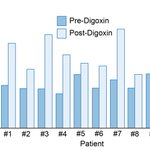
This single-center HF ICU series reviewed 10 consecutive patients with PA catheters and Fick CI <2.2 L/min/m². Each received IV digoxin 0.5 mg, then 0.25 mg at 6 hours and 0.25 mg 6 hours later. Four were on stable dobutamine or milrinone, with the aim of weaning.
At 24 hours:
• Median cardiac index 1.45 → 2.70 L/min/m² (p=0.002)
• All 4 weaned off IV inotropes, with no decrement in CI or SvO₂
• No significant atrial or ventricular tachyarrhythmia or bradyarrhythmia during the ICU stay
The authors' read: IV digoxin loading may have contributed to the rapid CI improvement and may help facilitate inotrope weaning. The series is small, mostly young and uncontrolled, and concurrent vasodilators and diuretics also affected the hemodynamics, so a randomized trial is needed.
By @maz_hanna, Rajakrishnan Vijayakrishnan, Rodolfo Benatti, @ChonyAlbertMD, @WilsonTangMD, @NutritionHF, Guilherme Oliveira & @rcstarling
opensourcecardiology.org/doi…
Free to read, no paywalls

OpenSource Cardiology retweeted

Our editorial, published today in the inaugural issue of @opensourcecards, examines both the promise of these findings and the important unanswered questions that should be addressed before PADN enters routine clinical practice. @vikasaggarwalmd @pulnovo_medical

🆕 in OpenSource: Cardiology
Should pulmonary artery denervation be offered to patients with PH due to left heart disease?
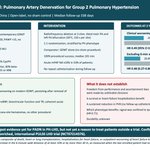
PADN-HF-PH (264 patients, 25 centers in China): 2-year clinical worsening 25.7% vs 51.5% with PADN + GDMT vs GDMT alone (HR 0.49), and the effect held after removing 6-minute walk decline (HR 0.48).
But the trial was open-label with no sham arm, and neither death (6 vs 7 patients) nor HF hospitalization reached significance on its own.
In a critical appraisal, @a_h_ghoneem, Rosa Cruz Torres and @vikasaggarwalmd answer: not yet. More studies are needed, and we specifically await the results of the sham-controlled PULSE-LHD trial.
opensourcecardiology.org/doi…
Free to read, no paywalls

OpenSource Cardiology retweeted

SGLT2 inhibitors have transformed how we treat heart and kidney disease. Could they also change how we approach healthy aging?
In our first review in @opensourcecards, we explore their potential as geroprotectors: therapies that may influence the biology of aging and extend the years we live in good health.
Across 13 placebo-controlled trials involving 90,413 participants, SGLT inhibition reduced all-cause mortality by 12% relative to placebo (HR 0.88; 95% CI 0.83–0.94). These therapies also reduce heart failure hospitalizations and slow chronic kidney disease progression in the populations studied.
Preclinical and translational studies suggest effects on cellular recycling, mitochondrial function, inflammation, and cellular senescence—processes closely connected to aging.
SGLT2i deserve a prominent place in the healthy-aging research agenda. The next step is to test whether their benefits extend to preserving healthspan before disease develops.
Congratulations to my colleagues @BrettSperryMD and @jtsaxon for developing @opensourcecards truly an amazing innovation for our field for disseminating science.
opensourcecardiology.org/doi…

OpenSource Cardiology retweeted

🔥 Our thoughts on all things CARDIO-TTRansform
A lot of nuance to unpack here, and hopefully more analyses of this study will shed light on the monotherapy vs combination therapy subgroups.
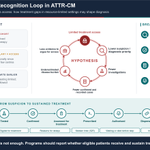
Attached is our reproduction of the all cause mortality curves for the monotherapy populations across all 4 ATTR-CM trials (Panel A) and the overall study populations (Panel B).
Good news for patients is that we keep creeping closer and closer to the age expected survival in the modern era!

🆕CARDIO-TTRansform, the largest treatment trial yet in ATTR-CM (1,432 patients), missed its primary endpoint: rate ratio 0.89 (95% CI 0.73 to 1.09).
But baseline stabilizer use modified the effect of eplontersen (P for interaction = .017):
• Not on a stabilizer at baseline: RR 0.71 (95% CI 0.54 to 0.93), a nominally 29% lower rate of CV death and recurrent CV events
• Already on a stabilizer: RR 1.14 (95% CI 0.85 to 1.53)
In a Critical Appraisal, @HamzahAliMD, Andrew A. Girard, and @BrettSperryMD argue this reflects the limited incremental benefit of adding a silencer to a stabilizer, not an ineffective drug.
They also unpack why percent TTR knockdown is hard to compare across silencers and reflect on where combination stabilizer and silencer therapy goes from here.
opensourcecardiology.org/doi…

OpenSource Cardiology retweeted

A thoughtful commentary by @BrettSperryMD et al
Lots of lessons to learn from cardio ttransform that will inform the whole field and practice
🆕CARDIO-TTRansform, the largest treatment trial yet in ATTR-CM (1,432 patients), missed its primary endpoint: rate ratio 0.89 (95% CI 0.73 to 1.09).
But baseline stabilizer use modified the effect of eplontersen (P for interaction = .017):
• Not on a stabilizer at baseline: RR 0.71 (95% CI 0.54 to 0.93), a nominally 29% lower rate of CV death and recurrent CV events
• Already on a stabilizer: RR 1.14 (95% CI 0.85 to 1.53)
In a Critical Appraisal, @HamzahAliMD, Andrew A. Girard, and @BrettSperryMD argue this reflects the limited incremental benefit of adding a silencer to a stabilizer, not an ineffective drug.
They also unpack why percent TTR knockdown is hard to compare across silencers and reflect on where combination stabilizer and silencer therapy goes from here.
opensourcecardiology.org/doi…
OpenSource Cardiology retweeted

We have a plan for this. Take a look at @opensourcecards
Free publication, no APCs, rewards for peer review, no paywalls!

Hoy he entregado otra revisión por pares. Sin cobrar, como casi todos y sacándolo del tiempo personal.
Mañana hacen huelga, por primera vez en 200 años, quienes editan The Lancet
Algo está cambiando.
Unos y otros sostenemos la calidad de lo que se publica. Merecemos que se reconozca.
researchprofessionalnews.com…

OpenSource Cardiology retweeted
Submit papers and review at @opensourcecards where open access research is free to publish and reviewers are paid!
@jtsaxon
OpenSource Cardiology retweeted
At @opensourcecards, we are committed to free publication with no APCs for all primary research, authors retain copyright, and no paywalls - ever - for any publication. Our science is free to all, permanently.
@BrettSperryMD

.@JAMAInternalMed recently published a thoughtful piece on public access calling for NIH to assert its position regarding compliance with the NIH Public Access Policy.
NIH has the right to make the Author Accepted Manuscript, which has been supported by taxpayers, public in PubMed Central at time of publication; a right which is independent from any publisher agreement.
This is a free path to compliance for authors, helping us ensure rapid public access to NIH-supported research results.
OpenSource Cardiology retweeted
Check out the SENTINEL-BVF study, new in @opensourcecards
@akcmahi @djc795 @chetanhuded @tnazifMD @MichaelNassifMD @BrettSperryMD
New in OpenSource Cardiology: the SENTINEL-BVF study.
Bioprosthetic valve fracture has changed what valve-in-valve TAVR can
deliver. By fracturing the surgical valve ring with a high-pressure
balloon inflation, BVF allows the transcatheter valve to expand fully — converting a
procedure that often left patients with a meaningful residual gradient
into one with durable hemodynamics.
OpenSource Cardiology retweeted
First original research paper published in @opensourcecards!
Congrats to @akcmahi @chetanhuded @jtsaxon @djc795 @HemalGada @tnazifMD @AlokeFinn @LizGrierMD et al on publishing this prospective study helping us better understand bioprosthetic valve fracture!
New in OpenSource Cardiology: the SENTINEL-BVF study.
Bioprosthetic valve fracture has changed what valve-in-valve TAVR can
deliver. By fracturing the surgical valve ring with a high-pressure
balloon inflation, BVF allows the transcatheter valve to expand fully — converting a
procedure that often left patients with a meaningful residual gradient
into one with durable hemodynamics.
OpenSource Cardiology retweeted
"They'll start their own journals that are non profit and open access."
We finally did it!
@DGlaucomflecken
youtu.be/hoUGiS1LeKU?si=IFQw…

OpenSource Cardiology retweeted
Most journals ask researchers to adapt to the publishing system.
We built the system around researchers.
$0 to publish original research.
100% open access.
Authors retain copyright.
Reviewers are recognized for their work.
Physicians make the scientific decisions.
That’s our permanent commitment to science.
Join the movement:
opensourcecardiology.org

OpenSource Cardiology retweeted

It is entirely backwards that we are asking peer review not be AI-assisted. The thankless job that academics do unwillingly for free is exactly the type of thing that you should use AI for. As someone that went through the process as an author - - peer reviews are already poor quality and incredibly biased. Using LLMs would make them a little more objective


OpenSource Cardiology retweeted
Really excited about this and looking forward to contribute in any way possible!
Academic publishing is overdue for reinvention.
Introducing OpenSource: Cardiology—a physician-led, nonprofit, fully open-access journal built by and for the cardiovascular community.
Better science. Broader access. A fairer system.
opensourcecardiology.org
OpenSource Cardiology retweeted
Why start another medical journal?
Because researchers fund the science, do the work, write the paper, review it—and then often give away the rights or pay thousands to make it accessible.
@BrettSperryMD and I built @opensourcecards to try a different model.
We want to reclaim the catalog.
Join the movement:
opensourcecardiology.org

OpenSource Cardiology retweeted
Honored and humbled to announce my clinical practice article on aortic stenosis for the @NEJM
🤖 Made with AI

OpenSource Cardiology retweeted

11 days from submission to decision. Unheard of. And the reviews are comprehensive and fair. Why can’t all journals do this?

OpenSource Cardiology retweeted
A few things in this document that are directly related to what we are building at OpenSource: Cardiology that align with the vision for improving scientific publishing:
1. Peer reviewers are overburdened and results of peer review are subjective with high inter-reviewer variability. We are changing that model by providing deep AI review alongside human review with meaningful compensation and recognition for the time, expertise, and responsibility required for high-quality peer review.
2. Using AI for verification. We utilize an AI verification layer to check references, numerical consistency, tables, figures, statistical reporting, and whether the manuscript’s conclusions are supported by the reported data. AI should strengthen the work of physicians, scientists, reviewers, and editors and not replace their judgment. Reviewing the veracity of long tables and cross referencing numbers found in the manuscript text and abstract is exactly what AI excels at.
3. Creating explicit article categories for critical appraisal. Advancing science does not always require collecting new data. We are creating dedicated categories for rigorous critical appraisal of influential studies, including examination of methodology, statistical interpretation, clinical relevance, unsupported conclusions, and important limitations.
Better incentives for reviewers. Better verification of the scientific record. More space for thoughtful and transparent scientific debate.
opensourcecardiology.org
@opensourcecards

In response to @POTUS's call for a revival of America's scientific enterprise, today I’m releasing Science: A New Golden Age.
This report is a blueprint for renewing American scientific leadership for the 21st century.

