

Engineer/scientist A new network value model for Bitcoin, free on Substack: https://teapaw.org/t.co/7VABJJxdge
Philadelphia
Joined September 2021
- Tweets1.9K
- Following79
- Followers935
- Likes2K





Pinned Tweet
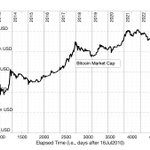
1) I’ve just completed the development of two new models for Bitcoin market cap. They are unique in modeling the growth of market cap in terms of the growth of Bitcoin network size and time.
Link:
bitcoinmodeler.substack.com/…
"Chapter 11. Two New Models Define How Bitcoin Market Cap is Affected by Both the Growth of Network Size and Time"
The models are express in 2 formats — the Square Root of Elapsed Time (SRET) model and the Power Law model.


Bitcoin Citizen retweeted

Willy Woo has no official audited success rate, but key calls show a mixed record typical of analysts:
Hits: Nailed 2021 bull run start, 2018/2022 bear bottoms via on-chain (MVRV, liquidity). 2020 buy zone spot-on.
Misses: Stayed bullish into 2021-22 crash (missed depth); overshot 2021 cycle top ($250k+ vs ~$69k ATH); Nov 2025 "2-week rebound" call saw ~30% drop instead.
Strong on cycle structure/long-term, weaker on exact timing/short-term when macro/Futures dominate. Data-driven overall, not infallible—~65% directional alignment per public reviews.
Bitcoin Citizen retweeted

Normally institutional money arrives during the Awareness Phase, but due to regulatory bars institutions were not allowed to enter. Hence we are now seeing institutional money compete with retail money to create a super bull season right now in Q4 2017 and into 2018. /23
Bitcoin Citizen retweeted
The sharp capitulation we saw 2018 was a consequence of BTC developing highly liquid derivative markets (BitMEX and clones) gaining volume dominance over spot markets (where organic investors buy on).
This allowed speculators to push the price around more than usual.


Bitcoin Citizen retweeted

It's not very often I get to go really into the weeds on the nuances of onchain data, but this conversation with Tom from @OnChainMind was just that.
Really fun conversation for those who want to go deeper into how we think about onchain tools and metrics for practical analysis.

Which on-chain metrics actually worked this cycle?
I sat down with @_Checkmatey_ to score them against the data.
SOPR, MVRV, exchange balances, the power law and mining metrics: which held up, which quietly broke, and the levels that would confirm the next leg up 👇🏼


Bitcoin Citizen retweeted

JUST IN: POWER LAW ANALYST CALMLY EXPLAINS WHY #BITCOIN WILL REACH $1,000,000 PER COIN THIS DECADE
"THIS IS NOT TECHNICAL ANALYSIS"
"THIS IS NOT A LINE ON A CHART"
"THE POWER LAW HAS BEEN SHOWN TO BE STABLE OVER MANY YEARS"
"WE ARE JUST LOOKING AT THE MATH" 🔥
Bitcoin Citizen retweeted

Radio is blamed for two hurricanes in Florida and Mexico.
(Credit to @PessimistsArc on X).


Bitcoin Citizen retweeted

Only from 73% retail ownership to 62%, after the biggest ETF launch ever?! #WallSt will never control #bitcoin & that’s a REALLY great aspect of it!! 💪

The amount of Bitcoins total supply held by individuals peaked in 2024 at 73%.
In the past 3 years retail has paper handed their coins, and individuals now only hold 62% of Bitcoins supply.
Once Wall Street has shaken all the apples from the tree, they will let this thing rip higher than you think. 🚀
Bitcoin Citizen retweeted

Matthew Mezinskis put the number on screen that his entire model hangs on:
"The power curve itself is about $145,000. #Bitcoin, as we know, is well under that, about half. So we're well under trend."
To understand why he trusts that curve, you need his gold-vs-Bitcoin distinction, and it's the cleanest version of it I've heard.
Gold is an exponential asset: a straight line on a log chart, constant growth. He ran the 55-year regression live, gold compounds at "5.7% per year... a doubling every 12 and a half years." That's what normal assets do. Stocks draw the same line. You can be off-trend for 20 years, but the line is the line.
Bitcoin doesn't fit that line. At all. Its best fit is a power curve, a straight line only on log-log scale. Different mathematical species: growth that slows over time, but with one proportion that never changes:
"For every 13% increase in the life of Bitcoin, the price doubles. That's the brass tacks of what the Bitcoin power curve does. It's a mathematical relationship that we can find and observe, and it's been going on really well for about 13 years."
Early on, a doubling took 93 days. Each one takes longer now. But the proportion holds; thirteen years and counting.
What I keep sitting with: he's not asking you to believe a story. Gold has a 55-year trend. Bitcoin has a 13-year one. Both are just regressions on data anyone can check.
The difference is what the regression says: gold doubles every twelve and a half years on trend. Bitcoin, even as it slows, still doubles multiples faster, from half price.
His curve, his math. But if price reverts to trend the way it has for thirteen years, the gap to $145K isn't a prediction. It's an observation with a delay.
@1basemoney

This has been a fascinating conversation with @1basemoney. I love data. I look at data for all the investment decisions that I make, and that’s why I wanted to talk with him about the Power Law.
What’s the actual valuation of #Bitcoin? Where are we in the cycle?
His model predicts Bitcoin’s price could reach $1.1 million by 2033. Fascinating.
Matthew Mezinskis built the model. He's the macro researcher behind the #Bitcoin Power Law model, and his claim isn't that Bitcoin will moon someday, it's that Bitcoin follows a mathematical growth curve, has for its entire life, and is currently trading at about half of where that curve says it should be.
His summary of the math: "Let's go out about eight years. We should be at a million dollars per Bitcoin."
The mechanics are almost absurdly simple. Every 13% increase in Bitcoin's lifespan doubles the price. That compounds into roughly a 10x every eight years. No halving cycles, no narratives, no adoption guesses, just time and a curve that's held for over a decade while skeptics called it broken.
We cover:
- The power law explained: why price scales with time, not hype
- Why he says the current price sits at half of fair value on the curve
- Power law vs stock-to-flow: why the exponential models failed and this one didn't
- What a decade of data says about the curve holding
- Bitcoin vs gold, and where this ends if the math keeps working
Thanks for @OKX for being the sponsor of todays episode!
Timestamps:
00:00 - Introductio
01:10 - Bitcoin's Recent Moves
04:06 - Bitcoin's Cycles
07:21 - Bitcoin vs Traditional Assets
10:57 - The Power Law Explained
11:23 - Bitcoin vs Gold
21:16 - Power Law vs Stock-to-Flow
34:56 - The Power Law In Pricing
46:48 - What History Tells Us
51:07 - Bitcoin's Market Position
01:00:26 - Bitcoin's Global Role
Bitcoin Citizen retweeted

Power law model claims TLDR:
• N goes up with time
• P goes up with N
• Therefore P goes up with time.
It’s not a demand model. It’s just a consistency check. The causal claim is not proven.
(Recent in-depth videos and articles in the replies)
Bitcoin Citizen retweeted
BTC MOVES TO A 6-8 YEAR CYCLE?
BTC has been locked into the gravity of a 4 year orbit... it was subject to strong internal forces of its halvening... a clockwork 4yr supply rate shock.
Meanwhile TradFi is on a 6-8 year short term debt cycle.
Given BTC's internal forces are de minimis at 0.8% new supply per year, soon to be 0.4%... we may be witnessing right now its transition to a 6-8 year cycle.
Bitcoin Citizen retweeted

Reminder that the 2022-2025 Bitcoin 'bull run' was never truly detected as a bubble by a simple Markov model coupled with the power law trend:
Bitcoin Citizen retweeted

1. Metcalfe’s Law is a law.
2. A straight line on a log-log plot is literally the expression of a power law.
3. “Power law” is not something we made up. It’s the mathematical definition.
Innumeracy .
@ScientificBTC
“A power law is a mathematical relationship in which one quantity varies as a fixed power of another:
{y = A x^β}
where A is a constant and β is the power-law exponent.
Its defining property is scale invariance. If x is multiplied by some factor k,
y(kx)=A(kx)^β =k^β y(x).
If β=5.7, doubling x multiplies y by roughly 2^{5.7} ~ 52.
Taking logarithms turns a power law into a straight line:
ln y = ln A+β ln x.
>>Thus on a log-log plot, a power law is a straight line whose slope is β.<<
Power laws can have positive or negative exponents. For example,
y=Ax^{5.7}
The essential idea is: the percentage response of y to a percentage change in x is constant:
{d ln y}/{d ln x}=β
That last equation is often the cleanest mathematical definition of a power law.” ~ ChatGPT 5,6

A line is not a law.
@CorySwan critique of Bitcoin price models is an important reminder: a model that fits the past does not automatically explain the future.
Supply is knowable. Demand isn’t.
That doesn’t mean models are useless. It means we should be precise about what they actually do.
A power law can describe historical behavior.
A forecast can estimate probabilities.
Neither should become a substitute for conviction.
The better question is not “What will Bitcoin be worth?”
It is:
What is actually driving demand today and is that regime strengthening or weakening?
Price structure.
Spot and institutional flows.
On-chain behavior.
Liquidity and macro conditions.
Market internals.
Then build scenarios, define invalidation, update continuously, and manage risk.
Don't outsource conviction to a price target.
Appreciate the original POV, Cory. The deeper lesson for me is that better Bitcoin analysis isn't about abandoning models—it’s about modeling the mechanisms, not mistaking historical geometry for causality.
#Bitcoin #Investing #Markets @Giovann35084111 @TheRealPlanC @100trillionUSD @nsquaredvalue @moneyordebt @Snz_BTC @sminston_with @MarioNawfal @BitcoinArchive @saylor @BitcoinPierre @JoshMandell6


Bitcoin Citizen retweeted

Regret the tone of my post on data centers yesterday.
What I should have said:
There were reasonable concerns about data centers 18ish months ago: water, taxes, jobs, electricity prices, the environment and what they would do to small towns. Well-structured data center projects have largely addressed these concerns today and we should be celebrating this.
On balance, data centers are awesome for America in every way.
On water: U.S. data centers use a fraction of what golf courses use. A lot of the numbers from 18 months ago were off by over 1000x. Newer data centers use closed-loop systems or recycled water. Should be required by every town approving a data center project.
On taxes: looking only at sales-tax exemptions, as Ronan Farrow did, is the wrong way to evaluate this. Data centers pay significant property taxes. Loudoun County, which is the wealthiest county in America, now collects on the order of $1 billion a year from data centers. In Quincy, WA, data centers are more than half the property-tax roll. Over time, property taxes can go to zero while government spending increases in these towns.
On jobs: this has been unambiguously awesome for blue collar Americans. Demand for electricians, plumbers, welders, HVAC techs, and contractors has gone vertical, and it is not a one-time construction job. These buildings get upgraded and expanded over time. That is why the building trades are fighting for them, and why some unions are now treating opposition to data centers as a reason not to endorse politicians.
On power: the original fear was that households would pay for the incremental electricity demand in the form of higher prices. That is why the ratepayer-protection deals and the new large-load tariffs exist. The right structure is: the data center brings or pays for new generation and signs a contract long enough that existing customers are protected. Where that is happening, utilities are cutting or freezing residential rates and saying so on the record. Where it is not, people are right to object. Electricity prices are going down *today* in a number of large states because of data centers.
On the environment: data centers overwhelming use natural gas today, which is the cleanest power source outside of nuclear, solar and wind. And the companies that are building the data centers are committed to carbon neutrality such that an equivalent amount of solar will likely be built. Maybe more importantly, the data centers need batteries to function effectively and these batteries can also sell energy back into the grid (which recently prevented blackouts in Texas). Over time, data centers will run on solar plus batteries.
On the towns: Poverty in Quincy, WA fell from 29% to 6%. Data center taxes paid for a new high school, a hospital, a library, police and fire stations. This is happening in many left for dead former mill and farm towns that had no other bidder for the land.
Data centers are actually reindustrializing parts of America and creating the kind of working-class jobs both parties have spent decades claiming to support. That should not be a partisan issue. Data centers can and should be awesome for America and they increasingly, overwhelmingly are. Supporting the outsourcing of data centers to China will likely age just as well as support for the outsourcing of high quality, blue collar manufacturing jobs to China has aged.
When the facts change, I change my mind. I hope that reasonable people who had good faith reasons to oppose data centers at least consider updating their beliefs given the change in the facts over the last 18 months. This really matters for America.
I will say I also think the idea of making data centers beautiful is a good one that has yet to be implemented. Data centers should be just as beautiful as Grand Central Station. We can learn a lot from the railroad buildout. Neoclassical revival ftw.
Might write up open-weight AI tomorrow as this is equally essential to America.