

Lead pastor of @rainbowccng. Inspirational speaker, writer, life coach and counselor. He's a change agent!
Lagos, Nigeria
Joined June 2010
- Tweets12.8K
- Following471
- Followers495
- Likes28.6K


Sunday Balogun retweeted

‘Using Solar Panels After Promising Nigerians Electricity Deserves Impeachment’ — Catholic Bishop Calls for Tinubu’s Removal parallelfactsnews.com/cathol…

Sunday Balogun retweeted
INEC Deletes List Of 17,671 Polling Units For November 28 Mock Election Hours After MundX Analytics Exposes Secret Publication parallelfactsnews.com/inec-d…

Sunday Balogun retweeted

lol.
@inecnigeria just deleted the list of polling units from their website after we shared it here.

Sunday Balogun retweeted
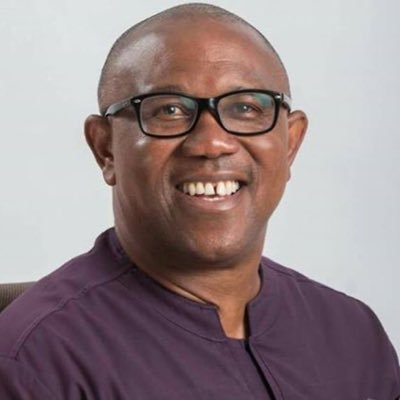
NIGERIANS, GO AND VERIFY (5)
CONNECTING COMMUNITIES, UNLOCKING PROSPERITY: OUR ROAD INFRASTRUCTURE RECORD
Peter Obi
Another critical foundation of development is infrastructure, particularly road construction and maintenance.
Infrastructure is not just about constructing roads, bridges, and buildings. It is about connecting people, opening up economic opportunities, reducing poverty, and enhancing the well-being of ordinary citizens. A road that connects a farmer to a market, a patient to a hospital, a child to a school, or a manufacturer to a distribution centre is an investment in economic and human development.
This thinking informed our approach under the Anambra Integrated Development Strategy (ANIDS). We set out to connect all 177 communities in the State with motorable roads, paying particular attention to rural communities that had suffered years of neglect. Our objective was to build an interconnected road network that served the entire State, rather than concentrate projects in major cities or politically important locations.
I. The Road Revolution: Over 900 Kilometres of Road Projects
Between March 2006 and March 2014, during my two-term tenure in office, my administration asphalted over 900 kilometers of roads. These projects were deliberately distributed across the three senatorial zones of Anambra State to connect communities, facilitate commerce, and enhance transportation.
I acknowledge that Dr. Chris Ngige started the road revolution in Anambra State, and I commend the efforts his administration made in initiating several road projects. When we assumed office in 2006, we recognised the importance of continuing worthwhile projects rather than abandoning them simply because they had been initiated by a previous administration.
Among the roads we inherited from Ngige and completed were the Owerri–Ezukala–Umunze–Umuchu–Amesi–Uga–Igboukwu Road, where his administration stopped around Umuchu and we continued through Amesi, Uga, and onward to Igboukwu; the Iseke–Orsumoghu–Ukpor–Utu–Nnewi–Awka-Etiti Road, where his administration stopped at Ukpor and we continued towards Awka-Etiti; and the Ideani-Otuocha where work stopped around Awkuzu before our administration continued the project from Nteje to Otuocha.
There were also roads, such as Mmili John and Nkwelle Ezunaka bypass, which had been awarded before we took over, but on which no payment had been made by the time we assumed office. We took over these projects, assessed their status, and proceeded with the work. This was our approach to continuity in governance: acknowledging what had been started, distinguishing between projects merely awarded and those on which work and payment had actually commenced, and ensuring that important infrastructure projects were carried forward.
Some of the major roads and corridors included Amansea–Ebenebe Road; Aguleri–Umueze Anam–Mmiata Road; Nnewi–Ozubulu–Okija Road; and the Old Onitsha–Awka Road.
Other important projects included:
Awka and its Environs: Zik’s Avenue, Awka; Adazi-Nnukwu–Obeledu–Neni Road; 33 Junction–Nwafor Orizu College of Education Road; roads within the Awka Government Reserved Area (GRA); and the Old Nkpor–Amawbia Road.
Nnewi and Surrounding Communities: Nnobi–Nnewi Road; roads within Nnewi town; Akwaeze–Oraeri–Igboukwu Road; and Ekwulobia–Nkpologwu–Akpo–Achina–Umuchu Road.
Onitsha and its Environs: Bridge Head–Umunya Road; over 30 roads in other parts of Onitsha; more than 25 roads within the Onitsha GRA; over 20 stone-based roads within Harbour Industrial Estate, Onitsha; and the Nkwele Ezunaka Bypass.
Other Communities and Strategic Corridors: Awgbu–Amaokpala Road, with the Odor Bridge; Aguluezechukwu–Ogboji–Ajalli Road; Awkuzu–Igbariam Road, passing through the university; Owerri–Ezukala–Umuchukwu Road; Ugwuoba–Obosi Road; and Lilu Road.


Sunday Balogun retweeted
“Treating gunshot victims does not require a police report.” Watch IGP Olatunji Rilwan Disu, psc(+), NPM, urge medical personnel to attend to gunshot victims immediately without waiting for police clearance.
Beyond this directive, refusing or delaying care is a punishable offence under Nigerian law: the Compulsory Treatment and Care for Victims of Gunshots Act, 2017 requires all public and private hospitals to treat gunshot victims immediately to prevent avoidable deaths, and non-compliance can lead to up to 15 years' imprisonment and/or a fine.
Sunday Balogun retweeted
I’ll be on @channelstv The Morning Brief tomorrow at 8:30 a.m. to discuss the possibility of publishing collation documents on IReV portal and why it matters for electoral transparency.
Tune in!
Yesterday, @inecnigeria said ward collation results can’t go on IReV because the feature hasn’t been built or tested, and that it would take a while.
We disagree.
It’s not rocket science, so we built it. In one evening. On IReV’s own data.
Left: IReV today.
Right: IReV with Form EC8B. 🧵👇


Sunday Balogun retweeted
Our analysis of the 2023 elections in Rivers State shows why publishing only polling-unit results on IReV is not enough.
In Obio/Akpor, the polling-unit sheets on IReV give the Labour Party HOR candidate 67,320 votes. The declared result gives him 18,766. Those two records cannot both be right. Somewhere between the polling unit and the declaration, during collation, 48,554 of his votes disappeared while his opponent's total rose by 24,357.
Collation is meant to add up polling-unit results, not override them.
The public cannot see where this happened, because the ward and constituency collation sheets have never been published.
We are not asking INEC to replace its collation process. We are asking it to publish every document that process produces, so that no figure can be changed between one stage and the next without anyone being able to see it real time.

Sunday Balogun retweeted

Obi empowers hospitals with N3b grant
thenationonlineng.net/2011/i…
Sunday Balogun retweeted
NIGERIANS, GO AND VERIFY (4)
Building a Healthy Nation: Our Health Sector Record in Anambra
Peter Obi
In the previous instalment of this series, I discussed our investments in education and explained why we considered human capital development central to the progress of Anambra State. Another sector that received considerable attention under our administration was healthcare. We understood that education gives people the tools to build their future, while good healthcare enables them to live healthy and productive lives.
When we assumed office in 2006, the healthcare system in Anambra faced serious challenges. Our health institutions required rehabilitation, medical equipment was inadequate, many communities lacked accessible primary healthcare facilities, and several medical training institutions had not secured accreditation. We therefore decided to approach healthcare as a comprehensive development priority, rather than concentrate resources on a few prominent hospitals.
Under our Anambra Integrated Development Strategy (ANIDS), we invested simultaneously in primary, secondary, and tertiary healthcare, medical training, maternal and child health, medical equipment, and partnerships with religious and private institutions.
Our approach was simple: healthcare should be accessible to people wherever they live, and the quality of treatment they receive should not depend on their status or whether they live in a city or a rural community.
Building a Teaching Hospital and College of Medicine
One of our most significant achievements was the establishment of the Chukwuemeka Odumegwu Ojukwu University Teaching Hospital at Awka.
We initiated, constructed, equipped, and secured accreditation for the institution, building it virtually from scratch. When I discovered that the state university was admitting medical students without having a teaching hospital through which they could complete their training, possibly with the intention of assigning them elsewhere, I considered the situation unacceptable. We therefore embarked on the construction of a modern teaching hospital to address this deficiency.
We constructed more than 25 buildings and provided facilities for the College of Medicine, laboratories, pathology, accident and emergency services, pediatrics, male and female wards, special wards, consultant clinics, and other essential departments.
We also provided vehicles, including ambulances and staff buses, to support the hospital and the College of Medicine as part of the accreditation requirements.
The objective was not merely to build another hospital but to establish an institution capable of providing specialist healthcare while training the next generation of Nigerian medical doctors.
Rehabilitating General Hospitals
We also recognized that a teaching hospital alone could not meet the healthcare needs of the population. General hospitals had to function effectively because they provide the essential link between primary healthcare and specialist treatment.
We rehabilitated and resuscitated 15 general hospitals across the three senatorial zones of Anambra State. We undertook substantial improvements in their buildings, wards, equipment, and general facilities.
In 2013, we provided ₦400 million for the ongoing renovation of 11 selected general hospitals, alongside other healthcare interventions.
Our intention was to ensure that people did not have to travel unnecessarily long distances to obtain basic secondary medical care.
Taking Primary Healthcare to the Communities
We believed that the best healthcare system is one that prevents illnesses and treats people early, rather than one that waits until minor health problems become emergencies.
That informed our extensive investment in primary healthcare. We built over 120 primary healthcare centers across communities in the 177 autonomous communities of Anambra State and rehabilitated existing facilities.
Sunday Balogun retweeted
Yesterday, @inecnigeria said ward collation results can’t go on IReV because the feature hasn’t been built or tested, and that it would take a while.
We disagree.
It’s not rocket science, so we built it. In one evening. On IReV’s own data.
Left: IReV today.
Right: IReV with Form EC8B. 🧵👇
Sunday Balogun retweeted

You people have mastered propaganda and the art of playing the victim when you’re actually the tormentors.
These are APC leaders and supporters openly threatening voters:
1. Senator Francis Fadahunsi - Threat to kill Accord Party members (August 2026)
He told APC supporters to kill Accord Party members if they encountered them in Ilesa ahead of the Osun governorship election.
teapaw.org/adewumiadeyemii/status…
2. Francis Eniade - Threatening non-APC voters in Osun
The APC candidate reportedly told voters who were not APC members not to come out to vote.
teapaw.org/oluwasayoelijah/status…
3. APC woman threatens to cut voters’ fingers
A woman identified in reports as “Arugba” threatened to cut off the fingers of people who voted for parties other than APC.
teapaw.org/trendingex/status/2088…
4. Kuje Area Council Chairman - “Support APC or leave”
Danjuma Shekwolo, chairman of Kuje Area Council, reportedly said residents must support APC or leave the area council.
teapaw.org/ebona69/status/2092199…
5. Edo APC Chairman Jarrett Tenebe - AK-47 threat
In October 2026, he reportedly made a threatening statement concerning people who might obstruct the party’s efforts to secure votes for President Tinubu.
teapaw.org/dee_9889/status/210592…
What happened to them? NOTHING.
Did Tinubu caution his supporters or release any statement condemning these threats? NO!
Or is the outrage only meant for the opposition?
And so far, you cannot produce any video of ANY opposition leader or supporter directly threatening voters who don’t vote for them. If you have any, I’d like to see them.
What I have seen are opposition parties defending themselves against attacks from APC TOUTS or people claiming to support APC.
Last month, an NDC supporter was buried in ENUGU after being shot during an NDC rally.
teapaw.org/peterobi/status/211329…
Still no word from Tinubu to his supporters in Enugu who carried out this dastardly act not has he sent any word of condolences to the family of the deceased. Is Tinubu telling us that he is only president to his APC supporters?
You expect the opposition to fold their hands and allow their lives to be threatened without fighting back?
That can’t work.
Every human being has an instinct to protect themselves when faced with danger.
Election should not be war.
If we want peace, let EVERYONE call their supporters to order. No exceptions.
Let the politics of intolerance being played by APC end.
And let @inecnigeria be fully transparent and open its register to an independent audit.

Sunday Balogun retweeted
NIGERIANS, GO AND VERIFY (3)
Building the Future Through Education
Peter Obi
In the first two instalments of this series, I explained how we approached the task of building strong institutions and laying a solid foundation for the development of Anambra State. One of the most important institutions we invested in was education.
For me, education was not a political game or a convenient political promise. Even before I ventured into politics, I had always regarded it as the foundation of meaningful development and the most enduring investment any government can make in its people. I believe that the future of any society depends largely on the quality of its educational institutions, teachers, learning environment, and opportunities available to its young people.
This conviction informed our decision to invest across the entire educational spectrum, from primary schools to universities, technical institutions, and adult education.
Basic and Secondary Education
One of our first major decisions was to return mission and privately owned primary and secondary schools to their original proprietors while retaining government support. We also provided billions of naira to assist in rehabilitating the returned schools, restoring the partnership between government and religious institutions that had historically contributed to educational excellence.
This policy attracted international attention. Professor Paul Collier, the Oxford economist and World Bank consultant, led a World Bank-commissioned study of Anambra’s educational transformation. His team examined our decision to return schools to their original missionary owners while retaining government responsibility for funding teachers’ salaries and supporting infrastructure. The team described the partnership model as a revolution in public service delivery and recommended it as a model that could be replicated by other Nigerian states and developing countries. We believed then, as we do now, that government does not necessarily have to own every institution to discharge its responsibility effectively. What matters is ensuring that every child has access to quality education.
For those who claim that we built no schools, I invite them to verify our records. We constructed five-classroom blocks in virtually all of the 177 communities in Anambra State, one of the most extensive community-based school infrastructure programmes undertaken by any state government. The town union chairmen and community leaders of that period can attest to this.
We also renovated hundreds of dilapidated schools, including some where trees had literally grown through abandoned buildings. Comprehensive Secondary School, Onitsha, and Oraukwu Grammar School are examples.
Beyond infrastructure, we distributed approximately 40,000 computers to schools, including more than 22,500 HP laptops. We equipped secondary schools with Microsoft Academies and connected schools across the state to the internet. We supplied generators, established and stocked libraries, revived school sporting activities, and installed boreholes in over 300 schools, including all girls’ schools. We also provided funding to support sporting activities in all our secondary schools.
These technology investments attracted remarkable international recognition. Mr Fabrice Campoy, Managing Director of the Personal Systems Group at HP Inc., described our procurement and distribution of over 22,500 HP laptops as the biggest project of its kind in the Middle East and Africa. Similarly, Mr Ken Spann, then Country Manager and Head of Microsoft Nigeria, described the establishment of Microsoft Academies in more than 500 Anambra secondary schools as the most extensive deployment of its kind in Africa at the time.
Sunday Balogun retweeted
WASHINGTON, DC : PRESENTING NIGERIA’S DEVELOPMENT AND DEMOCRATIC FUTURE ON THE GLOBAL STAGE.
Yesterday, Monday, November 16, I arrived in Washington, DC, for a series of significant meetings and engagements with congressional leaders from both the U.S. House of Representatives and the Senate, as well as other influential American figures. These discussions focused on vital matters affecting Nigeria’s development, the well-being of our people, and the future of our democracy.
I began the day with a substantive interview with renowned American television commentator Glenn Beck. Our conversation addressed Nigeria’s challenges, the pressing need for accountable leadership, the responsible management of our vast human and natural resources, and the opportunities to establish Nigeria among the world’s leading nations.
I also met with prominent American leaders, including Congressman Marlin Stutzman, Congresswoman Beth Van Duyne, Congressman Todd Tiahrt, Suzanne Bock Grisham, retired U.S. Army Colonel Albert V. Short, and other esteemed stakeholders.
One of the day’s principal highlights was my address on Capitol Hill, during which I underscored the urgent importance of international cooperation and support for Nigeria’s advancement, particularly in the areas of national unity, security, economic prosperity, and the welfare of our citizens.
Our conversations also addressed the protection of Nigeria’s emerging democracy and the strengthening of democratic institutions to ensure elections are free, fair, transparent, and credible, accurately reflecting the will of the Nigerian people.
Nigeria has immense potential to emerge as a leading nation within the global community. What is urgently required is accountable leadership, responsible stewardship of our resources, resilient institutions, and an authentic commitment to the security, unity, and well-being of every Nigerian.
Throughout these engagements, my message remained unequivocal: Nigerians must determine Nigeria’s future. Every vote must be counted, the rights of every citizen must be safeguarded, and the people’s will must consistently prevail.
I remain encouraged by these engagements and firmly committed to working with Nigerians at home and in the diaspora, alongside our international partners, to build a peaceful, secure, united, and prosperous Nigeria.
Our journey continues. Our determination remains steadfast.
A New Nigeria is POssible! -PO


Sunday Balogun retweeted
NIGERIANS, GO AND VERIFY (2)
Building the Institutions of the State
Peter Obi
In Series 1, I explained the philosophy that guided our administration in Anambra State: governance as a public trust, anchored on character, competence, capacity, and compassion. I also introduced the Anambra Integrated Development Strategy (ANIDS), our comprehensive framework for achieving balanced and sustainable development across all sectors.
But a development vision, however noble, cannot succeed without strong institutions to drive it. Before the government could effectively deliver on its promises in education, healthcare, infrastructure, security, and other sectors, we had to first restore the machinery of government itself. We could not build a prosperous state on a cracked and unstable foundation.
This was why one of our foremost priorities under ANIDS was to rebuild, strengthen, and reposition the institutions of government. When I assumed office, the physical and administrative architecture of governance was in a deplorable condition. Our task was not simply to construct buildings but to restore the institutions, systems, and structures through which government could function effectively.
We therefore began systematically rebuilding the infrastructure of governance across the executive, legislature, judiciary, civil service, and local government system.
Restoring the Seat of Government
The Government House in Awka, the state capital, had been vandalised and burnt by reactionary forces in 2004. We therefore had to rebuild, re-equip, and furnish it, restoring its dignity and functionality as the seat of executive government.
In the same vein, we rehabilitated the Governor’s Lodge in Amawbia and constructed a new Governor’s Lodge in Onitsha. These investments were intended not merely to provide accommodation but to strengthen executive presence and facilitate effective governance across the state’s major administrative and commercial centres.
Strengthening the Legislature and Judiciary
We rehabilitated the Anambra State House of Assembly Complex in Awka, providing our lawmakers with a more conducive and decorous environment in which to discharge their constitutional responsibilities. We also provided legislators with vehicles to facilitate the effective performance of their legislative duties.
We recognised that a functioning democracy requires strong institutions, including an effective legislature and an independent judiciary, each operating within its constitutional mandate.
In strengthening the judiciary, we provided brand-new vehicles to High Court judges. This was the first time such provision had been made for them in the history of the state. We also provided vehicles to magistrates for the first time since the creation of Anambra State.
These interventions were intended to strengthen the administration of justice, improve mobility, and enable judicial officers to discharge their responsibilities more effectively.
Rebuilding the Civil Service: The Chief Jerome Udoji State Secretariat Complex
Before our administration, many Ministries, Departments, and Agencies (MDAs) operated from scattered rented apartments, while civil servants lacked a centralised and decent working environment. This untidy arrangement undermined coordination, efficiency, and the dignity of public service.
We addressed this situation by constructing the two-phase, ultra-modern Chief Jerome Udoji State Secretariat Complex, comprising Blocks 1 and 2. The project brought the MDAs together under one roof, improved administrative coordination, and provided civil servants with a more suitable environment in which to serve the people.
The complex was named after Chief Jerome Udoji, the first indigenous Chief Secretary (the equivalent of today’s Secretary to the State Government) of the Eastern Region during the First Republic. This was also a recognition of his contribution to public administration and the civil service tradition.
Sunday Balogun retweeted
LET MY RECORD SPEAK
I just arrived United States this evening to honour an important invitation and participate in a series of engagements beginning at 9am tomorrow morning in Washington DC.
Throughout my election campaigns, I have sought to emphasise policies, ideas, and practical solutions that can deliver the change Nigeria urgently requires and help our nation overcome its current challenges.
Nevertheless, because certain individuals have repeatedly scrutinised my past, even as they appear uneasy about their own records, I have chosen to allow the facts to speak for themselves. Starting today and running for ten days, I will present some of the accomplishments recorded during my tenure as Governor of Anambra State. This series will outline my interventions, achievements and the responsibilities entrusted to me. I have titled it my Record of Service.
In every position I have held, I have consistently given my utmost effort in fulfilling my responsibilities. Although no one can always attain every intended result, I have never been found lacking in dedication or effort. I have always given the task my full commitment.
As campaign activities gather momentum, I will also continue to keep you updated on my daily engagements and other significant developments.
In particular, in light of allegations that I abandoned Anambra State during the erosion crisis, among other assertions, I consider it necessary to present the facts to the public. I have never evaded any responsibility entrusted to me, and I will certainly not shirk my responsibility to help address Nigeria’s challenges.
I am confident that, ultimately, facts outlast allegations, while records carry greater weight than rhetoric.
Let my record speak for itself! -PO


