supports Ampleforth College, Aston Villa, Warwickshire CCC, Wellington College, Durham University, Boston Red Sox, Cornish Pirates.
Joined December 2009
- Tweets9.3K
- Following184
- Followers1.2K
- Likes8.3K



Robin Dyer retweeted

With friends like these, who needs enemies?
Xi’s China = Theft
1. Up to $600B a year in stolen US IP. China is the #1 offender.
2. Up to 1.6M banned Nvidia AI chips smuggled in.
3. ~80% of DOJ economic espionage cases are tied to China.
Putin’s Russia = Death
1. Russia feeds Iran intel on U.S. forces. 23 U.S. troops killed, 860+ wounded in the Iran conflict.
2. Thousands of Ukrainian civilians killed since the Trump-Putin Alaska summit.
3. ~20,000 Ukrainian children taken by Russia.
The numbers speak for themselves. “World peace” isn’t on their agenda.


Robin Dyer retweeted

People often message me to ask if there is anything they can do to help effect change at Ofsted. In this thread, I’d like to approach that question from a different angle and demonstrate that there is something you may be able to do…
Robin Dyer retweeted
The audacity of this guy lecturing Europeans about their economic decline is shocking.
Estonia’s GDP per capita = $37,310
Russia’s GDP per capita= $19,953
(Source: IMF)

Putin:
The European Union is losing its industrial potential and its position in global competition.
The problems of budget deficits are becoming increasingly acute, debt burdens are growing, and so is inflation.
All of this places a heavy burden on European businesses and citizens, whose standard of living is steadily declining in a way that is humiliating for the eurozone.


Robin Dyer retweeted

CBS News: Jeffrey Epstein's death may not have been suicide, new analysis by leading forensics expert suggests
Across the political spectrum, a large chunk of Americans believe, despite a lack of evidence, that Jeffrey Epstein did not die by suicide
Now one forensics expert, working with photos and files provided by Epstein’s brother, is weighing in to contend that this suspicion might be right
cbsnews.com/news/jeffrey-eps…

Robin Dyer retweeted
Unfortunately, our worst fears have been confirmed.
After two weeks of recovery operations to retrieve the bodies of those killed in the Russian strike on November 2 against a school building in the town of Komyshuvakha, where humanitarian aid was being distributed to local residents that day, the death toll has reached 72. Four more persons are missing.
This is one of the deadliest mass murders of Ukrainian civilians by Russian forces in this war for which a confirmed death toll is known.
The number of victims exceeds even that of the devastating Russian missile strike on Kramatorsk railway station on April 8, 2022 (61 killed), or the Russian strike on a cafe in the village of Hroza during a memorial gathering on October 5, 2023 (59 killed).


Robin Dyer retweeted

Slow hand clap - less clarity for parents, teachers less happy

A year after the new Ofsted framework was introduced, a union poll reveals it is having a worse impact than the one it replaced
tes.com/magazine/news/genera…

Robin Dyer retweeted
Kaja Kallas:
I really want you to look at how the Russians are playing it. They are saying that we are waiting, the Europeans have not offered us anything.
This is exactly the playbook that they always do. Suddenly it is up to us to offer them something. They started the war, they are the aggressor.

Russia has demanded that the UK abandon its nuclear defense of Europe as a condition for a settlement in Ukraine, according to The Telegraph. According to the media, this point is included in the list of terms prepared by the Russian side for peace talks. Currently, apart from Russia, the only countries in Europe possessing nuclear weapons are the UK and France. Russia is also seeking the withdrawal of NATO forces from Eastern Europe and the Baltic states, the exclusion of Finland from the alliance, and an obligation not to deploy European troops on Ukrainian territory.
Russians continue to raise the stakes and are awaiting Europe's response.
As Kaja Kallas pointed out, this is a Kremlin trap. Europe must not discuss a "new security architecture" in exchange for a seat at the negotiating table. First, there must be a ceasefire, followed by a peace agreement for Ukraine, and only then, broader discussions on security should take place. Russia is an aggressor state and cannot dictate where to station troops or which alliances to join to sovereign nations. Any attempts by Moscow to substitute the topic of Russian aggression against Ukraine with a discussion of rolling NATO back to its 1997 borders need to be blocked.
The Kremlin is trying to split the EU by offering bilateral non-aggression pacts to individual countries.
In return, Europe needs to have a unified position and strengthen military support for Ukraine.
A strong negotiating position for Ukraine is only possible under the condition of uninterrupted supplies of weapons, air defense means, and financial assistance before winter. Instead of abandoning support for Kyiv, as Moscow demands, Europe needs to work out mechanisms for long-term guarantees for Ukraine, including the development of the Ukrainian defense-industrial complex and the potential deployment of European deterrence forces after a ceasefire. It is necessary to strengthen NATO's eastern flank. Instead of reducing troops in the Baltic states, Poland, or Finland, the Alliance must continue deploying defensive lines, air defense systems, and missile complexes. It is necessary to develop the European defense industry and nuclear deterrence. Great Britain and France must maintain their "nuclear umbrella" to protect allies, while EU countries must accelerate the production of ammunition, drones, and electronic warfare (EW) equipment, reducing dependence on American supplies.
Sanctions and control over Russia's frozen assets need to be maintained and strengthened. The key economic levers lie in Europe's hands - the sanctions regime, frozen Russian assets, Ukraine's European integration.
European intelligence services need to strengthen the protection of defense enterprises against cyberattacks and sabotage, as well as counter Russian attempts to destabilize countries in the region, Moldova in particular.
Robin Dyer retweeted

Children need real learning and teacher led support, not more screen time.
Conservatives will cut screen use in schools.
Robin Dyer retweeted
Apparently Donald thinks the US economy needs a functioning airline system less than it needs a masked secret police service.
Robin Dyer retweeted

乌克兰拆了一枚俄军新款小型巡航导弹,肚子里翻出将近一百个外国零件。
最扎眼的一块追踪模块,核心居然是一张英国产的民用树莓派微电脑。
再往下掀,里面还躺着中国微电脑、瑞士定位模块,外加四家美国厂商的芯片。
这份拆解来自乌克兰国防情报局(HUR)的战时制裁追踪库,美国保卫民主基金会(FDD)刚把细节拎了出来。
被拆的这枚导弹叫天竺葵-5 K5-K(Geran-5 K5-K),在俄罗斯阿拉布加工厂组装。
有意思的不只是零件像拼出来的,还有它的身份彻底变了。
以前的天竺葵-5,装了喷气发动机也还是按远程自杀无人机算的。
到了这个 K5-K 改型,乌克兰情报部门直接把它重新归类成了小型巡航导弹。
干嘛突然改头换面?
答案就在天上的新对手:乌军的高速防空拦截无人机。
以前那种贴着低空飞的慢速无人机,现在很容易被拦截无人机追上撞下来。
俄罗斯干脆动了大刀,先拿尺寸开刀。
老款天竺葵-5 机身 6.5 米,翼展 3.2 米。
新款 K5-K 直接把机身砍短两米半,缩到只剩 4 米,翼展也收到了 3 米。
流线型机身,高置后掠翼,配了 V 型尾翼和稳定舵面。
缩水这么多,威力减了吗?
没有。
4 米长的小身板,最大射程照样标到 1000 公里,肚子里塞的是一颗 90 公斤的 TBBCh-90 温压弹头。
巡航速度超过每小时 450 公里,升限从 5 公里拔高到了 6 公里。
据报到了末端俯冲攻击阶段,速度能飙到每小时 1000 公里。
说白了,就是把弹体压小、把速度拉满,专门往高速拦截无人机的防御空档里钻。
这么快一个小铁管,在强电子干扰下怎么找路?
顺着它塞满外国元件的机身往里看,就能看清这套制导拼图。
第一层靠抗干扰惯导和卫星。
导弹里装了一套叫 SADRA Seeker 的惯性导航系统,配一个 MOKh 模块,外加一个测气压的 AIR DATA TRD 单元。
天线用的是仿制 Harxon GI-006 的 16 阵元抗干扰天线,卫星定位模块则是瑞士的 u-blox。
那要是卫星信号被彻底掐断呢?
它肚子里还藏了一套代号苏萨宁(Susanin)的光电景象匹配系统。
原理很直接:机载双波段摄像头对着地面实时拍照,拿拍到的画面去比对事先存好的地形参考数据。
不靠卫星,自己看地貌认路往目标飞。
跑这套图像匹配算法的脑子,是一块中国产的 Coke Pi 微电脑。
飞出去之后,怎么传回遥测追踪状态?
拆出来的另一块追踪器代号罗宋汤(Borshch),里面焊着的就是那块英国产的树莓派 4 Model B 微电脑。
早在天竺葵-4 寻觅者(Geran-4 Seeker)喷气无人机上,这套同款电子架构就已经用上了。
把整套电路板摊开数一遍,里面一共找出了 93 到将近 100 个外国电子元件。
除了上面这几块微电脑和瑞士模块,底下的半导体、微控制器和基础芯片上,密密麻麻印着四家美国厂商的名字:德州仪器(Texas Instruments)、亚德诺(Analog Devices)、Diodes Incorporated 和 Vishay。
把参数和拆解单摆在一起,能看出一个很现实的拼图:
俄罗斯在阿拉布加工厂没能建起一条纯国产的军工供应链,却用买得到的民用微电脑和四家美国厂商的通用芯片,拼出了一枚 4 米长、末端时速 1000 公里、扛着 90 公斤温压弹飞 1000 公里的小型巡航导弹。
制裁清单写得再细,只要这些通用半导体和开源微电脑还能绕道流进阿拉布加的装配线,前线头顶上落下来的,就不会再是慢吞吞的螺旋桨无人机。


Robin Dyer retweeted
Medvedev said this in 2010, many years after NATO in Yugoslavia: "My colleagues were not short of words to describe this summit today, and this is probably no bad thing. I too used the term ‘historic’ to describe it, referring to the long way we have come, shedding some of the illusions we perhaps had back in the 1990s, and entering the period of productive construction that the start of this decade ushered in."
How do you explain that?
Putin in 2000 also said that Russia should join NATO, just a year after NATO bombed Serbia. How do you explain that?

Mr McFaul is technically correct. NATO as a bloc has never attacked Russia, but NATO members (such as Britain, France, Turkey, Germany, Romania, Hungary, and Italy) have attacked Russia in the past and the US and Canada launched a military intervention in the 1920s (which is often forgotten about).
And, of course, NATO itself bombed Yugoslavia in 1999, a country with longstanding ties to Moscow, which is one of the reasons Moscow refuses to accept claims that it's merely a defensive alliance.
This isn't a personal endorsement of Moscow's position (I find it hard to believe that 32 countries would be stupid enough to collectively agree to invade a nuclear power), but this is what the Russians think, and they have a legitimate right to have their own views on security.
Just as the US did in the 1960s when it brought the world to the verge of nuclear war over Soviet missiles in Cuba.
Robin Dyer retweeted

2003.
Putin firma il trattato che stabilisce i confini fra Russia e Ucraina.
Ecco quanto vale la sua parola.

Robin Dyer retweeted

The Arctic is warming 4x faster than the global average.
It's opening up new sea routes and triggering competition for resources. Between 2023 and 2025 Chinese operators doubled the number of container voyages crossing the Arctic. And Putin is now probing more, testing western defences to see how quickly Moscow could assert itself.
The most vital contribution we in Britain can make to European security over the next decade is deterring Russia in the high north. It's in our national interest and is what our allies, in Europe and in Washington, want us to do.
That means showing the Russians that in the event of a war we could put their bases on the Kola peninsula at risk. If Russia knows we could threaten its military infrastructure there, it is far less likely to escalate any conflict. As the former cabinet secretary and national security adviser @marksedwill argued on a British aircraft carrier in Norway just days ago, effective deterrence requires Moscow to feel some jeopardy.
The North Atlantic has always been the key to our defence. But now there can be no control of the Atlantic without security in the Arctic.
thetimes.com/comment/columni…

Robin Dyer retweeted
Jet-powered Russian drones with Nvidia chips are now breaking into Ukrainian airspace and killing people because Starlink restrictions hinder Ukrainian air defense.


Robin Dyer retweeted
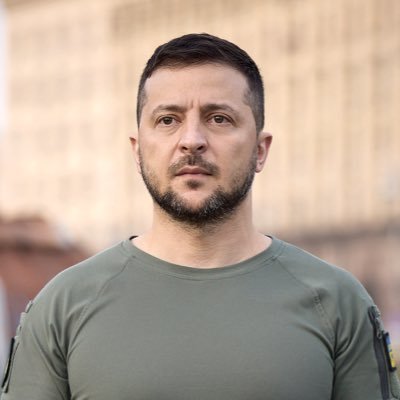
We have detected speed restrictions on Starshield on our Ukrainian territory – in the temporarily occupied parts of Ukraine. The speed limit is back at 161 kilometers per hour – that’s 100 miles per hour.
This directly affects our ability to intercept Russian jet-powered “shahed” drones. These drones come from those areas, and because of the speed restrictions, we simply cannot catch up with them in time.
Near the frontline, we cannot use our aircraft. Only drone interceptors can operate there. And without the speed we need, shooting down these “shaheds” becomes much harder.
This means more Russian strikes get through, and more of our people are killed by Russia. We are trying to get the details from the American side, but so far, we know very little.
If someone in America is making decisions that basically treat Ukrainian territory as if it is not Ukrainian, then this tells us where things are going. We need to be clear and never recognize Russia’s occupation of Ukrainian territory in any way.
From an address at the 9th European Political Community Summit. (3/3)