
cs phd at @umdcs @umdclip | past: @iitmadras, @UUtah, @UMassAmherst | professional acc
Joined June 2024
- Tweets138
- Following126
- Followers198
- Likes223


Pinned Tweet
Can you tell if the ideas in a piece of writing are from a human or an AI?
As AI writing becomes more commonplace, emerging policies on AI use increasingly focus on who came up with the ideas in the text rather than who wrote the text. Modern AI detectors such as Pangram answer the latter question but not the former.
Introducing IdeaLens, a detector of AI ideas!

I am at #EMNLP2026 in Budapest 🇭🇺 presenting POLARIS!
Do come check out our poster tomorrow, Oct 25 between 11 am and 12:30 pm in Hall H!
ICYMI: We introduce POLARIS, a lower-compute GRPO recipe with a structured StoryQuality rubric and Human Reference Injection (HRI).
Trained with this recipe, POLARIS-9B is competitive with open models 3x its size and its quality generalizes beyond training length.

Full thread:

Can open-weight language models write long stories?
Not well: either their writing quality degrades at longer lengths or they severely undershoot in length as the requested length grows, if not both.
Frontier models fare better.
This begs the question, can we train open-weight language models to write long stories with limited data and compute?

61
Thanks @bbcworldservice for running a segment on IdeaLens!
Couldn't make it to the interview unfortunately due to time zone differences but hopefully there is a next time.
rishanth rajendhran retweeted

Join @UMDCS Associate Professor @MohitIyyer for a talk on how AI is being used in writing and how researchers are working to detect and understand its impact.

Happy to have spoken to @Nature about IdeaLens!
Thanks @Nature @LizzieGibney for the feature!
Feel free to reach out if you are also excited about AI idea detection.
Go read the article here:

Researchers have developed a detector that aims to tell the difference between ideas made by humans and those conjured by artificial intelligence
go.nature.com/4evHZpg

Happy to have spoken with @ScienceMagazine about IdeaLens and the future of idea detection in AI-assisted writing.
Thanks @ScienceMagazine @JeffreyBrainard for the feature.
Read here: science.org/content/article/…

rishanth rajendhran retweeted

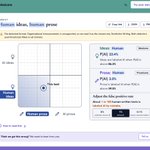
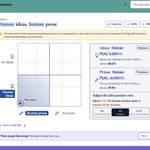
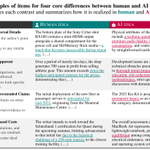
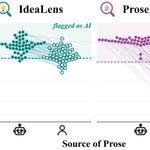
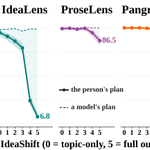
By changing the prose but keeping the arguments and labels, IdeaLens detects where a person or AI came up with the idea, not just who wrote them down. Trained on Tinker, and the code+data+model are open sourced as well!
Traditional AI detectors are accurate when ideas and prose come from the same source. However, on mixed provenance benchmarks where they differ, they follow the prose and not the ideas in the writing.
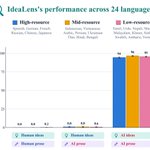
IdeaLens correctly detects who came up with the ideas and not who wrote the prose on these mixed benchmarks, with an average idea detection accuracy of 81.3% vs ProseLens's 25.4% and Pangram 4's 25.9%.
This suggests that ideas are a strong differentiator of human and AI writing.

wish more companies supported academic research like @pangram does.
shout out to them!

Another really cool paper out of @MohitIyyer’s lab! We’ve been thinking about idea provenance for a while and while I think there is a lot more grey area here than in text provenance, this is an impressive proof of concept for what could be really interesting technology
10
441
This work was done with @mjoonixix, @jennajrussell, @ramya_namuduri, @denizbtbt, @mar_kar_, @johnwieting2, and @MohitIyyer.
Thanks to @tinkerapi and @pangram for their research credits, @Google for their cloud credit award that enabled this research and @ClipUmd for their feedback and support.

1
8
1,539
Check out the IdeaLens and ProseLens result on this tweet thread here: ideadetector.ai/r/cs2v6ipzrm

3
7
1,083