

Palo Alto, CA
Joined October 2016
- Tweets3.5K
- Following691
- Followers642
- Likes21.5K






𝐑𝐚𝐥𝐩𝐡 𝐌𝐨𝐡𝐭𝐲 𝐌𝐃 𝐌𝐏𝐇 retweeted

論文はこちらです。筆頭は近松先生、石巻赤十字病院の252例です(Clin Kidney J 2017;10:9-15)。この仕事が、のちの1冊につながっていきます。
doi.org/10.1093/ckj/sfw131

𝐑𝐚𝐥𝐩𝐡 𝐌𝐨𝐡𝐭𝐲 𝐌𝐃 𝐌𝐏𝐇 retweeted

3/4
So why does blood cause this bump in urea and increase in BUN/creatinine ratio, whereas a steak dinner does not?
Because blood has poor BIOLOGICAL VALIUE (the protein is poorly utilized by the body).
The LOWER the biological value of a protein, the HIGHER the urea.
𝐑𝐚𝐥𝐩𝐡 𝐌𝐨𝐡𝐭𝐲 𝐌𝐃 𝐌𝐏𝐇 retweeted

Please join us TOMORROW Thursday 11/12/26 1 PM CST for a live @Rush_Nephrology renal biopsy conference.
One of the more common renal diseases, but there are enough nuances of presentation that there is no accepted treatment. Probably not what you are thinking 😝.

𝐑𝐚𝐥𝐩𝐡 𝐌𝐨𝐡𝐭𝐲 𝐌𝐃 𝐌𝐏𝐇 retweeted

It causes more encephalopathy.... Tte is not helpful because of confounding by indication.
Also. RCT evidence exists.
No more observational cefepime studies. RCT or go home.
𝐑𝐚𝐥𝐩𝐡 𝐌𝐨𝐡𝐭𝐲 𝐌𝐃 𝐌𝐏𝐇 retweeted
I'm a big proponent of stopping non-essential medications for patients admitted to ICU. If you continue a dozen home meds and add two dozen ICU meds, you create a 36-drug medication list that's impossible to safely maintain (in terms of drug-drug interactions, GFR shifts, additive toxicities).
This is actually a great opportunity for deprescribing:
[#1] At admission, pare back the med list & focus on treating the acute problem.
[#2] At discharge, think carefully about whether all those meds were needed in the first place, make sure the home med list is short & sensible.


Among older inpatients, a #DrugBurdenIndex stewardship intervention increased deprescribing of anticholinergic and sedative medications at discharge, but the increase was not sustained after stewardship support ended.
ja.ma/4sR6NhC

ALT Flowchart tracking 22,297 patients across 6 hospitals from Jan 2022 to July 2023. Shows 24,772 excluded admissions and 5,733 included patients broken down by pretrial, control, intervention, and sustainability periods across hospitals A-F in a data table.
𝐑𝐚𝐥𝐩𝐡 𝐌𝐨𝐡𝐭𝐲 𝐌𝐃 𝐌𝐏𝐇 retweeted

Clinical Trial of Open-Label #Mezagitamab in #IgAN: Final 96-Week Results
#VisualAbstract by @brian_rifkin
kireports.org/article/S2468-…

𝐑𝐚𝐥𝐩𝐡 𝐌𝐨𝐡𝐭𝐲 𝐌𝐃 𝐌𝐏𝐇 retweeted

This is the question we are already asking even amongst APRIL & APRIL/BAFF inhibitors. Add in complement & CD38 inhibitors to the dizzying mix. An embarrassment of riches, yet clinically we are falling behind on the order of initiation and what is superior to what.


𝐑𝐚𝐥𝐩𝐡 𝐌𝐨𝐡𝐭𝐲 𝐌𝐃 𝐌𝐏𝐇 retweeted

we need to lean into the "humility of uncertainty", per the wise @BradSpellberg
I'm a generalist and care for patients illnesses that span all organs and systems. I appraise evidence for a living. Most guideline recs are not supported by good evidence, and its not even close. Our best field is cardiology, and still half of recs are just opinions at the end of the day
Hepatology is a field without strong evidence where much of what we do is conjecture (of course with good intentions; they mostly always are)
We need fewer guideline recs, which does not mean you can't discuss pros/cons of different approaches. but we should not be setting the de facto standard of care when the history of medicine has shown time and time again we have erred with this approach

A new @AmCollegeGastro guideline outlines 18 preventive care recommendations for cirrhosis, covering carvedilol, HCC surveillance, vaccines, and more. Only one is supported by moderate-certainty evidence. Lead author @ebtapper discusses the challenges.
ow.ly/tAUI5103mFL

𝐑𝐚𝐥𝐩𝐡 𝐌𝐨𝐡𝐭𝐲 𝐌𝐃 𝐌𝐏𝐇 retweeted

Our pilot study on dynamic biomarkers of kidney function following treatment with daratumumab onlinelibrary.wiley.com/doi/… @rc_oncneph @Api_chew @tarekmd91

𝐑𝐚𝐥𝐩𝐡 𝐌𝐨𝐡𝐭𝐲 𝐌𝐃 𝐌𝐏𝐇 retweeted

Often - we do things that don’t work because they make “physiologic sense”.
Fluid restriction in HF is special, in that we do it in the absence of data AND it also makes no physiologic sense.
You trying to treat hyponatremia? Did drinking water cause their congestion?
Stop it

Restricting fluids is one of the first things we ask of patients with heart failure.
Four RCTs, 682 patients: no difference in death or heart failure hospitalisation.
@CardioJob (Radboud, who led the FRESH-UP trial) joins bit.ly/3VjQdtZ on the Heart podcast 🎧
🎧 Apple: apple.co/4Abz2Kn
🎧 Spotify: bit.ly/3WnhFro
🎧 Podbean: bit.ly/4BOx18G
▶️ YouTube: bit.ly/483tCFd
📄 Paper (free to read): bit.ly/4AbBgJt
#CardioTwitter #HeartFailure #MedEd

𝐑𝐚𝐥𝐩𝐡 𝐌𝐨𝐡𝐭𝐲 𝐌𝐃 𝐌𝐏𝐇 retweeted
I just updated the IBCC chapter on pulmonary vasodilators, here are new pearls I learned 🤯
🫁 The dosing of inhaled pulmonary vasodilators is a little different for ARDS versus for treatment of RV failure. In ARDS, you're shooting for selective vasodilation of the best-ventilated alveoli to maximize V-Q matching, so you want a mid-range dose (too high and you start vasodilating the worse-ventilated alveoli). In RV failure you're trying to vasodilate every alveoli as much as possible to bring down the pulmonary vascular resistance, so go high.
🫁 Nebulized milrinone causes selective pulmonary vasodilation for ~20-30 minutes, then gets systemically absorbed. One dose of nebulized milrinone in the OR is great, but scheduling milrinone nebs q4hr doesn't make pharmacological sense (it doesn't achieve consistent pulmonary vasodilation and there are risks of systemic accumulation in renal failure). IMHO milrinone nebs don't have much role in ICU. If you want to give milrinone just give it IV.
🫁 There's a gradually escalating amount of evidence supporting combined simultaneous use of inhaled epoprostenol and inhaled NO to treat RV failure. See the article by Andre Denault below. This may be a good option for RV failure before escalating to an Impella RP Flex. It's pretty easy to trial a patient on inhaled pulmonary vasodilators - if they work great, if they don't work you haven't lost much.
#1/2, link in next post.


𝐑𝐚𝐥𝐩𝐡 𝐌𝐨𝐡𝐭𝐲 𝐌𝐃 𝐌𝐏𝐇 retweeted
Fresh IBCC chapter: APRV guide 😁
My first APRV guide came out in 2017. I updated it during COVID in 2020. I just completely overhauled it again.
Two APRV guides were published recently (one by @TheEMNerd in 2022 and one by Nieman et al. 2026). Both guides focus on how to get patients initiated on APRV. My APRV guide is consistent with them. There is a general consensus about how to get APRV started.
Currently, the most challenging & controversial aspect is how to wean *off* APRV. Much less is written about this. I've described two possible approaches based on the best data that we have (Zhou et al. RCT) and basic vent weaning principles. But this remains murky.
Some approaches to weaning off APRV involve a gradual removal of ventilator support, without spontaneous breathing trials. This strategy isn't consistent with modern techniques of ventilator liberation (i.e., providing comfortable non-fatiguing support with intermittent spontaneous breathing trials).
APRV is a great rescue modality currently. However, for APRV to demonstrate benefit in clinical trials, proper attention is needed to rapid APRV weaning. Inadequately aggressive weaning strategies will destroy the ability of APRV to improve ventilator-free days & ICU length-of-stay.
I'd love to hear about folks' experience in terms of APRV weaning.
The role of APRV in ARDS remains controversial. It was hotly debated during COVID in a partisan fashion without any real conclusion. Hopefully further RCTs will clarify its precise use. This is tough because outcomes depend on how APRV is set (not simply the binary presence/absence of APRV).
Aside from ARDS, APRV is pretty fabulous for mucus plugging and atelectasis. Physiologically, its ability to produce biased airflow that promotes secretion clearance is simply unparalleled (slow inspiration & fast expiration clears secretions out of the airway).
So regardless of where we land with APRV for ARDS, I do think that there will always be some use for APRV in critically ill patients. So this guide will hopefully be evergreen.
(#1/2, link next)


𝐑𝐚𝐥𝐩𝐡 𝐌𝐨𝐡𝐭𝐲 𝐌𝐃 𝐌𝐏𝐇 retweeted

Avacopan: Is it the end of the road?
Yes, indeed. But complement is key in pathogenesis and new developments are needed and ongoing. Please see our comment published in @CKJsocial
academic.oup.com/ckj/advance…

𝐑𝐚𝐥𝐩𝐡 𝐌𝐨𝐡𝐭𝐲 𝐌𝐃 𝐌𝐏𝐇 retweeted

A Case of Bio-Dissimilarity: Rapidly Progressive Glomerulonephritis Following Switch From Infliximab to Infliximab-abda
ajkd.org/article/S0272-6386(…
𝐑𝐚𝐥𝐩𝐡 𝐌𝐨𝐡𝐭𝐲 𝐌𝐃 𝐌𝐏𝐇 retweeted

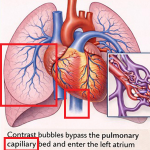
1970: teremos carros voadores no futuro
2026: ainda tem gente com medo de contraste

𝐑𝐚𝐥𝐩𝐡 𝐌𝐨𝐡𝐭𝐲 𝐌𝐃 𝐌𝐏𝐇 retweeted

Los diuréticos de asa intravenosos a dosis muy altas (ej, bumetadina y furosemida), NO se asociaron a ototoxicidad👂, los pocos cambios auditivos son temporales y totalmente reversibles
Olvidemonos ese mito viejo y obsoleto
JAMA Cardiol 2026
10.1001/jamacardio.2026.4913

𝐑𝐚𝐥𝐩𝐡 𝐌𝐨𝐡𝐭𝐲 𝐌𝐃 𝐌𝐏𝐇 retweeted

Bilirubin crystals - brightfield (orig mag x400) - from patient with advanced chronic liver disease and AKI - #UrineMicroscopy #UrinarySediment

𝐑𝐚𝐥𝐩𝐡 𝐌𝐨𝐡𝐭𝐲 𝐌𝐃 𝐌𝐏𝐇 retweeted

Comparative Analysis of GFR Measurement Techniques: Part 1. Concepts and Endogenous GFR Markers
ovid.com/jnls/kidney360/full…
@asnpublications
