
Former Trustee of @HelpforHeroes. Past President of @StoneinOxneycc 🏏. Volunteer EOHO with @CWGC. True British countryman at heart. Views are my own
Isle of Oxney
Joined June 2010
- Tweets2.4K
- Following625
- Followers225
- Likes6K





Rob Watsham retweeted
The UK farming sector faces a generational cliff edge that threatens food security, rural communities and the countryside itself.
Only around 5% of farmers in England are under 35, the average age is over 59, and more than a third are over 65.
Similar patterns appear across Wales. Without a stronger pipeline of younger entrants, the industry risks losing knowledge, capacity and momentum just as it needs to produce more sustainably, adopt new technology and respond to climate and market pressures.
Young people bring energy, digital skills, fresh thinking on sustainability and a willingness to innovate. Research shows many (around 38-42%) are open to careers in food and farming, yet only a small fraction actually enter - held back by limited school exposure, outdated perceptions of hard, low-paid work, and practical barriers around land access, finance, housing and training.
Getting more young people involved is not just about filling jobs. It is about securing domestic food production, strengthening rural economies, driving environmental progress and ensuring farming remains viable for the next decades.
Groups like the National Federation of Young Farmers’ Clubs are pushing for the under-35 share to rise significantly (targeting 15% by 2036), with better support for new entrants and clearer pathways.
Farming needs new talent now. Greater visibility in education, targeted support for new entrants and a modern image of the industry can help close the gap and build a more resilient future for British agriculture!

Rob Watsham retweeted
Invest in the future health of your children, do not rely on any institution to teach them what food is and where it comes from.
Explain to them the benefits of locally sourced whole-foods and how they originate.
🌍🌎🌏

Rob Watsham retweeted
While everyone else is arguing about tractors, planning applications and whose fault the latest disaster is, Gerald is just… getting on with it.
Fifty years of combining and maintaining the same land that his history is now etched into. Miles of dry stone wall kept standing by a man who actually knows how those walls are supposed to work. No fuss, no cameras-first attitude, just a proper countryside craftsman and every day hero doing a job most people half his age would struggle with.
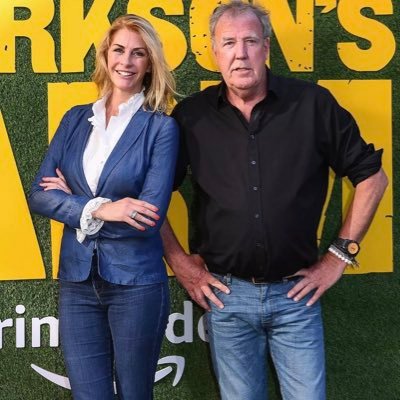
The hard working, kind, quiet (mostly inaudible) legend of Clarkson’s Farm. And a true custodian of the land (and people) he so loves!🤝

Rob Watsham retweeted
Farms are holding back on reservoirs and other resilience work because it would push the value over the inheritance tax threshold. That’s not planning for the next generation – that’s being forced to choose between the farm surviving the drought or surviving the tax. Scrap the family farm tax in the Budget. In fact, scrap inheritance tax for all.
Rob Watsham retweeted
Britain’s farms are being hammered by the worst bluetongue outbreak the country has seen.
Spread by biting midges and turbocharged by a long, hot summer, the virus is killing sheep, wrecking fertility in cattle, emptying bank accounts, and leaving farmers checking fields every morning not knowing what they will find.
As of 20–21 September 2026, officials had confirmed bluetongue on 1,517 premises in the 2026–27 season: 1,326 in England, 159 in Wales and 32 in Scotland. Northern Ireland still had none. Almost all of it is serotype 3 (BTV-3). Devon is the epicentre, with hundreds of infected holdings; Cornwall, Somerset, Staffordshire and parts of Wales are also badly hit. The whole of England and Wales sit in restricted zones, and south-west Scotland has one too. Thousands more farms were still waiting on test results.
Bluetongue does not infect people and does not make meat or milk unsafe. For livestock it is brutal. Sheep get fever, swollen faces and tongues, mouth ulcers, drooling, lameness and collapse. Some die quickly. Cattle more often survive the acute illness but pay later: milk drop, abortions, stillbirths, “dummy” calves that cannot stand or suck, and damaged fertility in bulls and rams. There is no cure. Care is supportive only.
On the ground, that looks like this.
Mark Walter, farming at Milton Damerel in north Devon, lost more than 50 sheep. He vaccinated 1,700 animals and spent close to £10,000 on jabs and medicines. He said he did not want another farmer to go through it.
Kim Dart, near South Molton, lost almost 25 sheep and lambs. “One minute you think that they’re doing OK and then suddenly they die.” A local fallen-stock collector took 120 calls in a single day.
On Exmoor, beef and sheep farmer Mark Taylor described his young daughter asking, “Is that one dead, daddy? They’re sick again, aren’t they?” He did not want her to see that side of farming. Collectors and hunt kennels in the West Country reported being overwhelmed; some flocks have seen mortality of 15–30% in particular groups. Jerry Sanders-Carr, near Exeter, lost 15% of his sheep and put the cost at about £15,000 once vaccines, treatment, carcass collection and replacements were counted. Some farmers have been told of neighbours losing 130 or 150 animals.
The money drain does not stop at dead stock. Vaccines and medicines arrive at a cash-tight point in the year. Disposal fees stack up. Shows have cancelled cattle and sheep classes. Movement rules complicate trade, breeding programmes and germinal products. Drought in the South West has already burned off grass and forced farms onto winter feed early - then bluetongue hit the same animals. Fertility damage will not show fully until next spring’s scanning and lambing. That is the delayed bill.
Farmers and vets say last year lulled people into thinking the virus was milder here than on the Continent. This season has been different. Midges have been active since late March. Warm weather lets the virus multiply inside them. Infected insects have also been blown into new areas - Scotland’s first cases this season were linked to a plume from further south.
Vaccines against BTV-3 exist and industry bodies, the NFU, the National Sheep Association and chief vets are urging keepers to talk to their vet and vaccinate remaining stock and next year’s animals. Vaccination does not make reporting unnecessary - vaccinated animals can still get infected - but it is the main tool left once midges are carrying the virus in the landscape. Leaving breeding ewes, rams, cows and bulls unprotected is the bigger gamble.
This is not an abstract animal-health story. It is dead ewes in the hedge, a child asking if another animal has died, a tenant farmer watching winter forage vanish in a drought, and a bill for vaccines and carcass collection arriving when there is nothing coming in.
Bluetongue is another gut wrenching blow to UK farming this year, heartbreaking to watch.
Rob Watsham retweeted
British farmers don’t just grow food. They keep the lights on in the countryside, hold 70% of the land together, and put about 65% of what’s on our plates there in the first place.
World-leading welfare. Traceable food. Shorter miles. Rural jobs. Landscapes that don’t look after themselves.
Cheap imports don’t carry those costs - or those standards. If you want British food to stay British, buy it, ask for it, and back the people who produce it.
Look for the flag. Look for the Red Tractor. Back British farming.
🇬🇧
Rob Watsham retweeted
To Britain’s farmers -
You got through one of the hardest summers in a generation. Five heatwaves. A flash drought. England’s driest July on record. Grass that stopped growing. Harvests weeks early. Fields that baked, cracked, and still had to be worked.
That is not a season you simply endure. It is long days, winter forage opened in August, water rationed, and crops taken when they were ready - yield or no yield. Arable, livestock, horticulture, dairy: none of you escaped it.
Congratulations is the right word, even beside the exhaustion. You kept animals watered and fed. You got the harvest in. You kept food moving when the weather was doing everything it could to stop you.
September rain has given the land a first drink.
The outlook now leans towards a wetter, more unsettled autumn. That is what is needed: rain that soaks in, soil that will take a drill, grass that grows again.
Thank you, well done. And here’s to hoping autumn is kinder!🍻
Rob Watsham retweeted
2026 has been one of the hardest years in a generation for UK farmers.
A punishing combination of record heatwaves, the worst drought in decades, soaring input costs and a major livestock disease outbreak has left many farm businesses facing a cashflow crisis.
Harvests of wheat, barley and other cereals have been well below average - in some cases the poorest since records began in the 1980s - after a dry spring followed by intense summer heat and almost no rain in key growing regions.
Livestock farmers have been hit just as hard. Poor grass growth created forage shortages, while a severe bluetongue outbreak (spread by midges thriving in the heat) added extra welfare, movement and disposal costs.
At the same time, the costs of doing business have jumped. Fertilizer and diesel prices have risen sharply, driven in part by conflict in the Middle East, while farmgate prices for many commodities have stayed weak. Cereal farm incomes are forecast to fall dramatically.
Longer-term pressures have made the pain worse: cheaper imports from new trade deals, reduced EU export volumes since Brexit, and ongoing uncertainty around support schemes and inheritance tax rules. The result is fragile confidence and many viable businesses struggling just to plant next year’s crop.
UK farmers produce around 65% of the food we eat and manage most of the countryside. A third report making no profit. Supporting them through this weather and cost shock isn’t just about rural livelihoods - it’s about food security.
Rob Watsham retweeted

Until last week, men over 50 were entitled to a free PSA prostate cancer check. But the government has now decided to withdraw that right. I cannot for the life of me work out what their reasoning might be.


This is brilliant - net zero explained . . . . .

This is BRILLIANT and beyond hilarious 🤣
The fight for Net Zero in the UK.
Officer Longcock and the solar submarine had me in stitches 😂
The team at Artificial Idiots @AiIdiots are bloody awesome.


Rob Watsham retweeted

I actually didn’t think I could love what he does for others any more…but then he goes and does this. WHAT A LEGEND 🫶🫡🙌


Rob Watsham retweeted
His father once told him, “Son, farming is in your blood.” 🌾
He believed it with everything he had.
At 26 he took over the family farm — young, hopeful, and ready to work harder than anyone who came before him.
He kept that promise for fifteen years.
Now he’s 41 and looks a decade older.
His hands are split and calloused from the cold. His back seizes up every morning before the day even starts. He’s missed birthdays, school plays, family dinners and anniversaries that can never be replayed.
Every Sunday night his wife does the accounts at the kitchen table.
Last Sunday she sat there for a long time without speaking.
Then she looked up.
“We’re forty thousand pounds down this year.”
After fifteen years of early mornings and late nights, diesel has doubled, fertiliser is up 60%, electricity has tripled… and the price he receives for his wheat is almost exactly what it was in 2015.
He is not lazy.
He is not incompetent.
He is not failing.
The system is failing him.
And every Sunday night his wife still sits at that same table, staring at numbers that only ever seem to get worse.
How long before Britain loses an entire generation of farmers who simply can’t afford to carry on?
Rob Watsham retweeted

An update and a message from Jeremy.
“Thank you so much for all the kind messages I've had but now, an announcement.”
Rob Watsham retweeted

The next war won't be won by armies, navies or air forces alone.
It'll be won by the country whose 19 year olds can code, whose factories can build drones in weeks not years, and whose grid stays on when someone tries to switch it off.
Industry. Society. Economy. That's the fight now.
We're not ready. And we're not being honest about what getting ready will cost.
Rob Watsham retweeted

We'd like to say a huge thank you to Baroness Ritchie of Downpatrick for her important speech last week on Parkinson's care and the Government's NHS modernisation plans, including improved integration of patient records.
@UKParliament