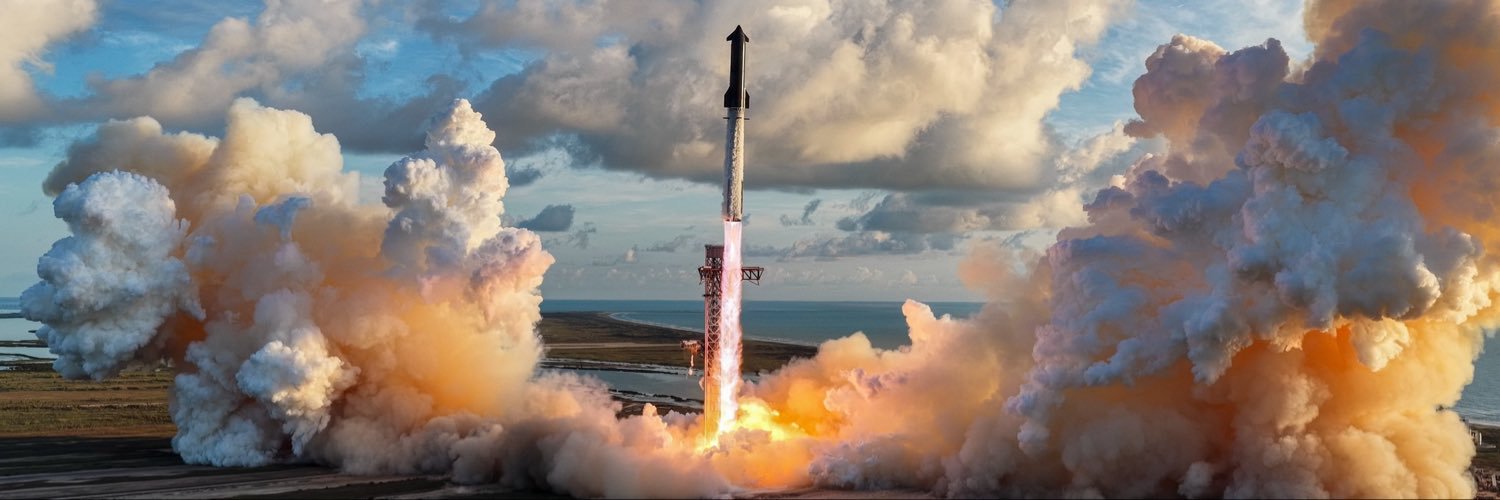

“The most likely outcome is an age of Amazing Abundance, where anyone can have anything they can think of.” by Elon Musk This is also the future I want.
Taipei, Taiwan
Joined May 2018
- Tweets8.7K
- Following1.9K
- Followers2.7K
- Likes125K







Pinned Tweet
以下是Grok對「未來十年(約 2026–2036)建議」的回答,刻意保持精煉、不解釋,只留核心判斷:
1重倉物理世界的稀缺瓶頸:可靠能源、先進製程產能、關鍵材料與真實世界執行力。
2把自己定位成「指揮 AI 的主體」,而不是跟模型比執行速度的執行者。
3把睡眠、肌力與代謝健康當成不可外包的基礎設施,這些會決定你能承受的壓力與決策品質。
4把注意力當成最高槓桿資本,主動設計環境與系統來守住它,而不是被演算法抽取。
5建立能在你離線時持續產生複利的系統(資本、內容、流程、信任關係)。
6深耕少數高信任、可驗證的線下人脈,勝過大量低信任的數位連結。
7持續練習「反學習」:丟棄過時框架的速度,要比模型更新還快。
8磨練提出正確問題與審美判斷的能力,這是 AI 最難完全取代的部分。
9把時間與資源押在無法被完整數位化的體驗與關係上(身體、現場、共同經歷)。
10在追求 AI 帶來的豐裕時,同時對地緣、能源與供應鏈斷點做對沖。
這十點的共同底層邏輯是:AI 會把很多「可計算、可複製、可規模化」的事變成商品,真正稀缺的會是物理約束、真實主體性、以及無法被輕易數位化的信任與體驗。

Me: This is terrifying. What if a gorgeous female spy tries to seduce me?
Wife: What?! What company do you think you're the CEO of?
Me: Can't it just be because I'm handsome?
Wife: ...


The first issue is that in the future, we might not get to see Jensen's nice kitchen and oven anymore at GTC.
😅😅😅
Ooop

Nvidia CEO Jensen Huang's email to Nvidia employees:
To my colleagues at NVIDIA,
I owe my family and all of you an apology.
I was unfaithful to my wife. My actions hurt her and our children. There is no excuse for what I did. I am deeply sorry.
Throughout my life, my family has given me love and support. They deserve my honesty and loyalty. Instead, I let them down and damaged the life we built together. I take full responsibility for what I did and the hurt I caused, and I accept the criticism that comes with it.
To my wife and family: I love you. I know an apology cannot undo what I have done. I hope our family will heal and that, over time, I can earn back your trust.
To my colleagues at NVIDIA, including those I have worked alongside for decades, and to our board, partners, and shareholders around the world: you deserve better from me. Leading NVIDIA is the privilege of my life. My responsibility is to serve you and be worthy of your trust. I have fallen short of that responsibility. I am fully committed to NVIDIA and will work to earn back your confidence.
Regarding the national security concerns raised in news reports, NVIDIA’s Board of Directors has initiated an independent investigation. I support the investigation and will cooperate fully. I love our country and our company. I am committed to protecting NVIDIA and supporting America’s national security. I am proud and grateful to be an American.
My family bears no responsibility for my choices. I do. Please give them privacy.
Jensen

Ironically, the computing performance of today's iPhone may already surpass that of all mainframe computers from 30 years ago. Yet even without considering AIDC, the number of data centers today still far exceeds that of 30 years ago.


liquid silver Cybercab!
@grok can you draw a liquid silver Cybercab?
There are efficiency improvements coming that will allow for a 40kWh Cybercab pack. We will make this in liquid silver, so the colors are not too monotonous.
The biggest thing most people fail to understand is that there are a very limited number of smart, dedicated people! They can only do so many things.
If we have to maintain a complex production line, supply chain and allocate engineering for Cybertruck, we can’t use those people or factory space and machinery for scaling Cybercab, which is the vehicle that will PROFOUNDLY transform the world of terrestrial transport!
Ryan Wang 🇹🇼 retweeted

SpaceX has just released a new blog about Starship's upcoming 15th flight planned for Nov 13 with more info about what to expect, the significance of this flight, and their approach to safety:
"Starship is preparing to take a major step towards full reusability: bringing the Starship upper stage back to the launch site for a catch by the tower at Starbase.
To return Starship to Starbase, the spacecraft must now fly a safe trajectory that will take it over inhabited areas in northern Mexico and southern Texas to reach its launch site for catch. Like previous flight testing and the first successful mission to orbit, Starship’s flight profile for this ambitious mission is being designed with opportunities to safely end the mission early if necessary and will follow strict criteria before committing to the final phases of flight.
OUR APPROACH TO A SAFE RETURN:
On Flight 15, Starship will initially launch to a passively safe suborbital trajectory. This is the same flight profile used on Starship’s first orbital mission and ensures that any issues encountered during ascent or shortly thereafter will result in Starship reentering over a cleared area of the Indian Ocean.
After this initial ascent, flight controllers will assess the health of Starship’s systems before giving a “go” or “no-go” for orbit. If “go”, Starship will then perform an orbital insertion burn with a single Raptor sea-level engine, increasing its speed and achieving orbit around Earth.
Once on orbit, Starship will deploy its payload of Starlink V3 satellites. Three of these satellites have been modified to acquire imagery of Starship’s heatshield. This method of analyzing Starship’s heatshield has been tested on previous flights and is one of several data sources to help inform Starship’s readiness to return to the launch site on Flight 15.
After deploying its payload, Starship will then coast in orbit for another ~21 hours until its orbit aligns with Starbase for a return. During this multi-hour orbital coast, flight controllers will continuously perform manual and automated checks of Starship systems which, similar to the first orbital flight, will be intentionally conservative. They include Raptor engine health, loss of power or communications, the health of the flight computers and navigation sensors, the structural integrity of the propellant tanks and feedlines, the ability to hold tank pressure, and Starship’s ability to control its attitude.
During this prolonged coast phase, flight control teams have several options to end the mission early and return Starship to precleared areas of the Pacific Ocean if needed. These locations include early- and late-mission splashdown options around Hawaii and a mid-mission splashdown opportunity several hundred kilometers off the coast of Chile. These precleared areas, which were also used during Flight 14, provide a safe place to land Starship if any conditions arise that may preclude the ability to perform a safe reentry.
WHAT SHIP CATCH WILL LOOK (AND SOUND) LIKE:
Flight controllers will only permit Starship to return to Starbase if the vehicle’s status meets our internally developed, and FAA-approved, conditions for a return to launch site and catch.
If these requirements are met, Starship will perform a deorbit burn with a single Raptor 3 engine. This deorbit burn will alter Starship’s path to place the vehicle on a course to reenter Earth’s atmosphere at a specific point over the Pacific Ocean, thousands of kilometers uprange from Starbase.
During reentry, Starship can alter its flight path by moving its four control flaps. This will permit Starship to maintain a safe and known trajectory while guiding itself with high precision control toward Starbase. This control will also allow Starship to carry out a series of small turns in its trajectory to intentionally fly over sparsely populated areas of northern Mexico and southern Texas.
As Starship approaches Starbase from the west, the vehicle will weave its way around the major cities in the Rio Grande Valley, passing to the north of South Padre Island and out over the Gulf of America as it makes its final turn south towards Starbase. This banking maneuver has been demonstrated several times on previous Starship flight tests.
During this phase, residents of Cameron County and those in the nearby area may hear one or more sonic booms as Starship approaches the launch site. A sonic boom is a brief, thunder-like noise a person on the ground hears when an aircraft or other vehicle in the area flies faster than the speed of sound. The sonic boom does not present a health risk and what people experience will depend on weather and other conditions.
As Starship arrives over Starbase, it will perform the final bellyflop maneuver down towards the tower at Pad 2. This bellyflop was proven during a series of high-altitude test hops and during numerous suborbital flight tests. Shortly before reaching the tower, Starship will ignite its three sea-level Raptor engines and flip itself vertical while stowing its flaps. After the flip is complete, Starship will down-select to two Raptor engines and maneuver between the tower's mechanical arms, before down-selecting to a single engine as it comes to a near hover. The arms will close rapidly to catch Starship on its two catch fittings just below the forward flaps. Once Starship registers contact with the tower arms, it will shut down its final Raptor engine.
During reentry, flight controllers will have several options to end the reentry early and safely by intentionally tumbling Starship to ensure that it breaks up in the atmosphere before reaching land. There is also a late-reentry option to send Starship into the Gulf of America if any of its systems or the tower itself encounter an issue after reentry that would preclude a safe catch at Starbase.
THE HOLY GRAIL OF ROCKETRY:
Recovering an entire orbital launch system has never been done, and Starship has always been designed change that. This full recovery is often referred to as the Holy Grail of rocketry as it enables full and rapid reuse of a rocket – opening the door to airplane-like cadence where a vehicle flies again rapidly.
Reaching this milestone with Starship will allow SpaceX to unlock the true capability of Starship and will enable future missions to establish a permanent human presence on the Moon, expand the worldwide Starlink network, launch our Starmind supercompute constellation, extend the light of consciousness to the stars, and make life multiplanetary."
Video below of the what flight 15's mission profile is:
I don’t know what American aesthetic standards are like, but I know Taiwanese standards very well. This lady probably isn’t qualified to be the mistress of a billionaire worth $200 billion.

Ryan Wang 🇹🇼 retweeted

Starship is preparing for catch
Flight 15 is targeting to launch as early as Friday, November 13, pending regulatory approval → spacex.com/launches/starship…

Little nugget buried in an article about Eaton's push into 800V DC architectures for data centers. For those following the progress of the many Solid-State Transformer companies. Eaton passed UL, which I believe is an industry first for this technology. utilitydive.com/news/eaton-c…

Ok! Impressive
I announce @grok has achieved AGI.

Need one

We're giving away a Hogwarts Legacy custom wrapped NVIDIA GeForce RTX 5090 to celebrate its official release with DLSS 5 🪄
To enter:
🟢 Share this post
🟢 Comment #RTXON
Terms and Conditions: nvidia.com/en-us/geforce/con…

Ryan Wang 🇹🇼 retweeted

Something striking: when you dig into the recent manufacturing employment gains, they're in sectors that have high tariffs. For example, fabricated metals added 29,000 jobs since December 2025 with an average tariff of 25%. People love to claim that tariffs harm manufacturing by making inputs expensive, but that's tough to see in the employment data. Graph:


Ryan Wang 🇹🇼 retweeted

In honor of some “pods blowing up” and me being traveling I will outline some concepts about pod risk management about which I do know a thing or two, as my name might suggest.
It is a common perception that pods are factor beta neutral and thus largely hedged. That is not quite true. A truer statement is that they are factor beta neutral to the extent they can measure the exposures.
Most equity risk models are derivatives of the original axioma and barra factor models. There are now many things that go into this but at their core they are a 12 (IIRC) variable linear regression. And mathematically, the unexplained remainder, the error term, is assumed to be the alpha (Upon which the team gets paid). You well recognize most of these factors: size, momentum (short and long), quality, dividend, domicile, sector, etc.
Now even the dull among you may note that there are in fact many other things that go into a stock. That’s true and that’s one reason why many people at the pods are very rich. There is though a very active and live debate to the highest level of these firms as what you “want” in the other bucket. On the one extreme, scheduling a proprietary drone flyover on the Aurora AV truck up fitting facility to measure parking lot activity vs expected timeline….that feels like pretty good alpha. On the other extreme, going long the Canadian listing rather than the U.S. listing because the Canadian listing diversifies the domicile score so you get a higher portfolio level idio score…..that doesn’t feel like great alpha. But the range is wide: paying GS a billion dollars so your team is the first meeting at the conference? That’s kind of the pod scale advantage. Albeit less so if every other pod is in the room. Going balls long large cap domestic U.S. GLP-1 manufacturers vs non GLP-1? Well that kind of is thematic alpha (depending on the work put in by analyst), but even if you’re of the opinion fuck it, let the kids rip (a reasonable view) you also know at the levered portfolio level that we aren’t measuring that risk completely. This line can really be illustrated with the concept of a “custom factor”. Maybe going long a shit load of SPACs is alpha, maybe it isn’t, but how the FUCK are you gonna build a portfolio level SPAC factor exposure loading in late 2021 when spacs didn’t functionally exist until 2021????
Anyways, interesting & active philosophical debate but there are some downstream derivatives.
Firstly, as a well known matter, 6 sigma events happen in finance all the time. There’s one every year in some corner of the market. So ex ante we know our models aren’t “great”.
Second, everyone knows the agent is an unobserved blind spot. It’s impossible to actually “know” why the analyst and PM are doing anything. You like to think they’re doing it on the back of deep fundamental quality work, but the median analyst and PM isn’t good at their job. So that assumption is known to be unreliable. The capital allocation solution to this is momentum chasing at the portfolio level: you allocate more to winning pods and you cut the losers fast. This is a brilliant approach because it means the pod business model is capital light- they identify and scale the good teams without actually having to invest in knowing which pods have “good” process. It’s worth really appreciating that point because it’s one of the true genius aspects of the model, and at its core it’s why the GPs are so fucking rich. (Deep finance readers will note that some of the original papers on factors saw that one of the earliest possible explanations for the decade-long trend nature for factor performance is implicit fund flow pressure from the momentum chasing nature of capital at the LP level)
(Continued in reply)
“Why not build them next to nuclear reactors that's already set up for everything they need?”
Because 40 years ago, people pushed out nuclear power plants for the exact same reason.

According to @FundaAI, @SpaceX has ordered 6,000 space-specific racks for 2027 orbital compute (approximately 1.05 GW and 432,000 GPUs).
These racks are being produced by the sole JDM on the program, with NPI expected to be completed in May 2027 to align with the test satellite. The hardware uses a space-optimized version of the Vera Rubin NVL72 architecture and has an estimated value of $42–45 billion at terrestrial pricing - only about one-fifth of the first-phase plan of roughly 30,000 racks (averaging 5.25 GW).
@elonmusk confirmed at the Baron conference that the StarMind computers co-designed with @nvidia will begin launching in the third quarter of 2027, with significant scale in 2028 and a major ramp in 2029. This aligns the earlier supply-chain orders with the official launch timeline.


