sandith (@sandith) header
sandith (@sandith) profile picture

Author, Naval Architect. Follow History, Mathematics, Engineering, Hindu Philosophy and Comparative Studies, Indian Art & Drama

Kochi
Joined March 2008
Photo by sandith (@sandith)Photo by sandith (@sandith)Photo by sandith (@sandith)Photo by sandith (@sandith)Photo by sandith (@sandith)Photo by sandith (@sandith)Photo by sandith (@sandith)Photo by sandith (@sandith)Photo by sandith (@sandith)Photo by sandith (@sandith)
DGMA has relaxed ship-age limits. Old ships are cheap to buy and expensive to run. It also takes orders away from shipyards and the defence industrial base. Support shipowners with finance and cargo, not with old ships. @shipmin_india sandith.in/2026/11/19/suppor…
21
sandith retweeted
A farmer digging in a ruined place near Peshawar in 1881 found 70 fragile leaves of birch bark. They carried mathematics that still surprises us. One leaf holds a rule for the square root of a non square number. Subtract the nearest square. Divide the remainder by twice that root. Apply one correction. That is all. How good is it? The manuscript itself computes the square root of 339009. Its answer is correct to 11 decimal places. In another problem it checks its own answer using a fraction whose numerator has 23 digits. No decimals. No calculator. Just digits in a row, and dots for zeroes. The bark reached Oxford's Bodleian Library in 1902, and the rule sat there, admired but shelved. Then in 1976, M.N. Channabasappa, a mathematics prof. at Karnataka Regional Engineering College, Surathkal, re-deciphered the sutra and turned the rule into an iteration. In 1979 he reported that, iterated, the Bakhshali rule reaches the square root of 41 to ten decimal places 38% faster than Newton's method. A rule from a birch bark, beating Newton at his own game. In 2012, David Bailey and Jonathan Borwein proved why. One Bakhshali step is secretly 2 Newton steps rolled into one, so every step multiplies the correct digits by about 4. They wrote that the Western tradition knew no square root method this powerful until well after the Enlightenment. How old is the bark? Oxford's 2017 carbon dating says its leaves come from at least 3 different periods, the oldest from the 3rd or 4th century. The rule itself cannot be dated. It may be older than the bark it sits on. We do not know the scribe's name. We do know the professor's. Why is it not in our maths textbooks? Sources: Indian Journal of History of Science, Ganita Bharati, American Mathematical Monthly, MacTutor, Bodleian Libraries Photo: A folio of the Bakhshali manuscript on birch bark. The dots are its zeroes. Credit: National Geographic / Bodleian Libraries
27
542
17
1,528
23,515
sandith retweeted
In Burma, a man from Kerala gave a Vishnu temple a lamp with a specific instruction: it was to burn constantly in the hall he had built. His name was Irayiran Siriyan, also called Sri-Kulasekhara-Nambi, and the Tamil letters recording his gift have been dated to the 13th century. He named his home as Magodayarpattanam in Malaimandalam, identified as Cranganore, today's Kodungallur, on the western coast of the Indian subcontinent. The temple stood at Pagan, in present-day Myanmar. Its name was Nanadesi-Vinnagar, which the epigraphist E. Hultzsch translated as "the Vishnu temple of those coming from various countries". The record was carved on sandstone: a Sanskrit verse in Grantha script, then Tamil prose. Before it gives his name or his gifts, it opens with a prayer from Kulasekhara's Mukundamala: नास्था धर्मे न वसुनिचये नैव कामोपभोगे यद्यद्भव्यं भवतु भगवन् पूर्वकर्मानुरूपम् I एतत्प्रार्थ्यं मम बहुमतं जन्मजन्मान्तरेऽपि त्वत्पादाम्भोरुहयुगगता निश्चला भक्तिरस्तु II Hultzsch's translation: "(I have) no regard for merit, none for a heap of wealth ... In every other birth also let (me) possess unswerving devotion to the pair of Thy lotus-feet!" Centuries later the stone was found at Myinpagan, south of Pagan. Taw Sein Ko sent ink impressions to Hultzsch, who published the text and translation in Epigraphia Indica. The Tamil part records what Siriyan gave: a sacred mandapa, a sacred door, and "one fixed lamp to burn constantly in this mandapa." Sources: E. Hultzsch; Taw Sein Ko; Mukundamala of Kulasekhara. Photo 1: The published text and translation, prayer and lamp lines highlighted in saffron. A scan of the printed page, not the stone. Credit: E. Hultzsch. Photo 2: Nathlaung Kyaung temple, Bagan, 2015. Context only, not proof it is the donor's hall. Photo 3: deity sculpture in a niche at Nathlaung Kyaung. Context only.
4
113
2
332
7,570
Riemann hypothesis proved by AI. (pic1) But proving theorems axiomatically has little practical or epistemic value as in my remarks on Kosambi's attempted proof (pic2,3,4).
3
44
1
119
3,586
sandith retweeted
Experience the thrill of the open waters, where every ride becomes a statement and every sunset creates a memory. Shesha by Navalt. Crafted for unforgettable journeys.
1
2
47
sandith retweeted
Oceanix X-Emission – a maritime emissions intelligence solution designed to help the maritime industry navigate evolving environmental regulations and achieve cleaner operations.
1
1
6
sandith retweeted
X-HULL optimising vessel performance through data driven hull and propeller analytics.
1
1
4
sandith retweeted
Oceanix X Mach transforms machinery data into actionable insights, helping operators monitor main engines, auxiliary engines, and other critical machinery to identify issues early and reduce downtime.
1
1
6
sandith retweeted
Oceanix X-Zero turns vessel performance data into environmental intelligence, helping operators understand CII, EEOI, SFOC deviation, speed loss, and cargo utilization.
1
1
5
Subsequently, some people in the 20th c., casually speculated on the possibility that the infinite series could have been transmitted TO India. In a seminar at IGNCA ca. 1997, David Pingree claimed "independent rediscovery". This talk was attended by just two persons, myself and A. K. Bag. I provoked Pingree by commenting that the calculus originated in India and was transmitted to Europe. Pingree's response was odd. He remained silent for a whole minute. Then asked "what is the evidence?" His goof up of a prolonged silence, hence the ongoing conflict in his mind, encouraged me that I was on the right track. I responded that I would produce the evidence in six months. To this end of collecting evidence to settle the issue, I undertook a project to determine the true origin of the calculus. The project was sanctioned by INSA in 1998.(pic1) ../4
The theft of the calculus-theft thesis represents my first hand experience of brazen and collective dishonesty and cheating by Western academics, and even their ethics committees such as those of Exeter and Manchester U to assist such theft. By way of background, the first published account of the Indian infinite series was in 1834 by Whish (pic1) . This account was suppressed by Augustus de Morgan with the help of the East India Company (the Yesudas Ramachandra scandal). Hence, the Whish paper remained little known to India. As late as 1858, the4 learned Bapudeva Śastri was still arguing for an Indian origin of calculus based on a single Sanskrit term तात्कालिक गति! ../3
2
70
3
194
4,792
The theft of the calculus-theft thesis represents my first hand experience of brazen and collective dishonesty and cheating by Western academics, and even their ethics committees such as those of Exeter and Manchester U to assist such theft. By way of background, the first published account of the Indian infinite series was in 1834 by Whish (pic1) . This account was suppressed by Augustus de Morgan with the help of the East India Company (the Yesudas Ramachandra scandal). Hence, the Whish paper remained little known to India. As late as 1858, the4 learned Bapudeva Śastri was still arguing for an Indian origin of calculus based on a single Sanskrit term तात्कालिक गति! ../3
My forthcoming book has two key sections. 1. The theft of the calculus 2. The theft of the calculus-theft thesis by G. G. Joseph, Dennis Almeida, etc. If you cite one thief (Joseph) to claim theft by another, what credibility do you expect to have? Will elaborate. ../2
71
3
142
4,928
At Huddle Global 2026 in Kovalam, @anoopambika, CEO of @startup_mission, introduced @NavaltBoats during the inauguration in front of the Chief Minister and the Industries Minister. That was a surprise. #HuddleGlobal2026 #KSUM #ElectricBoats
1
36
At the Chief Minister’s roundtable and the industry roundtable, I talked about how government and industry can help startups scale, through scale-up finance, the state as first customer, joint R&D and joint bids.
1
16
My book Solar Electric Boats: Plan, Build & Benefit releases tomorrow at the Sharjah International Book Fair 📘⚡ Sat, 14 Nov · 4 PM · Expo Centre Sharjah If you’re in the UAE, come by.
1
1
36
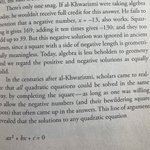
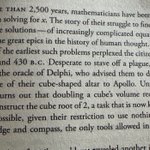
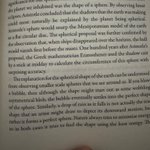
Have addressed it umpteen times since 1980's, e,g,(pic1,2,3,4). But it is your birthright to avoid due diligence. Just shoot questions as if I am a coach/chatbot. Save ur time waste mine. This contempt for knowledge sank India and allows such nonsense to flourish. Keep it up!
Replying to @MisraNityanand
@CKRaju14 Please address this issue sir
2
29
2
83
2,675
sandith retweeted
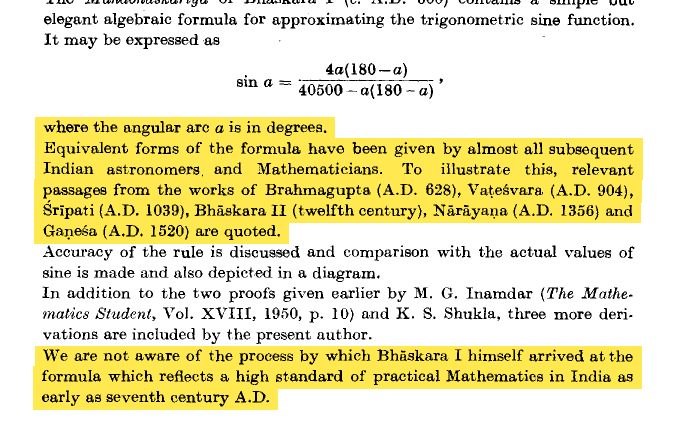
0.0016. That is the worst error of a sine formula from early 600s India. No table, no interpolation. One fraction: sin x = 4x(180 - x) / (40500 - x(180 - x)), x in degrees. It is in Bhaskara I's Mahabhaskariya, chapter 7. Astronomers of the time found sines from a 24 entry table. He states this rule as a way to do it without the sine-differences. Try 30 degrees: 4 x 30 x 150 / (40500 - 4500) = 18000/36000 = exactly 0.5. At 90 it gives exactly 1. At 0, 150 and 180 also exact. Checked against true sines, the worst miss is 0.00163, near 11.5 degrees. In 1967 R.C. Gupta compared it with five figure tables and found 0.00160 at 10 degrees. Gupta wrote 16 pages on this one formula. His last line: how Indians arrived at the rule "may be taken as an open question". The book gives no derivation. The fraction kept being used. Brahmagupta (628) has an equivalent rule. Then Vatesvara (904), Sripati (1039), Bhaskara II, Narayana (1356) and Ganesa Daivajna (1520), who changed 40500 to 40320. 🙏🙏 Sources: Mahabhaskariya vii.17-19, ed. K.S. Shukla, 1960. R.C. Gupta, Indian Journal of History of Science 2.2 (1967), pp. 121-136. Photo 1: Bhaskara I. Plot, the fraction against the true sine. The curves sit on each other. Below, the error x1000: worst miss 0.00163 near 11.5 degrees, exact at the dots. Photo 2: Mahabhaskariya vii.17-19, the Sanskrit rule and the formula as equation (2). From R.C. Gupta, 1967, p. 122. Photo 3: Ganesa Daivajna's 1520 change (40320 for 40500), and Gupta's Table I comparing the formula with true sines. Worst gap 0.00160 at 10 degrees. p. 127. Photo 4: Gupta's abstract. The same rule in Brahmagupta (628), Vatesvara (904), Sripati (1039), Bhaskara II, Narayana (1356) and Ganesa (1520), and "We are not aware of the process by which Bhaskara I himself arrived at the formula." p. 121.
4
54
4
153
10,245
Thanks to Bernard Bel, French translator of Euclid and Jesus, for pointing out several minor errors in the article on "Math and AI: a counter statement". All errors are in the hyperlinks: mostly the final full stop was included in the link, resulting in a 404 error, or the URL was wrongly entered in my database as a DOI, resulting in a malformed DOI. Pls point out any further such errors if you spot them. For axiomatic mathematicians, unable to save themselves from the charge of being cheats and quacks and second-rate theorem provers, promoting a church agenda, such errors would be fertile ground for quibbles.😃
26
64
1,103