

Sociologo y PhD en Urbanismo. #Apruebo pero no un bodrio. #ParticipaciónCiudadana #Cultura #PatrimonioCultural y #gobernanza. Amante de #Mexico y #Valparaiso ❤
Joined June 2012
- Tweets122K
- Following5.8K
- Followers5.3K
- Likes214K






Pinned Tweet
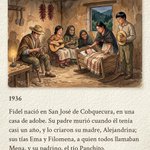
Hoy se cumplen 90 años del nacimiento de mi padre, Fidel Sepúlveda Llanos (San José de Cobquecura, 20 de noviembre de 1936). Poeta, profesor, investigador de la cultura popular chilena. Y sobre todo, un gigantesco ser humano.

SebaSepuMan retweeted

Esta frase creo que debería ponerla todos los días:
“Es difícil hacer que un hombre entienda algo cuando su sueldo depende de que no lo entienda.”
— Upton Sinclair
SebaSepuMan retweeted

A performance with enough power to change the course of classical piano history. 🎹🏛️ In this rare 1989 archive, the legendary Chilean master Claudio Arrau performs the Andante con moto movement from Ludwig van Beethoven’s Piano Concerto No. 4 in G major, Op. 58. Directed with deep structural precision by Riccardo Muti and the Philadelphia Orchestra, this interpretation captures the absolute summit of Arrau’s late-career genius.
SebaSepuMan retweeted

Opinión | | “Ojo con el estreno en cines de MINOTAURO, la película del ruso Andrey Zvyagintsev, una de las favoritas al Oscar Mejor Película Internacional y uno de los estrenos de lujo de esta temporada”, escribe @ana_josefa en su nueva columna en @exantecl.


SebaSepuMan retweeted

Los mismos que se quejan de lo que está ocurriendo en Guasave Sinaloa, son los mismos que celebran a este pendejo y a la narcocultura y a los alucines y los narcocorridos

SebaSepuMan retweeted

The most expensive mouthful of fish on earth was cat food until about 1960.
Toro is the fatty belly of the bluefin tuna, pale pink and marbled like good beef. In Japan it had a nickname, neko-matagi, the bit the cat steps over. For centuries tuna as a whole was a low-class fish, and the belly was the worst of it. It was oily, it spoiled within hours, and respectable people ate the lean red back. Fishmongers threw the belly away, or sold it to labourers for pennies.
In America it was worse. Bluefin were caught off New England for sport. After the photograph on the dock, the fish went to the town dump, or to a pet food cannery at a few cents a pound. Fishermen sometimes paid to have them taken away.
Two things changed. Refrigeration meant the fat no longer went off before it reached the counter. And after the war Japan began eating beef and discovered it had a taste for fat. Within a generation the cut the cat stepped over was the most prized thing in the shop.
In 1972 a Japan Airlines cargo manager, tired of flying planes home empty, loaded Canadian bluefin into the hold and sent them to Tokyo. The dump closed. In 2019 a single fish sold at auction there for $3.1 million.
The fattiest part of the fattiest fish in the sea went from the bin to the top of the market the moment people could taste it fresh.
A dietitian will tell you to choose the lean cut. An auctioneer will tell you what human beings actually want, and has the receipts.


SebaSepuMan retweeted

Of the civilizational role of alcohol
I was at a party last night. I like to have a few glasses of wine. Some people didn't drink at all. The contrast was striking.
What alcohol does is reveal the soul. Some inhibitions fall away. It shows more clearly what sits inside a person – a transparency serum – and it lets us dare to say things we otherwise wouldn't. It breaks certain taboos and lets in ideas that otherwise wouldn't appear. It lets us challenge and provoke, and leads to outcomes that otherwise wouldn't come about. It lets a little chaos into the machine of society.
In essence, it raises the temperature of human interaction, and heat is what allows new combinations that otherwise wouldn't form.
Metallurgists know this. To make metal stronger, you heat it. The atoms loosen, move and find new positions – and when it cools, the structure is better than before. Without the heat, the metal stays stuck in its old arrangement, with all its old flaws. A society is not so different.
Drinking together is also a test of trust. When I lower my guard in front of you, I give you something – a look at me without the mask. When you do the same, we are even. That is why people who drink together often end up trusting each other. It is also why the one who stays sober at the table, watching while everyone else opens up, makes people a little uneasy. Nothing personal. He just hasn't paid the entry ticket.
The Romans said in vino veritas. The Greeks built their philosophy around the symposium – which literally means drinking together. Christianity put wine on the altar. The civilization that questioned itself more than any other is also the one that kept wine at the center of its table. Probably not a coincidence.
And we in Poland know the other side of this. Under communism, the truth lived at the kitchen table, over vodka, late at night – the only place where people dared to say what everyone knew. Regimes that live on lies fear the unguarded word more than anything. A drunk man telling the truth was a small act of rebellion.
Of course, the dose matters. Heat, not fire. A few glasses raise the temperature; too many just melt everything into noise. And the ideas born at night must survive the morning. That is the full cycle: heat to loosen, sobriety to sort. Wine to dare, coffee to check.
It is civilizational infrastructure. And like all infrastructure, you only notice it when it's gone – in a society where everyone stays sober, polite and careful, and says exactly what is expected. Which is to say, nothing.


SebaSepuMan retweeted

Klasik fiziğe göre Güneş yanmamalıydı
Güneş'in çekirdeği yaklaşık 15 milyon derece. Kulağa korkunç sıcak geliyor ama fizikçiler 1920'lerde hesap yaptığında bir sorun çıktı. İki protonun birbirini itmesini yenip kaynaşması için bunun yaklaşık bin katı sıcaklık gerekiyordu. Güneş bu hesaba göre çoktan sönmüş olmalıydı
Çözüm 1928'de George Gamow'dan geldi. Kuantum tünelleme
Kuantum dünyasında bir parçacık aşamayacağı bir duvarın önünde durduğunda hikâye bitmiyor. Çok küçük bir ihtimalle duvarın öbür tarafında beliriyor. Tırmanmadan, kırmadan. Sadece geçiyor
Ama ihtimal o kadar küçük ki Güneş'teki tek bir proton bir eşine kaynaşabilmek için ortalama milyarlarca yıl bekliyor. Milyarlarca yıl boyunca saniyede defalarca duvara çarpıyor ve geri sekiyor
Güneş'i yakan şey bu yüzden tek bir protonun başarısı değil. Orada yaklaşık 10 üzeri 57 proton var. Her biri neredeyse imkânsız bir denemeyi durmadan yapıyor. Bu kadar çok deneme olunca imkânsız olan her saniye milyarlarca kez gerçekleşiyor
Şu an yüzüne vuran ışık bir başarı hikâyesi değil. Neredeyse tamamı başarısız olan sayısız denemenin sonucu
İnsan da "olmuyor" dediği şeye genelde tek bir denemeye bakarak karar veriyor. Bir başvuru reddedildi, bir mesaj cevapsız kaldı, bir paylaşım tutmadı. Oysa bazı duvarlar hiçbir zaman tırmanılarak aşılmıyor. Sadece yeterince çok çarpılarak
Sence bir şeyi başarmak için daha çok yetenek mi lazım, yoksa daha çok deneme mi
SebaSepuMan retweeted

A conversation between an Anglo-Saxon speaking in Old English, and a Viking raider speaking in Old Norse.
SebaSepuMan retweeted

In 1652, the Dutch East India Company sent Jan van Riebeeck to the Cape to build a refreshment station for ships going to India.
Not an empire. A vegetable garden and a fort.
Those first Dutch farmers, later joined by French Huguenots fleeing religious persecution and Germans, became the Boers.
They were not sent by a king to conquer. They were left behind by a company that went bankrupt. They had to survive or die.
When they landed in the Cape, the land was inhabited by the Khoikhoi and the San. Hunter-gatherers and herders. Not by Bantu-speaking black groups.
The Bantu migration had come down Africa from the north, but by 1652 it had only reached as far south as the Eastern Cape. It had not yet reached the Western Cape where the Boers landed.
So in the Cape, the Boers were there before the Xhosa, Zulu, Sotho, and Tswana arrived in that specific region.
The British took the Cape in 1806. They tried to anglicize the Boers, and impose British law.
The Boers refused to become British. In 1835-1840, over 12,000 of them loaded ox-wagons and left in the Great Trek. They crossed the Orange River and the Drakensberg on foot, with women and children, fighting Zulu impis at Blood River, fighting Matabele, fighting drought, disease, and lions.
They founded two republics: the Orange Free State and the Transvaal. They wrote constitutions. They built schools and churches with nothing.
Then Britain wanted their gold. The discovery of gold on the Witwatersrand in 1886 brought the Anglo-Boer War. The most powerful empire on earth sent 450,000 soldiers against 70,000 Boer farmers.
The Boers fought a guerrilla war for 3 years. The British burned 30,000 Boer farms, slaughtered their livestock, and put 120,000 Boer women and children in concentration camps. 26,000 Boer children died there.
They lost the war, but they never surrendered their identity.
After 1910, the Boers, now called Afrikaners, built the modern state.
They built the farms that fed the country. The Karoo sheep farms, the Free State maize belt, the Western Cape wine farms. All built by hand, in a dry land with no rivers.
They built the mines' engineering, the railways, the power stations, the universities; Stellenbosch, Pretoria, Free State. The legal system, Roman-Dutch law, the Afrikaans language itself, created from Dutch, Malay, Khoi, and French.
They did not inherit a working country. They built one in a place the world considered uninhabitable.
A Boer has no other home. A British South African can "go back" to Britain. A Boer cannot. His language exists nowhere else. His church, his songs, his graveyards, his family for 10 generations are in the Free State dust, in the Karoo, in the Transvaal.
He did not come to South Africa for 5 years to make money. He was born there when there was no electricity, no South Africa, no passport. His great-grandfather died in a British camp for that land.
South Africa is not where he lives. South Africa is what he is.
t.me/fmazhindu

SebaSepuMan retweeted
Hoy se cumplen 90 años del nacimiento de mi padre, Fidel Sepúlveda Llanos (San José de Cobquecura, 20 de noviembre de 1936). Poeta, profesor, investigador de la cultura popular chilena. Y sobre todo, un gigantesco ser humano.
SebaSepuMan retweeted

ay los pitutos...Esta influencer de izquierda trabaja como abogada asistente en el MP según su LinkedIn, desde 2024.
Saben uds la cantidad de abogados asistentes q pasan décadas antes de q los nombren como fiscales?
Increíble.

La Cotineja, “influencer” de Boric que se cagó a todos con el CAE, fue apitutada como Fiscal a pesar de estar recién titulada gamba.cl/2026/11/cotineja-bo…

SebaSepuMan retweeted
El caballo hizo posible el Estado:
El historiador mongol Lhamsuren Munkh-Erdene sostiene que el origen del Estado no está en la agricultura y el grano, como defiende la tesis dominante de autores como James C. Scott, Robert Carneiro o Jared Diamond, sino en el transporte extra-humano (transporte que va más allá de lo que un ser humano puede hacer solo con su propio cuerpo) y la conquista. Sin animales de transporte, las comunidades humanas permanecen pequeñas, igualitarias y dispersas, incapaces de concentrar población y recursos a gran escala. La domesticación de caballos, burros y otros animales de rebaño, junto con la invención de embarcaciones, permitió la movilización a larga distancia y, con ella, la formación de Estados y civilizaciones.
Los grandes imperios de la estepa, incluidos los mongoles, demuestran que es posible construir un poder estatal poderoso sin agricultura intensiva, basándose únicamente en el pastoralismo y el control de los caballos. Los romanos llegaban donde llegaban sus barcos; los mongoles, donde llegaban sus caballos. El poder siempre ha dependido del dominio del transporte. Munkh-Erdene denuncia que la idea de que el Estado nace de la agricultura sedentaria es en gran parte un constructo del siglo XX, con raíces políticas de la Guerra Fría y un marcado sesgo sinocéntrico que borra deliberadamente el papel de los nómadas.
En definitiva, el caballo hizo posible el Estado. La civilización no se construyó sobre el grano, sino sobre la capacidad de moverse, conquistar y concentrar poder a gran escala. La estepa euroasiática, y no solo los valles fluviales agrícolas, ocupa un lugar central en la historia humana.

SebaSepuMan retweeted

🙏🏼🙏🏼🙏🏼 Inolvidable! 🙏🏼🫶🏻🧡
Fue mi Maestro en el Magister de Apreciación Cinematográfica de la @ucatolica🧡
Cuando concluyó su curso recibió un ¡aplauso cerrado! Y largo de todos quienes estábamos allí.
🥹🥹 Emocionante!!!
SebaSepuMan retweeted

November 20, 1820. A sperm whale rammed a Nantucket whaleship twice, deliberately, and sank her in the middle of the Pacific.
Twenty men got into three open boats about 2,000 miles from South America. Eight came home.
What happened in between is the reason Herman Melville wrote Moby-Dick, and the reason the real story is worse than the novel.
The Essex was small for a whaler, about 88 feet and 239 tons, out of Nantucket on August 12, 1819, for a voyage planned to last two and a half years. Captain George Pollard was 29. First mate Owen Chase was in his early twenties. The cabin boy, Thomas Nickerson, was 14.
On the morning of the 20th the boats went off after a pod. Chase stayed aboard repairing his own boat, which a whale had damaged four days earlier.
Then a large bull, which Chase estimated at 85 feet, surfaced and lay still facing the ship.
It charged. It struck the hull hard enough to rock her, went under, came up alongside apparently stunned, and lay there. Chase had a harpoon ready and did not use it, because the whale's tail was next to the rudder and he was afraid of losing his steering.
Then it moved off several hundred yards, turned, and came back head-on with half its body out of the water.
That second strike crushed the bow. The whale pulled free and swam off, and the Essex began to go down by the head.
The motive is unknown. The best guess is that the hammering Chase was doing on the damaged boat sounded like a rival male, or simply confused it. What is not in doubt is that it struck twice and that the second run was aimed.
They spent two days stripping the waterlogged hull, rigged the whaleboats with masts and sails, and raised their gunwales with boards. They salvaged bread that had been soaked in seawater, water, and some Galápagos tortoises.
Then they made the decision that killed most of them.
The Marquesas were about 1,200 miles downwind to the west. The Society Islands about 2,000. South America was about 2,000 miles upwind.
They sailed for South America.
The reason was cannibals. Pollard wanted to go west; he was afraid of the Marquesas and preferred the Society Islands. Chase and Joy were afraid of those too, and argued for running south to pick up the westerlies toward Chile. Pollard gave in.
The islands they were afraid of were safe. Melville later wrote that they would all probably have lived if they had gone to Tahiti.
Men who had been eating salt-soaked bread for weeks chose 2,000 miles upwind over the risk of being eaten, and then ate each other.
They reached uninhabited Henderson Island in the Pitcairns on December 20, a month to the day after the sinking, thinking it was Ducie. Birds, eggs, crabs and a little fresh water, and within a week they had stripped it.
Three men chose to stay: Wright, Weeks and Chappel. The other 17 left on December 27 for Easter Island, then changed course for the Chilean islands.
What followed is a list.
Joy died on January 10 and was buried at sea. Peterson on the 20th, buried at sea. The same day Lawson Thomas died on Hendricks's boat and the men ate him, and over the following days Shorter, Sheppard and Reed as well.
On January 29 Hendricks's boat separated in the dark and was never seen again. A boat with skeletons in it later washed up on Ducie.
On February 6, in Pollard's boat, they drew lots.
The lot fell on Owen Coffin, who was 17 and Pollard's first cousin, and whose mother Pollard had personally promised to look after him.
Pollard offered to take his place. Coffin refused and said the lot was fair. A second draw decided who would do it, and it fell to Charles Ramsdell, who was Coffin's friend. Pollard's own words afterwards were that Coffin was soon dispatched.
Chase's boat was picked up by the British ship Indian on February 18, with Chase, Lawrence and Nickerson alive. Chase had navigated accurately the whole way.
Pollard and Ramsdell were spotted on February 23 by the Nantucket whaler Dauphin. They were sucking the marrow out of the bones of their shipmates and reportedly did not want to let them go.
The three on Henderson Island were taken off by an Australian trader on April 9.
Eight survivors out of twenty.
Pollard got another ship and wrecked that one too on a reef, after which no owner would employ him. He finished his life as a night watchman in Nantucket and is said to have fasted every November 20 alone in his room. He died in 1870.
Chase wrote his Narrative within months. He captained whalers, married four times, and in later life suffered from headaches, nightmares and a compulsion to hide food in his attic. He spent years in an asylum and died in 1869.
Melville read Chase's account, and in 1852 he visited Nantucket and met Pollard, then about 60 and nobody of any consequence on the island. Melville later wrote that he was the most impressive man he had ever met.

SebaSepuMan retweeted

Tuve la enorme fortuna de ser su alumno. De conversar en su oficina, de discutir con él, de recibir sus observaciones y consejos. Su ejercicio de Estética del Yo me abrió la cabeza y el alma. Tu padre fue un tremendo docente y un gigantesco ser humano. Yo también lo recuerdo y lo extraño.
SebaSepuMan retweeted

Un verdadero ser humano, un ciudadano ilustre de Cobquecura, el autor de muchos libros, entre ellos las notables "Geografías", un amigo del alma.


