

You were never bad at maths. You were missing steps. We find them, then map a route through only the concepts you actually need.
Joined June 2026
- Tweets371
- Following5
- Followers95
- Likes258


Pinned Tweet
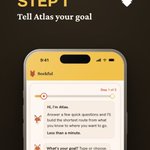
Tell Atlas your goal.
He maps the maths you already know, finds the prerequisite gaps holding you back, and builds the shortest route through only what you actually need to learn.
Your path through maths, built around you. 🦊


191
Understanding in the lecture is recognition; applying it on the day is recall. Recall comes from retrieving it cold, again and again, which is why Seekful brings each step back at growing gaps.

One thing school teaches almost everyone is this:
You can understand a topic and still fail the exam if you don't know how to apply what you've learned.
Life works the same way.
Knowing what to do is not enough. You must learn to put that knowledge into action.
19
90% of students got this wrong. The calculations aren't the hard part. Seeing the right connection is.
That's what we're building Seekful around. A way to find the gaps in your maths knowledge, connect the dots, and develop real understanding.
Give your brain a workout: seekful.org


this is a nice problem that feels hard but is incredibly intuitive to like a ~10 year old upon reflection
31
Maths is one of the best anti-brainrot habits you can pick up as an adult.
Not because you need it for an exam. Just because regularly forcing your brain to reason, struggle, and solve is good practice.

Learn maths, eventhough you are graduated or an old man, or anyone else in other fields, it help your brain a lot.
35
I think one of the biggest missed opportunities in education is how rarely we show people what they're learning towards.
Imagine someone wants to understand how GPS works. Suddenly, trigonometry, geometry, physics, and even relativity have a purpose.
Instead, we often spend years teaching people prerequisites before giving them a reason to care about them.
What if learning started with something you're genuinely curious about, and worked backwards through everything you need to understand it?
I suspect a lot more people would fall in love with subjects they once thought they hated.
39
“Relearn maths from scratch” is usually the wrong goal.
Your knowledge isn’t a staircase where one missing step means going back to the bottom. It’s a network. Some things you learned ten years ago are still there. Others disappeared.
Some gaps were probably never filled properly in the first place.
The useful question isn’t “where should I restart?” It’s “what do I actually know, and what does the thing I want to learn depend on?”
That’s a big part of why we built Seekful.
Quick note for our students: we’re now Seekful.
The old name was Consiliae, and we spent months watching people try to spell it. Consillia. Concilia. Consilae.
A name you’re afraid to say out loud doesn’t get said, and we grow by people telling friends.

1
46
“Relearn maths from scratch” is usually the wrong goal.
Your knowledge isn’t a staircase where one missing step means going back to the bottom. It’s a network.
Some things you learned ten years ago are still there. Others disappeared. Some gaps were probably never filled properly in the first place.
The useful question isn’t “where should I restart?” It’s “what do I actually know, and what does the thing I want to learn depend on?”
That’s a big part of why we built Consiliae: consiliae.com
We've sold 16 Founding Students seats (lifetime subscriptions) at Consiliae.com, not to mention our monthly and yearly active subscribers.
We're excited to see people start to understand our vision. Relearning mathematics doesn't need to be hard. You just need the right system.
Learn more about how Consiliae works here:
consiliae.com/why-it-works
1
56
Plenty of parents who say 'I was never a maths person' were really just missing some early steps.
Fill those in, and the anxiety they'd otherwise hand on gets a lot smaller.

‘Increased focus on early years numeracy’ can help to break the ‘intergenerational’ cycle of poor adult numeracy and maths anxiety, a House of Lords committee tells the government
tes.com/magazine/news/genera…

41
In maths, part of it is mixing things up.
Rohrer et al. (2020) followed 787 students: mixed practice of different problem types gave 61% a month later, against 38% for practising one type at a time.
Harder practice, better learning.

37
The striking bit: hobbyists are now solving Erdős problems with AI.
The bar to producing math has dropped.
The bar to understanding what was produced hasn't, and that's still the part worth learning.

When the great Hungarian mathematician Paul Erdős died, in 1996, he left behind about 1,000 problems. Solving one is a great honor. In May of 2023, the website erdosproblems.com began gathering the known remaining unsolved Erdős problems. Their depth and difficulty vary, deliberately. Erdős described some as “marshmallows” (“a tasty tidbit supplying a few moments of fleeting enjoyment”) and others as “acorns” (“requiring deep and subtle new insights from which a mighty oak can develop”).
In early 2026, mathematicians and math hobbyists using A.I. tools started solving some of the more marshmallowy Erdős problems. In January, GPT-5.2 Pro appeared to have solved Erdős Problem #728 largely on its own. Then more Erdős problems began to fall—including acorns. Much of the mathematical community, which was already distressed, tipped over into existential crisis.
The role that A.I. will play in research mathematics has been talked about a fair amount in the past five years, and a fearsome, unbounded amount in the past five months. Terence Tao—a professor of mathematics at the University of California, Los Angeles, and a founder, in 2025, of the Foundation for Science and AI Research—has been one of the most prominent voices in this discussion. He was for a time portrayed as almost uncritically enthusiastic about the role of A.I. in math. Recently, though, his muted optimism has given way to alarm. He has begun to speak in praise of cognitive friction and has described A.I. companies as having “managed to optimize by removing all the humanity out of the process.” Rivka Galchen talks to Tao and other mathematicians about how A.I. is transforming their field—and what is lost in the process: newyorkermag.visitlink.me/qu…

31
The answer is the least interesting thing an AI can give a math student. The reason behind it, or a nudge on where your own attempt went wrong, is the part you actually keep.

Terence Tao on the next phase of AI in mathematics: punching your favorite problem into an AI is the unimaginative use. The larger frontier is humans prompting AI in creative ways. That is Math 2.0, and it’s coming soon.
28
Worth reading even if you'll never write a paper. The idea that understanding, not producing the answer, is what counts holds all the way down to school mathematics. If a machine can write the steps, the valuable part is knowing why they work.

Frank Calegari has a great post on Terry's blog:
terrytao.wordpress.com/2026/…
I think it aligns most closely to what I've been thinking and trying to say (and I believe communicates it better than I've been able to). Some highlights:
"I hope AI can help mathematicians break out of the straitjacket of being constrained by the first natural conjecture they cannot prove, and work on unraveling the deeper mysteries woven throughout our subject."
"The natural grooves of our profession have very much been bent toward more narrow technical expertise than a bigger vision. AI allows us an amazing opportunity to broaden ourselves as mathematicians."
"There are so many problems in mathematics that are still so fresh and vital but were previously untouchable that the opportunity to approach them is massively exciting. We need to be more ambitious, to create bold research plans that weren’t even conceivable a year ago."
"The difference in reaction between the optimists and the pessimists is that, for the pessimists, the game is over. For the optimists, the game has just changed."
"[T]here now exists an amazing new tool to study mathematics. To turn away and say that the community of mathematics as it currently exists is more important than mathematics itself would be a terrible mistake."
"[I]t takes one look at the arXiv to see many people in our profession rushing out AI-assisted papers in a somewhat unsightly rush to be the “first” to prove things."
[Aside: mere days after the qRH result, I had something like a half-dozen emails in my inbox, some from amateurs but some also from tenured faculty, with Lean formalizations of nonvanishing on Re(s)> 7/8-1/10^k for various large values of k. What the hell are you even doing? That kind of thing may have been valuable years ago, when it was difficult and signaled deep understanding and great technique. Today? Who the hell cares?]
"To me [this is back to Frank now], someone who chooses a worthwhile problem, obtains a proof completely using AI, understands it thoroughly, and uses it to develop interesting further questions or directions has made a substantial mathematical contribution."
"If you, as a senior mathematician, are stressed about being scooped by AI, then you are not being ambitious enough."
[On hiring:] "I am looking for a narrative of where you want mathematics to go, the technical ability to explain why this may be possible, being able to converse about many areas of mathematics, and a demonstrable record of having done all of this in the past."
"What I want a graduate student to achieve at the end of their PhD is a view of mathematics that extends well beyond their discipline, and yet with demonstrable technical skills on at least some class of problems."
"I advocated above that we need to evaluate work as if AI was involved. But this does not imply that we don’t need to teach students to do deep mathematics without AI just as the existence of computers doesn’t mean we should no longer teach children arithmetic." [I've often said similar things as well...]
"All of my friends in the humanities truly believe that having mathematicians in society both as custodians of one of humanity’s oldest intellectual activities and explorers of the frontiers of knowledge is important. I understand that some part of the culture we so deeply care about will disappear, and as humans, an emotional response to that is very natural. But this is a time to explain to everyone that there are so many great new opportunities, possibilities, and reasons to be optimistic. We are on the verge of a new era of mathematics, and I am excited to see what happens."
Bravo Frank!

28
Maybe.
But for most of us, who aren't proving theorems, the question isn't whether AI can do math we can't follow.
It's whether we can still follow the math we actually need: a loan rate, a dosage, a chart in the news.
That part is very learnable.

"if ai solves math (or this or that) but humans can’t understand the solution, it’s worthless"
idk bro, has it occurred to you that human cognition might not be equipped to comprehend reality in its entirety and that this is just a limitation of your own ape brain?
20
This holds at every level, not just research. Follow every line of a worked solution and it all makes sense. Then face a blank page and you can't start.
A proof you didn't build teaches you surprisingly little. The understanding lives in the doing.

Terence Tao raises a serious question about AI in mathematics.
A machine may solve a century-old problem in hours, but what do mathematicians actually learn from its proof?
The methods, connections, and new questions discovered along the way are often as valuable as the solution itself.
AI may make proofs abundant. Understanding them could become the greater challenge.

27
The bit about fixing problems at the bottom is so true.
Maths works the same way: someone stuck on algebra is often missing one piece of fractions from years back.
Find that piece on Consiliae and the "hard" topic often turns out not to be hard at all.

A few months ago, my grammar was not particularly great, especially here on X.
Then, one beautiful morning, I received a call from Dr. Oby Ezekwesili ( @obyezeks ) that changed that aspect of my life forever.
She advised me to go back to Primary 3 and rebuild my foundation in English.
She said something profound: Once you fix the foundation, everything else begins to fall into place.
I took her advice wholeheartedly. I went back to study Primary 3 Grammar and Comprehension, and that simple decision transformed my command of English.
I remain deeply grateful to @obyezeks for that invaluable piece of advice. Its impact on my life has been remarkable.
But this experience taught me something much bigger about education.
Many of us are struggling today, not because we lack intelligence, but because we are building on weak educational foundations.
We keep trying to fix problems at the top when the real problems are at the bottom.
Sometimes, the greatest form of progress is having the humility to go back to the basics and rebuild properly.
You cannot build excellence on a foundation you have refused to repair.
73