

Naturephilosopher | Computational Biology of Aging
Joined May 2013
- Tweets104
- Following57
- Followers103
- Likes109





What would be the lifespan of a human who has overcome all aging mechanisms except somatic mutations?
We build a model that estimates it as 140 years, here are details: biorxiv.org/content/10.1101/…

Dmitrii Kriukov retweeted

Agentic AI vs Aging Hackathon
Make an impact or shift your career into longevity with @RetroBio_, @hacking_aging, @nebiusai, @BioProtocol, @athena_DAO_, @vita_dao
Turn two weeks into a job, collaboration, or company.
Details 🧵👇
Dmitrii Kriukov retweeted

I am happy to announce that we finished a huge work about Parkinson Disease and DBS. Check out the preprint arxiv.org/abs/2505.09624 and github github.com/NevVerVer/DBS-Gym🥳

🪐ComputAgeBench - v2 — Epigenetic Aging Clocks Benchmark is released. Check our new version of the preprint [biorxiv.org/content/10.1101/…]. We added 7k+ blood samples from 46 additional datasets of healthy individuals suitable for training clinically relevant 1-st gen aging clocks.

I saw this extremely important result in the preprint. PCA clocks fitted on clinical biomarkers OUTPERFORMED epigenetic clocks in terms of all-cause mortality ROC AUC. Great result, opening the important question, do we actually need epigenetic biomarkers?


People have been asking us how to interpret linAge, to drop difficult to obtain parameters and to compared to other clocks - we thought it would be a quick job to address these questions - it turned out to be a six month journey - preprint out now: doi.org/10.1101/2024.12.23.2…
Dmitrii Kriukov retweeted

People have been asking us how to interpret linAge, to drop difficult to obtain parameters and to compared to other clocks - we thought it would be a quick job to address these questions - it turned out to be a six month journey - preprint out now: doi.org/10.1101/2024.12.23.2…
I debuted on Medium with my heartfelt cry regarding the aging clocks. The article briefly outlines the main result of our recent article, interspersed with my personal concerns and feelings for the field of aging biology.
Enjoy reading!
medium.com/@firepaladiner/wh…
Dmitrii Kriukov retweeted

Thank you for the insightful conversation!
My intention is to initiate a discussion & make some attacks, as I think this field deserves more discussion on such important issues. Based on the available data, it is difficult for me to understand how one can come to the conclusion that #aging in human is primarily controlled by an epigenetic program, as @ydeigin states, & its consequences can also be reversed by partial reprogramming. This lack of understanding on my part arises from the following points, among others:
From minute 25 Deigin describes that it is possible to remove an old cell from the tissue and rejuvenate it both epigenetically & physiologically. But the devil is really in the details here, because I was realy confused for quite a while when I first read about this: It is not a single cell that is removed, but a very large number of cells, & this (partial) reprogramming takes place in a very small proportion of these cells (0.1 to max. 10%). These rejuvenated properties (= youthful like biomarkers) are then often measured in an entire cell population. Fittingly, whole-body exposure to Yamanaka factors for partial reprogramming in wild-type mice in vivo has not yet led to an extension of the mean lifespan by more than 25%, let alone to an extension of the maximum lifespan ...
This puts it behind calorie restriction in mice, which in turn is unlikely to have any effect on the type of aging we observe in normal humans. Mice have adapted their nutrient sensitivity to their specific ecological niche & therefore have the genetic potential to modulate their growth & damage/repair rate to some extent. Another reason for the results on calorie restriction is the poor health of the control mice (obesity). A good general discussion of the problems with "anti-aging" results can be found here xitter.cf/lex_sviridov/status/17… & @AlexanderMWolf7 has also written quite a bit about this recently.
From around minute 60, I believe that the role of damage to the extracellular matrix (ECM) & long-lived molecules in the aging process is downplayed, e.g. with the argument that cancer cells can modulate the ECM to their advantage in old age. However, this argument overlooks the fact that the ECM initially fulfills essential functions in multicellular structures, which is why the cancer argument is not really accurate. I think @afedintsev & @Replacing_Aging have a lot to say about this.
For example, the accumulation of damage to long-lived molecules and cellular ‘waste’ such as lipofuscin, which cannot be enzymatically degraded in the wild type, is not remedied by partial reprogramming, as even young cells cannot degrade these substances. They simply accumulate over time and only develop their harmful effects, which contribute to the aging phenotype, after sexual maturity. If old cells are made to ‘behave’ transcriptomically like young cells, they are still confronted with such irreversible damage that does not occur in young cells due to the lack of time for accumulation and for which they also have no repair strategies. So to what extent can significant improvements be expected from partial reprogramming alone? @aubreydegrey
It is also mentioned that after partial reprogramming, cells quickly lose their youthful properties and revert to their old state. So instead of discussing this as a possibility that aging is not primarily an epigenetic programmen and that many reversible epigenetic changes might rather be adaptive responses to an underlying remodeling process, the rebound is rather discussed as a technical problem. Even if old cells could be epigenetically rejuvenated, they could not maintain this state due to irreversible damage, presumably because of the high burden of irreversible changes in long-lived stable molecules (especially in long-lived species this becomes dominant) such as the ECM or other possible damages of entropic nature as proposed in @fedichev's models that may dominate the aging process in humans.

NEW episode of LEVITY the longevity podcast: We can reprogram cells to become younger! Yuri Deigin on the frontline of reprogramming for youth: youtu.be/kffO6GCfn1o?si=EcAf… via @YouTube
I really favor the discussion on top-down approaches in understanding aging (aka phenomenological theories) but what about bottom-up ones? We have concrete molecular intra/extracellular changes. Where the brave theory, bridging them to the phenomenology?

Please like, follow, and repost if you find this interesting - there may be more stories to share - like surprising ability of deep networks to predict long term behaviour of chaotic systems. #PhysicsOfAging
[1] nature.com/articles/s41586-0…
[2] nature.com/articles/s41467-0…
15/15

No more aging clocks without uncertainty estimation! Predictions of rejuvenation in reprogramming by the aging clock are extremely uncertain and therefore unreliable! If we want the aging clock to be in the clinic, it must predict its uncertainty! onlinelibrary.wiley.com/doi/…

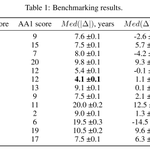
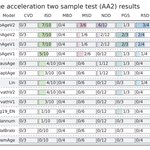
I'm also thrilled to report that according to our benchmark, the clock created in @DrMorganLevine group and colleagues was the most successful at predicting biological age. Thank you for your work and for publishing clock weights on github.com/MorganLevineLab/m…!

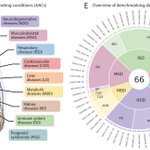
Along with our benchmark code, we published 66 DNA methylation datasets. You can conveniently download them and reuse in your studies. For example, @fedichev now you can comprehensively test your theory (from biorxiv.org/content/biorxiv/…) across dozens of conditions.

We present the first open benchmark of the epigenetic aging clocks to test their ability to predict biological age! We collected 66 datasets across 19 aging-accelerating conditions and compared 13 published aging clocks! Take a look at our preprint: biorxiv.org/content/10.1101/…

Dmitrii Kriukov retweeted

I’m going to say it—longevity/aging influencers are killing the science.
Yes, they bring attention, but it makes the field look like pseudoscience & snake oil sales
We need to attract scientific talent not groupies and when posts like this are rampant, it’s a losing battle.


Dmitrii Kriukov retweeted

The David Sinclair (@davidasinclair) $720,000,000 Resveratrol Train Wreck
Video shoutouts:
- Prof. Matt Kaeberlein (@mkaeberlein)
- Prof. Brian Kennedy (@BKennedy_aging)
- Dr. Peter Attia (@PeterAttiaMD)
- Prof. Richard Miller
- Prof. Jeffery Flier (@jflier)
aging-us.com/article/205604 - our new short story about mouse controls. It is peculiar that the effect of top longevity drugs is lower than within-strain genetic variation.
Dmitrii Kriukov retweeted

This is exactly what I've been saying since 2018!
"the induction of senescence programs depends critically on the mechanical environments of cells and that senescent cells actively respond and adapt to changing mechanical cues" biorxiv.org/content/10.1101/…
We finally did it! Now the traveling wave idea is spreading through the scientific community. An idea showing how important it is not to equate the model of an object with the model of the data generated by the object. nature.com/articles/s41598-0…
Dmitrii Kriukov retweeted

The cover of Aging's latest issue features Figure 1, "Basic principles of the 1st and next gen DNAme EN clocks," by Mei et al.
DOI: doi.org/10.18632/aging.20504…
#DNA #methylation #epigenetics #aging #agingclocks #biology #openaccess #peerreviewed #medEd #OA
