

Stackmatix automates business growth so you can focus on your other strategic priorities. Contact us today to get your growth stack and start growing faster.
San Francisco, CA
Joined October 2018
- Tweets1.1K
- Following482
- Followers2.7K
- Likes236








4/ This requires real thinking before the brief exists, which is why the vague version is more common. The thinking happens either way — a good brief just does it first.
3/ That's a constraint, and constraints let a writer produce something close to final on the first pass — no ambiguity left to accidentally resolve wrong.
2/ The brief that saves time states the specific point before writing starts: the actual argument, the example, the conclusion.
1/ When it doesn't land, that's a full rewrite — the time saved by a loose brief gets spent twice fixing the draft afterward.
"Write about the importance of attribution" is a subject, not a direction. The draft is a coin flip on whether it lands where the editor wanted.
The rewrite happens because the brief was never specific enough. A vague brief doesn't save time — it just moves the time to the rewrite.

4/ Have you actually checked whether any of your own pages are quietly splitting authority with each other?
3/ The audit: for any page family prone to duplication, confirm the canonical points where intended and no orphaned old URL is still live and competing.
2/ Nothing looks broken. Both versions might get indexed and some traffic, while the ranking signal that should concentrate on one page splits across two mediocre ones.
1/ A product in multiple categories, filtered views of a listing page, or an old migrated URL still live — all generate technically distinct URLs for the same content.
Canonical tags tell search engines which version of duplicate content is the "real" one. Most sites have at least one pointing at the wrong thing.
Your own pages can compete against each other. A canonical tag pointing the wrong way is how that happens, quietly.

4/ Are you refreshing based on frequency and CTR data, or on how long it's been since someone last looked at the ad?
3/ Refreshing too early wastes creative with life left. Refreshing too late burns budget on an ad that already stopped working.
2/ Rising frequency alone isn't automatically a problem — small audiences accumulate it fast. It's a problem when paired with declining engagement.
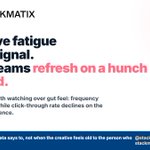
1/ The signal worth tracking: frequency rising alongside declining click-through rate on the same audience.
The feeling and the reality often don't line up. Creative can feel stale internally while still performing fine against a broad audience.
Creative fatigue has a real signal. Most teams refresh on a hunch instead — the ad's been running a while, someone's tired of it.

4/ Everything else mattered at the margins. Most of the reduction traced back to getting those two structural things right first.