

Tracking the companies and technologies behind the AI buildout. Research informed by company interviews, site visits, analysts, and industry experts.
Joined June 2024
- Tweets1.8K
- Following103
- Followers4.4K
- Likes718







Our supply-chain checks indicate that Macronix, a Taiwanese flash-memory maker, is shifting some production capacity from NOR flash to NAND to meet demand for NAND and eMMC storage.
Management attributed the decline in Q3 NOR shipments to that reallocation. It said NOR demand was still growing, particularly for higher-density products used in data centers.
Macronix plans to direct new capacity to NAND and eMMC, with no further expansion of NOR capacity. The first phase is expected to enter volume production in the second half of 2027. Output from the additional investment may not arrive until 2028.
macronix.com/en-us/about/inv…
Amkor’s high-density fan-out (HDFO) packaging ramp took longer than expected in Q3, even as its computing business posted record revenue.
The chip packaging and testing provider said its HDFO process involves more than 300 manufacturing steps. CEO Kevin Engel said getting enough work in progress moving through the production line took longer than planned. He said supply constraints were not the cause.
Computing revenue rose 25% from Q2. Amkor continues to scale its flagship HDFO CPU program and expects two new 2.5D packaging programs for networking and data-center applications to come online in Q4.
ir.amkor.com/events/event-de…
OpenShell limits what the agent can access and do. It enforces file and network permissions in a sandbox and keeps credentials outside the agent. The protection still depends on how those permissions are configured.
Japan’s Mitsubishi Materials plans to raise monthly production capacity for temperature sensors used in optical transceivers to about 12 million units by November 2027, roughly six times its 2025 level.
The sensor, a flake thermistor measuring less than 1 mm, monitors the temperature inside transceivers, where temperature changes can affect communication performance. Mitsubishi Materials says the component is used by major transceiver makers worldwide.
The company says growing data-center traffic from generative AI is driving demand for optical transceivers and its sensors. It plans to add production equipment in stages at its manufacturing site in Thailand.
news.mmc.co.jp/corporate/ja/…

[Taiwan’s Weekly Standout #1]
Each week, we spotlight a standout Taiwan-listed company and explore what its story reveals about the AI and semiconductor supply chain.
PCB drilling equipment maker Ofuna Technology (4577 TT) rose 37.3% between the Oct. 16 and Oct. 22 closes, including a 10% gain on Oct. 22.
Ofuna sells mechanical and laser drilling equipment and provides laser drilling services for PCB and IC substrate manufacturers. Its business spans equipment purchases and the processing work manufacturers outsource.
September revenue rose 55.2% from a year earlier, bringing growth for the first nine months to 50.4%. The company attributed September’s increase primarily to higher equipment production and sales.
The supply-chain backdrop connects with our Oct. 19 weekly roundup. DIGITIMES reported that lead times for ESI’s laser drilling systems, part of MKS ($MKSI), exceeded 18 months as substrate makers expanded capacity for AI chips.
Higher substrate layer counts require more rounds of drilling and other processing steps. Expanding output therefore depends on both equipment availability and processing capacity.
At the TPCA Show held last week, Ofuna’s lineup included substrate drilling equipment and CO₂/UV laser drilling services.
Its revenue figures show equipment activity picking up. The next questions are how much growth is coming from high-end substrates, and whether drilling-service utilization is rising alongside equipment sales.

Vietnam’s first chip factory is unlikely to begin trial production in 2027 as planned, Reuters reports, citing a person with direct knowledge of the project.
The source cited developer Viettel’s lack of experience building chip factories and administrative hurdles in securing government funding. Viettel told Reuters the project is progressing according to plan and on schedule.
Viettel has been in talks with ASML $ASML for months but has yet to reach an equipment deal, according to three people familiar with the matter. Two said the discussions involve a deep ultraviolet (DUV) lithography machine.
Authorities estimate the cost of the plant near Hanoi at about $1.3 billion. Reuters reported that no buildings had yet been constructed at the site.
bnnbloomberg.ca/business/com…

Celestica guides to $1.5–2B of capex in 2027. The higher 2028 demand forecast hasn’t come with a 2028 capex figure in the release.
Enphase’s 900V GaN devices have passed testing and are now going into development builds of its solid-state transformer. Production qualification is the next step toward commercial deployment.

Enphase and @Infineon have announced the world's first 900 V gallium nitride (GaN) bidirectional switch devices, designed for the Enphase IQ Solid-State Transformer (IQ SST) to advance power conversion for AI data centers.
Building on more than a decade of Enphase GaN research and Infineon’s device expertise, the technology enables high-frequency switching at higher voltages, helping reduce system losses, component count, size, and cost.
💬 "Enphase asks more of our technology than almost anyone, and medium-voltage solid-state transformers are exactly where high-voltage GaN proves its value," said Johannes Schoiswohl, senior vice president and head of GaN Systems Business Line at Infineon.
💬 "Moving to 900 V gives us more voltage headroom without giving up high-frequency switching, and it allows us to stay with components rated below 1 kV while reducing the number of converters in the system," said Hans van Antwerpen, senior vice president and chief technology officer at Enphase.
"Fewer parts in the power path means higher efficiency and fewer things that can fail."
Read the full announcement: investor.enphase.com/news-re…

They raised $3.39B net in Q3 and ended September with $3.96B in cash. Management expects cash, operating cash flow and credit facilities to cover the buildout.
Celestica says its lower 2026 free-cash-flow outlook mainly reflects working capital needed for 2027 growth. That means committing cash before it comes back through customer payments.

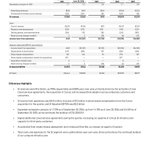
CELESTICA $CLS Q3’26 EARNINGS HIGHLIGHTS
🔹 Revenue: $5.83B (Est. $5.46B) 🟢; vs $3.19B LY
🔹 Adj. EPS: $3.30 (Est. $2.97) 🟢; vs $1.58 LY
🔹 Adj. Operating Margin: 8.5%; vs 7.6% LY
🔹 Adj. Oper Earnings: $496.1M (Est. $459M) 🟢
FY26 Guide:
🔹 Revenue: $21.00B (Est. $20.61B) 🟢; from $20.5B
🔹 Adj. EPS: $11.55 (Est. $11.18) 🟢; from $11.30
🔹 Adj. Operating Margin: 8.4%; unchanged
🔹 Free Cash Flow: $460M; from $600M
FY27 Guide:
🔹 Revenue: $40.00B (Est. $35.7B) 🟢
🔹 Adj. EPS: $21.50 (Est. $19.66) 🟢
🔹 Adj. Operating Margin: 9.0%
🔹 Capital Expenditures: $1.5B-$2.0B
Q4 Guide:
🔹 Revenue: $6.28B-$6.58B (Est. $6.39B) 🟡
🔹 Adj. EPS: $3.37-$3.57 (Est. $3.50) 🟡
🔹 Adj. Operating Margin: 8.7% at midpoint
Cash Flow:
🔹 Free Cash Flow: $127.5M; vs $88.9M LY
🔹 PP&E Purchases: $262.2M; vs $37.3M LY
Segment Revenue (YoY):
🔹 CCS: $4.87B; +102%
🔹 ATS: $960M; +23%
🔹 HPS Revenue: ~$2.3B; +70%
Segment Margin:
🔹 CCS Margin: 8.9%; vs 8.3% LY
🔹 ATS Margin: 6.6%; vs 5.5% LY
Other Q3 Metrics:
🔹 GAAP EPS: $3.26; vs $2.31 LY
🔹 Adj. ROIC: 64.7%; vs 37.5% LY
Key Updates:
🔹 Total Return Swap Impact on GAAP EPS: -$0.03/share negative (pre-tax)
🔹 SBC, Amortization & Restructuring Charge on GAAP EPS: $0.26/share (pre-tax)
🔹 Public Offering: $3.45B aggregate gross proceeds
Comments:
🔸 “We are also pleased to provide our initial 2027 annual outlook, with revenue of $40.0 billion, up 90%, record adjusted operating margin (non-GAAP)* of 9.0% and adjusted EPS (non-GAAP)* of $21.50.”
🔸 “The demand environment continues to be very robust, supporting our 2027 revenue outlook, with customer demand forecasts meaningfully higher for 2028.”

We don’t have a disclosed baseline either. NVIDIA gave the expansion targets, but no absolute capacity figures. Without that starting point, we can’t tell how much capacity the 15x would actually add.
Celestica expects revenue to nearly double to $40 billion in 2027, up from its latest 2026 forecast of $21 billion.
The data-center hardware supplier plans $1.5 billion to $2 billion in capital spending next year. It also lowered its 2026 non-GAAP free cash flow forecast to $460 million from $600 million, mainly because of working capital investments to support 2027 growth.
Q3 revenue rose 83% year over year to $5.83 billion. Connectivity & Cloud Solutions revenue grew 102% to $4.87 billion.
corporate.celestica.com/news…

Broadcom is helping finance AI hardware for Anthropic through a $63 billion deal announced with four financial partners on Oct. 26. Deliveries are expected to start in 2027.
A new special-purpose vehicle will buy Broadcom’s AI accelerators and networking equipment and lease them to Anthropic.
Broadcom will provide residual-value support equal to the vehicle’s senior debt, which Reuters puts at about $43.5 billion, citing two sources. The announcement doesn’t spell out what would trigger a payment from Broadcom.
prnewswire.com/news-releases…
investing.com/news/stock-mar…
Terafab has already ordered and paid for equipment, according to the supply-chain checks Sky discussed in EP571.
Those payments gave him more confidence that substantial work was under way. He was much less certain about whether the project could achieve successful volume production.
Producing a test chip would still leave yield and profitability unresolved. Sky emphasized the need to demonstrate that chips from Terafab’s own process could be manufactured at yields that support profitable production.


Cadence, which makes software for designing chips, has introduced Maestro, a family of AI models that customers can run in their own data centers.
The portfolio includes NVIDIA Nemotron models and can be further trained on customers’ proprietary designs. Cadence’s engineering tools evaluate the outputs against design requirements and feed the results back into training.
Cadence says initial workflow tests showed up to 30% better quality of results and up to five times greater token efficiency than a general-purpose model. The first Maestro models are available to select early-access customers in Q4 2026.
Our read: keeping proprietary chip designs in-house could lower a practical barrier to AI adoption. Pairing the models with engineering tools also gives customers a way to assess their output against specific design constraints. For Cadence, that creates an opportunity to sell AI capabilities built around the tools chipmakers already use.


Meta has outlined plans to raise about $95 billion in equity to help fund its AI buildout.
It has launched roughly $35 billion in common-stock and mandatory convertible preferred offerings. A separate $60 billion share-sale program could begin in Q1 2027, after its nonvoting Class C shares start trading. That program has yet to be established, and cash from the common-stock forward sales would arrive when those agreements settle.
NVIDIA, AMD and Broadcom have expressed interest in buying up to $5 billion of the common stock combined. Those indications are nonbinding.
Our read: if those investments go ahead, chipmakers would be helping finance the AI spending that supports demand for their own products. Meta would gain funding for expansion, while existing shareholders would face dilution.


Verizon $VZ has signed an AI infrastructure deal worth more than $2 billion with Amazon Web Services.
The agreement sets out a commercial framework to expand distributed computing for agentic and generative AI workloads, Verizon said in its Oct. 26 earnings release. The release does not specify the deal’s duration.
Verizon’s 2026 capital spending guidance of $16.0 billion to $16.5 billion includes success-based investments in AI Connect.
sec.gov/Archives/edgar/data/…