

Structural IC @GeisingerHealth. alumnus @endeavorhlth @UofCincy | IM & CVD alum @WrightcenterGME @RossMedSchool @TempleUniv 🇺🇸🇵🇰🦉🦅
Joined February 2019
- Tweets831
- Following3.3K
- Followers867
- Likes2.3K






Unbelievable!!!
🔥🔥🔥🔥
Hot off the press 🚨🚨🚨🚨
ITS A MUST READ IF YOU LIKE ELECTROSURGERY!
@Tahmad_dogar is insanely skillful.
I won’t say how quickly leaflets got modified.
🤫🤯🤫@GeisingerHealth @ACCinTouch @TCTMD @crfshj @HeartStructural @_backtablecards @Murmur_MD @

Mechanical traversal of leaflets for VIV TAVR; example of how incredible team at Geisinger Health takes on the challenges. @structuralMD @GeisingerHealth @ACCmediacenter @SCAI @crfshj
sciencedirect.com/science/ar…
🥇First TPVR at Geisinger Wyoming Valley. 🎉
Is the TR the disease, or the messenger? Severe TR, 28 yrs after a Ross. With heart failure and imaging, we traced it to a flail, calcified pulmonary homograft.
Covered pre-stent + 26 mm SAPIEN → MG 9 mmHg, no PR. ✅
Which lesion do you treat first? 👇
Lessons to learn when treating RVOT❤️🩹
#CardioTwitter #StructuralHeart #TPVR #HeartTeam @TCTMD #TCT @Tahmad_dogar @GeisingerHealth @GeisingerMedia
Couldn’t ask for a better partner, @Tahmad_dogar ! Your expertise, dedication, and thoughtful approach to even the most challenging cases are truly inspiring. It’s a privilege to work alongside you and learn.
What a team offering anything and everything for any valvular or non-valvular cardiac conditions! Patient with Ross operation 25 years ago, now with severe PI/mod PS. TPVR with S3 and excellent results! @structuralMD @b_kuscavage @EdwardsLifesci

Najam Us Saqib retweeted
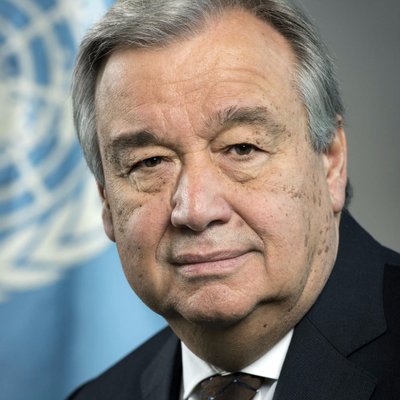
For over two decades in different roles, I have seen Pakistan as a source of solidarity & solutions. But what has always stood out to me is the resilience of the Pakistani people & their determination to build a better future.
My message is simple:
The @UN stands with the people of Pakistan. And I thank the Pakistani people for standing up for the world.

“We should think very carefully before designing that conversation out of medicine.”

Radiology used to have something that was almost invisible because it was so routine:
The reading room consult.
Rounding teams came down.
Surgeons pulled up their cases.
Internists brought the scan that didn't quite fit the clinical picture.
Sometimes the radiologist solved the problem.
Sometimes the clinician supplied one piece of history that completely changed how the images were interpreted.
And usually everyone simply walked away a little sharper.
But something else was happening during all of those conversations.
We were learning each other.
As a radiologist, I learned what individual physicians cared about.
I knew which findings mattered to a particular surgeon.
Which measurements an oncologist was following.
Which details a specialist wanted emphasized.
What questions they were really asking, even when the order just said "pain."
And they learned me.
They knew who was reading their study.
They knew they could walk in, point at something, challenge an interpretation, or ask, "What do you think?"
That relationship created context.
It created feedback.
It created trust.
And over years, it created a kind of institutional knowledge that never appears in the medical record.
When radiology becomes a report produced by someone hundreds or thousands of miles away, we don't just lose proximity.
We risk losing that entire feedback loop.
The report may still be technically excellent.
But the radiologist knows less about the physician.
The physician knows less about the radiologist.
The radiologist sees less of what happened after the report.
And both sides lose opportunities to make each other better.
The reading room was never just a room.
It was where imaging became part of the clinical conversation.
We should think very carefully before designing that conversation out of medicine.
Inspired by a conversation yesterday with @PaleoOnc . Also @909One and @brianchiong .

Najam Us Saqib retweeted

International Day for Interventional Cardiology: the first coronary #angioplasty
On 16 September 1977, Andreas Grüntzig & his team made history, and changed the lives of millions of patients forever.
Standing on the shoulders of the giants that came before him, this transformative vision led to an entirely new field of medicine.
What began nearly five decades ago with coronary angioplasty has grown into the broad field of interventional cardiology, transforming cardiovascular care through research, innovation and technological progress.
As the field has evolved, so has the need to learn from experience, share knowledge and shape what comes next. Join us in 2027 at #EuroPCR to mark this landmark moment!
📅pcronline.com/Courses/EuroPC…
#medicalhistory #interventionalcardiologist #cathlab #cathlabteam
@NievesGonzalo1 @CuissetDr @nicolasdumonte1 @EmanueleBarba13

Najam Us Saqib retweeted

BIG NEWS: CMS final TAVR coverage decision, biggest change to TAVR coverage since 2012.
Here’s my summary from the long 105-page statement:
- Symptomatic severe aortic stenosis is now covered as standard care. No mandatory registry enrollment.
- Asymptomatic severe aortic stenosis is newly covered, but only for patients enrolled in Medicare-approved studies.
- The heart team stays. Every patient still needs input from both cardiac surgery and interventional cardiology (can be done through chart review), plus an in-person visit with one TAVR operator before the day of the procedure.
- The two-operator requirement is gone. Now one qualified operator can do the case alone.
- Two operators are still covered if the heart team decides they’re needed and that can be in any combination: surgeon + interventional cardiologist, two interventional cardiologists, or two surgeons.
- Volume requirements now apply to the operator, not the hospital: at least 20 transcatheter valve cases a year (15 of them TAVR).
- Hospitals still need on-site cardiac surgery program.
@6ayyeboon @AlkashkariWail @mirvatalasnag @BinAbdulHak_A @amrmohsen213 @MarwanSaadMD @aelsab @MusaSharkawi @MohammedQintar @mhammadah @JDDCFratti @acamajmd @Almanfi_Cardio @scottiejj12

Najam Us Saqib retweeted

TRIC-I-HF trial: Transcatheter tricuspid repair plus medical therapy achieved a superior win ratio for mortality, HF hospitalization, and KCCQ improvement over medical therapy alone in patients with severe TR. Download slides here: clinicaltrialresults.org/wp-…


Najam Us Saqib retweeted
Presented at #ESCCongress:
In patients with severe tricuspid regurgitation and heart failure, transcatheter tricuspid-valve repair plus medical therapy was superior to medical therapy alone in reducing hospitalizations for heart failure and deaths. Full TRIC-I-HF trial results: nej.md/4ilZJGr
@escardio

ALT Three graphs showing Kaplan–Meier estimates for prespecified events as adjudicated by the clinical-events committee at 3 years. Panel A shows freedom from death from any cause or hospitalization for heart failure (second coprimary end point), Panel B survival, and Panel C freedom from hospitalization for heart failure.
Najam Us Saqib retweeted

The Fifth Universal Definition of #cvMI, released by 🌏 CV societies, provides a 🆕 clinical classification of MI that is based on pathophysiology, aligns w/ clinical evaluation of patients & incorporates objective diagnostic criteria.
🔗 bit.ly/4y53W63 #ESCCongress

Lots of good science. 🧪

🚨 Just Announced! Be among the first to see landmark research with the potential to change clinical practice and shape the future of cardiovascular care.
🔬 New Evidence💡 Fresh Insights ❤️ Clinical Impact
Explore the newly revealed late-breaking sessions and register today for #TCT2026! ow.ly/jIIp50ZFPTF
#CardioX #CardioTwitter #CardioEd #CardioResearch @BurkhoffMd @djc795 @ColletCarlos @georgedangas @jgranadacrf @mbmcentegart @Drroxmehran @sahilparikhmd @PopmaJeffrey @triciarawh @mirvatalasnag @TCTConference @TCTMD

Najam Us Saqib retweeted

In the RAPID-POP RCT (n=607 #STEMI patients), pressure-optimized stent inflation improved reperfusion vs conventional inflation-deflation (WIN ratio 1.42; P=0.004), with less post-dilation & a trend toward lower 30-day #MACE (2.0% vs 4.1%). jacc.org/doi/10.1016/j.jcin.… #JACCINT #PCI

Najam Us Saqib retweeted

Out in JSCAI today, our study examines 25 years of aortic stenosis–related mortality in the United States.
While overall aortic stenosis–related mortality has declined modestly, important disparities persist — particularly among men, adults ≥85 years, residents of nonmetropolitan areas, and individuals living in the Midwest.
Our findings highlight that improving outcomes in aortic stenosis is not just about advancing treatment — it is also about earlier recognition, timely referral, access to care, and addressing disparities in cardiovascular health.
Grateful to Drs. @mj_ricciardi and @AqamarMD for their guidance and mentorship!!
Read: doi.org/10.1016/j.jscai.2026…

Najam Us Saqib retweeted

A faculty member cut her research effort in half over three years. No one told her to. The comp plan did it for her. RVU-only compensation has destroyed more research capacity at academic medical centers than any funding cut.
Najam Us Saqib retweeted

Successful TAVI implantation relies on much more than accurate valve positioning, it requires an understanding of the relationship between the prosthesis and the cardiac conduction system.
@TAVRBot #cardioed #cardiotwitter
Najam Us Saqib retweeted

Proposition - OPTIMA-CTO Leaves No Doubt: CTO PCI Improves Symptoms
This was the title of my talk at #CICT2026 last week. I was debating good friend and fellow CTO enthusiast, @jbspadoni.
I only had 8 minutes - so a sophisticated analysis a la @SripalBangalore, @djc795, or @ihtanboga was out! 😅
Here are the slides...


Najam Us Saqib retweeted

#inspiris implanted 6 years ago. There is very little clinical data to suggest this valve will be as durable as it's predecessor, Magna or MagnaEase. But certainly more expensive. @tomcnguyen @DrZeigler1 @Abedeanda @APolancoMD

Najam Us Saqib retweeted

@BrettSperryMD and I are starting a new medical journal:
OpenSource Cardiology
opensourcecardiology.org
Learn more here 👇🏻


Academic publishing is overdue for reinvention.
Introducing OpenSource: Cardiology—a physician-led, nonprofit, fully open-access journal built by and for the cardiovascular community.
Better science. Broader access. A fairer system.
opensourcecardiology.org