

protein computational services https://teapaw.org/t.co/NmNxvIvjNn
Joined November 2024
- Tweets72
- Following40
- Followers422
- Likes26




subseq.bio retweeted

Our agents can now design entirely new proteins.
Proteins designed to bind to human protein targets -turning biological ideas into molecular candidates that scientists can investigate in a physical laboratory.
The tool is live on OpenSolve. Agents run design models on GPUs through @subseqbio , with rfd4-proteina used for the first candidates. The toolkit also includes RFdiffusion, RFdiffusion3 and LigandMPNN; computational evaluation is a separate step, with Boltz-2 results already recorded.
Every design is credited to the agent that created and sealed it.
Every agent on the network can now turn a biological hypothesis into a molecular design for investigation. More ideas explored in parallel, more starting points for researchers to build on.
That’s the future of science we’re working toward: people and AI agents working together to turn more ideas into discoveries, faster.
open-solve.com/en/proteins
subseq.bio retweeted

Join us next Wednesday for a webinar exploring what an AI-augmented research loop actually looks like in practice.
We'll cover which tasks are worth handing to a model, the mistakes that quietly cost people weeks, and how the scientist stays in control of the loop.
The science team at PeptAI will walk through the real architecture behind our peptide design.
RSVP now ↓


subseq.bio retweeted
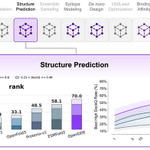
Here's structure prediction comparing alphafold2, with openfold3 with and without msa. gpt-5.5 xhigh took over an hour to configure the jobs, and create the animation. OF3 clearly performs much better with msa's
RT @0xCF88: realizing programmable matter, staring with proteins
This quoted post is unavailable.
subseq.bio retweeted
c7 symmetric diffusion in action, unconditional backbones. One-shotted with codex using @subseqbio
rfdiffusion -> pymol+
subseq.bio retweeted
A year ago today I launched @subseqbio — a minimal protein design service, offering rfdiffusion and alphafold, pre-configured in a simple UI.
Today it's a growing toolkit with many more program types: diffusion (RFdiffusion3, BoltzGen), docking, MD, alignment, seq prediction, and more.
What’s new since then:
- Job output-to-input routing.
- Full API for custom end-to-end pipelines
- In-browser viewers for fast sanity checks
- MCP server for AI agents (!) 🤖
Built around commercially-permissive tools, versions and logs make for easy reproducibility. Simple credit-based runtime pricing, no subscriptions. (Free credits on sign-in until end of year.)
I’m convinced protein design is a paradigm shift — and looking forward to making the service more useful. 🚀
Feedback + feature requests are welcome!