

Infovore, onetime IT services pro, wannabe economist. 🇺🇦
East Lansing, MI
Joined January 2016
- Tweets17.6K
- Following1.2K
- Followers301
- Likes17.3K







Tom Barson retweeted

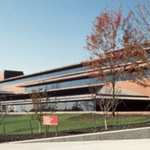
"Sausalito Houseboat, Evening", 2025.
Artist Alex Nizovsky (American , born 1977)
Acrylic on Canvas, 76 × 101 cm.

Tom Barson retweeted

And people say academic research makes no difference

I am fully serious when I say that Pangram might not be around today if it wasn’t for @brian_jabarian and @alexolegimas. When the widespread consensus was that commercial AI detectors didn’t work, they not only found that we exist, but put together this excellent study that showed Pangram was reliable.
Before this paper, it was an uphill battle to convince people to try Pangram. “I already tried ZeroGPT, these things don’t work.” I think part of their motive in making the paper was to correct this misconception that AI detection was an impossible task to do well. And they made a really airtight case for that.
After the paper, we were finally able to make progress on deals, because people trust third party research. AI and Econ twitter finally started to notice us. This was the beginning of our fantastic growth story, and we owe them so much.

Tom Barson retweeted

This is a poor article and does the @jacobin's political project no favors. I write this as someone who self-defines more as a Keynesian than a New Keynesian, in the sense that issues of multiple equilibria/indeterminacy, incomplete markets are more central to my thinking than price stickiness (at least as conventionally modelled).
First, the critique fails on its own terms: unoriginal in some respects, obsolete or incomplete in others.
-There is not a single argument here advanced on criticisms that appeared circa 2010. (To be fair the authors cite the excellent paper by Ricardo Caballero.)
-The critiques do not reflect the current New Keynesian program. One would have no idea that Heterogeneous New Keynesian models have emerged, a near revolution in macroeconomic methodology, which makes the complaints about representative agent models obsolete. Less progress has been made on enriching the role of banks and the financial sector, but advances have been made.
-Finally, one of the most important criticisms of New Keynesian model is omitted: the indeterminacy approach
Roger Farmer @farmerrf, "The Indeterminacy School in Macroeconomics," NBER Working Paper, 2019
This type of work challenges new Keynesian models using the logic of intertemporal decision making, so does not meet the agenda of the article's authors.
Second, the criticisms are in, important cases, incorrect. To claim that
"The contributions of Hall and Woodford and the New Neoclassical Synthesis more generally provided no theoretical foundation for macroeconomic stabilization."
ignores how New Keynesian arguments mattered in understanding zero lower bounds, forward guidance. The peremptory pronouncement of course ignores insights of the model in the decades preceding the Financial crisis.
The discussion of Hall's work on consumption is, to my eyes, bizarre. Leaving the fact that Hall himself demonstrated limitations to his original 1978 paper, consumption analysis has evolved to account for heterogeneity, borrowing constraints, etc. This evolution represents a success of the New Keynesian research program.
Third, the article misstates the purported value of pluralist/heterodox approaches. I have long argued for the value of complex systems methods in enriching economic theory, and am nevertheless comfortable in saying that 30 years of work have failed to demonstrate much value for the approaches in understanding macroeconomics. As for agent-based models,
Robert Axtell and J. Doyne Farmer , "Agent-Based Modeling in Economics and Finance: Past, Present, and Future, Journal of Economic Literature 2025
reviews the work, and demonstrates how little has been produced. Individual papers may be interesting, but the idea that complexity or agent-based models have demonstrated theoretical or empirical relative to mainstream macroeconomics. The Axtell-Farmer literature synthesis is filled with mainstream economists who have explored complexity/ABM methods. It is simply false that the economics discipline has refused to consider them.
As it happens, this article nearly coincides with the publication of
Greg Kaplan @GregWKaplan, Macro: The Economic Models that Shaped Our World
which I just finished reading and strongly recommend, if one wants to understand the actual state of the New Keynesian model.

Economists Michael Woodford and Robert Hall were awarded the Nobel Prize for the rigor of their models.
The only problem is, their proposed tools have proven useless in formulating the economic policy interventions needed to avert depression. jacobin.com/2026/11/hall-woo…


Tom Barson retweeted

Proposing a novel method to estimate a main monetary policy shock that explains more business cycle variation than prior shocks and sheds new light on the transmission mechanism, from Christoph Boehm, Husang Kim, and @KronerNiklas nber.org/papers/w36004

Tom Barson retweeted

I’m at the ATL airport and my @Delta flight has been continuously delayed because they can’t find another pilot. It’s midnight and they don’t know when or if they’ll find another pilot but won’t give out hotel vouchers until the flight is cancelled, which they can’t say when that’ll happen. This is a hot mess for Americans.
One of them just said, “pick another flight…pick another transportation secretary.” 🤷🏾♂️

Tom Barson retweeted
Brilliant discussion of the recent translation of the first volume of Das Kapital by Brad Delong @delong, with well justified chiding of politicization in various assessments of Paul Reitter's work.

Tom Barson retweeted

I’m still in awe of this.
The Democratic Party won the popular vote for both the Senate and the House. The last time we won the Class II popular vote was in 1984, and the last time we won the South-wide House vote was in 1992.


Tom Barson retweeted

It has taken me a few days to find the words.
Herbert Blomstedt — an honourable man, a great soul, a musician of profound depth who never ceased to surprise me. A unique and extraordinary conductor.
I will always cherish the many concerts we shared and the moments of music and humanity we experienced together.
It is so difficult to say goodbye. 🙏🏻🕊️
Maria João Pires

Tom Barson retweeted

From our piece aleximas.substack.com/p/will…
"As agriculture became more automated, its share of GDP shrank as the goods became cheaper and people became richer as a result. Where did value go? To goods and services which had demand but were not automated yet—manufacturing. As manufacturing became increasingly automated, the prices of those goods fell and the sector became a smaller part of GDP. Where did value go? Services."
Same with AI...

Google DeepMind's @alexolegimas explains how millions of AI agents could transform the economy while GDP growth stays at just 4-5%.
The reason: AI could make production so cheap that the economic boom barely shows up in GDP.
"Let's say you have tons of autonomous organizations, millions of agents. There’s a state of the world where you’re still in the four to five growth number."
"Agriculture got automated. What happens to agriculture as a part of the economy? It went from like 40% to 2%, even though there was way, way, way more agriculture."
"Whatever gets automated becomes cheaper, and if those firms are producing a lot of output for not a lot of cost, the price of that output drops, and hence they might not necessarily lead to huge growth numbers."
"We could see incredible flourishing, incredible amounts of cheap output that we’re all consuming and we’re all happy with, and when you look at the GDP numbers, they’re in the regular sort of ballpark."
@GoogleDeepMind
Tom Barson retweeted
November’s @APA_Blog Subst_ck: Open to View: Wittgenstein and AI Consciousness - drawing on behavioristic pieces from @dioscuri and @CrispinSartwell
@sckimbriel
@Douthat60
@TheAnnaGat
@freganmitts
apablog.substack.com/p/open-…
Tom Barson retweeted

This is exactly why we need mandatory data visualization courses in schools.


Tom Barson retweeted

1. US business sector productivity growth was 2.1% over the year ending 2026 Q3. That's solid.
2. If you think of trend productivity growth as ~1-1.5%, we running +0.5-1pp higher at the moment. Again, that's good news.
3. For perspective, at the height of the dot com boom (1999-2000), productivity growth was running about +2pp higher annually. This premium had completely faded by ~2005. So we're at 1/4 - 1/2 of peak dot com boom effect.
4. I would put next to no weight on quarter-to-quarter productivity growth. It's very noisy.
5. Productivity growth was stronger in 2023, when AI capabilities were far lower but AI capex was accelerating precipitously. That should tell us something.
6. There are probably other factors besides AI affecting short-run measured US productivity as well, including knock-ons from US policy choices made during the pandemic, the high-churn labor market of 2022, and large shifts in immigration flows.
7. Measures of TFP growth from Fernald and BLS are weak, suggesting to the extent AI is a factor, it's not primarily through task- or worker-level productivity effects (but TFP has to be estimated so take it with many grains of salt).
More from @Stripe Economics here:
stripeeconomics.com/p/ai-and…


Evidence is growing that we’re turning the corner on productivity.
US productivity grew at a 3.6% annual rate this past quarter.
That’s more than double the 1.5% average from 2007-2019.
The new numbers put me further ahead for my bet with Bob Gordon about productivity growth in the 2020s. 💪
Here’s how far the US is now ahead of the CBO estimate at the start of the decade (before they knew about the pandemic or LLMs) courtesy of @jasonfurman’s
Econvitals.

Tom Barson retweeted

Did you know that Ennio Morricone wasn’t particularly fond of his own melody “Chi Mai”? He reportedly compared its use in Le Professionnel (1981), starring Jean-Paul Belmondo, to dressing an ugly woman in haute couture.
Yet the melody went on to become one of his most recognizable works, beloved by audiences around the world.
Tom Barson retweeted

What's incredible is that India has managed to reduce poverty by a huge amount while also reducing inequality!


Tom Barson retweeted
Electric cars are just going to win.

The world's switch to electric cars. 🌍
60 countries, about 72 million new cars a year.
Over the last 12 months, 19.8% of new cars were BEV. The fitted model (exclusively dependent on past data) has BEV passing ICE in mid-2030 and reaching 50% a year later.
80% takes until around 2043 if the BEV transition continues without systematic change, which will almost assuredly not be the case, as I see this more as a lower limit.
PHEV peaks at about 13% in 2028 and then fades.

Tom Barson retweeted

What Michigan would look like if Mike Rogers is elected:
🚫 National Abortion Ban
📈 Skyrocketing health care costs
💰Tax breaks for the top 1%
⚒️No support for Michigan manufacturing
