

Donny Moss is an #AnimalRights journalist with https://xitter.cf/t.co/xjgp7YoOay, a doc filmmaker and campaign organizer. #KangaroosAreNotShoes #plantbased #vegan
New York, NY
Joined February 2014
- Tweets4.2K
- Following16.8K
- Followers22.5K
- Likes6.3K




Pinned Tweet
In an almost 2,000 word article about a resurgence in the popularity of meat and a waning interest in "vegetable-forward dining," @nytimes food correspondent @kimseverson makes no mention of the meteoric rise in the number of vegan restaurants and the normalization of #plantbased diets.
Given the devastating impact of animal agriculture on the planet, our health and the animals, why is the #NYTimes publishing what feels like a puff piece glorifying meat?
nytimes.com/2025/04/18/dinin…

Animal Rights News retweeted
Today, the NYC Council voted to ban horse-drawn carriages. Assuming the Mayor signs the bill into law, the ban will take effect in June 2028.
Among the many unsung heroes of this 20 year effort are two NYC Council Members who carried the bills when doing so cost them politically. They should be recognized because they placed the humane treatment of animals and public safety ahead of political expediency.
In 2007, Council Member @TonyAvella introduced the first bill to ban horse-drawn carriages. Despite the fact that Speaker Christine Quinn blocked the bill, Mr. Avella kept the issue alive and in the public discourse until the end of his term.
In 2022, Council Member @BobHoldenNYC introduced a new version of the bill named after Ryder, a horse whose dramatic collapse in midtown went viral and sparked global support for a ban. After a (human) teenager died in June 2026, the bill was renamed after the victim, Romanch Mahajan. Several of his family members, who are still in mourning, have been invaluable in advancing this bill.
The movement to ban horse-drawn carriages began in earnest in January 2006. When a spooked horse named Spotty crashed into a moving car on Ninth Avenue and died, animal rights activist Elizabeth Forel launched the Coalition to Ban Horse-Drawn Carriages. Her effort injected a ban into the public discourse.
In 2008, businessman and animal advocate @SteveNislick founded @nyclass which invested in humane alternatives, including electric vintage cars. The horse-drawn carriage trade rejected the alternatives and falsely accused him of being motivated by a desire to develop the real estate where the "stables" are located. Despite the fact that mainstream media amplified that false and defamatory narrative, Mr. Nislick stayed in the fight.
In 2017, longtime animal rights activist @Edita_NYC became NYCLASS's Executive Director. Since then, she has moved mountains to help the horses while advocating for a ban. This bill would not have passed without her and @SpeakerMenin who led the Council in moving the ban forward in the City Council - despite aggressive attacks by the bill's opposition.
From the start, @peta organized high profile campaigns with celebrities and helped behind the scenes, never looking for credit, just results.
That's a short version of a much longer and very dramatic history of the movement to ban horse-drawn carriages.
On a final note, I took the picture below in Times Square in 2006. When I saw this horse pulling a carriage on a frigid night while ingesting the exhaust of the cars in front of him, I knew this was wrong. I'm relieved that these horses will be free in 2028, if not sooner.
In 2008, a City Council member whose district included Central Park agreed to watch my documentary about the horse-drawn carriage controversy, BLINDERS: The Truth Behind The Tradition. To his credit, he watched the 50 minute film at his desk with me sitting next to him.
At the end, he said he agreed that horse-drawn carriages don't belong in NYC, but he couldn't support the bill to ban them because City Council Speaker Christine Quinn opposed it. If he backed the bill, she would have withheld discretionary funds and punished him in other ways.
Christine Quinn protected the horse-drawn carriage owners because Congressman Joe Crowley, the powerful boss of the Queens Democratic political machine, instructed her to do so. He had close ties to the horse-drawn carriage medallion owners, and his predecessor, Tom Manton, was a lawyer who represented them.
Quinn's decision to block the horse-drawn ban from 2006 to 2013 and to gaslight New Yorkers with fake reform legislation had consequences. Among them: She lost her political career, and a teenager lost his life.
For the past 21 years, advocates in NYC have warned our elected officials that someone was going to die from head trauma after being thrown from carriage. And that's exactly what happened. Romanch Mahajan was just 18 when he died in June.
To be clear, the hundreds of New Yorkers who have volunteered on the campaign to ban horse-drawn carriages were motivated by animal cruelty. The horses are stripped of everything that would make their lives worth living. They don't even have a pasture where they can graze, move freely and interact physically, as herd animals do. But we also sounded the alarm bells about public safety. I documented all of it in BLINDERS (YouTube link below).
Thanks to @Edita_NYC and @SteveNislick of @nyclass for leading the fight to ban horse-drawn carriages. Without their leadership, we would never have gotten to this point.
youtube.com/watch?v=r1oAV1fZ…

Baring any unforeseen circumstances, the bill to ban horse-drawn carriages from NYC will be passed by the City Council in October and then signed into law by the Mayor.
For the past 20 years, animal rights activists have warned elected officials that spooked horses who bolt in NYC are weapons. We asked them not to wait until someone flew out of a moving carriage and died from a head injury for the city to act, and that is exactly what happened. The teenager's death was preventable. Let's hope that no one else dies between now and when the ban takes effect.
Thanks to @nyclass for leading the fight.

BREAKING: @NYCCouncil will pass Romanch’s Law on October 22 to ban cruel and dangerous horse-drawn carriages! We have the support of the Council and the mayor to finally end this deadly industry.
Thank you @SpeakerMenin for your extraordinary leadership and unwavering determination to bring this long-overdue ban across the finish line. To our supporters who have spent years fighting to protect horses and people: this moment belongs to you.
Romanch’s death was a heartbreaking loss that shook our city and laid bare the devastating consequences of this dangerous industry. We are deeply grateful to his family for turning their grief into a powerful call for change.
Stay tuned for more details as we prepare to end horse-drawn carriages in New York City and how you can join us next week!

Animal Rights News retweeted

The @NYTmag reports on a groundbreaking five-year investigation by @ian_urbina that exposes the fishing industry's devastating environmental and human costs. But something vital is missing from this sweeping exposé.
cc: @jakesilverstein @jeanniechoi @jessicalustig @Fish_Feel
Animal Rights News retweeted
In an article about beef’s enormous climate footprint,
@billmckibben of the @NewYorker makes an important point that environmental reporting often misses: replacing #beef with #chicken may reduce emissions, but it means many more animals being killed. That's because chickens are so much smaller than cows.
Too often, stories about reducing meat consumption measure progress solely in carbon emissions, land use and dollars. A transition that benefits the climate but results in billions more sentient animals being bred and slaughtered shouldn't automatically be portrayed as progress.
Balanced journalism considers the impact of our food choices on the animals too. #NewYorker @michaelluo @RPFischer - Thank you for bringing them into the conversation.

Animal Rights News retweeted
Humans introduced green crabs to New England, where they are now “invasive.” Yet, in this @AP story, journalist @mcasey1 treats the crabs as the guilty party - a problem to be eliminated and an opportunity to be monetized.
In his article, Mr. Casey portrays the human stakeholders as individuals -- entrepreneurs, chefs, fishermen and scientists, each with perspectives and ambitions. He treats the crabs, arguably the most affected stakeholders, as commodities -- seafood, pet treats, fish sauce and even whiskey. He and the #AP don't consider what the trapping and killing sentient animals mean for the animals themselves.
@JuliePace - Journalism that recognizes the individuality of every human stakeholder while reducing the animals to products reinforces the very idea that they are unworthy of consideration.

In a story about the return of bluefin tuna to the North Sea, the @BBC reports on the "fights" between the fishermen and the tuna as if the animals are inanimate objects. #BBC - these 700 pound animals suffer immensely as they are violently dragged out of their home by a giant hook and suffocate on deck. They are victims of extreme cruelty. cc: @rburgessbbc

The @BBC reports that giant tuna have returned to the North Sea after disappearing 60 years ago due, in large part, to overfishing. @rburgessbbc - A wildlife comeback should be celebrated for the animals’ sake - not as another opportunity to catch them, which is what the BBC has done. cc: @biancabritton
If @NatGeo is a wildlife and conservation publication, then why is it promoting fish consumption? Fishing doesn't "protect the wonder of our world." It destroys ocean habitats and subjects billions of animals to a painful death. #NatGeo - If you're going to dispense nutrition advice, then why not encourage readers to eat healthy #plantbased foods? #FishFeel
In an article entitled, "Why Nutritionists Say You Should Eat More Tinned Fish," a publication known for celebrating wild animals encourages its readers to eat them. @NatGeo - Your lengthy story, which reads like an advertisement for fish companies, makes no mention of animal sentience or marine ecosystems. cc: @geoffgagnon @sadiequarrier
John Samuelsen, the lobbyist for NYC's horse-drawn carriage owners, is sending out mailers attacking elected officials who support the bill to ban carriage rides in Manhattan following the death of a teenager. Instead of arguing the merits of the horse-drawn carriage trade, he is accusing @SpeakerMenin @bradhoylman and others of attacking immigrants. The attacks are an insult to the immigrants who are actual victims of discrimination. I hope our elected officials call out these appalling attacks.
This exploitive strategy was employed by the fur industry in 2019. When Council Speaker Corey Johnson introduced a bill to ban the sale of new fur products in NYC, the fur lobby paid black pastors to transport busloads of congregants to City Hall for a press conference in which the pastors declared the bill "racist" because black women enjoy wearing fur. (Note: The law would not have prohibited anyone from wearing fur.) This tactic was an insult to actual victims of racism. Sadly, the strategy worked. Council Members who told us they supported the bill backed off for fear of being labeled racist.


The #AnimalRights organization @MercyForAnimals released shocking (but not surprising) footage from a factory farm that supplies @Costco with "organic" chicken. Moral of the story? No amount of regulation can make chicken farming - including organic and free range - humane. Thankfully, #plantbased chicken alternatives are delicious and available in most grocery stores. Thank you @JVM for shining a spotlight on this investigation.

Shocking New Mercy for Animals Investigation into Costco Chicken Supplier xitter.cf/i/broadcasts/1qxvvvjeR…

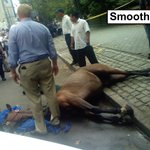
In 2007, Smoothie, a horse forced to pull carriages in Manhattan, spooked and bolted on Central Park South after hearing someone beat a drum nearby. She died in agony on the street after crashing into a metal pole. Smoothie is one of dozens of horses who died "on the job." Now that a human has died too, will @katiekings and @DLeonhardt of @nytopinion finally come out in support of ending unsafe and inhumane horse-drawn carriage rides from NYC? cc: @nyclass

Force feeding ducks by inserting tubes down their throats causes injuries, liver disease and lameness. Chefs who sell #foiegras will never be honest about the #animalcruelty because, to them, the birds are money-making commodities. @PostOpinions
Washington @PostOpinions gave chef Bart Hutchins a platform to “humane wash” the force feeding of ducks for #foiegras and to oppose a foie gras ban based on the lie that it’s humanely produced. @jameshohmann @MitraMili @murraymatt - shouldn’t the @wapo turn down op-eds that misinform readers?
“You’re in an open carriage with children driving into traffic. PUT YOUR SEATBELTS ON!”
It’s something I say to tourists as the horse-drawn carriages they board begin pulling away. Invariably, the parents look to their left and right for seatbelts that aren't there. Confused and concerned, they then look back at me.
In addition to seatbelts, the carriages are missing helmets. For years, we’ve warned elected officials that passengers who fall or jump out of a moving carriage (when a spooked horse bolts) could land on their head. On May 17th, that happened, and a teenage boy, Romanch Mahajan, died. (The first photo below shows his mother falling out of the carriage.)
Despite the fact that the same risks remain and despite pleas from Romanch's parents to suspend operations in order to prevent another tragedy, the carriages are out on the streets again.
Assuming the City Council votes in favor of Romanch’s Law, which will phase out the industry, what is the City Council doing RIGHT NOW to prevent another tragedy? How can NYC allow a tourist concession to continue to operate despite the same risk of injury and death?
Until a ban takes effect, shouldn’t the City Council require horse-drawn carriage operators to install seatbelts and provide helmets? And shouldn't the Dept. of Health require passengers to sign an acknowledgement indicating that they understand the risks?
@SpeakerMenin - Not every family who takes a carriage ride will know about the recent tragedy and the risks. They will not have seen the footage of Romanch dying in his mother’s arms next to an overturned carriage. What stopgap measures will you take right now to protect passengers until you lead the Council in passing Romanch’s Law? And what measures will you take to protect pedestrians and bicyclists from panicked horses who bolt uncontrollably?

