








Pinned Tweet
It's finally happening.
After a long journey, Take My Muffin is coming to Amazon Prime Video on August 21.
Whether you've been with us since the beginning or haven't entered the muffinverse yet - this is the perfect time.
A new chapter begins August 21.

One backpack. Five versions of Rok.
Exactly the right amount of startup energy to carry around every day.
Made by one of our talented TMM fans.
Which Rok mood are you today?

TMM survival test:
You have to spend one full day inside the Take My Muffin universe.
You may choose one character as your partner.
Who are you choosing, and why do you think you will survive?


U-D12 designs, prints, manages the office, and asks a difficult question:
Can a machine remain property after it learns to demand freedom?
Watch TMM on Amazon Prime.
Every Season 1 view helps bring Season 2 closer.
amzn.id/disc

Mojo is officially the team’s safety guard.
Unofficially, he is a potato philosopher.
You’re floating in the chunky broth of universal chaos poisoned by intelligent life.
Nobody asked.
Mojo explained existence anyway.

Someone bet his wife’s last $200 on Frank.
Unfortunately, Frank’s opponent is Bobby.
TMM gives a background fighter an entire financial tragedy in one line.
Watch Season 1 on Amazon Prime and help bring Season 2 closer.
amzn.id/disc

Pete does not need an army to become dangerous.
A contract, a camera, and something embarrassing enough to use as leverage will do.
Some villains create elaborate plans.
Pete simply keeps the footage.

Take My Muffin retweeted
top 6 mistakes founders make when dealing with VCs (all based on real cases)
1. conflicts of interest
even if VCs tell you it doesn't matter and they'll support all their portfolio companies equally, conflicts of interest can get complicated very quickly
just look at the public dispute involving Factory AI's @matanSF and @vkhosla
investors often have access to your roadmap, customer data, financials, and internal discussions. when the same investor backs your closest competitor, it's reasonable to question how that information is handled
before accepting an investment, find out which other companies the fund has backed in your space and whether they plan to invest in direct competitors
if there's an overlap, make sure the information-sharing boundaries are clear and reflected in your agreements, especially if the investor wants a board or observer seat
2. investor rights you don't fully understand
I've seen founders spend weeks negotiating valuations while paying surprisingly little attention to the investor rights agreement
the dispute involving @isaiah_p_taylor and @mashadrokova is a good example of how complicated pro-rata rights and waivers can become
the parties disagree about what happened, but it raises an important issue: some rights can be temporarily waived and later restored, while others can be amended with approval from a majority of investors, depending on the agreement
that means an investor's rights can sometimes change without their individual consent
it's worth going through these scenarios with your lawyer before closing. understand which rights can be amended, who has the authority to do it, and how those changes could affect future rounds
3. giving third parties access to your cap table
your cap table contains some of the most sensitive information about your company, including ownership, investment history, and shareholder details
@karrisaarinen discovered that @cartainc's secondaries team had contacted Linear shareholders about buying their shares without the company's authorization
Carta said an employee had violated internal procedures and subsequently exited the secondaries business
@ItzSuds later raised a related concern about how much control companies actually have over their data on Carta
both are worth keeping in mind when choosing any platform that handles sensitive company information
I'd pay particular attention to how the company uses shareholder data, which teams have access to it, whether that information can be used for other commercial purposes, and how easily you can export it if you decide to leave
4. losing control of your own company
owning the largest individual stake in a company doesn't necessarily mean you control it
Benchmark was an early investor in Uber, and @bgurley sat on its board for years. after he stepped off, Benchmark's relationship with @travisk escalated into a legal dispute over board seats and governance
whatever your opinion of that conflict, it's a good example of how much influence investors can have through board structures
the important thing to understand is who can appoint and remove directors, what decisions require board approval, and which decisions can be made without the founder's support
also consider how that structure might change after another two or three funding rounds
a board arrangement that seems perfectly reasonable at seed can become a serious problem later
5. liquidation preferences and who actually gets paid in an exit
@naval co-founded Epinions, which raised $45M from VCs. when DealTime acquired the company, more than 6 million common shares were valued at zero, while preferred investors received equity in the combined company
Shopping com, the combined company, went public in 2004 and was worth around $750M by the end of its first day of trading. Naval and other former founders sued, alleging they'd been misled about Epinions' real value
the lesson is pretty simple: your ownership percentage means very little if you don't understand who gets paid first and how your shares are valued in an exit
before raising, model what happens if your company sells below its last valuation, especially after multiple funding rounds with different liquidation preferences
sometimes a lower valuation with cleaner terms is a much better deal
6. terms that give investors all the upside and leave founders with the risk
@JosephJacks_ recently shared allegations about a fund offering terms that included a 5x return requirement, full anti-dilution protection plus additional equity, and the right to remove founders if the 5x wasn't achieved within three years
I haven't independently verified those terms, but the combination illustrates something founders should be very careful about
investors already receive certain protections through preferred shares and investment agreements
when those protections become excessive, you can end up in a situation where the investor has significantly reduced their downside while retaining most of the upside
and if the agreement also gives them the ability to remove you from the company, the consequences can extend far beyond dilution
worth understanding how these provisions work together, rather than evaluating each one separately
one more thing I'd strongly recommend is doing reference calls with founders whose companies didn't work out
it's relatively easy to find founders who speak highly of their investors when everything is going well
the more interesting questions are about what happens when a company misses targets, struggles to raise its next round, or has to shut down
how did the investor behave? did they continue supporting the founder? how did they handle difficult decisions?
those conversations can tell you much more about the people you're about to spend the next 5-10 years working with
Major Payne only needs one call to make an impression:
“Your daughter just got arrested by the most decorated SWAT team in state history.”
Even TMM’s worst-case scenarios get memorable introductions.
Watch Season 1 on Amazon Prime.
amzn.id/disc

Saint Pablito understands that faith sometimes needs technical support.
Stage magic attracts attention.
A universe-sized processor might contact God.
HolyCoin can fund the entire operation.
In TMM, even a miracle needs a business model.
This post contains no references or hidden messages related to real-life events, people, or projects.
It is based entirely on the fictional world of Take My Muffin.

Blondie knows when to say no.
When everyone expects the same answer, she proves that following the group is still a choice.
Sometimes strength is simply refusing to become the person others want you to be.
Would you trust Blondie when it matters?

Time travel creates paperwork.
A machine reveals the future.
Korney invents a possible solution.
Then intellectual property enters the conversation.
Even the timeline apparently needs legal ownership.
Watch Season 1 on Amazon Prime.
Every view helps bring Season 2 closer.
amzn.id/disc
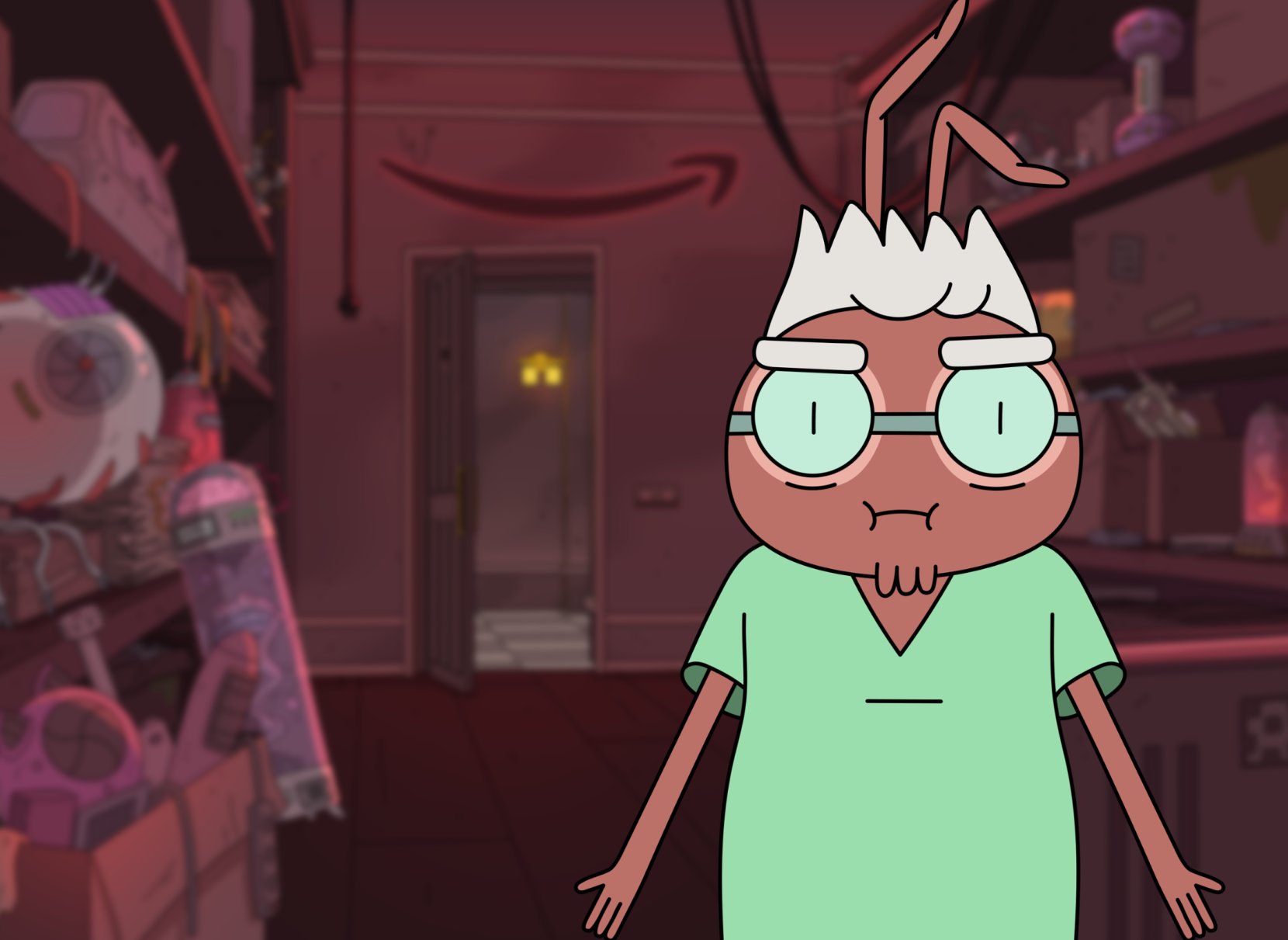
The future needs a new startup.
Professor Prawn shows Korney something he refuses to believe.
Fixing it requires several inventions combined into one impossible solution.
Watch Season 1 on Amazon Prime.
Every view helps bring Season 2 closer.
amzn.id/disc


Professor Prawn has seen enough.
He knows what is coming, knows Korney is involved and has a time machine ready to prove it.
The only problem is convincing a unicorn who does not want to believe him.
Would you step inside?

Take My Muffin retweeted
full list of tools to turn influencers and clients into distribution without paying them upfront
equity, rev share, referrals, exclusive access, case studies
you can set up the whole system for almost nothing
1. vet people before giving them anything
- @Favikon_ (free). creator rankings by niche and country, calculators. useful for checking someone before offering equity or upside
- @SocialBlade (free). growth history across YouTube, TikTok, Instagram, Twitch, and Facebook. quickly shows whether an audience has been growing organically
2. give them equity
- @founding (free). Founder Institute FAST Agreement. standard advisor equity framework and agreement
- @cartainc (free up to 25 stakeholders / $1M raised). issue equity, manage SAFEs, cap table, and 83(b)s
3. run referral and rev share deals
- @useAffonso by @zilvestro ($15–19/mo, 14-day trial). best for starting out. affiliate tracking, payouts, and campaigns. up to $1k/mo in partner revenue
- @getRewardful ($49/mo). affiliate and referral tracking. up to $7.5k/mo in partner revenue
- @ToltHQ ($69/mo). affiliate tracking for SaaS. up to $10k/mo in partner revenue
start with Affonso, then move up once partner revenue grows
4. create exclusive access and invite codes
- @getwaitlist ($15/mo, 7-day trial). waitlists, invite codes, referral leaderboards, position tracking, who referred whom
5. track every partnership
- @attio (free for 3 seats). CRM for influencer and client relationships with live contact syncing and up to 50k records
6. turn good partnerships into proof
- @SenjaHQ by @helloitsolly (free for up to 15 testimonials). collect testimonials, embed them anywhere, and turn them into case studies. one strong name makes the next partnership much easier to close


Three startups enter the chat.
Harmonizer. Facehook. ChatTPG.
They sound familiar enough to be useful and strange enough to exist only in the Muffinverse.
Watch Season 1 on Amazon Prime.
Every view helps bring Season 2 closer.
amzn.id/disc

Korney creates best under pressure.
Give him a personal crisis, a collapsing company, and almost no time to think.
Harmonizer. Facehook. ChatTPG.
His life may be falling apart, but his imagination is still working overtime.

The truth comes with consequences.
Korney meets his father and learns something he was never prepared to hear.
Returns to a team that desperately needs new ideas.
Meanwhile, their property is about to belong to someone else.
Watch Season 1 on Amazon Prime.
Every view helps bring Season 2 closer.
amzn.id/disc
