

Startups, engineering, software, hardware, wireless, product, management. | Keeping the signal-to-noise ratio high.
Salt Lake City, UT
Joined January 2009
- Tweets2.3K
- Following1.4K
- Followers790
- Likes3.1K



Pinned Tweet
Close-up of the edge of a 35mm film print. Every last bit of space is used for audio data:
Left: Sony Dynamic Digital Sound (SDDS)
Between sprocket holes: Dolby Digital
Waveform pairs on the right: Analog optical sound
Right dashed lines: DTS time codes

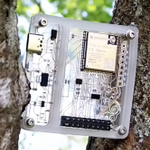
The new translucent flex PCB substrate from @JLCPCB looks amazing.
I need to find an excuse to make a translucent PCB now.


Next big advancement in consumer 3D printing:
Dual Independent Extruders (IDEX) on CoreXY.
Much faster than filament switchers or tool changers, with the added option of dual simultaneous printing.
I'm excited to see the Rat Rig V-Core team pull this off.
Very impressive that they made regenerative suspension work.
However, the power generated is too negligible to be useful. They claim a semi truck can recover 4kWh over an 8-hour shift with this unit. That's about $1 of electricity saved, or about 2 extra miles of charge.


I was excited to go through "all design & engineering" files for the original #Tesla Roadster, but the website only has 3 simple PCBs (Battery monitor, HVAC control, display system) and some the CAN database files for the diagnostic software
Was everything else outsourced? Lost?


All design & engineering of the original @Tesla Roadster is now fully open source.
Whatever we have, you now have.
service.tesla.com/roadster


Strange discovery by folks on the @BambulabGlobal forum:
Carbon Fiber Nylon filament from multiple vendors is lightly magnetic.
Neither carbon fiber nor nylon are magnetic materials. Is there something else in these filaments?
nVidia did an amazing job of squeezing their new H20, L20, and L2 parts right up against the export limits (Approximate marks below)
The most impressive part is that the limits were announced last month and nVidia is sampling these parts *now*. Impressive last-minute adjustments

The Pixel Pump handheld pick-and-place tool by @robin7331 sets the gold standard for crowdsourced, open-source hardware projects I've seen lately
Everything from the hardware to the packaging to the CrowdSupply supporter updates have been first-rate.
crowdsupply.com/robins-tools…

.@beagleboardorg has been on a roll lately with these high quality specialty SBCs.
The latest BeagleV-Fire has a @MicrochipTech PolarFire SoC with 4 x RISC-V cores and decent FPGA fabric with 23K LEs.
Great to have these affordable boards for testing speciality SoC platforms.

Fun feature in @adskFusion Fusion 360:
3D textures for materials like wood: Wood rings and grain stay consistent and realistic across 3D shapes.
Nice effect for woodworking projects.

Intel's new Xeon MAX 9480 has 64GB of high-speed RAM packaged next to the cores.
Four large squares in the center are CPU cores (14-cores each)
Four rectangles on the outside are HMB2e RAM (16GB each)
Interestingly, it can boot and run without any extra DIMMs installed!

Here I am setting up this 12ft long track saw cut all by myself because my workshop assistant is too busy licking the measuring tape.

These tiny HEPA filters are going into an air filtration system for my @BambulabGlobal X1C.
The in-chamber purifier also has a large activated carbon chamber for filtering VOCs.
I run the printer in the garage to be safe, but extra filtration is still welcome.

.@ScanOfTheMonth produces excellent analysis of CT scans of interesting objects.
This month: coffee making equipment.
Fascinating to see the quality different between an old Moka pot (left) and a new model with low-quality porous casting (right)

It's wild that we can literally look at molecules using atomic force microscopy.
It's especially satisfying when the resulting images look like their structural formulas.

Upgrading my build server with a 16-core AMD 7950X3D with 128MB of L3 cache.
Interestingly, this chip benchmarks similarly to an Apple M2 Ultra, but with a fraction of the price tag.
Having a fast build and CI/CD server while I edit on my MacBook Pro has been a good combo.

.@nvidia 's new module pairs a 72-core ARM Neoverse V2 CPU with their H100 GPU on a single module
CPU and GPU are connected with 900GB/s NVLink interconnect. 7X faster than the normal PCIe Gen5 x16 link.
This close integration has more benefits beyond raw bandwidth

An additional NVLink connection allows pairing up with another GH200 CPU+GPU combo, giving even further easy access to memory on peer modules in the same way

Memory and IO bandwidth is *the* bottleneck for a lot of operations, so speedups here can pay large dividends.
@nvidia 's benchmarks show an unbelievable 4.5X (!) speedup in certain LLM inference operations with this architecture.