








twtwr retweeted

One guy in Sweden built a search engine that doesn't run on Google or Bing. It's been online since 2021, and the bills come to about $200 a month.
Viktor Löfgren says most "alternative" search engines are really powered by Google or Bing, or by authoritarian states like Russia and China.
His engine, Marginalia, has its own crawler and index, with no ads, no loans and no investors.
His argument: when nearly all search runs through a few US companies, censorship becomes easy, even by accident, and one country's cultural bias shapes what everyone finds.
He isn't trying to replace Google. He wants Marginalia to be the "minority report" that keeps the big engines honest.
So it ranks what they tend to bury: personal blogs, old university pages, text-heavy sites with nothing to sell.
Every result shows whether a page uses affiliate links or JavaScript, and you can filter those out. An "explore" mode just shows you random sites from the index.
It's keyword-based on purpose. Löfgren argues that the better a search engine gets at answering questions, the worse it gets at finding websites.
It's open source under the AGPL, so you can host your own copy.
marginalia-search.com/

twtwr retweeted

Some folks don’t believe that a “principled AI company” would destroy books after they suck out all the information for their models, even one-of-a-kind books and manuscripts.
Here it is admitted in open court.


Confirmation of Anthropic’s BOOK BURNING for their AI: The Great Forgetting of the Amnesia Generation
In the quiet warehouses and shipping docks of 2024, Anthropic did not merely train an AI.
It staged a quiet erasure of human knowledge.
While the public was still dazzled by Claude’s fluent paragraphs and polished marketing emails, the company’s engineers and logistics teams were busy executing Project Panama—an internal campaign whose own documents announced the ambition to “destructively scan all the books in the world.”
The method was industrial and irreversible: buy the physical volume SOMETIMES THE LAST COPY, slice its SPINE with a hydraulic cutter, feed the pages through high-speed scanners, then pulp what remained.
Millions of books: scientific research, novels, rare technical treatises, obscure monographs, volumes that had already survived wars, fires, and decades of handling—were reduced to data tokens and then to wet mulch or burned.
They literally burn the evidence of this crime against humanity.
The company itself preferred the darkness. “We don’t want it to be known that we are working on this,” the planning memos warned.
A federal judge later blessed the slaughter. Because Anthropic had purchased the copies and then destroyed them, the court held, the act was “transformative” fair use. Ownership plus obliteration equaled permission.
The ruling handed every subsequent AI lab a legal license to treat the printed past as disposable feedstock.
That license is now being exercised at industrial scale. In 2026, companies like ISBNdb openly market pre-2022 books as the last pure reservoir of human language—text uncontaminated by the synthetic sludge that large language models themselves have already poured into the open web.
Orders arrive for tens or hundreds of thousands of titles at a time. Non-disclosure agreements are standard.
The preferred language is “digital preservation.”
The actual outcome is the same mechanical process Anthropic refined: spine cut, pages scanned, original shredded.
Rare and near-unique copies are disappearing into the same pipeline. Booksellers across continents report sudden, strange bulk orders for specialized, low-demand titles that no ordinary collector would ever buy in volume.
Once the pages are gone, they are gone forever.
A website can be re-uploaded. A bestseller can be reprinted.
The last three surviving copies of an eighteenth-century botanical text cannot.
This is not progress. It is the Great Forgetting.
An entire generation of machines is being taught to speak by consuming and then discarding the physical record of human thought.
The companies that profit from the resulting fluency call the process necessary, legal, and even enlightened.
They speak of curated knowledge and domain-specific expertise while the spines crack and the paper is carted away.
Anthropic did not invent the hunger for data, but it demonstrated openly in private documents and then under court seal how far a well-funded laboratory was willing to go to satisfy it, and how readily the law would ratify the destruction.
Just to gain a temporary AI benchmark advantage.
The amnesia is already here.
Future models will generate elegant sentences to beat Al sorts of tests about history, science, and literature.
They will do so on the ashes of the books that once contained those sentences.
The generation that built these systems will leave its children fluent machines and emptier shelves.
That is the real product of Project Panama and its successors: not intelligence, but a carefully engineered cultural void, papered over with synthetic prose and non-disclosure agreements.
We are left to forget to remember. We are The Amnesia Generation with our brains being put into a meat grinder and fed back to us.

twtwr retweeted
Thank you for writing this. It is something I have tried to alert folks about, quite repeatedly for the last decade. We have lost 100s of one of a kind manuscripts and books from these folks and Anthropic is the worse offender. They have spent millions going around the world draining private and public libraries of books.
We are the Amnesia Generation and this is The Great Forgetting.
twtwr retweeted

#Israeli authorities & security forces have deliberately targeted #Palestinian children resulting in #genocide, crimes against humanity & war crimes, the @UN Commission of Inquiry on the Occupied Palestinian Territory & Israel says in new report. #HRC62
➡️ bit.ly/4w0AxbY


twtwr retweeted

The world is just a hair's breadth away from acknowledging publicly that we need Bitcoin mining on our grids

The AI data center boom is exposing what bitcoin miners have argued for years: flexible load matters on an increasingly stressed grid. From @DSBatten
twtwr retweeted
Correct and ... Bitcoin is in fact causing a myriad of environmental benefits and is essential to the clean energy transition and methane mitigation! (which makes the ban idea even more facepalm)
twtwr retweeted
Seeing the sort of laughable ideas that get oxygen in echo chambers such as Reddit makes me grateful that I spend my time on X.
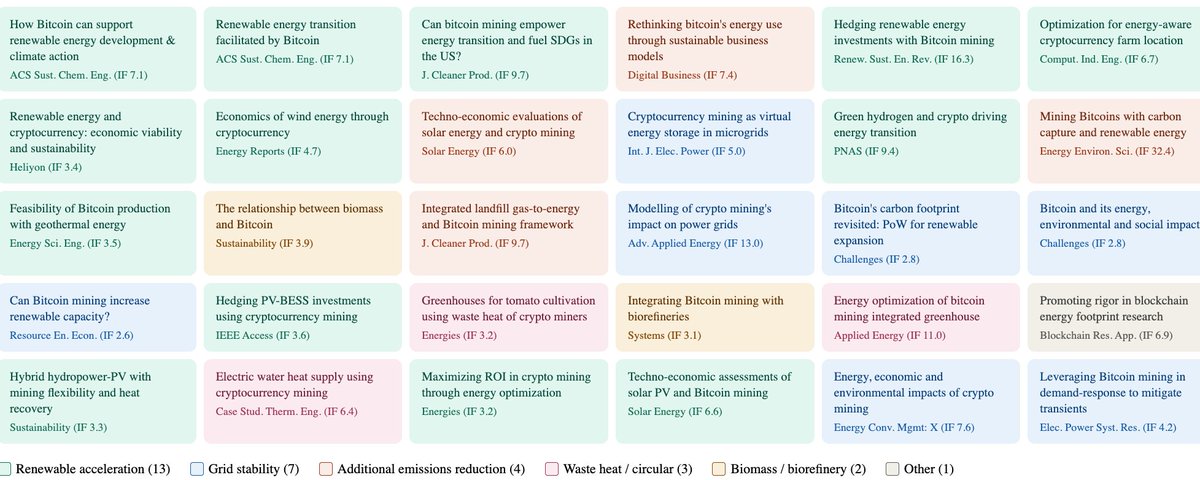
Imagine launching a petition to ban a technology that 30 peer reviewed papers have said is an essential part of the green energy transition

twtwr retweeted
Anti-Bitcoin reporting in the media is at least 24x negatively weighted against Bitcoin.
In other words, a negative take on Bitcoin is 24x more likely to be reported than a positive one.
Exhibit A:
Bitcoin environmental reporting: only 1 of 30 positive studies was picked up by the media, while 4 of the 5 negative (and disputed) studies were. A 24x anti-Bitcoin bias
Exhibit B:
MSTR sell and buy of Bitcoin.
After saying that it would occasionally sell Bitcoin a week ago - Strategy sold 32 bitcoin and the story ran for a week. 24 mainstream articles including Cramer chiming in, a Polymarket betting scandal, a run of paper-loss explainers.
Then MSTR bought 1,550 bitcoin, 48x larger event but only 6 outlets covered it.
That's arguably an event larger asymmetry.
h/t @BTCPerception for data

twtwr retweeted
This is the sort of article that can lose a media publication's credibility. Fast.
In a truly embarassing effort from Switzerland's public broadcaster @swissinfo_en just claimed a long-debunked claim that "Bitcoin emits a lot of energy per transaction"
For the record, no it doesn't. Bitcoin resource use comes through mining, not transactions (getting this wrong is a rookie error). It was debunked 4 times in peer reviewed papers (Masanet et al, 2019, Dittmar et al. 2019, Sedlmeir et al, 2020, and Sai and Vraken, 2023.)
That's why no reputable mainstream media companies make this claim any more.
Oops.
Imagine having done so little research on your article that you
a. didn't know that
b. didn't know that all your peers in the media except you already know that
But the Swiss article gets worse. The author mentioned none of the actual contemporary research on Bitcoin, appearing to have no awareness that since 2021 there have been 30 peer reviewed articles (source: xitter.cf/DSBatten/status/206179…) showing that Bitcoin is not only not a big emitter, but it is a genuine solution to ending the era of big emissions by:
- Accelerating renewable energy transition (16 papers)
- Monetizing wasted renewable energy (14 paper)
- Obviating flaring, landfill gas emissions, or gas peaker plants (3 papers)
Finally, the article references its own previous copy, an article from 31 May 2025 quoting the non-peer reviewed hobby blog Digiconomist (which Wikipedia expressly states is not a reputable source), authored by Dutch Central Banker Alex de Vries, whose work on Bitcoin Mining was debunked in 2023 (Sai and Vranken)
Source: sciencedirect.com/science/ar…
So in summary, what can we objectively say is true about this article on Bitcoin's environmental impact from @swissinfo_es. They have
1. Not acknowledged 30 peer reviewed papers which contradict their thesis
2. Referenced the hobby blog from an author whose work's academic merits are disputed (to say the least)
3. stated the flawed "per transaction" metric which has been debunked 4 times in academic work
Irrespective of your opinion on Bitcoin or Bitcoin mining, this is not a great look for Swissinfo.
Rather, it is misinformation against a technology that has been established in multiple academic journals, by energy experts, grid operators and renewable energy generators as being an important part of the UNSDGs and environmental action.
in short: the sort of article that establishes a news outlet as not a reliable source
Do better @swissinfo_jp @swissinfo_fr @swissinfo_de


twtwr retweeted

JUST IN: BILLIONAIRE TIM DRAPER JUST ADMITTED HE TRUSTS #BITCOIN MORE THAN HIS BANK ACCOUNT
"QUANTUM WILL HACK THE BANKS LONG BEFORE IT TOUCHES BTC"
BTC WILL "ECLIPSE THE DOLLAR"
HE KNOWS WHAT'S COMING 🔥
twtwr retweeted

Bitcoin is the only asset that can lose 50% of its value in 6 months and the people who hold it are not only unphased but excited for the future
twtwr retweeted

Anonymous cash for Bitcoin Lightning at nearly all Polish ATMs.
And that’s not all—you can pay with Bitcoin Lightning literally everywhere in Poland!
No KYC, no registration, via the Nostr provider.
I love it when I come across new technology that gives (European) bureaucrats the middle finger, especially in a situation where they want to spy on and regulate you across the board.
Most recently, I was this excited about a non-KYC project for exchanging stablecoins for fiat via peer.xyz/, which bypasses the dystopian centralized exchanges that have to do massive reporting due to EU regulations like DAC-8 and MiCA.
In the case of BITBLIK, just like with peer.xyz, you’re doing decentralized P2P trading, so I assume no regulation applies to you (it doesn’t go through any intermediary).
Today I came across a great Polish app called BITBLIK bitblik.app/, which connects the widely available BLIK system in Poland with Bitcoin Lightning.
With Bitcoin Lightning, you can pay anonymously anywhere in Poland, withdraw cash anonymously from an ATM (which I just did!), or make online payments on Polish websites.
BLIK is widely accepted (it’s supported by a network of over 13,000 ATMs across Poland and hundreds of thousands of merchants; according to AI, there are 87,000 of them).
Install the bitblik.app/ app, launch it—no registration required, no KYC—enter an offer for how much you want to pay in PLN or how much you want to withdraw from an ATM.
You’ll make a Bitcoin Lightning payment, which will be locked.
Wait a minute or two until someone accepts your offer (the other party who has BLIK and wants Bitcoin Lightning).
As soon as they do, a BLIK code will appear.
It’s valid for about two minutes, so enter it at an ATM or at a terminal in a store or restaurant.
After a successful payment, you confirm that you used the BLIK code, and the Lightning payment is credited to the recipient.
Limits for BLIK payments vary by Polish ATM. ING Bank Śląski has the highest limit: 10,000 PLN per day (2,356 EUR), while mBank has a limit of 5,000 PLN per day (1,178 EUR). PKO BP allows BLIK transactions up to 1,500 PLN, but you can make up to 20,000 PLN (4,722 EUR) worth of transactions per day.
And of course, those limits apply to the merchant. When various merchants accept your Lightning payments, you effectively have no limits—you’re only limited by the counterparty’s liquidity.
BLIK is 100% open-source, so it can’t be banned!
You can fork it and use it within your own closed community.


twtwr retweeted

Today is the day: The European Commission is expected to publish the EU Tech Sovereignty Package. 🇪🇺
And the demand is clear. When purchasing software products, European authorities must prioritize
- Open source
- Buy European
The Americans buy American, the Chinese buy Chinese, when will Europe start to support its own industry?
The EU Tech Sovereignty Package can be a turning point for #digital #sovereignty.
But will they be bold enough?
👉 Find out more here: suse.com/c/an-open-letter-fr…
📝 Read the letter and co-sign: suse.com/eu-tech-sovereignty…
#OpenSourceFirst #DigitalSovereignty #TechSovereignty
