

電子工作、昔の電卓、マイコン、計測機器などに興味あり。あまり更新されていないブログとGitHubとYouTubeがあります。(gooブログ終了のため古い記事はnoteに引っ越し。) https://xitter.cf/t.co/LckIVOYw0T https://xitter.cf/t.co/JFucdZXPTM
Tokyo, Japan
Joined October 2020
- Tweets1.6K
- Following900
- Followers1.7K
- Likes12.5K
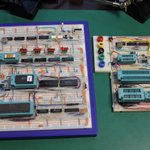






Ryo Mukai retweeted

Last year this was the hot thing in Japanese Twitter hooking them up to FPGAs!
xitter.cf/uCOM80/status/19773087…


Ryo Mukai retweeted

my weekend project was making a floating point basic completely from scratch for the pdp-11, specifically the TangNanoDCJ11MEM J-11 cpu, it uses native F11 code and has a fair degree of compatibility with microsoft basic from that era. everything was done with chatgpt codex.


Ryo Mukai retweeted
I also created a .ptap file and loaded it in simh, should run on any pdp-11 now. github.com/annuvin/SCELBI-GA…

Ryo Mukai retweeted
i used claude to convert some early star trek games to pdp-11 assembly, TSC Space Voyage from a 6809 assembly listing and SCELBI Galaxy from a 6800 assembly listing, loaded through ODT on the TangNanoDCJ11MEM by @uCOM80
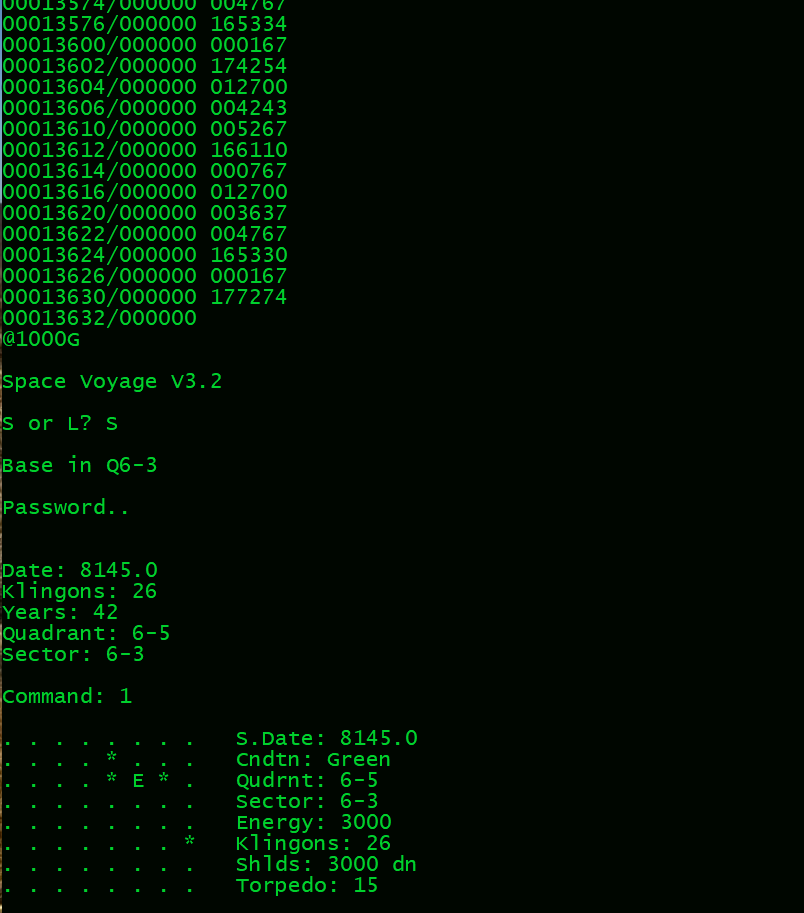

Ryo Mukai retweeted

Toshiba EX-80 (その3) 修理の巻|Ryo Mukai @uCOM80 note.com/ryomuk/n/nb4eac0935…
Ryo Mukai retweeted

取り敢えずハマったところを忘備録として纏めました。 cafe2p54.seesaa.net/article/…


Ryo Mukai retweeted

すごいw😳
そう言えば以前 uCOM80さんが i4004で i8080エミュレータを動かしてらっしゃいましたね~w😀 xitter.cf/uCOM80/status/16474548…
4004で動く8080エミュレータで @vintagechips さんが移植してSBC8080データパックに入れてくれているGrant's BASIC(浮動小数点 8K BASIC)が軽微な修正で動きました。動かす過程でデバッグ機能を強化したりバグを発見できました。#intel4004

Ryo Mukai retweeted

This is "Jaws". That was the codename for the DEC J11, which is essentially a "PDP-11 on a chip".
Jointly developed by DEC and Harris Semiconductor, it was the first PDP-11 CPU done in CMOS technology. The project aimed to pack the performance and features of the high-end PDP-11/70 into a compact chip set.
It consisted of two separate dies: a data path chip and a control chip, mounted together on a single 60-pin ceramic hybrid DIP carrier. An optional floating-point accelerator (FPA) chip was also available. These are each entire hex BOARDS in my 11/44.
Development began in the late 1970s/early 1980s (with Bob Supnik as early project leader), and the J-11 was introduced in late 1983 at 3.75 MHz. Speeds were later increased to around 4.5 MHz initially, with later variants and systems reaching up to 18–20 MHz by the early 1990s. I have an 18MHz on hand!
The J-11 powered systems such as the PDP-11/73, PDP-11/83, PDP-11/93, and the Professional 380. It included advanced features like memory management, cache support, and most PDP-11/70 capabilities.
As the last in DEC's line of PDP-11 microprocessors, it helped extend the long-lived 16-bit PDP-11 family into the mid-1980s and beyond, even as the company shifted focus to the VAX architecture.
And its likely the prettiest chip I can think of!

Ryo Mukai retweeted

A Prototype of Homebrew Portable Vectrex youtu.be/2sRUTAbVEdg?si=1u9J… @YouTubeより




Ryo Mukai retweeted

実装方法を見直して、640KB(RAM)+4KB(ROM)にしてみました。BSRAMの使用率は97%です。github.com/quoth57/TangConso…
Ryo Mukai retweeted
メモリ512KBに拡張する実験をしてみました。詳しくは、こちら offrepose.blogspot.com/2026/… BSRAMの使用率は78%です。640KB(RAM)+8KB(ROM)に拡張すると100%になります。

Ryo Mukai retweeted
TangConsoleDCJ11MEMへの2.11BSDのインストールですが、デバイスを追加してフルインストールできるようにしました。詳しくはoffrepose.blogspot.com/2026/… にて。#DCJ11 #211BSD