







willynet retweeted
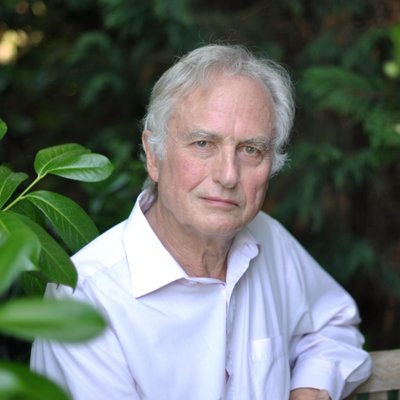
Can a machine be conscious? And if so, how would we know?
My interview with Peter Hoskin for Prospect: prospectmagazine.co.uk/views…
🤖 Made with AI

willynet retweeted

"I don't know ... I perhaps foolishly stuck my neck out". Fascinating interview w/ @RichardDawkins in which he walks back (a little) his previous strong views that Claude is conscious. But IMO the most interesting bits are about his recent openness to structuralist influences in evolution 👇🏼

Can a machine be conscious? And if so, how would we know?
My interview with Peter Hoskin for Prospect: prospectmagazine.co.uk/views…
willynet retweeted

Sagan wrote this in the first chapter of Cosmos in 1980. Ten years later, in February 1990, Voyager 1 turned its camera back from about 6 billion kilometres out and photographed Earth as a speck less than a pixel wide. Sagan had pushed for that picture, and it became the Pale Blue Dot.
Note what the sentence refuses to do. It says human concerns look petty, then immediately says the species is young, curious and brave. Smallness does not settle the question of worth, because the universe offers no rank to us; it only offers a scale.
Later in Cosmos he writes, "We make our world significant by the courage of our questions and by the depth of our answers." So it is up to us to create meaning, to make something good of humanity, to be a species we can be proud of.

willynet retweeted

A 2023 Review in @ScienceTM looked at the complex connections between astrocytes and other types of cells in the nervous system, including neurons, oligodendrocytes, and microglia.
Learn more: scim.ag/3USPZdx #ScienceMagArchives

willynet retweeted

Chaos — Making a New Science: link.amazon/B03wsy1c5


Chaos is not randomness, it is the boundary of what we can ever know about a deterministic universe.
For centuries after Newton, physicists viewed the cosmos as a giant clockwork machine: know the starting state, and you can predict the future forever. That dream was challenged in the 1890s when Henri Poincaré studied the three-body problem, revealing the intricate complexity of gravitational motion. It took another step toward collapse in 1961 when meteorologist Edward Lorenz rounded a single number (0.506127 → 0.506) in a weather simulation and obtained a dramatically different weather trajectory.
This double pendulum captures that exact phenomenon. Both trajectories obey the same strict laws of classical mechanics in an idealized system with no external noise, separated only by a microscopic 0.1° shift at release. At low energies, the motion remains regular and predictable. At high energies, nonlinear dynamics can produce chaotic motion, causing that tiny 0.1° gap to grow approximately exponentially (e^(λt)) over time until both paths diverge dramatically within the four-second horizon.
Determinism is a property of nature’s laws; predictability is a limit of human measurement. Chaos isn't the absence of order, it's order so sensitive to its beginnings that finite knowledge hits a wall.

willynet retweeted

“Study hard what interests you the most in the most undisciplined, irreverent, and original manner possible.”
— Richard Feynman

willynet retweeted

Kurt Gödel left 1,009 pages of unpublished mathematical notebooks.
In a newly reported study, Jan von Plato used Claude to examine their contents. AI identified 663 theorem candidates, with about 400 reportedly verified as stated using Coq.
The notebooks may also contain a near-proof anticipating Paul Cohen's work on the axiom of choice.
An extraordinary discovery in mathematical history, though independent examination of the results is still needed.

willynet retweeted

Cásate con alguien que te celebre el cerebro, no con alguien que le compita. Eso también es escalar en la vida.


willynet retweeted

Chaos is not randomness, it is the boundary of what we can ever know about a deterministic universe.
For centuries after Newton, physicists viewed the cosmos as a giant clockwork machine: know the starting state, and you can predict the future forever. That dream was challenged in the 1890s when Henri Poincaré studied the three-body problem, revealing the intricate complexity of gravitational motion. It took another step toward collapse in 1961 when meteorologist Edward Lorenz rounded a single number (0.506127 → 0.506) in a weather simulation and obtained a dramatically different weather trajectory.
This double pendulum captures that exact phenomenon. Both trajectories obey the same strict laws of classical mechanics in an idealized system with no external noise, separated only by a microscopic 0.1° shift at release. At low energies, the motion remains regular and predictable. At high energies, nonlinear dynamics can produce chaotic motion, causing that tiny 0.1° gap to grow approximately exponentially (e^(λt)) over time until both paths diverge dramatically within the four-second horizon.
Determinism is a property of nature’s laws; predictability is a limit of human measurement. Chaos isn't the absence of order, it's order so sensitive to its beginnings that finite knowledge hits a wall.
willynet retweeted

Is consciousness fundamental to reality?
In this talk, Philip Goff responds to critiques of panpsychism by theoretical physicists Sean Carroll and Sabine Hossenfelder, and then explores some implications for the science of consciousness.
Philip Goff is a philosopher of consciousness at Durham University, whose research focuses on integrating consciousness into our scientific worldview.
Tap here to watch his talk now. iai.tv/video/the-many-voices…

ALT Title cover for "Consciousness and Fundamental Physics" by IAI Talks. The image features an abstract representation of a head formed by swirling, colorful clouds in fiery oranges and cool blues against a dark background.
willynet retweeted

Just received this in the mail today: The Welch Labs - Illustrated Guide to AI". What an astonishing, gorgeous work of art! Bravo, Stephen Welch and team!


willynet retweeted
For centuries, the ultimate goal of physics and philosophy has been to construct a "God's eye view": a complete, objective account of the universe as a whole.
Yet theoretical physicist Eric Cavalcanti argues that a deep paradox at the heart of quantum mechanics throws a wrench into this idea.
Walking through a simple thought experiment, he demonstrates why no observer can stand outside the system and why reality is fundamentally perspectival.
Tap here to read more. iai.tv/articles/a-gods-eye-v…

ALT A circular, abstract design with blue and black hues resembles a complex eye or lens. Text overlays read: “We can still do physics from within a relational world.” Eric Cavalcanti argues that at the heart of quantum mechanics, there is a paradox that prevents a God's eye view. At the bottom, the headline is "Quantum Mechanics Challenges a God’s Eye View." The source is iai news.
willynet retweeted

MIT professor delivers a brilliant masterclass on how to effectively present your ideas with clarity, high impact and purpose; 15 key insights
willynet retweeted

AI-powered proof has rigorously proved that using quantum computers would not have huge advantages for a whole class of mathematical problems, confirming a vastly influential conjecture. newscientist.com/article/259…



willynet retweeted
Writing about math for a wide audience is tricky. Here are some pitfalls we fell into, and lessons we learned along the way. ams.org/journals/notices/202…

willynet retweeted
Quantum theory assumes that only the present, not the past, has an influence on the future. Now there are hints that could be wrong, and if so some of theory's most bizarre implications could make a lot more sense newscientist.com/article/259…

willynet retweeted
When AI becomes an oracle, what happens to mathematics?
arstechnica.com/science/2026…
