

香港人 Hoeng1 Gong2 jan4 // Conlanger // 渠/其 // East Asian linguist with a penchant to wander afield
Hong Kong
Joined November 2019
- Tweets2.1K
- Following164
- Followers380
- Likes1.8K





Henry_Wong retweeted

ain’t no way they lexicalized ‘sigma’ as a regular masculine noun bro 😭
sigmā sigme
sigme sigmõ
i wouldn’t be surprised if they created a feminine ‘sigmī’ out of this afterwards


If you want some fun verbs to bite into, may I suggest Kiranti languages as a potential look-in
For example, below is the intransitive paradigm of Sindrang Bantawa, segmental in someways but opaque in many others!


The more I dig into linguistic typology I seem to be realizing that the layout of (noun-case.number) and (verb-tense-person.number), and the concept of paradigmatic "fusionality" beyond occasional contraction is basically unattested outside of IE, Uralic, Afroasiatic and Georgian
2
15
583
Henry_Wong retweeted

I can finally go back to posting linguistics memes


so i've often mentioned that there's an unspoken rule in the field of lingustics that example sentences have to be needlessly violent. "The farmer killed the duck.", and so forth.
this very common example sentence is a perfect example of how that rule could perhaps be formulated in a sort of "ease of articulation" framework, because the original sentence was "Omne homo habens asinum videt illum." ("Every man who owns a donkey sees it."), but apparently linguists were like "Nope! not violent enough, gotta add some more beatin’"
Henry_Wong retweeted
Might I also say that the map is also terribly sloppily made. Even working within the map’s focus on national languages, Myanmar’s is just wrong (Burmese is SOV) and they coloured in the Andaman and Nicobar islands as blue when it’s a part of India…

Might I also say that the map is also terribly sloppily made. Even working within the map’s focus on national languages, Myanmar’s is just wrong (Burmese is SOV) and they coloured in the Andaman and Nicobar islands as blue when it’s a part of India…
When linguists refer to word order, they are usually referring to a language’s “basic word order” which is defined as the default order a languages used in a *transitive* sentence with two *overt* *noun phrases* (not pronouns) devoid of pragmatic (eg topic or focus) prominence


There is a lot of problematicse about this definition and certainly lakes of ink have been split about why this metric’s utility is dubious at best such as such sentences being an extreme minority in spoken speech and also stuff like rhemic sentences
1
28
921


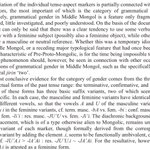
- The other one is the otherwise absence of verbal agreement. The only feature marked on Mongolic verbs appeared to have been gender which stands in stark contrast to Turkic and Tungusic
2
8
167
Henry_Wong retweeted
I say similar phonetic pathways because this precise sound change of p t > ɓ ɗ is attested elsewhere, most notably in the traditional Wu dialects in Shanghai, including, in the 19th century, the city of Shanghai itself
en.wikipedia.org/wiki/Jinhui…