
Assistant Professor of Politics and International Affairs, Princeton University https://xitter.cf/t.co/pTFeHOnMGO
Joined March 2021
- Tweets38
- Following122
- Followers617
- Likes5
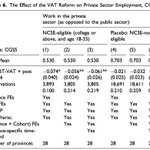
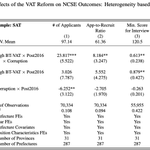


Why do talented people compete so fiercely for government jobs in China? In our @cps_journal paper with @FengBo10517365, @he_qiwei, and Xin Jin, we identify state power as a key reason—with implications beyond China. doi.org/10.1177/001041402614… 🧵

10/ This is aggregate evidence, not a claim about every applicant. Many people pursue civil-service jobs out of public-service motivation, professional commitment, and a sincere desire to serve. Our argument is about how state power shapes incentives at scale.
11/We are grateful to the editors , reviewers, and many colleagues for their helpful comments, as well as our research assistants for their excellent work! Full paper here: doi.org/10.1177/001041402614…

China’s chatbots are censored by the state. In our @PNASNexus paper with @jenjpan, we find substantially higher levels of political censorship in large language models (LLMs) originating from China than those developed outside China. doi.org/10.1093/pnasnexus/pg…🧵


8/ Our work shows that framing repression can transform it from something widely opposed to something the public may support. It also points to the central role of morality in understanding mobilization and repression.
9/ We are grateful to the editors, reviewers, and many colleagues for their helpful comments, as well as our research assistants for their excellent work! Read the full paper here: 🔗doi.org/10.1086/734267
