

B787 First Officer, retired CVICU/ICU/COVID RN, SpaceX Enthusiast/Investor, Futurist, Snowboarding and Paragliding Addict.. no seriously none of this is healthy
Vacaville, CA
Joined July 2017
- Tweets1.9K
- Following310
- Followers370
- Likes6.3K




Pinned Tweet
Imagine standing on a European dock in the late 1400s or early 1500s, staring in quiet awe at the first truly ocean-going ships being fitted for exploration and trade. Hulls larger than anything most people had ever seen. Masts rising like church spires with sails big enough to blot out the sky. Most people around you barely glanced up. Those who did often shook their heads and said the same things we still hear today: “What a waste of money. They’re crazy—they’re going to get themselves killed. What do they think they’re going to find out there? We could use that money here. Why aren’t they fixing our problems at home?”
But a few people—maybe only a handful—stood still and watched. They felt the weight of what those ships represented. They understood, somehow, that the world was about to change. That the boldness of a few dreamers could open an entire age. They couldn’t name the discoveries that would follow, the maps that would be redrawn, the technologies and sciences and ways of living that would grow out of those voyages. They only knew that something vast was beginning.
Not without cost. Ships vanished. Men died. Fortunes were lost. The same has always been true of every leap that matters. And yet the world has been carried forward by exactly those people—the ones willing to risk everything on an idea larger than the problems of the moment.
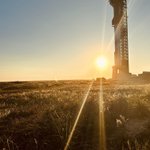
When I stand at Starbase in Texas and look at the massive factories and assembly lines SpaceX is building, it feels like I’ve stepped centuries into the future. At the same time, it feels exactly like standing on that European dock in the early 1500s—watching the first steps of a future that most people still can’t quite believe is real. We are living in that same hinge of history right now with Starship. This is only the beginning of our future among the stars.. @SpaceX


Justin Alexander retweeted

Someone sent me a DM asking why I was nakedly defending Jensen and hoping for his return to NVIDIA.
It's not for financial reasons, I can assure you. I was too stupid not to buy NVIDIA back in the day. Although I do own some NVDA, it's much, much smaller than my TSLA and SPCX holdings.
The reason is simple: it's deeply offensive to me to see this man, who obviously cares deeply about this company and what he's built, treated this way.
I'm aware he made some mistakes. Some of which are really none of my business and are ridiculously common among us flawed humans.
But he, like most of the people who seem so eager to hang him, is not perfect. And I never expected him to be.
And the problem, as I see it, is that there's very little logic in the argument that Jensen's objective was to harm the United States by empowering China. Given his Taiwanese heritage and his own background, that narrative makes very little sense to me.
We're being asked to believe that someone who spent 30 years building one of America's most consequential technology companies was secretly working against the country in which he built it. That's a pretty extraordinary claim.
Jensen believes in an optimistic future. And unlike those throwing knives from dark corners, he's out there building it. Dedicating his life to this mission. In his view, his contribution to humanity.
Other people seem to want power or control. And they want these things without putting in the effort required to achieve them.
Jensen spent 30 years of his life getting to this place, where power, control, and wealth aren't even the mission.
So I'm offended, perhaps in a naive way, by his detractors. The takers, not the makers. Those looking for shortcuts. Those who would rather tear someone down than build something themselves. Or punish him for offering something they cannot.
Some of the people who wish to tear him down seem to have little understanding of the implications of their own mission. And frankly, I find that pretty pathetic.
So what can I say? I'm an idealist.
I prefer the Jensens and the Elons of the world. The people who build, who take risks, who dedicate their lives to making an optimistic future possible.
And so should you.

Justin Alexander retweeted
FULL SEQUENCE: Ship 42 returns to Starbase for the first ever Starship return to launch site, catch, and landing during Flight 15!


Justin Alexander retweeted

Nvidia employees applauding Jensen Huang today as he returned as CEO. What a moment


Justin Alexander retweeted

My composite image I created from this event was made into a limited number of gorgeous fine art prints. I still have some available, but they come off my shop tonight.
Get a print as a memento of this incredible event: cosmicbackground.io/pages/dr…

Justin Alexander retweeted
Jensen is back

NVIDIA Board reinstates Jensen Huang as President, CEO and Board Director.
Read the release: nvidianews.nvidia.com/news/n…


Justin Alexander retweeted

Tesla FSD 15 is actually insane!!
What you're seeing here is not some kind of 3D engine view or gaussian splats. No no.
It's a synthetic real-time view generated by the AI model itself.
This is how the Tesla AI "sees" the world 👀
Stephen Wilson Jr. is musically brilliant. It’s like an artist somehow wielding charcoal, watercolor, acrylics, and oil on the same canvas effectively and somehow none of it fights. I’ve been a fan for a few years now I’m glad to see he got artist of the year.
1
40


The Right Answer for All the Wrong Reasons -
Sometime in mid-2020, when our ICU started getting real numbers of COVID patients for the first time, something stood out to me immediately.
Every morning we clocked in around 6:45. Before COVID, the routine was simple: go sit in the meeting room right behind the nurses’ station. Ten to fifteen of us around a conference table in a roughly 10×20 room. The assistant nurse manager would come in, run down the patients, give assignments, maybe touch on a couple metrics. Normal morning stuff with people you knew.
When COVID hit we kept doing the same thing. I showed up one morning in a KN95 and a face shield (still hard to find then; I was buying my own) and walked into the room. Nobody else was wearing anything. I stood there for a minute confused, then got up and left.
After that, for the next four months or so—until we were all vaccinated—I stopped going in. I’d clock in, walk past the doorway, and stand out at the nurses’ station desk in full gear while they sat inside. They’d call me in. I’d decline in protest. “I’m fine right here thanks.” Every morning I’d stand about twenty feet away, KN95 and face shield on, just watching them. It was genuinely hard to process.
We were telling the public to stay home, stay six feet apart, wear a mask. Meanwhile a group of about a dozen ICU nurses—some of the loudest ones on precautions—sat unmasked in a small, poorly ventilated room for 15–20 minutes every morning, talking and laughing. The behavior was so disconnected from what we were saying that I kept expecting someone to notice. No one did.
Several of them got COVID. Not from patients. From each other or from home. I’ve still never had it. When we actually took care of COVID patients we suited up the same way—PAPR, closed-circuit ventilation, the whole thing. In a lot of ways that was one of the lower-risk places you could be. The highest-risk thing most of them did each day was the unmasked huddle in that little room.
What interested me was the gap. They weren’t careless with patients. They followed the protocols once they were in the room with a ventilated patient. Outside of that, the same people treated the morning meeting like normal life. Best I can tell, a lot of it came down to not really understanding the mechanics (small room, poor ventilation, prolonged close contact, no source control) while still having a strong interest in belonging to the group that was lecturing everyone else. The rules felt real when they were attached to the job and the identity. They felt optional when they got in the way of sitting with the tribe.
That same group, at baseline, is the most identity-politics set of people I’ve ever worked with. Everything is “blue no matter who,” Elon is a Nazi, SpaceX should be nationalized, and so on. Once the position is set, new information mostly doesn’t move the needle. It’s not that they’re uniquely bad at risk assessment. It’s that the assessment is downstream of the group. When the group says masks and distancing, they say it loudly. When the group is sitting together unmasked because that’s what the group is doing, the same people don’t register the contradiction. The understanding was never the main thing. Fitting in was.
That’s the part that stuck with me. Precautions made sense. Masking in the right contexts made sense. They did the clinical version of it correctly. What they seemed to lack was any real internal model of how transmission actually worked once you stepped outside the script. From where I stood every morning, it looked a lot more like group belonging than it did like understanding the stakes.
44


Justin Alexander retweeted

Full release notes below
– – –
v15 upgrades every part of the end-to-end driving network. Includes:
Upgraded vision encoder shared between FSD, Robotaxi, and Optimus, which is trained on millions of internet videos for improved generalization and data efficiency, improving the critical intervention rate by 25x.
Introduced Tesla Reality View, replacing all of the explicit model signals into a single end-to-end visualization using less total compute.
Improved navigation by using an end-to-end learned model based on route preference data from the fleet.
Improved parking location selection by using personalized parking history, and the map will now display multiple parking options at your destination.
Improved driver monitoring by increasing vision-based attention monitoring availability with hats and sunglasses and decreasing strictness in higher speed driver profiles.
Improved detection of road signs, small animals, road debris, and chains.
Improved detection of potholes, road details, and avoidance of deep standing water.
Improved speed handling for each driver profile, school zones and speed limits, and inclement weather.
Improved Autoshift functionality by unifying with FSD-based gear predictions.

FSD v15 now starting to roll out – upgrading every part of the end-to-end driving network
Safety
25x better handling of safety critical cases
Tesla Reality View
Adds a live visualization of the drive that lets you see & control what FSD is planning to do
Navigation for start & end of the trip now learns end-to-end from fleet route preferences. Later v15 releases will expand this to the entire route.
You also should notice better detection of signs, animals, debris, potholes and standing water, plus more natural speed handling in school zones and inclement weather.
Lastly, FSD can now slow for speed cameras & Bike Rack Mode lets you enable FSD w/ bike racks or similar hitch accessories
Justin Alexander retweeted

Can’t believe it … FSD V15 beginning its rollout! Looks great, big promises! Exciting!
FSD v15 now starting to roll out – upgrading every part of the end-to-end driving network
Safety
25x better handling of safety critical cases
Tesla Reality View
Adds a live visualization of the drive that lets you see & control what FSD is planning to do
Navigation for start & end of the trip now learns end-to-end from fleet route preferences. Later v15 releases will expand this to the entire route.
You also should notice better detection of signs, animals, debris, potholes and standing water, plus more natural speed handling in school zones and inclement weather.
Lastly, FSD can now slow for speed cameras & Bike Rack Mode lets you enable FSD w/ bike racks or similar hitch accessories