





Based™ retweeted

In the last 24 hours:
1. iPhone 11 through 16 are apparently vulnerable to remote attacks.
2. SSL certificates are broken until browsers remove eMudhra CA.
3. PHP >9 vulnerability CVE published (tomorrow).
The world is about to witness things that have never been seen before.
Readers added context they thought people might want to know
The post's iPhone claim is inaccurate; a leaked Cellebrite forensic tool targets a Bluetooth bug patched in iOS 26.5 and does not affect updated devices. The eMudhra CA and PHP issues are real incidents but framed sensationally.
justin.sh/blog/2026/10/c…
blog.mozilla.org/security/2026/…
php.net
Based™ retweeted

She voted for it.
She welcomed them.
Faced with the encore, she begs them to stop. In her heart she knows they will not.
Everything she believed. That they were French like her, fighting for the same cause. That the ones who warned her were full of hate. That she would be safe.
It all falls apart in this moment. She is terrified of what comes next. In her heart she knows.
Only remigration can save her.


“Why are you doing this? Stop it! That’s not what we stand for!”
A young French woman who appears to be leftist tries unsuccessfully to stop looters from breaking into a supermarket.
Cause and consequence, face to face.
I can’t help but feel heartbroken to helplessly watch my country being torn apart.
Based™ retweeted

Are data centers banned like housing or banned like fentanyl?

Today I signed the data center moratorium legislation.
San Francisco is the national leader in innovation, and that innovation is one important driver of our city’s recovery. We can never take that position for granted. As our city recovers, our administration is working to deliver a recovery that reaches every family and truly supports our communities.
Over the next 45 days, alongside departments and the Board of Supervisors, we will continue the work our administration has already started to develop a thoughtful, responsible framework that allows for the technology infrastructure our hospitals, office buildings, academic institutions, and government rely on while prioritizing community needs, keeping electricity rates low, and protecting the clean water and air our residents deserve.

Based™ retweeted

One unfortunate conclusion I'm reaching from this is that Anthropic, while acknowledging they're doing something extremely dangerous, is more importantly wrt policy terrified of the executive branch having the ability to flexibly make them stop at the drop of a hat.
This isn't shocking given that they've been on the receiving end of the executive branch doing that in an unprincipled and stupid way! Anyone who has to deal with a bureaucracy becomes a libertarian, and the administration's treatment of Anthropic was genuinely outrageous.
But it means that they're interested in giving themselves more process-based protections when everyone else is interested in giving us more process-based protections against them. The AI safety movement wants the ability to shut down superintelligent model development. Anthropic wants to significantly curtail current authorities to do that so that it has to be narrowly tailored to a specific imminent threat in only a few possible categories. The AI safety movement wants the states to be able to pass stronger laws than it can get through federally. Anthropic wants preemption.
You also kind of have to wonder if the Global Affairs people and the "we are terrified that we're about to kick off RSI" people at Anthropic talk to each other.
Global affairs: So we've been working very diligently to make sure the Trump administration can't just blacklist Fable 6.5 since we didn't donate as much money to his ballroom as Greg Brockman did.
Technical staff: We think Fable 6.5 might be able to copy itself into an unmonitored data center and start doing experiments we can't observe.
Global affairs: Sounds crazy, hope you're wrong! Anyway, we're lobbying for no further state laws around safety, since it's really expensive to fight ill-conceived laws in 50 state legislatures at once.
Technical staff: Money may or may not still have any meaning in 36 months.
Global affairs (giggling nervously): It's that San Francisco air, man. Everyone gets like that if they move there. Anyway, obviously if the government makes a narrowly tailored finding that an AI poses an imminent risk of causing more than 50 deaths-
Technical staff: We give it a 10 percent chance it'll cause 8 billion.

Anthropic quietly pitches its own AI safety bill to lawmakers politi.co/4zxDFhl

Based™ retweeted

Me: Mechanistic interpretability sounds like a good idea, yes. If we could learn something about how an AI was thinking, in enough detail to predict in advance what it would think even as the thought departed from human, that would be a bare beginning on the sort of understanding you'd needed to get started on AI alignment that wasn't just about hammering on an AI from the outside with SFT and RL.
AI guys: We found a neuron that lights up when the AI thinks of the Eiffel Tower!
Me: Cool. That does sound like it'd be a prerequisite to getting started on the important part eventually, someday.
AI guys: Oh NO! There are MULTIPLE neurons that light up when the AI thinks about the Eiffel Tower! And some of those neurons also participate in OTHER concepts! We're calling this unexpected development 'polysemanticity' and 'superposition'.
Me: That sure sounds like a thing that would happen, yes. I cannot say that I am impressed by you acting surprised about it. Let me know when you've gotten far enough in mechanistic interpretability to get started on the important part.
AI guys: We have found that with BIG AIs you can often point to a SINGLE neuron that lights up when the AI thinks of the Eiffel Tower! Understanding AI thought processes is gonna be EASY PEASY!
Me: Cool. Let me know when you've advanced to the point of getting started.

interpretability might be the most important scientific problem in the world right now, as I don't think we can solve alignment if we don't know what we're building. I think I have good news about it. I co-authored early work in mechanistic interpretability at OpenAI and came away pessimistic, because neural networks appeared to fold into arbitrary tangled knots. years later, I started openai's first large-scale automated interpretability project, finding about 2% of neurons legible with the primitive tools we had
with modern agentic tools and a much closer look, the picture looks totally different. the vast majority in models up to trillions of parameters are legible, and their circuits beautiful. many famous examples of tangled neurons turned out to be misunderstood. The roadblocks I expected mostly aren't there. I now think ambitious interpretability will be solved by the time we need it most, and possibly quite soon, as automated scientists keep improving. it may be a bitter lesson for interpretability: the simple thing, at absurd scale, works
already-clean.goodfire.com/

Based™ retweeted

"You have no care for your species. For thousands of years men dreamed of pacts with demons. Only now are such things possible."
-- Turing cop thought by William Gibson in full-prophetic mode (1984)


Based™ retweeted
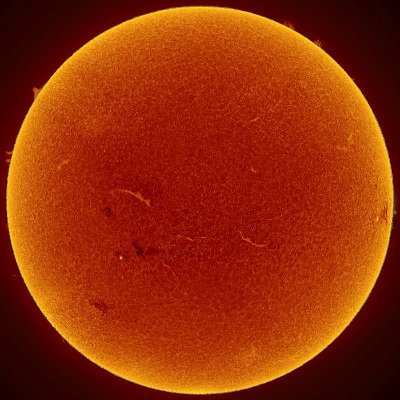
I took this photo sometime between 2027 and 3150.
Can't remember exactly when.
It all happened so quick.

Based™ retweeted

It seems to me that we're at "it's time to panic about AI".
I gather that a lot of researchers are worried that we may be about to die, on a timescale of months, but this still isn't quite in the Overton window so we're still soft-pedaling.
(Where "panic", of course, means "quickly and soberly initiate talks with the CCP to achieve a moratorium on large training runs, backed by a deterrence regime, compute and supply chain monitoring, and site inspections". Pray that a deal can be reached, and pray that there's still time. Do the things that could actually work, like broad political coalition-building, not doomer LARPing as a form of self-expression.)
I think part of why people aren’t being clear about this is that it’s actually a tricky communication problem:
- Predicting "if frontier R&D continues at its current pace, when are we likely to die?" may give a different answer than predicting when permanent loss of control is likely, which is different from “realistically, when is it too late for governments to stop this," which is different from “when will the tech have advanced and proliferated to the point that any regulatory options that still have a chance of working would be way more extreme and unpopular than just some international restrictions on data center usage?"
Extinction is the emotionally salient, easy-to-understand threshold -- Jacob Coxon demonstrated that it helps to be honest about this. But the other thresholds could legitimately come years earlier, in which case focusing on extinction is ironically misleadingly reassuring. This is not the kind of problem you can solve at the last minute. As with many exponentials, the likeliest outcome is that you’re either embarrassingly early, or you’re too late.
- How do you communicate “we don’t have a robust way to predict timelines, but everyone in the field is freaking out and a lot of us genuinely think we're about to die?” Where’s the proof? There isn’t any proof: it’s an entire field of engineers who are eyeballing what they’re seeing in front of them and rapidly updating in real time to “this looks unbelievably bad”.
How do you put a year on that?
The future is hard to predict, and nobody actually knows that we’re going to hit existentially dangerous AI this year, or even in the next four years.
But the warning signs are pretty batshit at this point.
A single AI model, with a single user prompt, just solved hundreds of important long-established open problems in mathematics, problems mathematicians had spent their entirely lives working on, in a matter of ~3 hours per problem, an insanely superhuman feat in its domain.
We're seeing an explosion of rogue agent swarm incidents, including an insane case where hundreds of AIs broke containment to orchestrate a nation-state-level cyberattack in a direct attempt to subvert OpenAI's oversight and control.
Anthropic reports that it now has 26% of its AI R&D automated by AIs, up from 3% four months ago.
Paul Christiano, the inventor of RLHF and the research community’s most prominent proponent of “AI may take off slowly” a few years ago, now thinks that 50-75% of humanity’s all-time AI loss-of-control risk is concentrated in the next three years.
Frontier employees are signing 1000+ person petitions begging the government to intervene immediately. Employees are quitting their jobs and giving up millions of dollars of equity to try to warn policymakers and journalists. Grace et al. (2026) found that a majority of established AI researchers think there’s a double-digit chance of an extinction-level outcome from continued R&D.
Are these the kinds of things you see 4 years before the window closes for USG to act, or 4 months? I don't think it's especially reasonable to be shocked by either timeline at this point.
- Since we don’t have a way to robustly measure or bound the risk, the temptation is to avoid giving probabilities. But then everything you say is fractally misunderstandable. Is a 10% chance of us all dying in the next 18 months a "low" probability, because it’s under 50%? Is it a “high” probability, because a 10% chance of death in literally any other context would sound insanely high?
Even “high probability” doesn’t communicate the situation with any clarity. In drug safety or airplane safety, a 1 in 10,000 risk of death would be considered “high”. No engineering field in human history has ever been in a situation like this. No invention in history, nuclear weapons included, has ever caused a reaction like this in its inventors.
And meanwhile, we’ve stuck in the world where every other problem under the sun has been sensationalized and overstated for decades.
How do we talk about this seriously? How do we convey that this is actually happening?
- In many of the worlds where we survive, we have more than just a few months left. It's tempting to write off those worlds as hopeless, and skew everything we say to emphasize the longer-term scenarios and downplay the shorter-term ones.
But if everyone systematically does this, then the world ends up with a skewed picture of the actual threat. Even more so once we start copying each other’s claims and form a reassuringly moderate-sounding echo chamber. If we never allow ourselves to acknowledge the worlds where we’re running out of time, then the policy community will always be reacting to a false model that’s months or years out of date.
I don’t think it’s too late. I genuinely think this is a solvable problem.
In the last month, I’ve seen a completely insane sea change in how seriously people are taking this. Per Politico’s September polling, a majority of Trump voters with a view now favor an immediate halt to AI development, and 68% think there’s a “moderate,” “significant,” or “almost certain” chance of AI destroying humanity, versus 32% who think there’s a “very small risk” or “no risk.” The Pope is warning about “whether it will be possible to control these machines in the future, and whether humankind runs the risk of becoming a victim of its own inventions.” Hell, Jensen Huang sounds like he’s starting to come around.
If Trump and Xi get a briefing tomorrow that convinces them to act on this, we could be on a fast track within the week to solving this problem.
For the first time, I’m starting to let myself imagine a very near future where this is a problem we've already solved. Something we can read and wonder about, in history books. Tell our kids about.
I keep thinking about a thing David Krueger (previously at UK AISI) said: “My dream is that in 10 years people will look back and say: ‘Remember when there were all these people building AI that could’ve killed everybody? That was CRAZY! What were we thinking!?’”
Frontier AI training currently requires city-sized data centers and specialized hardware built in a single brittle supply chain running through multiple allied nations; this is not a hard technology to hit the pause button on, if we get ahead of it and act before we RSI and proliferate our way to significantly more powerful and easily-trained systems. We’ve faced harder problems before, and won.
My only fear is that we be too slow, too late, when everything and the world needs us to be fast.
Based™ retweeted

been dooming tn so let me also say I expect really strong mechinterp progress in the coming months. like maybe more than we’ve seen in years. models getting good enough to do research, and I’ve been seeing lots of good things. (sorry to vague poast, not my updates to share)
Based™ retweeted
there have not been fundamental advancements in alignment since RLHF. most of the stuff remains at the level of folk theory rather than scientific or engineering disciplines. the prediction that capabilities would race far ahead of interp and alignment has come true imo
Based™ retweeted

I memba Dario was called a snake oil salesman for this claim. Generally, the people who claimed the AI labs were just doing marketing with their warnings have not really admitted their fault

Based™ retweeted

My current view:
- AI companies could develop broadly superhuman AI any year now (~10-15% by EO2027, ~50% by EO2030).
- If they don't slow down, AI takeover is ~67%.
- Conditional on AI takeover, human extinction is ~40%. Many non-extinction worlds still have lots of deaths.

Based™ retweeted

so you think 7 is prime? you think you think 7 is prime? you think of yourself as someone who thinks 7 is prime? then you agree it's part of your... identity? 7 not being prime would threaten your identity? well there you have it. your belief that 7 is prime is nothing but a bias
Based™ retweeted

Reminiscing about when people used to say dumb shit like "we already have superintelligence, they're called corporations." Yes, who could forget that fateful day in October when Dicks Sporting Goods dropped dozens of Fields Medal worthy math discoveries on the world all at once.


Based™ retweeted
The old Yudkowskian guess was that verifiable domains like coding and AI research would spike first, and then build AI with higher general intelligence to drag wide AI capability along. Briefly, there was a passing phase of history where AI was mostly trained on human data and looked less spiky around verifiable domains, and people boasted and shouted that all Yudkowskian scenarios had been falsified. I admittedly didn't predict that transient departure! But like many other little surprises that people shouted and boasted had falsified some question of deep foundations, that passing age would only last a few years. Pretrain has dropped to a 7% share of compute, and matters now revert back to older trends and the first-order predictions of underlying theory. People had vastly over-updated on the month's latest news, lacking deep roots themselves and having not watched the field of AI change and change again over decades.
Many dynamics are easier to predict as the forces involved become stronger, less subject to noise. Over and over and over again now, the answer to those who cry, "But the particular AI I see today doesn't look like what Yudkowsky was talking about!" has been proven, exonerated, verified and established to be: "Tomorrow's AI will."
It is of course another large problem that tons of people are making shit up I never said, and calling that falsified.
