Bilind retweeted
A century of IBD drugs. Part 1: the people behind the discoveries.
It starts with a post-mortem. London, 1859. Samuel Wilks calls it ulcerative colitis. It was probably Crohn's.
Then half a century of a handful of drugs. Sulfasalazine. Steroids. 5-ASA. Thiopurines. Ciclosporin. The first randomised trial in IBD? Cortisone v placebo, Oxford, 1955.
Then 1993. Sander van Deventer and his team in Amsterdam give Jan Vilček's anti-TNF antibody in Crohn's for the first time. Infliximab. Everything changes. After that, gut-only vedolizumab, IL-23, JAK inhibitors.
But this is really about the people.
• Nanna Svartz, Sweden's first woman professor of medicine, designed sulfasalazine.
• Gertrude Elion made 6-mercaptopurine and won a Nobel Prize.
• Azad Khan, from Bangladesh, showed which half of sulfasalazine actually works.
• Andrew Lazarovits made the antibody that became vedolizumab and died at 43, long before it was licensed.
• Brian Feagan gave the very first dose of vedolizumab, in London, Ontario, and led the trials from phase 2 to GEMINI 1. He died last November.
• Stephan Targan led the first big infliximab trial, then tied TL1A to gut inflammation.
We should not forget them. Who did I miss?
Part 2 soon: the trials that taught us how to use them.
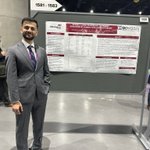
Honored to receive the Presidential Poster Award at #ACG2026! 🏆
Grateful to my co-authors & mentors.
@AmCollegeGastro
#ACG2026 #PresidentialPosterAward #GITwitter #MedTwitter
5
165
Bilind retweeted
After coronary bypass for acute coronary syndrome, adding ticagrelor to aspirin did not reduce cardiovascular events but increased major bleeding at 1 year, as compared with aspirin alone. Full TACSI trial results and Research Summary: nej.md/45OjEWN

ALT The New England Journal of Medicine Ticagrelor and Aspirin after CABG for Acute Coronary Syndrome A Research Summary based on Jeppsson A et al. | 10.1056/NEJMoa2508026 | Published on September 1, 2025 Visual representations of the patients in the trial and the treatments they were assigned. Read the full Research Summary at NEJM.org.
Bilind retweeted
In older patients with frailty who were receiving antihypertensive drugs and had a systolic blood pressure below 130 mm Hg, reducing antihypertensive drugs did not lead to lower all-cause mortality over 4 years than usual care. Full RETREAT-FRAIL trial results and Research Summary: nej.md/45NUK9v

ALT The New England Journal of Medicine Reduction of Antihypertensive Treatment in Nursing Home Residents A Research Summary based on Benetos A et al. | 10.1056/NEJMoa2508157 | Published on August 29, 2025 Visual representations of the patients in the trial and the treatments they were assigned. Read the full Research Summary at NEJM.org.
Bilind retweeted
The health hierarchy:
SLEEP
EXERCISE
NUTRITION
STRESS CONTROL
HEALTHY RELATIONSHIPS
CIRCADIAN RHYTHM ADHERENCE
Bright mornings & days & dark nights = great sleep, energized focused days & overall robust mental & physical health.
Bilind retweeted
Today is #WorldIBDDay! ACG supports IBD care teams and patients in determining which therapies and strategies work best for them.
Learn about IBD ➡️ bit.ly/acg-about-ibd
⭐ New ACG Clinical Guidelines on Ulcerative Colitis AND Crohn's Disease are coming in early June! ⭐
Bilind retweeted
Farewell #DDW2025 Another great meeting! Safe travels, hope to see you again soon. @AmerGastroAssn @CleClinicMD @ClevelandClinic
Just done with my first presentation at #DDW2025 🌟 Huge thanks to my mentors for guidance, and my colleagues for their help. Here’s to this being the start of many more DDW adventures!
#Gastroenterology #liver #MedTwitter
First #DDW2025 meeting 💩 and already experiencing so much! 🤩 So glad to be here, every moment counts for learning new things and new technologies. 📸🥳 #Gastroenterology #GITwitter
Great breakdown by @COREIMpodcast on secondary causes of constipation using the LMNOP mnemonic—covering Lifestyle, Metabolic, Neurologic, Obstruction, and Pharmacologic factors! 💩 #GITwitter
1/ 🚨 NEW #5Pearls: Constipation Medications💩
Firstly, we have to define primary and secondary causes of constipation:
1️⃣ Primary
- Diagnosed by Rome IV criteria
2️⃣ Secondary
- LMNOP mnemonic ⤵️
🖥️: coreimpodcast.com/2025/04/30…
Sponsor: @getfreedai
1
2
248
First time at #DDW2025! 🥳I’m excited to present my abstract at @DDWMeeting! 🎉 Can’t wait to explore latest groundbreaking digestive disease researches and connect with brilliant minds.
Huge thanks to my amazing mentors & collab crew for their support! ✨💪
Bilind retweeted
*⃣*⃣*⃣ 4⃣5⃣ *⃣*⃣*⃣
ACG recommends #ColorectalCancerScreening starting at age 45 for average risk adults
#Colonoscopy with polyp removal can prevent colorectal cancer
Learn more about screening: gi.org/ColonCancer
#ColorectalCancerAwarenessMonth #Gastroenterology
Bilind retweeted
The approval of Resmetirom marks a significant milestone in the treatment of MASH, offering the first targeted therapy for a disease that affects millions worldwide. This paper provides a critical analysis of the MAESTRO-NASH trial, highlighting key insights into its clinical efficacy, real-world applicability, and the challenges of implementation across healthcare systems.
Congratulations to @brennap9, @chriskopka, Leire Agirre Garrido, @Camilla_Dalby, @AlkhouriNaim , @schattenbergJ, Dana Ivancovsky Wajcman, @scottisaacsmd , Maurice Michel, and @JVLazarus for their important contribution to advancing our understanding of MASH treatment and policy implications. Their work will help shape future discussions on resmetirom accessibility and the evolving landscape of liver disease management.
#SLDliver #livertwitter @MadrigalPharma
Link to open paper (limited open access time) nature.com/articles/s44355-0…
Bilind retweeted
Do you know how structure can lead to rupture?
When you see an aneurysm on imaging, do you know it’s risk of rupture?
This month's @TheAJNR SCANtastic shows you which aneurysms are bursting w/risk!
ajnr.org/content/45/11/1678
Check out what you need to know!!
To remember which features make an aneurysm more likely to rupture, think about the things that make a guy at the bar angry & likely to rupture—these are the same things that make aneurysms more likely to rupture
1. Size
--If he’s big, he’s more likely to be willing to start a fight b/c he knows he’s more likely to win.
--Larger aneurysm = more likely to rupture
--Aneurysms > 7mm more likely to rupture
--Remember this b/c rolling a lucky 7 in Vegas makes you rupture w/excitement
2. Location
--More likely to fight in the back alley where there are no witnesses
--Aneurysms in the back alley are more likely to rupture
--PCOMM & post circ aneurysms are more likely to rupture
3. Involves daughters
--More like to fight if it involves his daughter
--Aneurysms w/ “daughter” aneurysms or blebs are more likely to rupture
--Increases risk by 50%
4. Growth
--If he is getting more upset, more likely it isn’t going to end well
--Growing aneurysm = increased risk of rupture
--Any growth by >1 mm in any diameter, increases the risk of rupture. Small changes do matter!
In this month’s @the_ajnr, Van Tuijl et al. used 4D MRA to show that these high-risk imaging findings are merely surrogate markers for low wall shear stress.
Low wall shear stress is bad bc shear stress is required to removed thrombus, plaque & inflammatory cells that weaken the aneurysm wall
So now hopefully your mind is bursting w/new things to look for w/aneurysms!
Check out the article for yourself: ajnr.org/content/45/11/1678