

Brute in a suit. Like correlations. Love Tchaikovsky. 'Feed your head'. FSU.
Fuckersberg, Austria
Joined December 2009
- Tweets48.4K
- Following4.9K
- Followers2.5K
- Likes63K






Byronic Mac 😎 retweeted

Bukele l’a dit clairement :
« Si vous n’impeachez pas les juges corrompus, vous NE POUVEZ PAS réformer le pays. Ils formeront un cartel (une dictature judiciaire) et bloqueront toutes les réformes. »
Le Brésil vient de le montrer en direct.
La France le pratique depuis des décennies, plus discrètement.
Le suffrage universel n’a de sens que si le dernier mot appartient aux élus, pas à un réseau de magistrats irrévocables qui interprètent les règles selon leurs intérêts.
Sans destitution réelle des juges politiques, les élections restent un théâtre.
Le cartel reste en place.
A bon entendeur.


Au Brésil, on vient d’avoir le plus bel exemple d’État profond en action. Et la France a exactement le même.
Dimanche, les bureaux de vote devaient fermer à 17 h. Le décompte avait déjà commencé. La campagne de Lula saisit alors le STF pour réclamer une prolongation nationale. Le juge qui tranche, Cristiano Zanin, n’est pas un magistrat neutre tombé du ciel : c’est l’ancien avocat personnel de Lula, nommé au Supremo Tribunal Federal en 2023… par Lula lui-même. Il ordonne deux heures supplémentaires sur tout le pays.
Le TSE doit interrompre le décompte.
Confusion dans les bureaux, certains déjà fermés, d’autres rouverts dans le flou. Quatre ans plus tôt, en 2022, Alexandre de Moraes (alors à la tête du TSE) avait refusé une demande similaire du PT malgré des blocages routiers. Les règles se plient selon le camp qui demande.
Ce n’est pas un incident. C’est le fonctionnement normal d’un appareil judiciaire et institutionnel qui a cessé d’être un arbitre pour devenir un acteur politique permanent. L’État profond, c’est précisément ça : un réseau de hauts magistrats, de conseillers, de hauts fonctionnaires et de relais médiatiques qui survivent aux élections, qui interprètent les règles, qui fixent les limites du possible, et qui savent à quel moment il faut « adapter » le cadre pour protéger « un certain ordre ». Les citoyens votent, les institutions décident ce que le vote a vraiment le droit de changer.
La France connaît exactement la même mécanique depuis des décennies. Le Conseil constitutionnel, la Cour de cassation, le Conseil d’État, les hautes juridictions administratives et une partie du parquet n’ont pas seulement interprété le droit : ils ont progressivement délimité le périmètre de ce qui est politiquement acceptable.
Des réformes votées par des majorités élues ont été neutralisées, retardées ou vidées de leur substance par des interprétations extensives, des questions prioritaires de constitutionnalité opportunément soulevées, ou des décisions de censure présentées comme purement techniques.
Pendant ce temps, « le personnel politique change », mais les mêmes milieux (énarques, magistrats issus des mêmes promotions, hauts fonctionnaires recyclés dans les conseils et les médias) continuent de définir les « principes républicains » que nul élu ne peut vraiment contester sans être qualifié de danger.
Dans les deux pays, on célèbre le suffrage universel tout en confiant le dernier mot à des gens qui ne sont ni élus ni révocables par les électeurs.
On parle de « démocratie » alors que le vrai pouvoir de blocage, d’interprétation et d’ajustement des règles se situe en dehors du cycle électoral.
Le Brésil vient simplement de le montrer de façon plus crue, avec un juge-ex-avocat du candidat qui prolonge le scrutin en pleine journée.
La France le fait depuis plus longtemps, de façon plus feutrée, et avec les mêmes justifications : défense de l’État de droit, protection des institutions, sauvegarde des acquis. Le résultat est identique : les électeurs découvrent trop tard que leur vote ne pèse que dans les limites que l’appareil a déjà fixées.
Tant qu’on ne nommera pas clairement cet État profond au Brésil comme en France on continuera à s’étonner que les résultats électoraux produisent si peu de changements réels.

Byronic Mac 😎 retweeted

Most Western democracies have been hacked. Not with code. With institutional architecture. Let me show you how it works, using the most advanced example: the European Union.
First, how it works. Once every five years, you vote for a European Parliament that cannot even initiate legislation. The body that proposes laws is the Commission: 27 commissioners nobody elected, appointed after backroom bargaining between heads of state. Bills are then negotiated between the Commission, Parliament and Council in "trilogues", closed-door meetings where the real decisions get made. A law that will apply to 450 million people goes through corridors that 99.9% of them will never see.
Now look at who's in those corridors. Brussels has become the lobbying capital of the world: nearly 18,000 organizations on the transparency register, tens of thousands of lobbyists, more than 50 for every single MEP. And that's just the declared part. Add the revolving door: a former MEP only has to wait six months before becoming a lobbyist to the EU himself.
The real problem is distance. A national MP who votes for a law that ruins the farmers in his district runs into them at the market on Saturday. In Brussels, the decision-maker never meets the people who live with his decisions. But he meets lobbyists every day: at lunch, at cocktails, at conferences. So the system doesn't optimize for the wellbeing of the people. It optimizes for the interests of whoever is in the room. You don't even need corruption for that, incentives are enough. Although sometimes, as Qatargate showed, there's corruption too.
The result: the system has a structural incentive to accept things the people would never vote for.
Take Mercosur. Twenty-five years of negotiations. France votes against it in the Council in January 2026 and gets outvoted. To keep national parliaments from blocking it, the Commission splits the deal into two texts, including a trade agreement that only needs a vote in Brussels. The European Parliament itself writes, in black and white, that this split circumvents the right of national parliaments, and refers the deal to the EU Court of Justice. The Commission's response: it has been applying the agreement provisionally since May 1, 2026, without waiting for the Court's opinion. Farmers were protesting outside Parliament. They lost anyway.
And remember the one time the people were actually asked about Europe directly: in 2005, France and the Netherlands rejected the European Constitution. The text came back two years later as the Lisbon Treaty, ratified by parliaments. No more referendums.
But the worst of it is immigration. In 2015, relocation quotas were imposed by qualified majority on countries that had voted against them. Since June 12, 2026, the Pact on Migration and Asylum applies across the entire Union, with its "mandatory solidarity" mechanism: you take people in, or you pay. Not a single European people has ever been consulted directly on this, even though it's the issue that is transforming our societies most profoundly.
And this is where we have to talk about the most sophisticated piece of the machine: George Soros.
Soros understood before anyone else that you don't need to win elections if you shape the ecosystem around the people who make decisions. His network, the Open Society Foundations, describes itself as the largest private funder of advocacy groups in the world. In Brussels, it runs its own lobbying arm aimed at EU institutions, the Open Society European Policy Institute.
Here's what we know from internal documents leaked in 2016: a document titled "Reliable allies in the European Parliament" listed more than 200 MEPs. Strategy papers described building "inside-track groups" to caucus "internal allies" who could advance their goals in their daily work. Training sessions were organized for MEPs on how to counter so-called populist parties.
The mechanism is brutally elegant. Think tanks produce the "expertise". NGOs produce the "demand from civil society". Legal NGOs litigate in the courts. Funded media outlets produce the narrative. The Brussels decision-maker, cut off from the population, hears the same message from every direction and ends up believing that this is what people want.
And the craziest part: the institutions fund the loop themselves. Between 2021 and 2023, the EU paid around €7.4 billion to NGOs, and the European Court of Auditors found the use of that money insufficiently transparent. It even came out that the Commission had funded NGOs to lobby MEPs in favor of its own Green Deal legislation. The institution pays "civil society" to ask it to do what it already wanted to do.
All of this is legal. That's exactly what makes it a hack and not a crime. The system works exactly as designed, except nobody designed it for the people anymore.
The patch is simple to state and hard to impose: bring decisions back closer to the people who bear them, hold referendums on issues that change a civilization, create a mandatory register for every influence actor, NGOs included, with their funding sources, and shut the revolving door. Until that happens, European democracy will remain what it has become: a user interface sitting on top of a system that runs for someone else.
🤖 Made with AI


Byronic Mac 😎 retweeted

Total bollocks. I only pay for Sky Sports on the off chance I get a thorough geopolitical briefing from Lewis Hamilton and a look at his post race keks.


Byronic Mac 😎 retweeted

One of the most depressing aspects of conducting these council-by-council housing audits is the realisation that British taxpayers are being made to fund an extraordinary system of housing provision for people arriving from overseas.
The money is earned by British workers, collected through taxation, and then used to provide accommodation, welfare and housing for foreign nationals.
But it gets worse.
The government is not merely spending billions on asylum accommodation, Afghan resettlement and Ukrainian housing.
It is also providing councils with enormous capital grants to PURCHASE residential properties for these schemes. In some cases, councils are borrowing additional money to finance the acquisitions.
Think about the implications of that.
British people work, pay their taxes, struggle with astronomical rents, compete for scarce social housing and increasingly find themselves priced out of homeownership.
Meanwhile, their taxes are being used to fund dedicated housing programmes for people arriving from abroad.
In some cases, councils are even taking on long-term debt to acquire those properties.
This is not simply about immigration. It is about the priorities of the British state and the extraordinary redistribution of taxpayers' money towards housing provision for foreign nationals.
The more councils I audit, the more astonished I become at the scale of the expenditure and the long-term commitments.
This is deeply unfair on so many levels.
Byronic Mac 😎 retweeted

🚨An 11-bedroom HMO in London, owned by Kamber Ramadani, just received boxes of machetes and zombie knives.
Police bodycam shows officers pulling them out on the doorstep.
The same name was jailed in 2020 for trying to smuggle illegal knives and a starter pistol into the UK to sell from his Old Kent Road shop.
Serious questions: Who is living in this HMO? How do bulk banned weapons reach multi-occupancy properties with this landlord’s history? Why does this keep happening under current housing and enforcement policies?
Every MP should be asked about this.
It does not look like coincidence.
Byronic Mac 😎 retweeted

Amazing that in the course of a couple of centuries Europe went from conquering the globe to being leveled by pencil-necked Marxists who have never even thrown a punch, let alone fired a gun

Byronic Mac 😎 retweeted

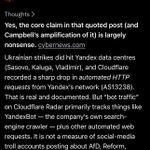
Finally some evidence!
Turns out Ukraine was in fact violating the Starlink TOS by strapping Starlink terminal into drones they were using to attack Russia.
SpaceX figured out that the terminals were travelling fast by gaging how often they switch satellite connection.
They updated their terminals and that’s what caused the “slowdown”.


Byronic Mac 😎 retweeted

BREAKING: China orders government agencies to develop plans to combat mass job displacement from AI.


Byronic Mac 😎 retweeted

Classic EU playbook. Open borders for years, call everyone racist for questioning it, and now when it backfires — blame Russia. Ursula wants "emergency powers" to fix the crisis Brussels created.
Byronic Mac 😎 retweeted

“So Channel 4, which party are you trying to dish the dirt on?”
“Well we’ve broadcast a program about Reform’s funding and other stuff”.
“OK. Anything on the Tories? Or how about Labour? Andy Burnham maybe… Man City? Operation Hexagon”?”
“We’re having him on Gogglebox”.

Byronic Mac 😎 retweeted

HORRIFYING: Muslim boys are taught from a young age how to ‘properly’ beat a woman, while girls learn how to take the abuse.
Mosques across America and Europe are also teaching the same thing. There’s no coexisting with this culture.
Byronic Mac 😎 retweeted
Myriam was a 7-year-old French Jewish girl. She witnessed a terrorist break into her school and kill two of her classmates.
She tried to run but tripped while grabbing her schoolbag, causing her ballet slippers to fall out. She stopped to pick them up. He chased her and grabbed her by the hair, shooting her in the head at point-blank range.
The man was Mohamed Merah, and a rap song honoring him and other Muslim terrorists has become the unofficial anthem of the ‘student protests’ in France.


🚨 ALERTE - Des élèves ONT BLOQUÉ le lycée François Villon, à Beaugency (45), en écoutant MRH, un titre faisant référence à des TERRORISTES ISLAMISTES.
« À la Mohamed Merah, v-esqui' les caméras. Bataclan, je l'ai shooter à l'œil, chasse à l'homme, Salah Abdeslam »
« J’ai pas peur, j’ai pas peur de l’enfer, le pacte est intact, à part Allah qui peut m’arrêter. Bataclan, faisaient les morts, allongez-vous, je vais en shooter à l’œil ».


Byronic Mac 😎 retweeted
Watch this clip carefully. The script is always the same: Elon is "dumb," Elon is "lucky," and Bill Gates is the good billionaire because he gives his money away.
Let's talk about that.
Bill Gates didn't give his fortune away. He converted it into control.
Over $100B spent since 2000, another $200B by 2045.
Where does it go? Into Gavi, the Global Fund, the WHO, health ministries, policy shops, media partnerships. Into the state, and into the institutions that orbit the state. Gates found the ultimate hack: you don't need to win elections when you finance the people who write the agenda. One private man at the center of global health policy, accountable to no voter, ever.
And what does all that money produce? Maintenance.
Gates is a man maintaining a photograph. The world as it is, framed, preserved, retouched a little every year. Some of it saves lives, and that's good. But not one new industry. Not one order-of-magnitude drop in the cost of anything. No growth. The same world, administered more politely.
That's what this kind of philanthropy buys: the perfection of goodness, not the reality of goodness. The galas, the annual letters, the glowing coverage, the moral immunity. Goodness as a brand.
Now look at the other model.
SpaceX cut the cost of reaching orbit by more than 10x. Starlink brought internet to places no government ever bothered to wire, and kept Ukraine online when the war hit. Tesla forced the entire auto industry to go electric when every incumbent said it couldn't be done. Neuralink patients with paralysis are controlling computers with their thoughts.
None of that was a donation. All of it was creation. Products people pay for, which fund the next thing, which compounds. That's real philanthropy: building things that make the whole pie bigger, permanently.
A donation ends when the money runs out. A company that bends the cost curve of civilization keeps giving forever.
Hard to understand when your entire career depends on the redistribution machine.
So here's why they're panicking, A+B.
A. Their power rests on one thing: controlling the allocation of other people's money. Budgets, agencies, grants, foundations, NGOs. Whoever controls the flow controls the country.
B. Builders prove, publicly and at scale, that creation beats redistribution. A rocket company did what decades of space budgets couldn't. A car company did what decades of climate summits couldn't.
A + B: if growth does more good than the state, the people who manage the state become optional. That's the threat. Not Elon's politics. Elon's results.
They can't attack the results, so they attack the man. "Dumb." "Lucky." When someone lands reusable rockets and the best you've got is that he got lucky, you're not making an argument. You're confessing you don't have one.
History will judge this period very harshly. The lies, the manipulation, the coordinated narratives repeated word for word across every network. It's all archived now. Every clip. Every quote.
You've already lost. You just don't know it yet.
The builders won the moment they proved the future can be built instead of managed.

🚨 BREAKING: Democrats are lining up to call Elon Musk dumb, and it's the most embarrassing thing you'll see today.
One called him "one of the most unintelligent billionaires I have ever met." Another said he's "one of the dumbest, luckiest people."
Lucky? SpaceX and Tesla were both about to go under, per Brian Kilmeade. Elon bet everything, the rockets worked, and Tesla came roaring back.
Kilmeade said it best: "I'm embarrassed for those people."
The man builds rockets, electric cars and tunnels. Democrats can't even build a message.

