

Fannie Mae and Freddie Mac Retirees and Families
Joined January 2025
- Tweets315
- Following195
- Followers611
- Likes8.5K






Pinned Tweet
Director @pulte,
Thank you for your hard work on improving federal housing for Americans.
On behalf of many thousands of American families that are shareholders of Fannie Mae and Freddie Mac, we respectfully submit this letter. This letter, along with a request for a meeting in DC, has been submitted via email and regular mail.
In a recent interview, you said that you are willing to listen to anyone. As the majority owners of the outstanding common shares, hardworking Americans deserve a voice.
Thank you for your consideration.
- Family shareholders of Fannie Mae and Freddie Mac
$FNMA $FMCC


F2 retweeted

Bill Ackman called on the Trump administration to release Fannie Mae and Freddie Mac from conservatorship, warning that a Democrat-controlled government could weaponize the entities against Republicans bloomberg.com/news/articles/…

F2 retweeted

"It's absolutely politically critical for Fannie and Freddie to be released from conservatorship before the end of the Trump administration."
@BillAckman is bullish on $FNMA and $FMCC – here's why:
cnbc.com/video/2026/10/22/bi…

F2 retweeted

We welcome your focus. Now is the time to take further steps for release from conservatorship.
F2 retweeted

For 250 years, America has been the greatest nation on Earth — and with God’s grace, it will be for 250 more.
Happy Independence Day!
F2 retweeted

$FNMA $FMCC
@realDonaldTrump today on Air Force One when pressed on the Fannie Mae & Freddie Mac IPO:
"We’re thinking about an IPO for them…it's not a rush."
IMHO, if he wasn’t going to do it, I believe he would just say so.
There’s too much money to be made on all sides not to do it. But timing is everything.
GLTA
F2 retweeted

President Trump praises Federal Housing Director Bill @Pulte and praises him for increasing the value of Fannie Mae and Freddy Mac to over $1 billion while hinting that he may take them public to benefit taxpayers
F2 retweeted
$FNMA $FMCC
Sonic Booooom!🔥🔥🔥
@realDonaldTrump TONIGHT applauding @pulte & his FHFA leadership while discussing the possibility of taking Fannie Mae & Freddie Mac public.
Sounds like the IPO is on the table...well down the road...locked, loaded, & ready to go!!!
F2 retweeted
And Fannie and Freddie are stupidly cheap. Asymmetry at its best. They could be a 10X and it could happen soon.
F2 retweeted
A number of press reports have characterized our and other shareholders’ efforts on behalf of Fannie and Freddie (F2) as seeking a ‘gift’ or ‘handout’ from the government. We, the shareholders of F2, seek no such thing.
Hundreds of financial institutions were bailed out during the GFC by the U.S. Treasury. Nearly all of the financial institution bailouts during the GFC involved an injection of capital in the form of senior preferred stock by Treasury at an interest rate of 5%, plus warrants to acquire common stock in an amount equal to 15% of the face amount of the preferred with an exercise price at the then-current stock price of the rescued institution.
For example, Treasury’s preferred stock investment in Goldman Sachs was in an amount of $10 billion and, in addition, Treasury received warrants on $1.5 billion of GS' common stock at its then market price.
The bailout terms for F2 were materially more burdensome and expensive, with a higher interest rate and substantially more warrant coverage, than that of every other financial institution (other than those of AIG whose terms were similar). Despite the F2 bailouts’ massively more burdensome terms, shareholders are not complaining about the original terms.
Treasury invested $193 billion in F2 in the form of senior preferred stock (SPS), including funding for $2 billion of commitment fees, with a 10% coupon (twice that of the banks). Treasury also received warrants on 79.9% of both companies’ outstanding shares.
Fannie and Freddie have since repaid Treasury $301 billion, which includes interest on the SPS at a blended rate of 11.6%, an interest rate which is 160 basis points more per annum, and have returned the entire $193 billion of outstanding principal, $25 billion in excess of what was contractually owed. In summary, the F2 SPS has been fully repaid according to its original contractual terms plus an extra $25 billion.
Despite the fact that the SPS has been more than repaid in full, Fannie and Freddie have not accounted for these payments on their respective balance sheets, and the $193 billion of SPS remains an outstanding liability as if no principal payments had ever been made.
How can it be, you might ask, if indeed F2 have repaid $301 billion to Treasury when only $276 billion was due could there be any remaining balance of the SPS on the F2 balance sheets?
The answer relates to something called the ‘Net Worth Sweep (NWS).’
During the second term of the Obama administration, on August 12, 2012, two quarters after F2 returned to profitability, Treasury announced that it was unilaterally amending the terms of the SPS stock to provide that Treasury would take 100% of the profits of F2 each quarter in lieu of the 10% annual dividend rate. This was not a negotiated resolution with F2. It was a unilateral amendment of the original terms of the SPS that was done in bad faith.
The supposed rationale for the amended terms of the SPS was akin to the IRS garnishing the wages of someone who will never be able to pay the taxes that they owe. That is, the Treasury said F2 will never be able to pay the 10% coupon, let alone the SPS’ $193 billion principal balance, so it decided instead to ‘settle’ for 100% of F2’s profits forever.
In discovery, shareholders learned that the stated justification for the amendment was false. In mid 2012, the Obama administration had come to learn that both companies would soon be reversing tens of billions of reserves on their balance sheets as housing values had increased and the reserves taken during the GFC had been excessive. The NWS was instituted by Obama to forestall F2 from forever being able to recapitalize and be released from conservatorship. The NWS was not a ‘settlement’ for a lesser amount of future payments. It was the outright theft of the forever profits of both companies.
Never before or since has the government ‘swept’ 100% of the profits of any company, let alone a financial institution in conservatorship, a form of government intervention where the goal is rehabilitation of the institution, and where the hierarchy of corporate claims has always been respected.
The accounting for the NWS payments while it was in effect (until Secretary Mnuchin terminated the NWS in Trump’s first term) was also unusual. The NWS was treated by F2 as a quarterly adjustment to the dividend rate on the SPS such that the dividend amount owed was made equal to the after-tax profits of F2 for that quarter with no limitation.
In other words, regardless of the amount of profit F2 generated for the quarter – whether or not it was in excess of the original 10% annual dividend – the dividend payable under the NWS was made equal to the quarterly profit. The absurd terms of the NWS sweep therefore made it impossible for any partial or full repayment of the SPS to take place as every dollar paid to the Treasury on the amended terms of the SPS was considered a dividend payment, even if the amount was massively in excess of the original contractual SPS terms.
The absurdity of the NWS was made clear just two quarters after the NWS went into effect. Fannie Mae generated a profit of $59 billion in the first quarter of 2013, and the SPS dividend rate for that quarter was set at $59 billion so the entire amount was swept to the government, more than 10 times the contractual dividend rate.
I had the opportunity to discuss F2 and the NWS with Warren Buffett about a decade ago and he said that he “couldn’t believe what the government had done.”
In short, the shareholders of F2 are simply asking the government to respect the original and highly burdensome terms of the SPS. There is no dispute that Treasury has received more than the original 10% coupon and full repayment of principal of the SPS, that is, an extra $25 billion.
We and the millions of other shareholders of F2 are simply asking the administration to honor the original SPS terms and properly account for the $301 billion of payments, thereby eliminating the SPS liability from both companies’ balance sheets.
Shareholders have not asked for the extra $25 billion to be returned to the two companies. Treasury can decide whether to keep those funds or return them to the companies.
Accounting for the repayment of the SPS has other important implications. Namely, it is critically important that conservatorships respect the rule of law, in particular, the contractual terms of corporate instruments and the hierarchy of claims. Otherwise, no financial institution that gets into trouble will be able to raise rescue capital in the private markets.
Notably, the treatment of F2 in conservatorship explains why Silicon Valley Bank and other recent large bank failures since the GFC were unable to raise private capital and avoid government intervention or a forced sale to J.P. Morgan. If the government with the stroke of a pen during conservatorship can at a whim wipe out common and preferred shareholders, no one is going to step in to try to save a financial institution that gets into trouble, and only the top few banks will be possible rescuers of big banks that fail.
Furthermore, because of F2’s history, their reputation in the capital markets has been greatly damaged. F2 raised $22 billion of preferred stock in the year or so prior to conservatorship as the government pressed both companies to raise capital. Institutions were willing to invest billions of dollars of capital into both institutions before they failed because, based on all precedent conservatorships, the contractual terms of all financial instruments and the hierarchy of claims had been preserved. Unfortunately, in light of the precedent of the net worth sweep, no investor can be confident that they won’t be wiped out in a future conservatorship so none has been willing to take the risk.
Some have proposed that Treasury simply convert the SPS into junior preferred and common stock and massively dilute shareholders. Putting aside the potential legal challenges to this approach, the result will be that Treasury will at best own something approaching 95% of both companies rather than 79.9%.
While the government’s percentage ownership stake would be larger in the SPS conversion approach, the value of the government’s larger stake would be considerably lower as the companies would become un-investable. Who would invest in F2 alongside the government when they just wiped out the previous owners?
In the SPS conversion scenario, the government’s stake, at best, if it could be sold, would trade at a massively discounted valuation, well below the value of the government's stake if Treasury retained only its contracted for 79.9% stake and respected the original terms of the SPS. In other words, a slightly smaller ownership stake of much more highly valued companies would equate to considerably more value for Treasury and taxpayers.
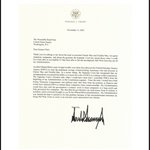
In a public letter to Rand Paul after his first term in November of 2021, President Trump recognized that the net worth sweep was theft from the shareholders of Fannie and Freddie. He wrote:
“Another Obama/Biden scam in legal trouble was when they allowed the Federal Housing Finance Agency (FHFA) to steal the retirement savings of hardworking Americans who had invested in Fannie Mae and Freddie Mac…The idea that the government can steal money from its citizens is socialism and is a travesty brought to you by the Obama/Biden administration. My Administration was denied the time it needed to fix this problem because of the unconstitutional restriction on firing Mel Watt. It has to come to an end and courts must protect our citizens.”
I couldn’t have said it better than President Trump.
Now that you have the time, Mr. President, let’s Stop the Steal!
If you believe that F2 will ultimately be released from conservatorship, F2 has significant upside value. Even in a scenario where the USG owns 90-95% of the entities, the downside is limited if you assume the valuations proposed by the administration ($500 bn+).
For long-term holders, this is an interesting buying opportunity, even if release timing on F2 appears to be uncertain or at least delayed.
I am buying this drop and my first entry in several months.
Conduct your own research, this is not personalized investment advice.
$FNMA $FMCC

1/ 🧵Fannie Mae vs. Freddie Mac: Which GSE has more upside if released?
I built a detailed model analyzing 4 recap scenarios. Freddie $FMCC offers better downside protection AND more upside than Fannie $FNMA — here’s why. 👇
docs.google.com/spreadsheets…


F2 retweeted
Trump is asking bank executives for their pitches on monetizing mortgage giants Fannie Mae and Freddie Mac, including a major public offering of stock, sources say bloomberg.com/news/articles/…
Excellent and informative post by Tim Howard. We recently had dinner and have been discussing Fannie/Freddie reform. He’s been a wealth of knowledge.
I have been meeting with GSE and capital markets experts so that my presentation is well informed. Timeline is around mid-summer.


A superb and detailed post on Fannie and Freddie from the former Vice Chairman and CFO of Fannie Mae howardonmortgagefinance.com/
F2 retweeted
Interesting. I will look into these Obama items, if available, as it relates to our Agency and the GSEs.

Matt Taibbi on why the Obama administration is trying to keep 11,000 documents sealed rol.st/1NjjA61

A few updates this week:
1. Confirmed that Secretary Bessent is in receipt of our letter. His office reached out and said he is unavailable the next couple of weeks, but would be happy to followup thereafter.
2. Held 30 minute call with Scott Carpenter at Bloomberg. Discussed a wide variety of topics, but of specific interest was the existing cap table and the fact that hedge funds have taken a material short position - a fact not yet reported by the financial media. Followed-up and shared a financial model and offered to walk through
3. Held a 60 minute call with Gina Heeb at WSJ. Discussed (a) beneficiaries of delaying an exit (banks); (b) capital requirements should be risk-based as required by law (HERA) and therefore follow the Dodd-Frank stress test results; (c) current capital structure; and (d) senior preferred options
4. Held numerous calls with institutional investors and mortgage reform specialists. Some had creative ideas I had not considered, so will be adding a few scenarios to the financial model and likely making an update
5. Still no word from Director @pulte; the letter from Senate Democrats asked for a list of all shareholders he has met with, so I think that makes a meeting less likely in the short term
6. Working on a white paper/ opinion piece; numerous interested publications if that is the best route to get coverage - more to come. Lots on deck this week.
Celebrated Flag Day with the family. Happy Father’s Day to all!
$FNMA $FMCC

F2 retweeted

Over the course of the conservatorship, the GSEs paid over $301 billion back in dividends, fully repaying the initial federal investment on the original terms.

For transparency, I've sent the following note to Joe:
Joe,
Thank you for your recent Barron’s article “Will Fannie and Freddie Go Public? A Fight Is Unfolding Over the Mortgage Giants.” It was an informative read. As a long-time follower of the Fannie Mae and Freddie Mac saga, I wanted to add some critical context that I believe was missing from the piece. These points are material to the discussion and would greatly benefit readers’ understanding of the situation:
1. Historic Jury Verdict in Shareholders’ Favor: In 2023, a federal jury found that the Federal Housing Finance Agency (FHFA) breached its contractual duties to Fannie and Freddie’s private shareholders by enacting the 2012 “Net Worth Sweep.” The jury awarded $612.4 million in damages to shareholders, a figure which Judge Lamberth later ordered to be grossed up with ~5% annual interest. This has boosted the total judgment to over $780 million (likely approaching $1 billion by the time post-judgment interest is included) – a very material legal outcome. It affirms that current shareholders were harmed by the sweep, contrary to the government’s arguments, and it underscores that shareholders’ claims have legal merit. I was surprised this verdict went unmentioned in your article, given its significance and recency relative to Mark Calabria’s claims about the Treasury’s legal analysis . Acknowledging this win would show that any plan to take Fannie and Freddie public isn’t happening in a vacuum – it’s unfolding in the shadow of ongoing litigation and judicial findings that the government overreached.
2. No Existing Right to Convert the Government’s Senior Preferred Shares: You noted the massive size of Treasury’s senior preferred stake – the government’s senior preferred stock now carries a liquidation preference of about $340 billion (up from the original $191 billion drawn). However, any conversion of those senior preferred shares into common equity (as some recapitalization proposals contemplate) would require granting a brand-new right that does not exist today. The senior preferred stock has no conversion feature – in fact, the stock purchase agreements explicitly state that holders of the senior preferred “shall not have any right to convert such shares into or exchange such shares for any other class or series of stock”. This means Treasury cannot simply “flip” its $340+ billion claim into common stock without either amending the agreements or passing new legislation. It’s an important distinction: any such conversion would be an extraordinary step, not an automatic or contractually pre-ordained outcome.
3. Conversion = New Litigation Risk and Harm to Shareholders and Taxpayers: Converting Treasury’s senior preferred stake into common stock might sound like a neat solution on paper (effectively turning government debt into equity), but it could severely harm existing shareholders and expose FHFA and Treasury to major new legal challenges. In legal analysis circulating among stakeholders (see: ruleoflawguy.substack.com/p/…), experts point out that a conversion would be seen as the “closing transaction” of the very Net Worth Sweep that the jury found to be a breach of the implied covenant. In other words, if Treasury were to “squeeze out” current investors by converting its entire senior preferred into common stock, shareholders could credibly argue this causes new and additional harm – essentially a continuation of the 2012 breach. By one estimate, this added shareholder damage could be on the order of $24+ billion. Such a move would almost certainly invite fresh litigation and reset the clock on legal claims. In short, any plan that involves conversion of the senior preferred – as opposed to deeming it repaid– carries a huge litigation overhang. This risk also endangers the value of the Treasury’s common shares claim and the time to monetize that claim.
4. Clarifying the Numbers: $191 Billion vs. $340+ Billion: The article references the massive $340 billion (and growing) senior preferred liquidation preference, but it’s crucial to clarify how we got from $191 billion to that number. The $191 billion was the total net cash Treasury actually infused into Fannie and Freddie during the 2008-2011 crisis. By 2014, Fannie and Freddie had paid back $228 billion in dividends, and by the end of 2019 they’d paid over $301 billion – far exceeding the original bailout amount. In fact, by 2017 the GSEs had fully repaid the $191 billion in loans they received (every dollar of principal was returned to Treasury). The reason Treasury’s stake now sits at ~$340 billion is that, under the terms of the government’s senior preferred stock, the 10% annual dividend that used to be owed kept getting added to the liquidation preference (especially after the Net Worth Sweep agreement was modified). In other words, the government’s paper claim grew by continually capitalizing unpaid dividends – even during years when all profits were already being swept to Treasury. That $340+ billion thus reflects an accounting construct; it is not additional cash that taxpayers poured in. It includes a large amount of “profit” that Fannie and Freddie already handed over. As a knowledgeable reader, I think it’s important this distinction be made clear. Portraying the senior pref as an investment that ballooned to $340B could mislead readers – the true taxpayer outlay was $191B, and taxpayers have earned roughly a 60% return ($301B back on $191B by end of 2019) even before considering the remaining stake. In any discussion of going public, this matters: many stakeholders argue that the government has been made whole (and then some), and that the excess value in that $340B number is value that rightfully belongs to the companies (and thus their shareholders) absent the contentious Net Worth Sweep.
5. Who Owns Fannie and Freddie Stock (It’s Not Just Hedge Funds): The article (and others in the media) often frames the shareholder base as predominantly hedge funds looking for a windfall. In reality, approximately 80% of Fannie Mae and Freddie Mac’s common shares are held by everyday individual investors, families, and long-only investment funds, according to SEC filings, Bloomberg ownership data, and recent court amicus briefs. The notion that “hedge funds” alone stand to gain is a misleading simplification. There are also thousands of retail shareholders – many of whom held Fannie/Freddie stock since before the 2008 conservatorship (or bought in support of the companies during the crisis). Notably, per Bloomberg data, once the government exercises its warrants (for 79.9% of the common stock), the Treasury would own four-fifths of the common shares, leaving existing common shareholders with just 20%. Of that remaining 20%, roughly 16 percentage points belong to individuals, families, and long-only funds, and only about 4 percentage points to hedge funds. In fact, a number of hedge funds are even shorting the stock now. Short interest in Fannie Mae and Freddie Mac swelled to over $250million, indicating that some hedge funds are betting on the stocks to fall.)
6. Elevated Mortgage Credit Spreads Favor Big Banks:
Another critical dimension worth highlighting is that mortgage credit spreads—the extra yield investors require on mortgage-backed securities (MBS) relative to Treasury securities—are currently 70-90 basis points, compared to just 15-25 basis points before conservatorship. This substantial widening directly increases costs for homebuyers, contributing significantly to higher mortgage rates. The primary beneficiaries of these wider spreads are the largest commercial banks, which collectively earn tens of billions of dollars annually in additional interest income on mortgage loans. Given these lucrative economics, major banks have a strong financial incentive to maintain the status quo and oppose ending conservatorship for Fannie and Freddie. By restricting competition from a recapitalized and publicly accountable Fannie and Freddie, banks effectively protect a highly profitable lending environment, at the direct expense of homebuyers and consumers. In other words, the longer conservatorship continues, the longer these outsized profits flow to big banks rather than benefiting homeowners through reduced mortgage rates—a key dimension often overlooked in discussions about the future of the mortgage giants. Finally, the discussion on mortgage spreads is usually around the small, short-term impact, not the medium and long-term effects of mortgage spreads. Fannie and Freddie have a very clear incentive to lower spreads and as public companies, would work to do so over time.
I offer these points respectfully, as someone who has closely followed the GSEs’ journey and cares about accurate reporting. I believe incorporating these facts and clarifications would greatly enrich your article’s analysis. The conflict over Fannie and Freddie’s future is not just a political and financial tug-of-war, but also a legal and fairness debate – and current shareholders (big and small) are at the heart of it.
Thank you for your time, and I hope you’ll consider addressing these aspects in a future update or follow-up piece. Your coverage is widely read, and getting this context on the record would do a service to readers seeking the full picture. Please feel free to reach out if you’d like any further detail on these points – I’d be happy to point you to sources.
Again, I appreciate your work on this topic.
Sincerely,
Martin

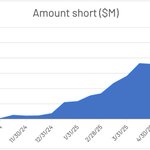
$FNMA short interest is up 100x since last fall!
The media portrays Fannie and Freddie’s investors as primarily hedge funds poised for a “huge payday.” In reality, the shareholder base is predominantly individual retail investors. SEC filings (e.g., the 2024 10K), Bloomberg ownership data, and amicus briefs in court cases confirm that while a couple of hedge funds hold notable stakes, the vast majority of common shareholders are individual investors.
While there was only $3M of short interest last fall, there is now approximately $300M in Fannie. These are almost exclusively hedge funds or speculators, not individuals or long-only institutional investors.
@pulte @SecScottBessent @matt_levine @carney @ScottJourno @McKennaGregjed @ginaheeb
